Safe Holi Celebrations in South Korea 2026: Practical Tips and Major Events for the Indian & Hindu Diaspora Amid Global Uncertainties
By Hindutone Desk | Updated March 1, 2026 As cherry blossoms begin to hint at spring's arrival, South Korea's vibrant Indian and Hindu diaspora — including…
By Hindutone Desk | Updated March 1, 2026 As cherry blossoms begin to hint at spring's arrival, South Korea's vibrant Indian and Hindu diaspora — including…
By Hindutone Desk | Updated March 1, 2026
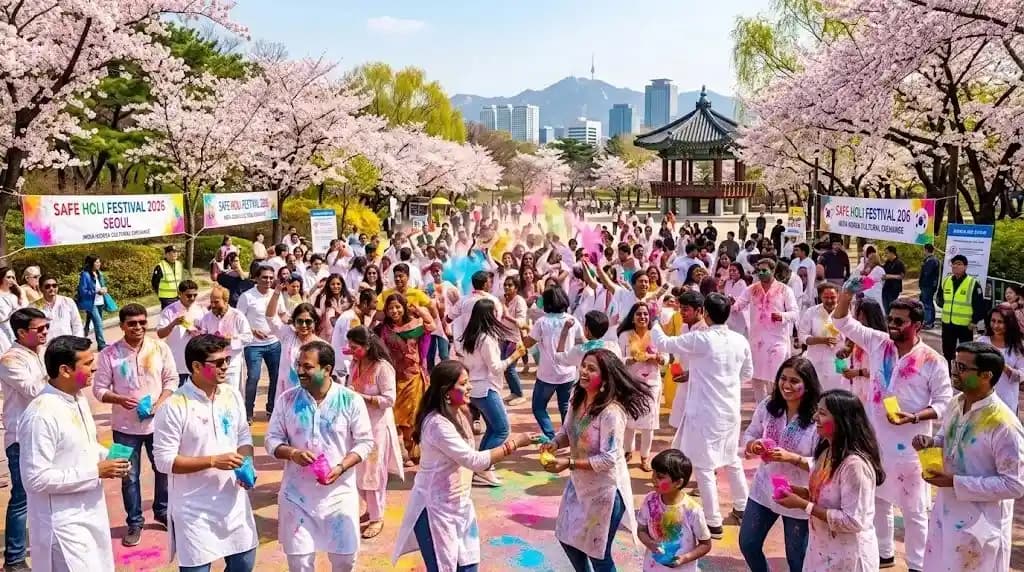
As cherry blossoms begin to hint at spring's arrival, South Korea's vibrant Indian and Hindu diaspora — including professionals, students, and families in Seoul, Busan, Daegu, and beyond — gears up for Holi 2026, the joyful Festival of Colors that celebrates renewal, forgiveness, unity, and the victory of good over evil. Rooted in Hindu legends like Prahlad's devotion defeating Holika and Krishna's playful love with Radha, Holi in Korea blends tradition with K-culture fusion, often drawing parallels to local spring festivals like Daeboreum (full moon celebration) for shared themes of joy and community.
This year, Holika Dahan (bonfire ritual) is observed on the evening of Tuesday, March 3, 2026, with Rangwali Holi (color play) on Wednesday, March 4, 2026. Community events typically extend into weekends (March 7–15) for larger crowds and milder weather (5–15°C in Seoul, cooler in the north, possible rain). South Korea's Indian community, supported by groups like Indians in Korea (IIK), United Indian Association, and the Embassy of India in Seoul, hosts inclusive, family-oriented celebrations featuring organic colors, Bollywood music, dhol, authentic food, and cultural performances.
Amid global uncertainties, organizers prioritize safe, respectful, and eco-friendly Holi: natural/herbal gulal to prevent skin/eye irritation, consent-based play ("ask before you throw"), limited water usage (dry or minimal play), and venue controls for hygiene/security. Here's your complete guide to safe Holi in South Korea 2026, with major events and tips.
Why Safety & Inclusivity Define Korean Holi
Korea's multicultural ethos welcomes Indian traditions, but public events require discretion — no unauthorized color-throwing in streets/parks to respect local norms. Celebrations are community-led (often by IIK or United Indian Association), open to Koreans and internationals, emphasizing organic colors, consent, and sustainability. Many events are alcohol-free or moderated in family zones, fostering cross-cultural bonds.
Major Holi Events in South Korea 2026
Events center on Seoul (Hangang Park area) and Miryang (wellness-focused), with announcements via Instagram (@holihaikorea, @indiansinkoreaiik), Facebook (Indians in Korea groups), holihai.org, or embassy channels.
- Holi Hai 2026 – 16th Edition (Indian Community in Korea / Miryang Yoga Culture Town)
- Date & Time: Sunday, March 8, 2026 (full day; gates likely open morning/early afternoon).
- Venue: Sunshine Miryang Theme Park / Yoga Culture Town, Miryang (Gyeongsangnam-do; accessible by train/bus from Seoul/Busan).
- Highlights: Korea's biggest Festival of Colors — 16th annual edition since 2011, blending Indian traditions with Korean wellness vibes. Expect massive color throws (safe, organic powders), cultural performances (traditional/contemporary music, dance acts), authentic Indian food stalls, family activities, and multicultural joy. Promoted as a "grand celebration" of unity and friendship; early bird registration discounts until late February (regular/on-site ~20,000 KRW). Free photo clicks/prints, games, and more. Register at www.holihai.org. Attracts participants from over 50 countries.
- Why Attend: Largest multicultural Holi in Korea — vibrant, family-friendly, and wellness-themed.
- IIK Holi Hungama 2026 – Let the Colors Speak! (Indians in Korea – IIK)
- Date & Time: Sunday, March 15, 2026, 11:30 AM – 4:00 PM (approx.).
- Venue: Ichon Hangang Park, Seoul (along the Han River; central, accessible by subway).
- Highlights: Annual community explosion of colors, music, dance, food, and festive vibes. Bring family/friends for colors, Bollywood tracks, games, and pure Holi energy. Registration via tinyurl.com/IIKHOLI2026SEOUL or IIK channels. Open to all — spread laughter and happiness!
- Why Attend: Seoul-centric, lively park setting — perfect for urban diaspora and locals.
Other potential events:
- Smaller devotional gatherings (Holika Dahan kirtan on March 3) at community halls or homes in Seoul.
- Possible embassy-supported cultural events (e.g., blended with Daeboreum at Korean Cultural Centre or similar).
- Watch for pop-ups in Busan, Daegu, or Chuncheon (past locations like Subyeon Park).
For updates: Follow @holihaikorea (Instagram), Indians in Korea Facebook groups, holihai.org, or Embassy of India Seoul channels — events announced early and often sell out!
Essential Safety Tips for Holi 2026 in South Korea
- Attend Organized Events Only Join IIK, United Indian Association, or registered gatherings for security, structure, and compliance. Avoid unpermitted public play.
- Prioritize Natural, Organic Colors Use herbal gulal supplied on-site — no synthetics to prevent allergies/rashes/eye issues. Many ban outside powders.
- Pre- & During-Play Protection
- Apply thick coconut oil, Vaseline, or moisturizer on skin/hair.
- Wear sunglasses/goggles.
- Cover hair with cap/scarf; old, modest white/light clothes.
- Grippy shoes for parks/grass.
- Consent & Respect
- Always ask before applying color.
- No forced play on kids/elders/strangers.
- Limit water (dry preferred).
- Follow venue rules on noise/cleanup.
- Health & Weather Prep Cool spring — layer up, stay hydrated. Supervise children; family zones common.
- Post-Holi Care
- Rinse lukewarm water + mild soap; oil cleansers for stains.
- Moisturize skin/hair.
- Seek help if irritation occurs.
Embracing Holi's Spirit in Korea
In South Korea's dynamic culture, Holi fosters unity and cultural exchange — a reminder of hope and shared joy. Celebrated responsibly, it strengthens diaspora ties.
For latest details, follow organizers or embassy channels. Whether at Miryang's wellness bash or Seoul's Han River park, may your Holi be safe, colorful, and filled with love!
Hindutone.com shares authentic insights on Hindu festivals and diaspora life. Share your Korea Holi moments! #SafeHoliKorea #Holi2026 #HoliHaiKorea #FestivalOfColors
Frequently Asked Questions
When is Safe Holi Celebrations in South Korea 2026?
Safe Holi Celebrations in South Korea 2026 falls on March 1, 2026.
What is the significance of Safe Holi Celebrations in South Korea?
By Hindutone Desk | Updated March 1, 2026 As cherry blossoms begin to hint at spring's arrival, South Korea's vibrant Indian and Hindu diaspora — including professionals, students, and families in Seoul, Busan, Daegu, and beyond — gears up for Holi 2026 , the joyful Festival of Colors that celebrates renewal, forgiveness, unity, and the victory of good over
How is Safe Holi Celebrations in South Korea celebrated?
Devotees observe it with puja, fasting or special offerings, visiting temples, chanting mantras, and gathering with family. Customs vary by region and tradition.
What should devotees do on Safe Holi Celebrations in South Korea?
Take a sacred bath, perform the day's puja and charity (dana), observe any prescribed fast, and chant mantras with sincere devotion.
You might also like
Hindu Festival Calendar 2026 — Complete Guide for NRIs (Dates, Tithis, Puja)
June 2026 Hindu Festival Calendar — Complete Dates, Vrat & Puja Guide for NRIs
Shani Deva Temples Worldwide & Must-Performed Rituals — Complete Devotee's Guide