Must-Perform Rituals on Holi 2026: Complete Guide to Sacred Traditions & Puja Vidhi
Published: February 28, 2026By: HinduTone EditorialRead Time: 10 min Table of Contents The Spiritual Significance of Holi Ritual 1 — Holika Dahan: The Sacred…
Published: February 28, 2026By: HinduTone EditorialRead Time: 10 min Table of Contents The Spiritual Significance of Holi Ritual 1 — Holika Dahan: The Sacred…
Published: February 28, 2026
By: HinduTone Editorial
Read Time: 10 min
Table of Contents
- The Spiritual Significance of Holi
- Ritual 1 — Holika Dahan: The Sacred Bonfire
- Ritual 2 — Holika Puja Vidhi
- Ritual 3 — Rangwali Holi: Playing with Colors
- Ritual 4 — Applying Gulal: A Gesture of Love
- Ritual 5 — Preparing and Offering Prasad
- Ritual 6 — Holi Mantras and Prayers
- Important Tips for Celebrating Holi the Sacred Way
- Frequently Asked Questions
The Spiritual Significance of Holi
Rooted in the legend of Prahlada and Holika, Holi symbolizes the eternal triumph of good over evil, devotion over arrogance, and love over hatred. Lord Vishnu protected his devoted follower Prahlada from the demoness Holika, and this divine victory is commemorated each year through the sacred fire of Holika Dahan.
Beyond mythology, Holi marks the arrival of spring (Vasanta Ritu), a time of agricultural abundance and new beginnings. The festival is also closely tied to Lord Krishna's playful traditions in Vrindavan, which introduced the beloved custom of applying colors.
Did You Know? Holi is celebrated across all major Hindu traditions — Vaishnavas, Shaivas, and Shaktas — making it one of the most universally observed Hindu festivals in the world.
Overview: 6 Must-Perform Holi Rituals
Ritual 1: Holika Dahan — The Sacred Bonfire
Holika Dahan is the most important Holi ritual, performed on the night of Purnima (full moon). Communities gather around a large bonfire built in an open area, symbolizing the burning of the demoness Holika and the destruction of all evil.
Step-by-Step Guide to Holika Dahan
Step 1 — Gather the materials: Collect wood, cow dung cakes (upale), twigs, and dried leaves. Place a wooden or metal effigy of Holika at the center.
Step 2 — Choose an auspicious time: Perform Holika Dahan during the Pradosh Kaal (just after sunset) on Purnima when the Bhadra tithi has passed, as advised by your local Hindu almanac (Panchang).
Step 3 — Purify the space: Sprinkle Gangajal (holy water) around the pyre and draw a protective circle with rice flour (rangoli).
Step 4 — Perform puja before lighting: Place flowers, coconut, raw wheat stalks, and incense near the pyre. Offer water (Arghya) and perform aarti.
Step 5 — Light the bonfire: The eldest or most respected member of the community lights the pyre, beginning from the east side.
Step 6 — Perform Parikrama (circumambulation): Walk around the burning pyre 3 or 7 times in a clockwise direction, carrying a coconut. This ritual purifies the devotee and removes negative karma.
Step 7 — Roast grains in the fire: Roast raw wheat, sesame seeds (til), and cane pieces in the holy fire. Eating these is believed to bring good health throughout the year.
Holika Dahan Mantra
असृक्पाभयसंत्रस्तैः कृता त्वं होलि बालिशैः।
अतस्त्वां पूजयिष्यामि भूते भूतिप्रदा भव॥
"O Holika, you were created by the ignorant to strike fear. I now worship you — may you grant well-being."
Ritual 2: Holika Puja Vidhi
Before the bonfire is lit, performing a proper Holika Puja is essential. This puja is done by women in many households to pray for the protection of their children and family — mirroring Prahlada's mother's prayer to protect her son.
Puja Samagri (Items Required)
- Roli and Kumkum — For applying tilak and symbolizing purity and auspiciousness.
- Raw coconut — Offered to the fire as a symbol of self-offering and letting go of ego.
- Flowers and garlands — Yellow marigold and rose petals are traditionally offered.
- Akshat (whole rice) — Symbol of prosperity and completeness offered to the deity.
- Incense sticks and lamp — For creating a divine and pure atmosphere during puja.
- Wheat stalks, cane, and til — Traditional grains offered to the sacred fire.
Ritual 3: Rangwali Holi — Playing with Colors
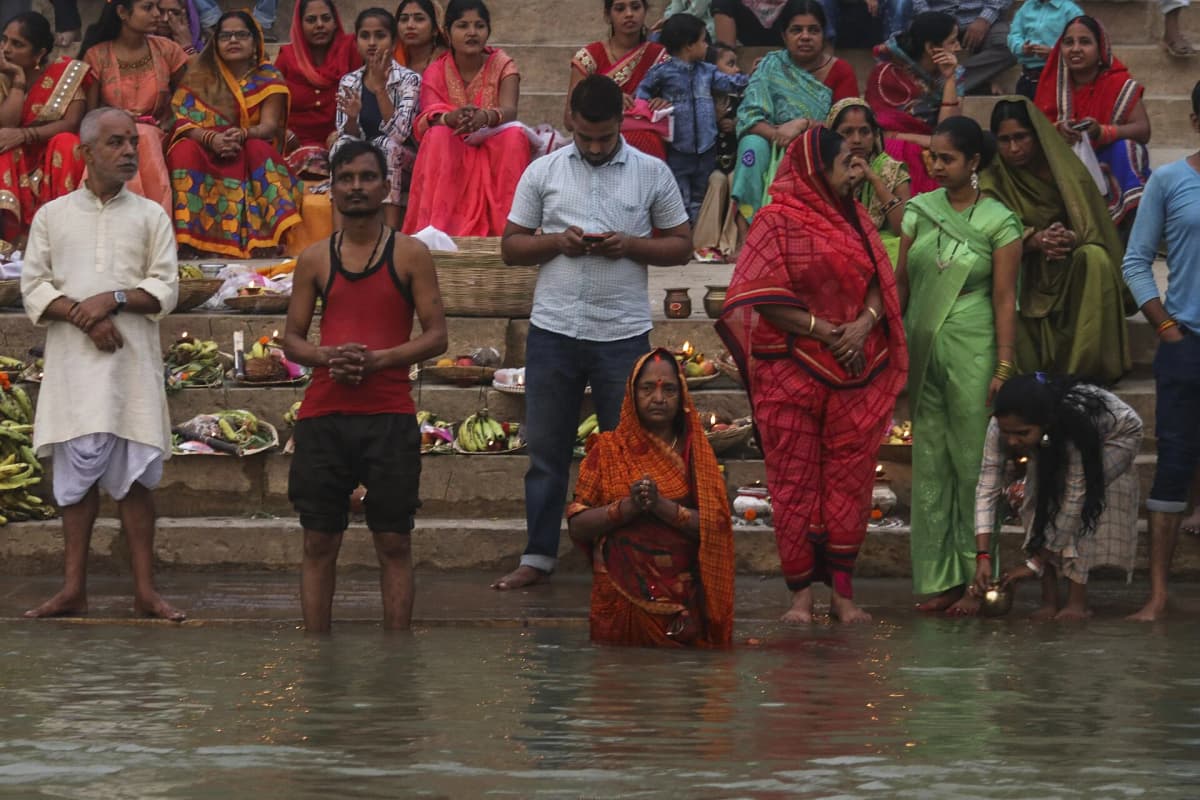
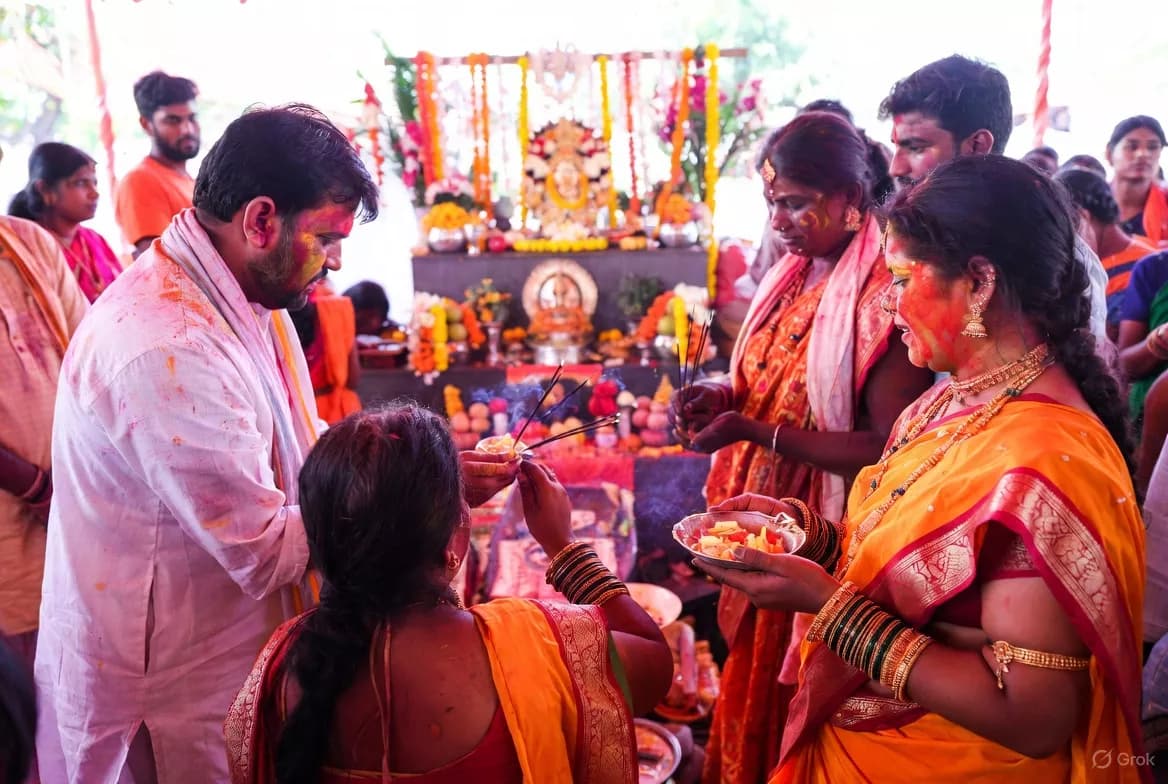
On the morning after Holika Dahan, the joyous Rangwali Holi begins. People come out into streets, courtyards, and open spaces to play with natural colors, gulal, and water. This tradition traces back to Lord Krishna playfully applying color on Radha and the gopis of Vrindavan.
Traditionally, natural colors made from flowers like marigold, palash (flame of the forest), turmeric, sandalwood, and neem are used. These carry medicinal properties and are gentle on the skin, unlike synthetic chemical colors.
Auspicious Colors and Their Spiritual Meanings
Ritual 4: Applying Gulal — A Gesture of Love
One of the most touching Holi rituals is the act of applying gulal (dry colored powder) to the feet of elders and on the faces of loved ones. This gesture is not just celebratory — it is an expression of love, respect, and the seeking of blessings.
Begin Holi by applying gulal to the feet of your parents, grandparents, and teachers. Then visit your neighbors and friends to apply it on their foreheads. This tradition strengthens family bonds and spreads joy throughout the community.
Ritual 5: Preparing and Offering Prasad
No Holi celebration is complete without preparing and sharing traditional Prasad (sacred food offerings). These foods are first offered to God and then distributed among family and guests as divine blessings.
Traditional Holi Prasad Items
- Gujiya — Deep-fried sweet dumplings filled with khoya (reduced milk) and dry fruits — the iconic Holi sweet. Offered to Lord Krishna and Lord Vishnu first.
- Thandai — A cold milk-based drink made with almonds, fennel seeds, rose petals, and spices. A Holi staple from the Braj region.
- Puranpoli — A sweet flatbread stuffed with jaggery and chana dal, popular in Maharashtra during Holi.
- Malpua — Sweet fried pancakes dipped in sugar syrup, offered as bhog to deities in Bengal and Odisha during Holi.
Ritual 6: Holi Mantras and Prayers
Reciting sacred Holi mantras and prayers on this day magnifies the spiritual energy of your celebration. These mantras invoke blessings from Lord Vishnu, Lord Krishna, and the divine forces that protect us from evil.
Lord Vishnu Mantra for Holi
ॐ नमो भगवते वासुदेवाय नमः।
"Om, I bow to Lord Vasudeva (Vishnu), the Divine Pervading the Universe."
Lord Krishna Mantra for Holi (Hare Krishna Maha Mantra)
हरे कृष्ण हरे कृष्ण, कृष्ण कृष्ण हरे हरे।
हरे राम हरे राम, राम राम हरे हरे॥
The most powerful mantra for joy, love, and divine connection on Holi.
Important Tips for Celebrating Holi the Sacred Way
- Use Natural Colors Only — Avoid synthetic chemical colors that can harm the skin and eyes. Prepare natural colors from turmeric, flowers, and herbs to stay true to Holi's ancient, eco-friendly roots.
- Fast or Pray in the Morning — Begin Holi day with a morning bath, prayer, and if possible, a short fast or visit to the temple before playing with colors. This sets a sacred intention for the day.
- Seek Blessings Before Anything Else — Apply gulal on your elders' feet and seek their blessings before joining in the celebrations. This ancient custom keeps the spiritual heart of Holi alive.
- Be Mindful with Water — Use water sparingly and thoughtfully. Many regions face water scarcity, so celebrating a dry Holi or using minimal water honors both nature and community.
Frequently Asked Questions About Holi Rituals
What are the most important rituals performed on Holi?
The six most essential Holi rituals are Holika Dahan (sacred bonfire), Holika Puja (fire worship), Rangwali Holi (playing with colors), applying gulal on elders and loved ones, offering and sharing Prasad (gujiya, thandai), and reciting Holi mantras to Lord Vishnu and Krishna.
When is Holika Dahan performed in 2026?
In 2026, Holika Dahan will be performed on the evening of March 3, 2026 (Tuesday), during the Pradosh Kaal after sunset (auspicious muhurta typically 6:22 PM to 8:50 PM, subject to local Panchang and considerations like lunar eclipse impacts in some regions). The main Rangwali Holi is celebrated on March 4, 2026 (Wednesday). Always consult your local Hindu calendar (Panchang) for the exact auspicious timing in your region, as dates may vary slightly due to astronomical events.
What is the significance of Holika Dahan?
Holika Dahan commemorates the burning of the demoness Holika and the miraculous survival of the devoted Prahlada, who was protected by Lord Vishnu. The ritual symbolizes the burning away of sin, ego, and evil forces while invoking divine protection for the family.
Why should we use natural colors for Holi?
Natural colors made from turmeric, neem, rose, and palash flowers have medicinal and skin-nourishing properties. They are environmentally friendly and align with Holi's ancient agricultural roots. Synthetic chemical colors can cause skin irritation, eye damage, and environmental harm.
Can we perform Holika Dahan at home?
Yes, a smaller version of Holika Dahan can be performed at home using a clay pot or in a safe, open area. Light a small fire using cow dung cakes and wooden sticks, perform puja around it, and complete the Parikrama. Always follow fire safety precautions and ensure children are supervised.
Celebrate Holi with Full Devotion
May the colors of Holi fill your life with joy, your heart with love, and your home with divine blessings. This Holi, go beyond the colors — embrace the rituals, honor the traditions, and feel the spiritual depth of this beautiful festival.
Visit HinduTone.com for more festival guides, puja vidhi, mantras, and Hindu traditions.
Tags: Holi Rituals · Holika Dahan · Holi Puja Vidhi · Holi 2026 · Hindu Festivals · Holi Traditions · Rangwali Holi · Holi Mantras · Festival of Colors
© 2026 HinduTone.com — Your guide to Hindu festivals, rituals, and traditions.
You might also like
Shani Deva Temples Worldwide & Must-Performed Rituals — Complete Devotee's Guide
Hindu Festival Calendar 2026 — Complete Guide for NRIs (Dates, Tithis, Puja)
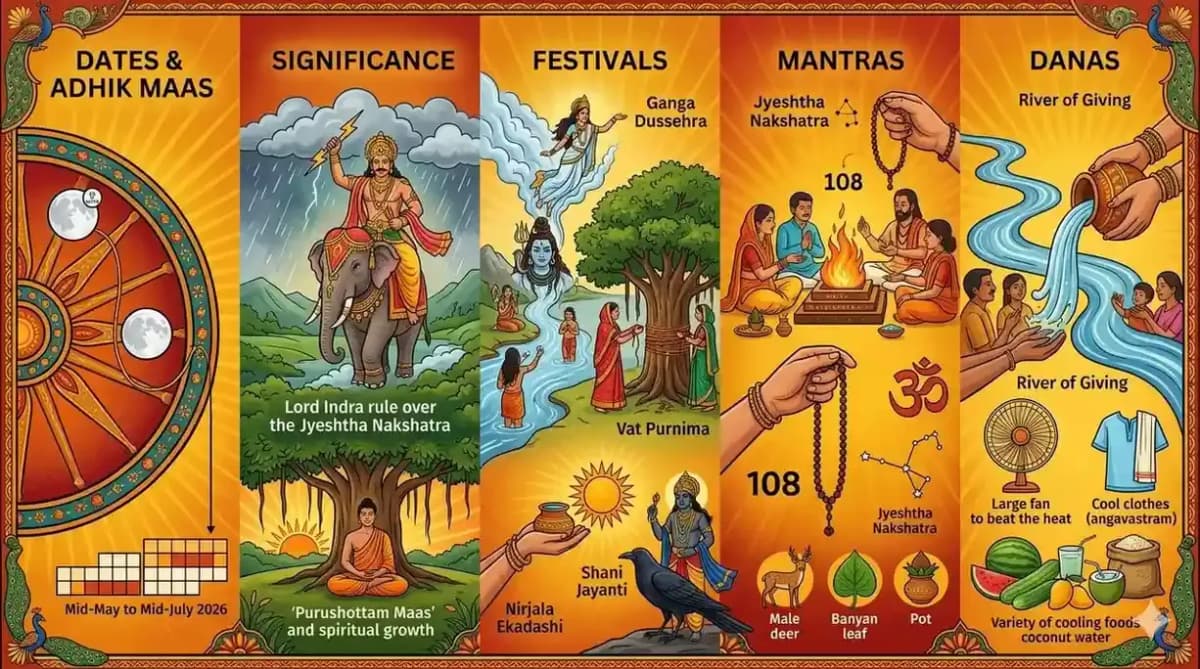
June 2026 Hindu Festival Calendar — Complete Dates, Vrat & Puja Guide for NRIs