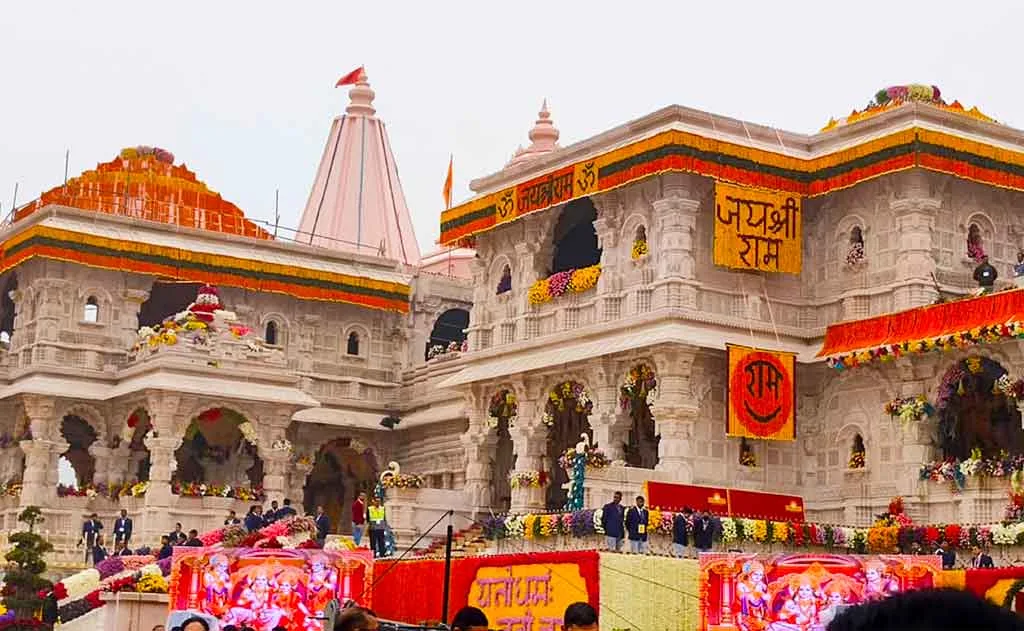
How to Perform Lord Sri Rama Puja at Home – Step-by-Step Puja Vidhi & Guide
Performing Lord Sri Rama Puja at home is a beautiful and powerful way to invite the divine presence of Maryada Purushottam Shri Ramachandra, along with Mata…
Performing Lord Sri Rama Puja at home is a beautiful and powerful way to invite the divine presence of Maryada Purushottam Shri Ramachandra, along with Mata…
Performing Lord Sri Rama Puja at home is a beautiful and powerful way to invite the divine presence of Maryada Purushottam Shri Ramachandra, along with Mata Sita, Lakshmana, and Hanumanji, into your life. It brings peace, protection, dharma, and blessings to the entire family. Whether you are doing a simple daily puja or a special Ram Navami puja, the most important element is pure devotion (bhakti) and sincerity.
Below is a complete, easy-to-follow step-by-step guide suitable for beginners as well as regular devotees. You can perform this daily or on auspicious days like Ram Navami, Ekadashi, or any Thursday.
1. Preparation Before Puja (Important for Purity)
- Clean the space: Thoroughly clean your home, especially the puja area. Wipe the altar with a clean cloth. Sprinkle Gangajal (holy water) or water mixed with a little salt and turmeric to purify the environment. Draw a simple rangoli or kolam at the entrance of the puja space if possible.
- Personal purification: Take a bath early in the morning. Wear clean, preferably traditional or light-coloured clothes (avoid black). Women may wear a saree or salwar kameez; men may wear dhoti-kurta or simple clean clothes.
- Best time (Muhurat):
- Daily puja: Morning after sunrise or evening before sunset.
- Special days like Ram Navami: Madhyahna Muhurat (around noon) is ideal. For 2026, check the exact tithi locally.
- Mindset: Keep a calm and positive mind. Chant “Jai Shri Ram” mentally while preparing.
2. Essential Items (Puja Samagri) for Sri Rama Puja
Collect these items in advance:
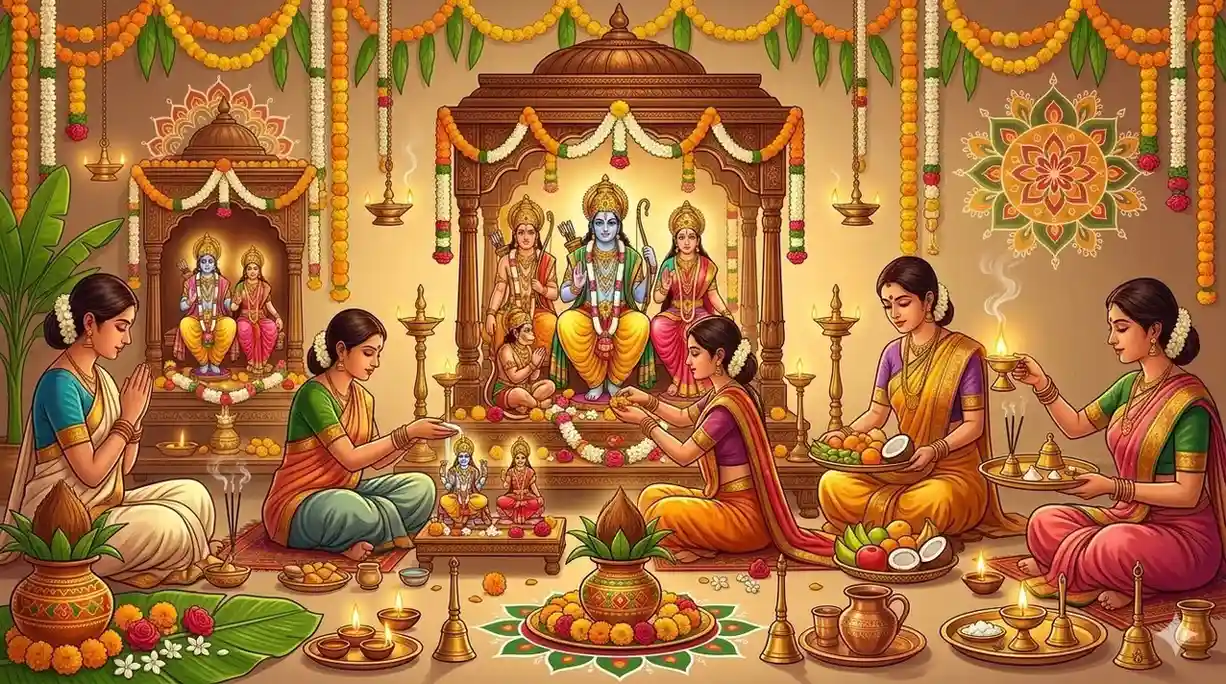
- Idol or Picture: A murti or framed photo of Ram Darbar (Lord Rama with Sita, Lakshmana, and Hanuman). Place Rama in the centre, Sita to His left, Lakshmana to His right, and Hanumanji at His feet.
- Altar setup: A small chowki (wooden platform) covered with a clean red or yellow cloth.
- Kalash: A copper or brass pot filled with water, topped with mango leaves and a coconut (for auspiciousness).
- Diya (Lamp): Ghee or oil lamp with cotton wick (preferably two diyas – one for Rama and one for aarti).
- Incense (Agarbatti/Dhoop) and dhoop holder.
- Flowers: Fresh flowers (especially marigold, jasmine, or lotus) and Tulsi leaves (very important for Rama).
- Offerings: Fruits (banana, apple, mango), sweets (kheer, panjiri, peda, or any homemade), coconut, betel leaves & nuts.
- Panchamrit: Mixture of milk, curd, ghee, honey, and sugar.
- Other items: Sandalwood paste (chandan), kumkum, haldi (turmeric), akshata (unbroken rice grains mixed with turmeric), Gangajal, camphor (kapur) for aarti, bell (ghanti), aarti plate/thali, and a small spoon or achamani vessel for water.
- Optional but recommended: Ram Raksha Stotra book, Ramcharitmanas or small Ramayana, rudraksha or tulsi mala for japa.
3. Step-by-Step Sri Rama Puja Vidhi at Home
Step 1: Sankalp (Taking a Resolve) Sit facing east or north in front of the altar. Take a little water in your right palm (or use a spoon). Chant the sankalp mantra while thinking of your wish (e.g., for family well-being, protection, or just pure devotion):
“Om Vishnu Vishnu Vishnu… Shri Ramachandra Parameshwara Preetyartham, Ram Puja Karishye…” (I am performing this Sri Rama Puja for the pleasure of Lord Rama.)
Sprinkle the water on the ground or offer it symbolically.
Step 2: Achaman (Internal Purification) Take three sips of water from the right palm while chanting:
- Om Keshavaya Namah (first sip)
- Om Narayanaya Namah (second sip)
- Om Madhavaya Namah (third sip)
Wipe your hands and mouth.
Step 3: Guru and Ganesha Invocation Light the main diya and incense. Invoke Lord Ganesha first (remover of obstacles): Offer a flower and chant: “Om Gan Ganapataye Namah” or “Om Shri Ganeshaya Namah” (3 or 11 times).
Then remember your Guru or Ishta Devata with folded hands.
Step 4: Kalash Sthapana (Optional but Auspicious) Place the kalash on the altar. Put mango leaves and coconut on top. Sprinkle some water and chant “Om Varunaya Namah”.
Step 5: Avahana (Inviting Lord Rama) Look at the murti/picture with devotion and invite the Lord: “Om Shri Ramachandraya Namah, Avahayami” (I invite You, Lord Rama). Offer a flower or akshata.
Step 6: Shodashopachara Puja (16-Step Worship) – Simplified Version Offer each item with devotion while chanting “Om Shri Ramachandraya Namah” or “Jai Shri Ram”:
- Asana — Offer a seat (symbolically sprinkle water or akshata).
- Padya — Offer water to wash feet.
- Arghya — Offer water to wash hands.
- Achamaniya — Offer water for sipping.
- Snana — Offer water for bath (or sprinkle Gangajal).
- Vastra — Offer a small piece of cloth or akshata symbolically.
- Chandan — Apply sandalwood paste.
- Pushpa — Offer fresh flowers and Tulsi leaves (offer many Tulsi leaves to Rama).
- Dhoop — Offer incense (wave 3 times).
- Deep — Offer the lighted ghee lamp (wave clockwise).
- Naivedya — Offer fruits, sweets, and panchamrit. Cover with a cloth and sprinkle water.
- Tamboola — Offer betel leaf and nut.
- Dakshina — Offer a coin or fruit as symbolic offering.
- Aarti — Perform aarti with camphor or diya while ringing the bell.
- Pradakshina — Circumambulate the altar 3 or 7 times.
- Namaskara — Do full prostration (sashtanga namaskar) or simple namaste.
Step 7: Mantra Japa and Stotra Recitation Chant any of these with a mala (108 times or as many as possible):
- Moola Mantra: Om Shri Ramaya Namah
- Taraka Mantra (most powerful): Shri Rama Jai Rama Jai Jai Rama
- Rama Gayatri: Om Dasharathaya Vidmahe, Sitavallabhaya Dhimahi, Tanno Rama Prachodayat
- Recite Ram Raksha Stotra (highly recommended for protection).
- Read a few verses from Ramcharitmanas (especially Bal Kand for birth story) or simply chant “Jai Shri Ram” continuously.
Step 8: Aarti Perform the Rama Aarti with love. A popular one begins with: “Om Jai Raghuveera, Swami Jai Raghuveera…” or the traditional “Shri Ram Jai Ram Jai Jai Ram…” Wave the aarti plate clockwise 7 times while singing or playing a recorded aarti. Ring the bell loudly.
Step 9: Offer Bhog and Prasadam Offer the naivedya to the Lord. After a few minutes, sprinkle water on it and distribute prasadam to family members. Also offer panakam (jaggery water with tulsi), neer mor (buttermilk), or fruits on special days.
Step 10: Visarjana and Prayer Thank the Lord: “Om Shri Ramachandraya Namah, Anujnaatum” (Please give permission to conclude). Pray sincerely for your wishes, family protection, and strength to follow dharma like Lord Rama.
End with: “Sarve Bhavantu Sukhinah…” (May all beings be happy) and “Jai Shri Ram! Jai Siya Ram! Jai Hanuman!”
Special Tips for Daily vs. Special Puja
- Daily simple puja (10–15 minutes): Light diya + incense, offer flower + Tulsi, chant “Shri Rama Jai Rama Jai Jai Rama” 108 times, do quick aarti, and distribute prasadam.
- On Ram Navami or festivals: Do the full version with kalash, more offerings, and longer stotra recitation. Decorate the altar beautifully with lights and flowers.
- For beginners: Start with the simple version and gradually add more steps as devotion grows.
Important Do’s and Don’ts
- Always offer Tulsi leaves to Lord Rama (never offer to Shiva).
- Maintain cleanliness and avoid non-vegetarian food or onion/garlic on puja days.
- Women during menstruation may participate in chanting and aarti but avoid direct touching of deities (follow family tradition).
- Perform puja with a smiling, peaceful face and full faith.
May Lord Sri Rama, Mata Sita, Lakshmanaji, and Hanumanji bless your home with happiness, health, prosperity, and unwavering dharma.
Jai Shri Ram! Jai Siya Ram!
If you are performing this for the first time, begin with a pure heart — even a simple lamp and sincere “Jai Shri Ram” is enough to please the Lord. Feel free to adapt according to your time and tradition while keeping the devotion intact.
HinduTone wishes you a blessed and divine puja experience. Share your experiences or ask for specific mantras if needed.
Jai Shri Ram! [image: 🙏]
Frequently Asked Questions
What items are needed for Sri Rama Puja at home?
Key items are a Ram Darbar murti or picture, a chowki with red or yellow cloth, a kalash with mango leaves and coconut, ghee diyas, incense, flowers and Tulsi leaves, fruits and sweets, panchamrit, chandan, kumkum, akshata and camphor for aarti.
When is the best time to perform Rama Puja at home?
For daily puja, perform it in the morning after sunrise or in the evening before sunset. On Ram Navami, Madhyahna Muhurat (around noon) is ideal, and the exact tithi should be checked locally.
Which mantras can be chanted during Sri Rama Puja?
Common choices are the Moola Mantra (Om Shri Ramaya Namah), the Taraka Mantra (Shri Rama Jai Rama Jai Jai Rama) and the Rama Gayatri, chanted with a mala 108 times or as many as possible. Reciting the Ram Raksha Stotra is also highly recommended.
How should the Ram Darbar be arranged on the altar?
Place Rama in the centre, Sita to His left, Lakshmana to His right, and Hanumanji at His feet. Face east or north while sitting for the puja.
Can I do a short Rama Puja every day?
Yes, a simple daily puja takes 10 to 15 minutes: light a diya and incense, offer a flower and Tulsi, chant Shri Rama Jai Rama Jai Jai Rama 108 times, do a quick aarti and distribute prasadam.
Is Tulsi offered to Lord Rama?
Yes, Tulsi leaves are very important in Rama worship and many are offered, though Tulsi is never offered to Shiva. Avoid non-vegetarian food, onion and garlic on puja days.
You might also like

Gita Jayanti 2026 Prasad Recipes — Tulsi-Honoring Sweets, Krishna's Favourites & December 20 Bhog Plate

Shani Deva Temples Worldwide & Must-Performed Rituals — Complete Devotee's Guide
Maha Shivratri 2026 Vrat Recipes — Sabudana Khichdi, Singhada Halwa, Phalahara Foods Complete Fasting Guide