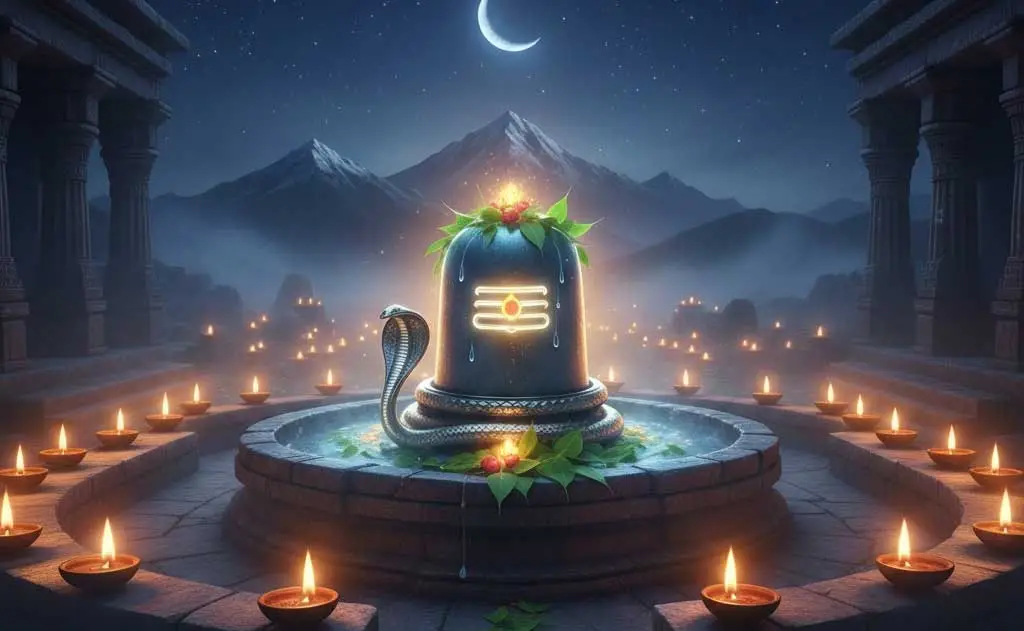
How to Celebrate Nagula Chavithi: Step-by-Step Guide
Nagula Chavithi (also spelled Nagula Chaviti) is a vibrant Hindu festival primarily celebrated in Andhra Pradesh, Telangana, Karnataka, and parts of Tamil…
Nagula Chavithi (also spelled Nagula Chaviti) is a vibrant Hindu festival primarily celebrated in Andhra Pradesh, Telangana, Karnataka, and parts of Tamil…
Nagula Chavithi (also spelled Nagula Chaviti) is a vibrant Hindu festival primarily celebrated in Andhra Pradesh, Telangana, Karnataka, and parts of Tamil Nadu. It falls on the Chaturthi Tithi of Shukla Paksha in the month of Kartik, which is four days after Diwali Amavasya. In 2025, it is observed on October 25 (Saturday). The festival honors Nag Devtas (Serpent Gods), symbolizing protection, fertility, and ecological balance. Snakes are revered as guardians of crops and soil, and the day emphasizes harmony with nature. Married women observe it for the well-being and longevity of their children, while families seek blessings for prosperity and health.
Significance
- Spiritual and Cultural: Worshipping serpents appeases them to ward off "Naga Dosha" (curses from past-life harm to snakes) and invites divine protection. It's linked to deities like Shiva (Naga Bhushana), Vishnu (on Shesha), Kartikeya (Naga Swarupa), and Ganesha (Naga Yajnopaveeta).
- Ecological: Highlights respect for nature, as snakes control pests and maintain soil fertility. Communities avoid harming insects or tilling soil on this day.
- Family Bonding: Promotes unity through communal rituals, fasting, and sharing prasad, fostering gratitude and environmental awareness.
How to Celebrate Nagula Chavithi: Step-by-Step Guide
Celebrations blend devotion, fasting, and feasting. The puja is ideally performed during the auspicious Muhurat (exact timings vary by location; check a local panchang). For 2025 in major cities like Hyderabad or Bengaluru, the Abhijit Muhurat is around 11:45 AM to 12:30 PM, and the overall Chaturthi Tithi spans from October 25 morning to October 26 early hours—confirm locally for precision.
1. Preparation (Early Morning)
- Wake up during Brahma Muhurat (pre-dawn) and take a purifying bath.
- Clean the puja area at home or prepare to visit a temple/anthill (snake pit).
- Married women observe a strict fast (fruits, milk, or water only) from sunrise until puja; others may fast partially.
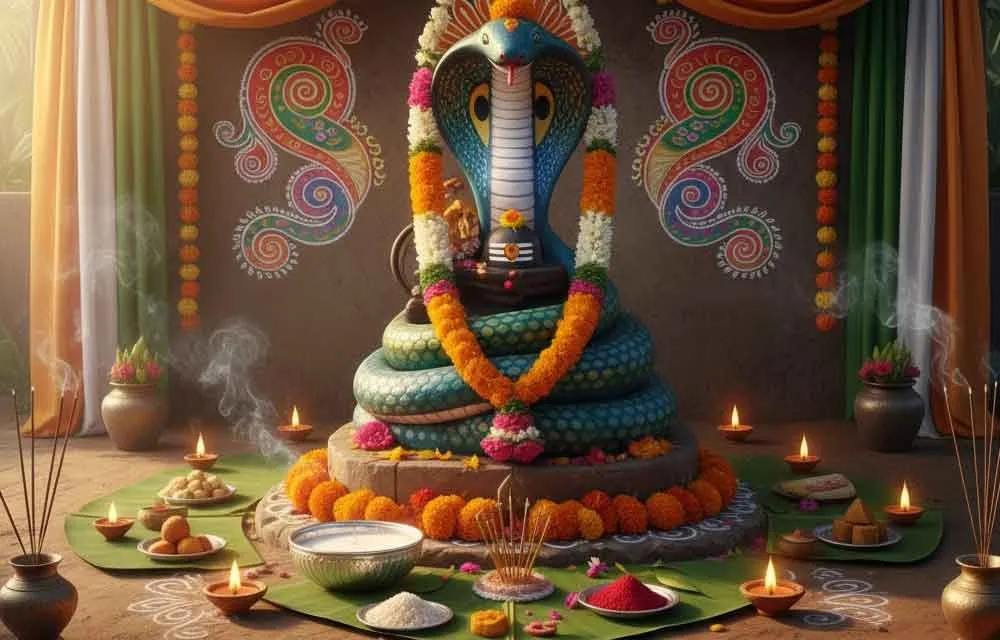
- Gather items: Idols or pictures of Nag Devta (eight-hooded cobra or Ashtanaga), milk, turmeric, kumkum, flowers (especially bilva leaves), incense, lamps (diyas), bananas, eggs (optional, for traditional offerings), dry fruits, chalimidi (sweet rice flour), tamarind rice, and a banana leaf for neivedyam.
2. Puja Rituals (Morning/Auspicious Muhurat)
- Setup: Draw a rangoli at the entrance. Place a Nag Devta idol or silver cobra image on a clean altar facing east. If possible, go to a nearby anthill or temple for authenticity.
- Sankalpa and Invocation: Chant the Sankalpa (vow) to dedicate the puja for family welfare. Invoke Nag Devtas with mantras like:
- "Om Nagrajaya Vidmahe Padma Hastaya Dhimahi Tanno Ananta Prachodayat" (for Ananta Naga).
- Or the simple Nagula Chavithi mantra: "Naga Devata Namah" while offering prayers.
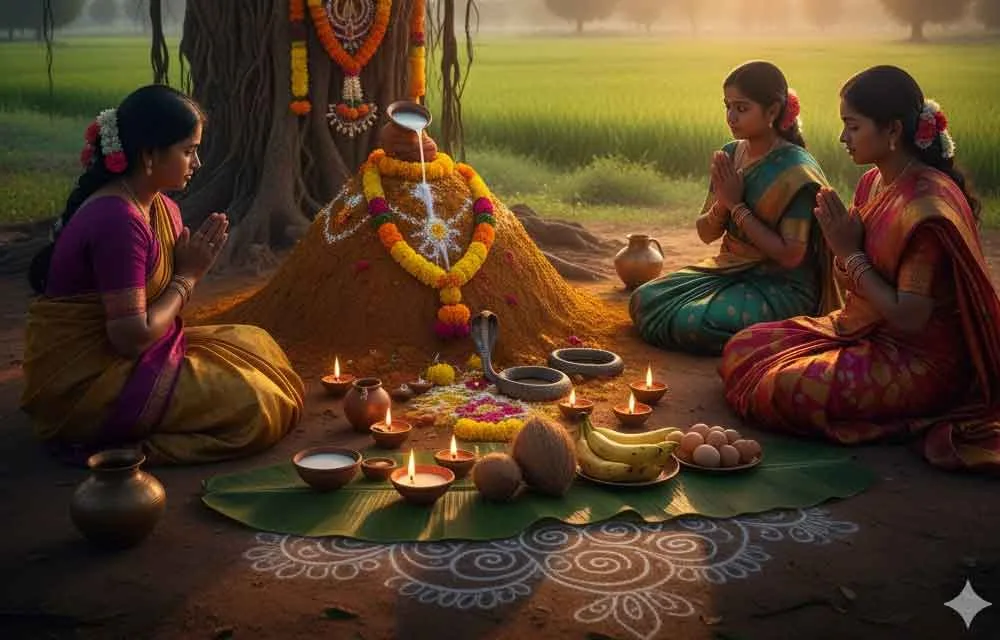
- Abhishekam (Bathing Ritual): Pour milk over the idol or anthill to symbolize appeasement. Add turmeric water, honey, and curd. Sprinkle flowers and apply kumkum/tilak.
- Offerings (Naivedyam): Present bananas, chalimidi, guggillu (jaggery balls), pachadi (yogurt-based dish), and dry fruits. In rural areas, pour milk directly into snake pits. Avoid harming any creatures.
- Aarti and Chanting: Light diyas, perform aarti with camphor, and recite the Nagula Chavithi Vrat Katha (story of a devotee saved by Nag Devta from a curse—available in Telugu/Tamil books or online). Chant the Ashtottara Shatanamavali (108 names of Nag Devta).
- Communal Aspect: In villages, gather with neighbors near temples or anthills for group puja. Share stories and songs praising serpents.
3. Breaking the Fast and Feasting
- After puja, break the fast with prasad: Tamarind rice (pulihora), chalimidi, and seasonal fruits. Prepare a special meal with rice, curries, and sweets like sesame laddus.
- Share food with family, neighbors, and the needy. Mothers gift married daughters new clothes, bangles, dry coconuts, and laddus. Elder sisters exchange gifts with younger ones.
4. Evening and Post-Puja Activities
- Perform evening aarti and meditate on nature's balance.
- In some traditions, place a small Nag Devta idol on a plant/tree and "send it off" into nature as a symbolic release.
- Avoid non-veg food, arguments, or fieldwork. End the day with family discussions on environmental conservation.
Additional Tips
- At Home vs. Temple: Urban families use printed idols; rural ones prefer live anthills (safely, without snake charmers—modern celebrations avoid animal harm due to ethical concerns).
- Modern Twists: Eco-friendly versions use plant-based offerings. Online pujas are available for those unable to visit sites.
- Benefits: Devotees believe it brings child health, marital harmony, prosperity, and protection from misfortunes.
Nagula Chavithi reminds us that true celebration lies in reverence for all life. Wishing you a blessed Nagula Chavithi—may Nag Devtas shower protection on your family!
Frequently Asked Questions
When is How to Celebrate Nagula Chavithi?
How to Celebrate Nagula Chavithi is observed on its traditional tithi in the Hindu lunar calendar; refer to the year's panchang for the exact date in your region.
What is the significance of How to Celebrate Nagula Chavithi?
Nagula Chavithi (also spelled Nagula Chaviti) is a vibrant Hindu festival primarily celebrated in Andhra Pradesh, Telangana, Karnataka, and parts of Tamil Nadu. It falls on the Chaturthi Tithi of Shukla Paksha in the month of Kartik, which is four days after Diwali Amavasya.
How is How to Celebrate Nagula Chavithi celebrated?
Devotees observe it with puja, fasting or special offerings, visiting temples, chanting mantras, and gathering with family. Customs vary by region and tradition.
What should devotees do on How to Celebrate Nagula Chavithi?
Take a sacred bath, perform the day's puja and charity (dana), observe any prescribed fast, and chant mantras with sincere devotion.
You might also like
Nagula Chavithi: Scientific and Cultural Significance

Gita Jayanti 2026 Prasad Recipes — Tulsi-Honoring Sweets, Krishna's Favourites & December 20 Bhog Plate
Shani Deva Temples Worldwide & Must-Performed Rituals — Complete Devotee's Guide