

Karthika Brahmotsavams 2025 Kick Off with Grandeur at Tiruchanur Sri Padmavati Temple
The annual Karthika Brahmotsavams at the revered Sri Padmavati Ammavari Temple in Tiruchanur (near Tirupati) has commenced with great fervor, drawing thousands…
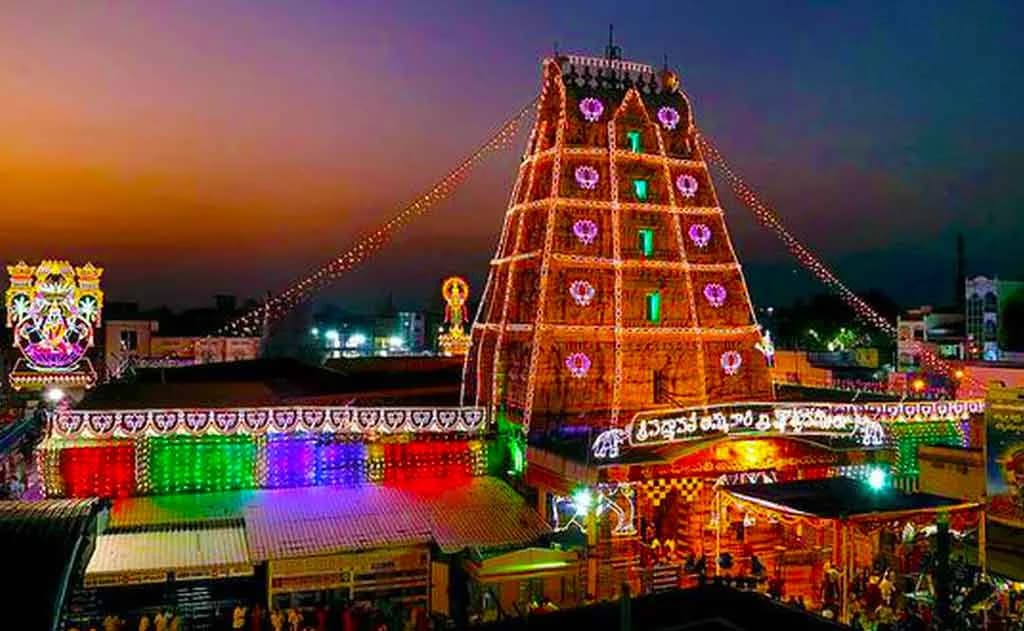
The annual Karthika Brahmotsavams at the revered Sri Padmavati Ammavari Temple in Tiruchanur (near Tirupati) has commenced with great fervor, drawing thousands…
The annual Karthika Brahmotsavams at the revered Sri Padmavati Ammavari Temple in Tiruchanur (near Tirupati) has commenced with great fervor, drawing thousands of devotees to honor Goddess Padmavati, the divine consort of Lord Venkateswara. As the second most popular temple under tirumala/" class="auto-interlink" data-interlink="1">Tirumala Tirupati Devasthanams (TTD) after Tirumala, this nine-day festival (November 17 to 25, 2025) promises a blend of ancient rituals, vibrant processions, and enhanced devotee amenities.
Festival Highlights and Schedule:
The festivities began on November 17, 2025 (Monday) with the auspicious Dhwajarohanam ceremony, where priests hoisted the sacred flag 'Dhwajapatam' – emblazoned with the imprint of an elephant, the goddess's celestial vehicle – atop the temple flagpost. This was followed by the Tiruchi Utsavam, parading the idol of Goddess Padmavati around the temple in the evening on the Chinna Sesha Vahanam (five-hooded serpent carrier).
Key events unfolding daily include:
- November 18 (Tuesday): Pedda Sesha Vahanam and Hamsa Vahanam (swan carrier).
- November 19 (Wednesday): Mutya Pu Pandiri Vahanam and Simha Vahanam (lion carrier).
- November 20 (Thursday): Special visit by President Droupadi Murmu for prayers; Kalpavruksha Vahanam.
- November 21 (Friday): Sarvabhoopala Vahanam.
- November 22 (Saturday): Mohini Avatara Vahanam and Chandraprabha Vahanam.
- November 23 (Sunday): Suryaprabha Vahanam.
- November 24 (Monday): Rathotsavam (chariot festival) and Aswa Vahanam (horse carrier).
- November 25 (Tuesday): Grand finale with Panchami Theertham (holy bath in the temple tank) and Dhwajavarohanam (flag lowering).
All processions occur around the four mada streets, with live telecasts on Sri Venkateswara Bhakti (SVBC) Channel for global viewers.
Devotee-Centric Arrangements:
Anticipating massive crowds (over 2 lakh expected for the finale), TTD has ramped up facilities:
- Annadanam (Free Meals): 10,000 devotees served daily at the temple's expanded dining halls.
- Floral Exhibition: Inaugurated by TTD EO Anil Kumar Singhal at Friday Garden, featuring mythological floral displays.
- Traffic & Crowd Management: Diversions at Navajeevan and Pudi Road junctions; ZP High School repurposed for overflow. Roadworks on Tirupati-Tiruchanur route may cause delays – check TTD app for updates.
- VVIP Protocol: Seamless for President Murmu's visit on Nov 20, without disrupting common pilgrims.
TTD EO Singhal emphasized, "Our focus is on ensuring every devotee experiences the divine grace comfortably."
Quick Tips for Visitors:
- Timings: Morning rituals from 5 AM; evening processions 6-8:30 PM.
- Bookings: Free darshan; book accommodation via TTD website.
- Poojas: Laksha Kumkumarchana prelude on Nov 16; Pushpayagam on Nov 26.
- Travel: Buses from Tirupati Railway Station; avoid peak hours.
This festival not only celebrates Goddess Padmavati's benevolence but also underscores TTD's commitment to spiritual inclusivity. For live updates, visit tirumala.org or tune into SVBC.
Om Sri Padmavathi Thayar Namaha!
Who Is Goddess Padmavati and Why Is She Worshipped at Tiruchanur?
Goddess Padmavati, also known as Alamelu Manga, is venerated as a form of Mahalakshmi, the goddess of prosperity and auspiciousness. Her identity is rooted in the Bhavishyottara Purana and the Skanda Purana, both of which describe her birth from a lotus flower discovered by King Akasharaja of the Tondamandalam region. The name 'Padmavati' literally means 'She who dwells in the lotus' — Padma (lotus) + vati (one who abides in), reflecting her Lakshmi-svabhava, or essential nature as abundance embodied.
The Tiruchanur shrine, formally called Sri Padmavati Ammavari Devasthanam, sits approximately five kilometres south of Tirupati and is considered inseparable from the Tirumala Venkateswara tradition. Theological texts within the Vaikhanasa Agama — the priestly code followed by both Tirumala and Tiruchanur temples — describe Padmavati as Vishnu's nitya-kalyana-patni, the eternal auspicious consort, whose darshan must precede or accompany the pilgrimage to Lord Venkateswara. This is why countless devotees visit Tiruchanur before ascending Tirumala Hill.
What Is the Significance of Brahmotsavam and the Dhwajarohanam Ritual?
Brahmotsavam — literally 'the festival presided over by Brahma' — is the grandest cycle of temple celebration prescribed in the Agama Shastras. The Pancharatra and Vaikhanasa Agamas specify that Brahmotsavam must span a minimum of nine days, with each day's vahanam (processional vehicle) carrying a specific theological meaning that narrates episodes from the Puranas. The festival is considered a period during which the deity's presence is especially accessible, showering collective blessings on all who witness the processions.
The opening ritual, Dhwajarohanam, carries profound symbolism. Hoisting the Dhwajapatam — the consecrated flag bearing the elephant motif, since Gajendra (the divine elephant) is an emblem of Padmavati's grace and Lord Vishnu's swift rescue in the Gajendra Moksha episode from the Srimad Bhagavatam — formally invites the divine presence to remain with the devotees for the entire nine days. The flagpole itself, called the Dhwaja Stambha, is treated as a form of Garuda, the vahana of Vishnu, and is ritually purified before hoisting. The lowering of the flag on the final day, Dhwajavarohanam, ceremonially marks the deity's return to the inner sanctum.
What Does Each Vahanam Procession Symbolise During the Nine Days?
Each processional vehicle used during the Brahmotsavam is not merely decorative but embeds a layer of Puranic teaching. The Chinna Sesha Vahanam (five-hooded serpent) on Day One represents Adishesha, the cosmic couch of Vishnu, signalling the goddess's inseparable connection to the Vaikuntha realm. The Pedda Sesha Vahanam on Day Two evokes the seven-hooded Ananta Shesha of Patala Loka, while the Hamsa Vahanam (swan carrier) symbolises Saraswati's realm of wisdom being blessed by the goddess — a reminder that Lakshmi, Saraswati, and Parvati are ultimately one Shakti expressed in different modes.
The Simha Vahanam (lion carrier) recalls the Narasimha Avatara and Devi's aspect as Narasimhi, one of the Saptamatrikas. The Kalpavruksha Vahanam on Panchami (Day Four) references the wish-fulfilling tree of Svarga, pointing to Padmavati's role as the granter of all desires — echoing the Lakshmi Ashtottara Shatanama Stotra's verse 'Kalpalatika.' The climactic Rathotsavam on Day Eight, when the deity is taken in a grand chariot through the mada streets, mirrors the ratha processions described in the Agni Purana as the most meritorious event a devotee can witness, believed to confer the fruit of a full Ashvamedha yajna.
How Does Panchami Theertham on the Final Day Carry Spiritual Weight?
The concluding ceremony, Panchami Theertham, involves a ritual bathing of the goddess's processional idol in the temple's sacred tank — an act known as Theertham Snanam or Avabhritha Snanam in Agamic terminology. This mirrors the Avabhritha bath that concludes a Vedic yajna, symbolically purifying both the deity's utsava vigraha (festival idol) and the assembled devotees. Devotees who touch or receive even a few drops of this consecrated water are believed to receive the cumulative merit of the entire nine-day festival.
The Tiruchanur temple tank, called Padma Pushkarini, holds its own sanctity year-round, but during Panchami Theertham it is considered equivalent in potency to the Pushkara Theertham of Tirupati. The Skanda Purana's Venkatesha Mahatmyam chapter alludes to the sacred waters around the Tirumala-Tirupati complex as capable of dissolving accumulated karma. This theological backdrop explains why over two lakh devotees converge on the final day, many travelling from distant districts of Andhra Pradesh and Telangana specifically to witness or participate in this ritual.
What Is the Historical and Architectural Heritage of the Tiruchanur Temple?
The Sri Padmavati Ammavari Temple at Tiruchanur is built in the Dravidian style of temple architecture, featuring a towering rajagopuram (entrance tower) characteristic of South Indian Agamic construction. Epigraphic evidence from the Tirumala Tirupati Devasthanams' own records indicates that the present stone structure received significant patronage during the Vijayanagara period (14th–17th centuries CE), when rulers such as Krishnadevaraya endowed many temples across the Andhra-Karnataka corridor. Earlier literary references in the Divya Prabandham of the Alvars — the Tamil Vaishnava poet-saints — identify 'Tiruchanur' as a Divya Desam, one of the 108 sacred Vaishnava pilgrimage sites, known in devotional literature as 'Tirukkurungudi Nambi's southern abode.'
The presiding deity, the swayambhu (self-manifested) idol of Padmavati, is crafted in the Panchaloha (five-metal alloy) tradition for the utsava vigraha, while the moolavar (main deity in the sanctum) is a stone murti adorned with elaborate gold and jewelled coverings during festival seasons. The temple follows the Vaikhanasa Agama exclusively — a Vedic-rooted priestly tradition traced to the sage Vikhanas — which dictates every aspect of daily worship (nityakalyanotsavam), seasonal festivals, and the precise sequence of the Brahmotsavam rituals observed this November.
How Can Devotees Participate Remotely and What Sevas Are Available?
For devotees unable to travel to Tiruchanur in person, TTD's Sri Venkateswara Bhakti Channel (SVBC) broadcasts live coverage of all major vahanam processions and the Panchami Theertham. This continues a tradition of accessible darshan that aligns with the Bhagavata Purana's teaching that even the sight (darshan) of a deity in procession — whether direct or through a reliable medium — generates spiritual merit. Devotees watching from home are encouraged to observe a simple vrata: light a deepam (lamp) with sesame oil during each evening broadcast as an act of karthika-masa observance.
TTD also offers a range of participatory sevas (ritual services) at Tiruchanur that devotees can book through the official TTD portal. Notable among these during Brahmotsavam are the Suprabhatam Seva (morning invocation), Arjitha Brahmotsavam (sponsored vahanam for a chosen day), and Sahasra Deepalankara Seva (illumination of a thousand lamps). Sponsoring an Arjitha Brahmotsavam vahanam is considered especially auspicious, as it places the sponsoring family's name in direct association with the processional worship of the goddess — a practice of temple patronage (devaswam dharma) with roots in medieval South Indian inscriptional tradition.
Frequently Asked Questions
Where is Karthika Brahmotsavams Kick Off with Grandeur at located?
The annual Karthika Brahmotsavams at the revered Sri Padmavati Ammavari Temple in Tiruchanur (near Tirupati ) has commenced with great fervor, drawing thousands of devotees to honor Goddess Padmavati, the divine consort of Lord Venkateswara. As the second most popular temple under Tirumala Tirupati Devasthanams (TTD) after Tirumala, this nine-day festival (N
Who is the presiding deity of Karthika Brahmotsavams Kick Off with Grandeur at?
The temple's presiding deity and its significance are described in the guide above.
What are the timings and how do I reach Karthika Brahmotsavams Kick Off with Grandeur at?
Temples typically open early morning and evening; confirm current darshan timings before visiting. The nearest airport, railway station and road routes are covered in the guide above.
What is the best time to visit Karthika Brahmotsavams Kick Off with Grandeur at?
Major festival days and the cooler months are popular, though weekday mornings offer a calmer darshan. Plan around the temple's key festivals for the most vibrant experience.
You might also like
Shani Deva Temples Worldwide & Must-Performed Rituals — Complete Devotee's Guide
June 2026 Hindu Festival Calendar — Complete Dates, Vrat & Puja Guide for NRIs
The Resolve of a Monk – A Divine Incident Showcasing Kanchi Paramacharya’s Compassion
