

Kartika Purnima 2025: Divine Lights, Spiritual Renewal, and Dev Uthani Vibes – November 15
Namaste, devotees of the moon's sacred glow! As Kartik's waxing luminescence builds toward its zenith, Kartik Purnima (also spelled "Karthi Pournami" in some…
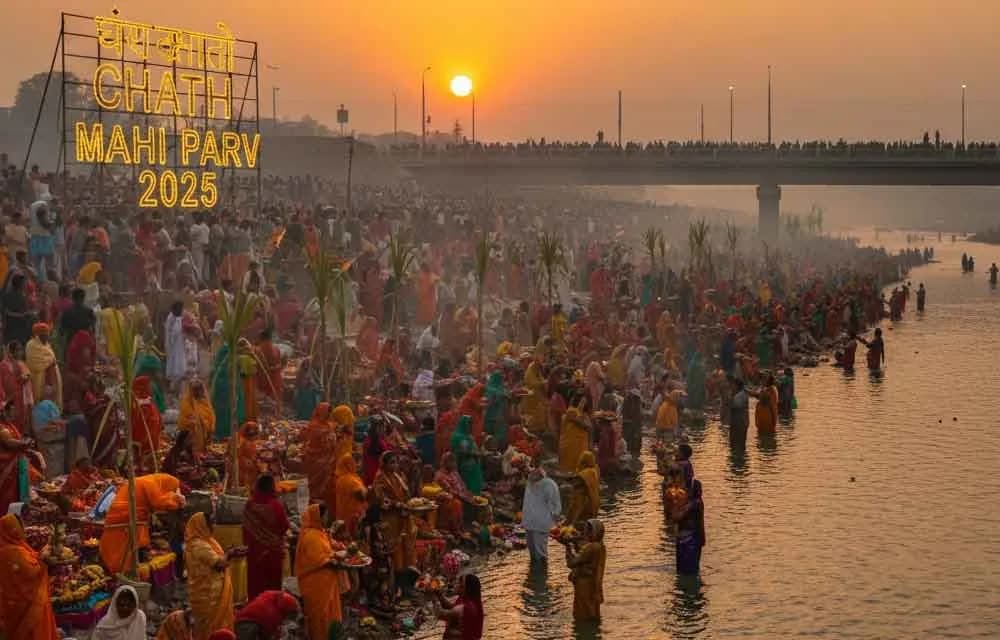
Namaste, devotees of the moon's sacred glow!
Namaste, devotees of the moon's sacred glow! As Kartik's waxing luminescence builds toward its zenith, Kartik Purnima (also spelled "Karthi Pournami" in some regions) emerges as one of Hinduism's most luminous festivals. Falling on Saturday, November 15, 2025—just under two weeks from now (next fortnight, aligning with your query for "next week" vibes)—this full moon day in the Kartik month is a cosmic symphony of light, pilgrimage, and purification. Revered as Dev Deepawali (Festival of Lights for the Gods) and Tripuri Purnima, it marks Lord Shiva's triumph over the demon Tripurasura, while devotees honor Vishnu's eternal flame. In this blog, we'll explore its profound significance, rituals, regional splendor, and how it ties into the ongoing spiritual wave post-Tulsi Vivah. Whether you're planning a Ganga Aarti in Varanasi or a simple home puja, Kartik Purnima invites you to illuminate your soul amid the year's closing celestial grace. 🌕🙏
The Celestial Essence: Why Kartik Purnima Shines Eternal
Kartik Purnima isn't merely a full moon—it's a divine beacon symbolizing the victory of knowledge over ignorance, light over darkness. Occurring on the Purnima Tithi of Shukla Paksha in Kartik (Hindu lunar month), it aligns with Prabodhini Ekadashi's renewal, awakening deities from Chaturmas slumber. Astrologically, the full moon in Taurus (Vrishabha Rashi) on November 15 amplifies Jupiter's benevolence, making it ideal for moksha pursuits, charity, and karmic cleansing.
Core Legends & Spiritual Power:
- Shiva's Triumph: On this day, Lord Shiva destroyed the three cities (Tripura) of demons with a single arrow from his Pinaka bow—earning the title Tripurasura Samhara. Devotees fast and worship Shiva for obstacle removal.
- Vishnu's Deepotsav: As Dev Deepawali, gods celebrate in heaven; on earth, it honors Vishnu's awakening, blending Vaishnava and Shaiva traditions.
- Guru Nanak Jayanti Overlap: Coinciding with the 556th birth anniversary of Sikhism's founder (exact match in 2025), it fosters interfaith harmony—Sikhs light lamps for enlightenment, echoing Hindu diyas.
- Ekadashi Parana Link: The fast from Prabodhini Ekadashi (November 14) breaks on Purnima morning (~6:00 AM–8:00 AM IST), infusing the day with renewed vigor.
In essence, Kartik Purnima radiates auspicious vibes for prosperity, health, and spiritual liberation—a perfect antidote to November's transitional energies.
Key Dates & Panchang Snapshot for Kartik Purnima 2025
While the peak is November 15, preparations span the week prior. Here's the lunar roadmap (timings for Ujjain, IST; adjust locally):
The Scriptural Roots: What the Puranas Say About Kartika Purnima
The sanctity of Kartika Purnima is not a matter of regional custom alone — it is firmly anchored in Vedic and Puranic literature. The Skanda Purana dedicates an entire section, the Kartika Mahatmya, to this month, declaring that bathing in a sacred river on Kartika Purnima is equivalent in spiritual merit to performing one thousand Ashvamedha yajnas. The Padma Purana similarly elevates this Purnima above all others, stating that Vishnu himself descends into every body of water on this day, transforming rivers, lakes, and even household water vessels into tirtha.
The Tripurasura Samhara narrative appears in full detail in the Shiva Purana's Rudra Samhita. The three demon cities — made of gold, silver, and iron, orbiting in the sky — could only be destroyed when all three aligned in a single straight line. Lord Brahma became the chariot, the Himalayas the bow, Vasuki the bowstring, and Vishnu himself the arrow. Shiva released the Pashupatastra at the precise moment of alignment on Kartika Purnima, annihilating the Tripura in a single flash. This event is why the festival is also called Tripuri Purnima, and why lighting diyas in rows of three carries special symbolic weight on this night.
Dev Deepawali in Varanasi: The Ghats That Carry Heaven Down to Earth
Among all celebrations of Kartika Purnima, the Dev Deepawali at Varanasi (Kashi) stands unmatched in scale and theological significance. According to local tradition rooted in the Kashi Khanda of the Skanda Purana, the thirty-three crore devas descend to the banks of the Ganga on this night to bathe and celebrate Shiva's cosmic victory. To welcome them, every one of Varanasi's eighty-four ghats — from Assi Ghat in the south to Rajghat in the north — is lined with hundreds of thousands of earthen diyas (deepams), creating a mirror image of the starlit sky on the water's surface.
The Ganga Aarti performed on this night at Dashashwamedh Ghat is notably more elaborate than the daily aarti, involving priests holding large multi-tiered brass lamps (pancha-aarti deepas) in choreographed unison. Devotees float individual diyas on banana-leaf boats, each carrying a prayer for departed ancestors or a personal sankalpa (vow). The ritual of deep-daan — gifting of light — is considered especially meritorious here because Kashi is held to be Shiva's own city, and any act of devotion performed within its boundaries yields amplified phala (fruit) according to the Kashi Khanda.
Kartika Snanam: The Sacred Bath That Defines the Entire Month
The pre-dawn ritual bath, known as Kartika Snanam or Kartika Brahma Snanam, is considered the cornerstone practice of the entire Kartika month, and it reaches its highest point on Purnima day. Devotees rise before sunrise — ideally during the Brahma Muhurta, approximately ninety minutes before dawn — and bathe in a river, pond, or at minimum pour water drawn from a well while reciting the mantra 'Om Namo Narayanaya.' The Padma Purana specifies that this practice, observed consistently through the month and culminating on Purnima, liberates not only the devotee but also seven preceding generations of their lineage.
In coastal Andhra Pradesh and Tamil Nadu, Kartika Snanam is a deeply communal ritual. Women gather at tanks (pushkarinis) attached to temples such as the Kapaleeshwarar Temple in Mylapore, Chennai, or the Kanaka Durga Temple ghats along the Krishna River in Vijayawada. They carry brass lamps called karthika deepams and place them on the water's edge while singing devotional songs called karthika paatalu in Telugu. The combination of water, light, and collective chanting is understood as a triple purification — of the physical body, the subtle body (suksharira), and accumulated karmic impressions (samskaras).
The Tulsi Connection: How Tulsi Vivah and Kartika Purnima Form One Continuum
Kartika Purnima does not stand alone — it is the culminating point of a devotional arc that begins with Prabodhini Ekadashi (Dev Uthani Ekadashi) four days earlier, on which Vishnu awakens from his Chaturmas sleep and the sacred marriage of Tulsi (Vrinda Devi) to Shaligram (Vishnu) is performed. The Tulsi Vivah ritual signals the reopening of the cosmic auspicious period (shubha kaala) for worldly marriages and new beginnings. Kartika Purnima then seals this arc: by the full moon, the divine household of Vishnu and Tulsi is considered fully established, and the world enters a spiritually protected phase.
Theologically, Tulsi (Ocimum tenuiflorum) is identified in the Devi Bhagavata Purana as the most beloved plant of Vishnu, and her presence in any worship is said to multiply the merit of prayers tenfold. On Kartika Purnima specifically, households decorate the Tulsi plant with sugarcane stalks, marigold garlands, and rows of diyas, performing a final elaborate aarti before the plant. In Vrindavan and Mathura, this Tulsi puja takes on a distinctly Vaishnava character, with Radha-Krishna bhajans performed through the night in the courtyards of temples such as the Banke Bihari Mandir and the ISKCON Chandrodaya Mandir.
Pushkar Mela and the Pan-India Pilgrimage Dimension of Kartika Purnima
The Pushkar Mela in Rajasthan is one of the world's largest camel fairs, but its spiritual core is entirely defined by Kartika Purnima. The sacred lake of Pushkar — the only temple in India dedicated to Lord Brahma, at the Jagatpita Brahma Mandir — is believed to have been created when Brahma dropped a lotus flower (pushpa) to earth while seeking a location for a yajna. Bathing in Pushkar Lake on Kartika Purnima, particularly at the Brahma Ghat and Gau Ghat, is described in the Padma Purana as conferring moksha immediately, without further spiritual effort.
Beyond Pushkar and Varanasi, Kartika Purnima activates a network of pilgrimage centres across the subcontinent. In Odisha, the Boita Bandana ritual takes place, in which devotees float tiny toy boats (boitas) on rivers and ponds to commemorate the ancient Odia maritime traders who sailed to Bali and Southeast Asia — a practice that blends Puranic devotion with living folk memory. In Karnataka, devotees throng the Udupi Sri Krishna Matha for a special deepotsava. In Maharashtra, thousands gather at the Pandharpur Vitthala Temple for the final wari (pilgrimage walk) of the year. Each of these observances, though regionally distinct in expression, shares the same scriptural foundation: that Kartika Purnima is the tirtha-raja, the king of all pilgrimage days.
Practical Sadhana Guide: How to Observe Kartika Purnima at Home on November 15, 2025
For devotees who cannot travel to a major tirtha, the Kartika Mahatmya assures that sincere home observance carries genuine spiritual weight. Begin with the pre-dawn bath (Brahma Muhurta on November 15, 2025 falls approximately between 4:32 AM and 5:20 AM in most of North India — verify local timings). After bathing, light a sesame-oil lamp (til-tel deepa) before the household deity and recite either the Shiva Panchakshara Mantra (Om Namah Shivaya) or the Vishnu Ashtakshara (Om Namo Narayanaya) 108 times, using a tulsi-bead or rudraksha mala.
The act of deep-daan — donating lamps — is emphasized across all Puranic sources as the single most powerful karma of this day. Even lighting eleven earthen diyas along the boundary of one's home and placing one at the nearest waterbody (a river, a lake, or simply a bucket of water with flower petals) fulfills this vidhi. Pair this with anna-daan (donation of food, particularly sesame sweets called til ke laddoo) to a temple, a Brahmin, or a community in need. The Padma Purana specifies that observing a night-long jagran (vigil) with Vishnu or Shiva bhajans on this Purnima night erases the accumulated sins of an entire year, making it one of the most accessible yet potent practices in the Vaishnava and Shaiva devotional calendars alike.
Frequently Asked Questions
When is Kartika Purnima?
Kartika Purnima falls on November 15, 2025.
What is the significance of Kartika Purnima?
Namaste, devotees of the moon's sacred glow! As Kartik's waxing luminescence builds toward its zenith, Kartik Purnima (also spelled "Karthi Pournami" in some regions) emerges as one of Hinduism's most luminous festivals.
How is Kartika Purnima celebrated?
Devotees observe it with puja, fasting or special offerings, visiting temples, chanting mantras, and gathering with family. Customs vary by region and tradition.
What should devotees do on Kartika Purnima?
Take a sacred bath, perform the day's puja and charity (dana), observe any prescribed fast, and chant mantras with sincere devotion.
You might also like
Shani Deva Temples Worldwide & Must-Performed Rituals — Complete Devotee's Guide
June 2026 Hindu Festival Calendar — Complete Dates, Vrat & Puja Guide for NRIs
The Resolve of a Monk – A Divine Incident Showcasing Kanchi Paramacharya’s Compassion
