Karwa Chauth 2026 in Australia & New Zealand: Complete Celebration Guide
Karwa Chauth 2026 is on Thursday 29 October in Australia and New Zealand. How to plan Sargi, the evening puja and moon sighting around a working Thursday, and how to find your exact local moonrise.
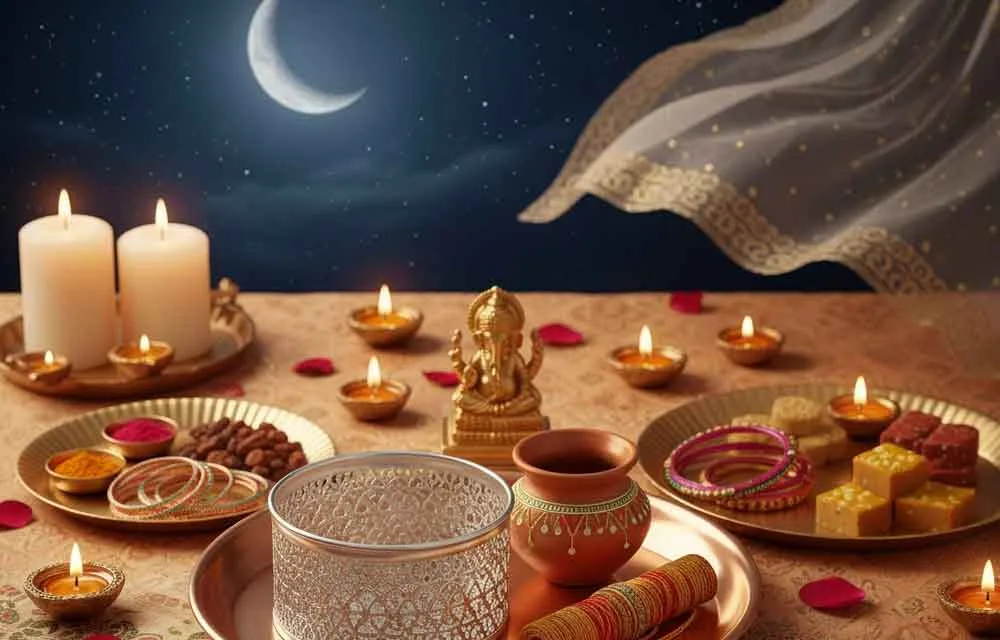
Karwa Chauth 2026 is on Thursday 29 October in Australia and New Zealand. How to plan Sargi, the evening puja and moon sighting around a working Thursday, and how to find your exact local moonrise.
Quick answer: Karwa Chauth 2026 falls on Thursday 29 October 2026 in Australia and New Zealand (the same day as India; it is Wednesday 28 October in the USA and Canada). Women eat Sargi before sunrise, fast through the day and break the fast after sighting the moon in the evening. Moonrise differs city by city, so check a moonrise table for your own city rather than relying on a generic time. Diwali follows on Sunday 8 November.
Karwa Chauth Down Under
Karwa Chauth has found a warm home in Australia and New Zealand. From Sydney and Melbourne to Brisbane, Perth, Auckland and Wellington, Indian families keep the sunrise-to-moonrise fast with the same devotion as relatives back home, while adapting it to a southern-hemisphere spring, a working week and local shops.
This guide covers what is different about observing the vrat here: the date and time-zone picture, planning a fast on a working Thursday, finding your exact moonrise, sourcing puja items, adapting Sargi to local ingredients and connecting with community gatherings.
Because 2026 includes an extra lunar month, Karwa Chauth is roughly three weeks later than last year, sitting just ten days before Diwali. For the full festival sequence see our Karwa Chauth 2026 date and moonrise guide and the October 2026 festival calendar.
The time-zone picture
Australia and New Zealand are among the first places in the world to see each day begin, so you will complete the fast while your family in India is still in the middle of theirs. Daylight saving is in force on 29 October in New South Wales, Victoria, the ACT, Tasmania, South Australia and New Zealand, but not in Queensland, the Northern Territory or Western Australia.
| Region | Time zone on 29 Oct | Ahead of India (IST) |
|---|---|---|
| Sydney, Melbourne, Canberra, Hobart | AEDT (UTC+11) | 5 hrs 30 min |
| Brisbane, Gold Coast | AEST (UTC+10) | 4 hrs 30 min |
| Adelaide | ACDT (UTC+10:30) | 5 hrs |
| Darwin | ACST (UTC+9:30) | 4 hrs |
| Perth | AWST (UTC+8) | 2 hrs 30 min |
| Auckland, Wellington, Christchurch | NZDT (UTC+13) | 7 hrs 30 min |
So when you break your fast in the evening in Sydney or Auckland, it is still early-to-mid afternoon in India and your family there has several hours of fasting left. A video call at your moon sighting is a lovely way to give them encouragement.
Finding your exact moonrise time
Moonrise is the single most important time on Karwa Chauth, and it varies by city, by latitude and by daylight-saving status. Rather than trusting a time copied from another city or another year, look up your own location a few days ahead:
- Use a moonrise table for your city, such as the astronomical data published by Geoscience Australia, or a site such as timeanddate that covers both Australia and New Zealand.
- Enter your actual suburb or nearest city; Perth, Brisbane and Auckland can differ by a long way from Sydney.
- Check the time again on the day; also check the weather forecast, as spring cloud can hide the moon after it has technically risen.
- Many temples share the local moonrise time with their community on social media or WhatsApp in the days before the festival.
If cloud covers the moon, follow your family custom: many women wait a short while, then break the fast at the calculated moonrise time while facing the direction of the moon, or after offering arghya to a picture of the moon.
Fasting on a working Thursday
In 2026 Karwa Chauth falls mid-week, so most women will be working or managing school runs. A little planning makes the day far easier.
The night before (Wednesday)
- Prepare the Sargi and keep it in the fridge; set alarms so you can eat well before sunrise.
- Lay out comfortable work clothes and your festive outfit for the evening.
- Prepare school lunches and partly prep dinner (chop vegetables, soak dal).
- Assemble the puja thali and karwa so the evening is not rushed.
At work
- Schedule demanding meetings in the morning, when energy is highest; keep the afternoon light.
- Carry a cardigan or shawl, since fasting can make air-conditioned offices feel cold.
- Politely decline lunch invitations; a simple "I am observing a religious fast today" is enough.
- Consider a half-day or flexible finish if your moonrise is early and you want time to prepare. Australian and New Zealand workplaces are generally supportive of religious observance.
A short explanation for colleagues: "Karwa Chauth is a Hindu festival where married women fast from sunrise to moonrise for their husband's wellbeing. It is one day, I had a good meal before dawn, and I break the fast when the moon rises this evening."
Childcare
Line up help from your partner, relatives or friends for pick-ups and after-school care, keep snacks simple and plan an early, easy dinner for the children so you can focus on the puja.
A suggested day plan
- Before sunrise: eat Sargi slowly, with plenty of water, milk or coconut water.
- Morning: normal work; this is usually the easiest part of the day.
- Early afternoon: the hardest stretch; stay cool, sit when you can, take short breaks.
- Late afternoon: finish work on time, travel home, rest briefly.
- Evening: dress in festive attire, set up the puja, join a group katha or perform it at home.
- Moonrise: view the moon through the sieve, offer water (arghya) from the karwa, then look at your husband, who offers the first sip of water and bite of food.
- After: break the fast gently and enjoy a family dinner.
The evening puja in brief
- Decorate the puja area with an image of Goddess Gauri (Parvati) with Lord Shiva and Ganesha, a filled karwa, diya, roli, rice, flowers and sweets.
- Women gather (at home or at a temple) to hear the Karwa Chauth katha, often the story of Queen Veeravati, and pass their thalis around the circle in the traditional thali-feri.
- Offerings are made to Gauri Mata for the long life and wellbeing of the husband and family.
- At moonrise, the moon is viewed through a sieve, arghya is offered, and the fast is broken by the husband.
Puja items: where to look
Large Indian grocery precincts are the easiest one-stop source for karwas, thalis, sindoor, bangles, diyas and sweets: Harris Park, Parramatta and Wentworthville in Sydney; Dandenong, Glen Waverley and Footscray in Melbourne; Sunnybank and Logan in Brisbane; Mirrabooka in Perth; and Sandringham Road, Mt Roskill and Papatoetoe in Auckland. Smaller cities usually have at least one Indian grocer, and many larger stores deliver nationally; order two to three weeks ahead if shipping.
Temple shops often stock puja items as well. Well-known temples include the Shri Shiva Vishnu Temple in Carrum Downs (Melbourne) and the BAPS Shri Swaminarayan Mandirs in Sydney and Melbourne, and every major city in both countries has several mandirs; ask yours what it stocks.
DIY alternatives
- Karwa: a small terracotta pot from a garden centre or hardware store, painted and decorated.
- Thali: any decorative plate or tray from a homewares store.
- Sieve (chalni): an ordinary kitchen strainer, tied with a red ribbon.
- Decorations: red and gold craft supplies, fresh flowers from a local florist.
Sargi with local ingredients
Supermarkets in both countries carry everything for a sustaining Sargi: milk and yoghurt, Medjool dates, almonds, cashews and walnuts, oats, bananas and berries, honey, coconut water and wholegrain bread. Indian stores add paneer, vermicelli (seviyan/fenia), ghee, mathri and traditional sweets.
- Fusion option: overnight oats or bircher muesli with nuts, dates and honey; Greek yoghurt with chia seeds; a banana; two glasses of water and a glass of coconut water.
- Traditional option: two paneer or aloo parathas with ghee, a small bowl of sweet fenia, dry fruits, fresh fruit and saffron milk.
- Substitutions: oats with dried fruit for fenia, wholegrain crackers for mathri, homemade date-and-nut balls for mithai, cottage cheese or Greek yoghurt for paneer.
Focus on slow-release carbohydrates, protein and good hydration, and go easy on salt and very sweet foods that increase thirst.
Spring weather and moon sighting
Late October is mid-spring. Evenings in most Australian cities are mild, while New Zealand and southern Australia can be cool, breezy or showery. Keep a warm layer for an outdoor sighting, choose a balcony, backyard or open space with a clear view east, and have an indoor backup plan.
Community gatherings
The largest Indian communities are in Sydney (Parramatta, Harris Park, Blacktown), Melbourne (Glen Waverley, Dandenong, Footscray), Brisbane (Sunnybank, Logan), Perth (Mirrabooka, Canning Vale), Adelaide and Auckland (Sandringham, Mt Roskill, Papatoetoe), with active groups in Wellington, Christchurch and Hamilton too.
Temples, regional associations (Hindi, Punjabi, Gujarati, Telugu and other samajs) and neighbourhood or school WhatsApp groups are the usual places to hear about evening katha gatherings. Programmes change every year, so check your local temple or association for its 2026 plans rather than relying on last year's arrangements.
Hosting a small gathering at home
- Invite five to eight friends two or three weeks ahead and share your city's moonrise time once you have checked it.
- Ask guests to bring their own thali, karwa and sieve, plus a potluck dish for after the fast.
- Start the puja and katha comfortably before moonrise so nobody is rushed after work.
- Use a backyard or balcony for the sighting, with fairy lights, a heater for cool evenings and an indoor backup for rain.
- Welcome non-Indian friends and children; explaining the meaning of the day builds lasting traditions.
Explaining Karwa Chauth to Aussie and Kiwi friends
- "No water all day?" Yes, it is called a nirjala fast. We eat well before dawn, it is one day, and health always comes first.
- "Does your husband fast too?" Traditionally the wife fasts; some couples now fast together, and husbands often help with the evening rituals.
- "Is it like Ramadan?" There is a fasting element in both, but Karwa Chauth is a single day focused on marital love and family wellbeing.
Frequently asked questions
When is Karwa Chauth 2026 in Australia and New Zealand?
Karwa Chauth 2026 is on Thursday 29 October in Australia and New Zealand, the same date as in India. In the USA and Canada it falls a day earlier, on Wednesday 28 October.
What time does the moon rise on Karwa Chauth 2026 in Sydney, Melbourne or Auckland?
Moonrise depends on your exact city and changes by several minutes between suburbs and cities. We do not publish estimated times; check a moonrise table for your city (for example Geoscience Australia or timeanddate) a few days before 29 October, and remember that clouds can delay the actual sighting.
Why is Karwa Chauth so much later than last year?
2026 has an extra lunar month (Adhik Maas), so Karwa Chauth and the festivals that follow it, including Diwali on Sunday 8 November, arrive about three weeks later in the Gregorian calendar than they did last year.
Can I drink water if I fast at work?
The traditional fast is nirjala (without water), but many families allow a phalahar or water fast for health reasons. Pregnant or breastfeeding women, diabetics and anyone on medication should speak to their doctor first; health always comes before the vrat.
Do temples in Australia and New Zealand hold Karwa Chauth gatherings?
Many temples and community associations hold an evening katha and puja. Programmes and timings change every year, so check your local temple or association directly for its 2026 plans.
Editor's note (4 October 2026)
This guide has been updated for 2026. The date (Thursday 29 October in Australia and New Zealand) follows Drik Panchang. We have removed specific moonrise and sunrise times, shop listings and costs from the previous edition because they cannot be kept accurate; please check a moonrise table for your city and contact your local temple or association for 2026 programmes.
Related guides
You might also like

Gita Jayanti 2026 Prasad Recipes — Tulsi-Honoring Sweets, Krishna's Favourites & December 20 Bhog Plate

Maha Shivratri 2026 Vrat Recipes — Sabudana Khichdi, Singhada Halwa, Phalahara Foods Complete Fasting Guide
Shani Deva Temples Worldwide & Must-Performed Rituals — Complete Devotee's Guide