


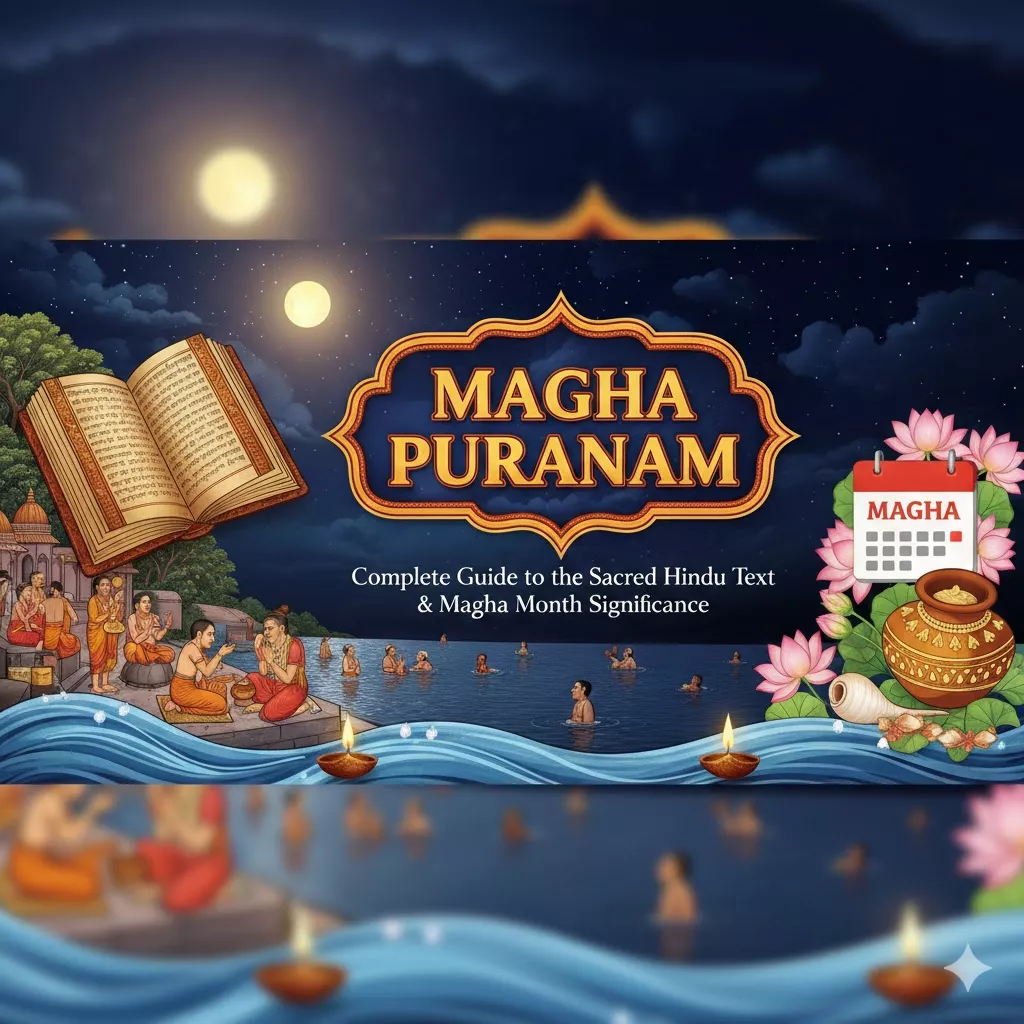

Magha Puranam: Complete Guide to the Sacred Hindu Text and Magha Month Significance

Magha Puranam: Complete Guide to the Sacred Hindu Text and Magha Month Significance
Introduction to Magha Puranam
Magha Puranam is a sacred Hindu text that celebrates the spiritual significance of the Magha month (January-February in the Gregorian calendar), considered one of the most auspicious periods in the Hindu calendar. This ancient scripture emphasizes the importance of holy bathing, charity, devotion, and righteous living during this blessed month.
What is Magha Puranam?
Magha Puranam is a devotional text that describes the religious observances, rituals, and spiritual practices to be followed during the month of Magha. The scripture outlines the profound benefits of performing sacred activities during this period, particularly bathing in holy rivers, offering prayers, and engaging in charitable acts.
According to Hindu tradition, any religious merit (punya) earned during Magha month is multiplied manifold, making it an exceptionally favorable time for spiritual advancement and divine blessings.
Significance of Magha Month in Hindu Calendar
The Magha month holds extraordinary importance in Hinduism for several reasons:
Cosmic Alignment: During Magha, the sun transitions into Capricorn (Makara Rashi), marking the auspicious Uttarayana period when the sun begins its northward journey. This phase is considered highly favorable for spiritual practices and divine communion.
Divine Presence: Hindu scriptures state that all deities, sacred rivers, and holy places descend to Earth during Magha month, making every spiritual activity more potent and meritorious.
Ancestral Worship: Magha is particularly significant for honoring ancestors (Pitru Tarpana) and seeking their blessings for family prosperity and well-being.
Key Rituals and Observances in Magha Puranam
1. Magha Snan (Holy Bathing)
The most prominent practice described in Magha Puranam is the daily ritual bath in sacred rivers, particularly at the confluence of holy waters (sangam). Devotees wake before sunrise and immerse themselves in rivers like the Ganga, Yamuna, Godavari, or other sacred water bodies.
The ritual includes chanting mantras, offering prayers to the sun god (Surya), and meditating on divine energies. This practice is believed to cleanse both physical impurities and karmic debts.
2. Daan (Charitable Giving)
Magha Puranam emphasizes the importance of charity during this month. Donations of food, clothing, blankets, grains, and money to the needy are considered highly meritorious. Feeding Brahmins, cows, and the poor multiplies spiritual benefits.
3. Fasting and Austerities
Many devotees observe fasts on specific days during Magha, particularly on Mondays (dedicated to Lord Shiva), Thursdays (for Lord Vishnu), and Saturdays (for Lord Shani). These fasts may involve consuming only fruits, milk, or a single meal.
4. Temple Worship and Deity Veneration
Visiting temples, performing abhishekam (ritual bathing of deities), offering flowers, and conducting special pujas are integral practices outlined in Magha Puranam. Lord Vishnu and Lord Shiva are particularly worshipped during this period.
5. Recitation of Sacred Texts
Reading and reciting holy scriptures like the Bhagavad Gita, Vishnu Sahasranama, Shiva Purana, and the Magha Puranam itself are recommended spiritual practices.
Important Days in Magha Month
Magha Gupt Navratri
A nine-day celebration dedicated to Goddess Durga, observed with fasting, prayers, and devotional worship.
Mauni Amavasya
The new moon day in Magha month is considered the most sacred day for holy bathing and charitable acts. Millions of pilgrims gather at sacred confluences, especially at Prayagraj (Triveni Sangam), to take the holy dip.
Vasant Panchami
Marking the arrival of spring, this day is dedicated to Goddess Saraswati, the deity of knowledge and arts. Students seek her blessings for academic success.
Magha Purnima
The full moon day concludes the month with special significance. Bathing in sacred rivers and performing charity on this day brings immense spiritual merit.
Bhishma Ashtami
Commemorating the day Bhishma Pitamah chose to leave his mortal body, this day is observed with reverence and prayers for ancestors.
Benefits of Following Magha Puranam Practices
According to the scripture, sincere observance of Magha month rituals brings numerous benefits:
- Spiritual Purification: Cleansing of sins and karmic impurities accumulated over lifetimes
- Divine Blessings: Grace from all deities and fulfillment of righteous desires
- Health and Prosperity: Physical well-being, financial stability, and family harmony
- Liberation (Moksha): Advancement on the path to spiritual liberation
- Ancestral Peace: Satisfaction and liberation of departed ancestors
- Merit Accumulation: Earning religious merit equivalent to performing thousands of sacrifices
How to Observe Magha Month in Modern Times
While traditional practices remain valuable, contemporary devotees can adapt Magha observances to their lifestyle:
Morning Rituals: Wake early and take a bath while chanting mantras, even if not near a sacred river. Visualizing holy waters during bathing maintains spiritual intent.
Daily Prayers: Dedicate time to meditation, prayer, and scripture reading, maintaining consistency throughout the month.
Charitable Acts: Contribute to charitable organizations, feed the hungry, or support educational initiatives for underprivileged children.
Dietary Discipline: Adopt a sattvic (pure) diet, avoiding non-vegetarian food, alcohol, and excessive indulgence.
Pilgrimage: If possible, visit sacred places like Prayagraj, Haridwar, Varanasi, or local temples during Magha month.
Community Participation: Join group chanting, bhajan sessions, or spiritual discourses organized at temples.
Magha Puranam and the Kumbh Mela Connection
The Magha month holds special significance in relation to the Kumbh Mela, the world’s largest religious gathering. The Magh Mela, held annually at Prayagraj during Magha month, attracts millions of pilgrims who camp along the riverbanks and perform daily sacred bathing throughout the month.
Every twelve years, this gathering becomes the Maha Kumbh Mela, and every six years, the Ardh Kumbh, drawing devotees from across the globe to experience the spiritual power of Magha at the sacred confluence.
Scientific and Environmental Aspects
Interestingly, the timing of Magha month aligns with specific astronomical and environmental conditions. The Uttarayana period represents increasing daylight hours, symbolizing spiritual enlightenment. The winter season in India makes river bathing more challenging, thus adding an element of tapasya (austerity) to the practice.
Cold water bathing has recognized health benefits including improved circulation, enhanced immunity, and mental alertness, which ancient sages may have understood intuitively.
Magha Puranam Stories and Legends
The Magha Puranam contains numerous narratives illustrating the power of devotion during this sacred month:
The Story of the Poor Brahmin: A tale demonstrating how sincere worship during Magha, even with minimal resources, brought divine grace and prosperity.
King Bhagiratha’s Penance: References to how Magha bathing in the Ganga, brought to Earth through Bhagiratha’s efforts, provides liberation to ancestors.
The Merchant’s Transformation: Stories of how charity and righteousness during Magha transformed lives and brought spiritual awakening.
Conclusion: Embracing the Spirit of Magha
Magha Puranam teaches that the true essence of this sacred month lies not merely in ritual performance but in cultivating devotion, compassion, and spiritual discipline. Whether through traditional practices or contemporary adaptations, observing Magha month offers an opportunity for inner transformation and connection with the divine.
As we engage with these ancient wisdom traditions, Magha reminds us of the cyclical nature of time, the importance of purification, and the eternal quest for spiritual evolution that defines the Hindu dharmic path.
Frequently Asked Questions (FAQ)
Q: When does Magha month occur? A: Magha month typically falls between January and February in the Gregorian calendar, varying slightly each year based on the lunar calendar.
Q: Can anyone observe Magha month practices? A: Yes, Magha observances are open to all devotees regardless of age, gender, or background. The practices can be adapted to individual capacity and circumstances.
Q: Is it necessary to bathe in a river? A: While river bathing is ideal, devotees who cannot access sacred rivers can bathe at home with devotion, visualizing holy waters and chanting mantras.
Q: What are the most important days in Magha? A: Mauni Amavasya and Magha Purnima are considered the most auspicious days, though the entire month is sacred.
Q: What should be donated during Magha? A: Traditional donations include food grains, clothing, blankets, money, educational materials, and items for daily use to those in need.
Q: Can married women observe Magha fasts? A: Yes, married women often observe specific fasts during Magha for family welfare, though they should consult family traditions and personal health considerations.
This article is provided for educational and informational purposes. For specific religious guidance, please consult qualified spiritual teachers and scholars.
For More Devotional Journey, Follow
- Temples
https://hindutone.com/temples/ - Tirumala Updates
https://hindutone.com/tirumala/ - Sabarimala Yatra
https://hindutone.com/category/sabarimala-yatra/ - Pooja, Slokas & Mantras
https://hindutone.com/pooja-slokas-and-mantras/ - Hindu Gods
https://hindutone.com/hindu-gods/
Related posts:
 Pushya Masam: Hindu Astrology’s Auspicious Month and Planetary Influences
 Festivals of Jyeshtha Masam 2025: Rituals, Dates & Spiritual Significance
 Nag Panchami 2025: Snake Worship & Its Vedic Significance Explore rituals, folklore, and eco-friendly ways to celebrate
 Janmashtami Social Media Post Ideas: Captions, Hashtags & Reels for 2025
 Nagula Chavithi 2025 in Tamil Nadu: Complete Guide to Date, Sacred Temples, Rituals & Regional Traditions
 Lohri Celebrations in Germany 2026: City-Wise Guide for Indian NRIs


 ︎
︎

