Vijayadashami Pooja: Step-by-Step Guide
1. Preparation for the Pooja Date and Time for 2025: Vijayadashami 2025 is expected to fall on October 1 or 2, depending on the lunar calendar.
1. Preparation for the Pooja Date and Time for 2025: Vijayadashami 2025 is expected to fall on October 1 or 2, depending on the lunar calendar.
1. Preparation for the Pooja
- Date and Time for 2025: Vijayadashami 2025 is expected to fall on October 1 or 2, depending on the lunar calendar. Confirm the exact date and auspicious muhurat (time) with a local panchang or priest, as the pooja is typically performed in the morning or during the Vijaya Muhurat (auspicious time for victory, usually in the late morning).
- Clean the House: Clean the pooja area thoroughly, preferably the northeast corner of the home, as it is considered auspicious. Sprinkle Ganga jal (holy water) to purify the space.
- Set Up the Altar:
- Place a clean wooden plank or table covered with a fresh cloth (preferably red or yellow, symbolizing auspiciousness).
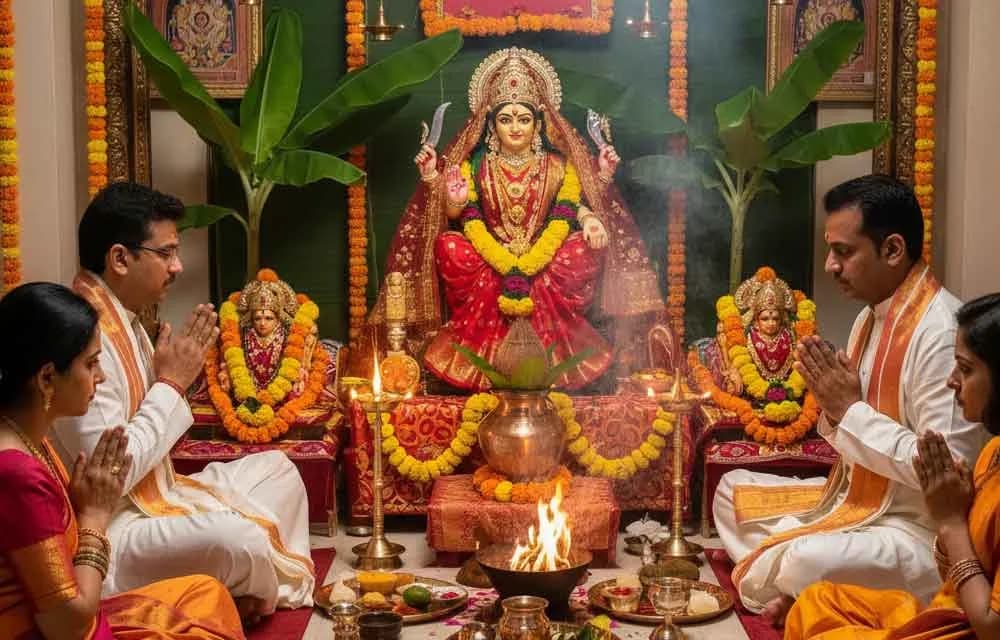
- Install idols or images of Goddess Durga, Saraswati, and Lakshmi, as Vijayadashami honors all three deities in South India.
- Include a picture or idol of Lord Rama if you follow the tradition of celebrating his victory over Ravana.
- Decorate with flowers, rangoli, and mango leaves at the entrance.
2. Gather Pooja Items
Prepare the following items for the pooja:
- Idols/Pictures: Goddess Durga, Saraswati, Lakshmi, or Lord Rama.
- Pooja Materials:
- Fresh flowers (marigold, jasmine, or lotus), flower garlands.
- Betel leaves, betel nuts, bananas, and other fruits.
- Turmeric, kumkum (vermilion), sandalwood paste, and akshata (unbroken rice mixed with turmeric).
- Incense sticks, camphor, and a ghee/oil lamp (preferably with five wicks).
- Coconut, jaggery, and offerings like sweets (laddoos, payasam) or traditional dishes.
- Books, pens, or musical instruments for Saraswati Puja (especially in Tamil Nadu and Kerala).
- Other Items:
- A small pot (kalash) filled with water, topped with a coconut and mango leaves.
- A plate for offerings and a bell for invoking divine presence.
3. Performing the Pooja
Follow these steps for a traditional Vijayadashami pooja:
- Sankalpa (Intention):
- Begin by taking a bath and wearing clean traditional clothes.
- Sit facing east or north, and take a sankalpa (vow) by stating your intention to perform the pooja for divine blessings, prosperity, and wisdom. You can say: “On this auspicious Vijayadashami day, I offer my prayers to Goddess Durga, Saraswati, and Lakshmi for victory, knowledge, and prosperity.”
- Kalash Sthapana:
- Invoking the Deities:
- Light the lamp and incense sticks. Ring the bell to invite divine energies.
- Chant mantras to invoke the deities:
- For Goddess Durga: “Om Dum Durgayei Namah” or recite the Durga Ashtakam.
- For Goddess Saraswati: “Om Aim Saraswatyai Namah” or recite the Saraswati Vandana.
- For Goddess Lakshmi: “Om Shreem Mahalakshmyai Namah”.
- If worshipping Lord Rama, chant “Jai Shri Ram” or the Rama Tarak Mantra.
- Offerings (Upachara):
- Offer flowers, kumkum, turmeric, and sandalwood paste to the deities.
- Present betel leaves, fruits, and sweets as naivedyam (food offering).
- Perform arati by circling the lit camphor or lamp in front of the deities while chanting mantras or singing devotional songs like Durga Aarti or Saraswati Aarti.
- Saraswati Puja and Vidyarambham (Optional):
- In Tamil Nadu and Kerala, place books, pens, or musical instruments before Goddess Saraswati.
- Perform a simple Vidyarambham by guiding children to write their first letters (e.g., “Om” or the first letter of the alphabet) on a plate of rice or sand.
- Chant: “Ya Kundendu Tushara Hara Dhavala” (Saraswati Vandana) for wisdom.
- Aparajita Puja (Victory Ritual):
- Common in Andhra Pradesh and Telangana, this involves worshipping Goddess Durga as Aparajita (the invincible).
- Offer five types of flowers or leaves (e.g., bilva, tulsi) and chant: “Om Aparajitayai Namah”.
- Pray for protection and success in endeavors.
- Shami Puja (Optional):
- In some South Indian traditions, especially in Karnataka, the Shami tree (or its leaves) is worshipped, as it is believed to symbolize victory (from the Mahabharata, where the Pandavas hid their weapons in a Shami tree).
- Offer prayers to the Shami tree or its leaves with the mantra: “Shami shamayate papam, shami shatru vinashini”.
4. Conclusion of the Pooja
- Prasadam Distribution: Share the offered sweets, fruits, and other prasadam with family and neighbors.
- Seek Blessings: Bow before the deities, seeking blessings for wisdom, strength, and prosperity.
- Visarjan (Immersion): If you’ve created a temporary setup (e.g., for Navaratri Golu in Tamil Nadu), respectfully dismantle it or immerse any temporary idols in water, as per tradition.
5. Regional Touches
- Andhra Pradesh/Telangana: Include offerings of pulihora (tamarind rice) and pongal in the naivedyam. Perform kumkum archana for Goddess Durga.
- Tamil Nadu: Decorate the Golu (display of dolls) and invite guests to view it. Include sundal (spiced chickpeas) as prasadam.
- Karnataka: Incorporate betel leaf garlands and traditional sweets like holige or mysore pak.
- Kerala: Focus on simplicity, with rice, coconut, and banana offerings during Vidyarambham.
Spiritual Significance of Vijayadashami Pooja
- Victory of Good: The pooja commemorates Goddess Durga’s victory over Mahishasura and Lord Rama’s triumph over Ravana, symbolizing the defeat of negativity and ignorance.
- Wisdom and Learning: Saraswati Puja and Vidyarambham emphasize the pursuit of knowledge and intellectual growth.
- Prosperity and Strength: Worshipping Lakshmi and Durga invokes blessings for wealth, courage, and protection.
Tips for a Meaningful Pooja
- Perform the rituals with devotion and a pure heart; the scale of the pooja doesn’t matter.
- Involve family members, especially children, to pass down traditions.
- If you’re unable to perform elaborate rituals, a simple prayer with a lit lamp and flowers is equally powerful.
- Consult a local priest for specific mantras or regional customs if needed.
May your Vijayadashami 2025 pooja bring divine blessings, wisdom, and victory in all your endeavors. Jai Maa Durga! Jai Saraswati! Jai Shri Ram!
Note: For precise muhurat timings and additional regional rituals, check with a local temple or panchang closer to the date. If you’d like a specific mantra list, detailed regional variations, or guidance on a particular aspect (e.g., Vidyarambham or Aparajita Puja), let me know!
Frequently Asked Questions
When is Vijayadashami Pooja?
Vijayadashami Pooja is observed on its traditional tithi in the Hindu lunar calendar; refer to the year's panchang for the exact date in your region.
What is the significance of Vijayadashami Pooja?
Preparation for the Pooja Date and Time for 2025 : Vijayadashami 2025 is expected to fall on October 1 or 2 , depending on the lunar calendar. Confirm the exact date and auspicious muhurat (time) with a local panchang or priest, as the pooja is typically performed in the morning or during the Vijaya Muhurat (auspicious time for victory, usually in the late m
How is Vijayadashami Pooja celebrated?
Devotees observe it with puja, fasting or special offerings, visiting temples, chanting mantras, and gathering with family. Customs vary by region and tradition.
What should devotees do on Vijayadashami Pooja?
Take a sacred bath, perform the day's puja and charity (dana), observe any prescribed fast, and chant mantras with sincere devotion.
You might also like

Hindu Festival Calendar 2026 — Complete Guide for NRIs (Dates, Tithis, Puja)

June 2026 Hindu Festival Calendar — Complete Dates, Vrat & Puja Guide for NRIs
The Resolve of a Monk – A Divine Incident Showcasing Kanchi Paramacharya’s Compassion