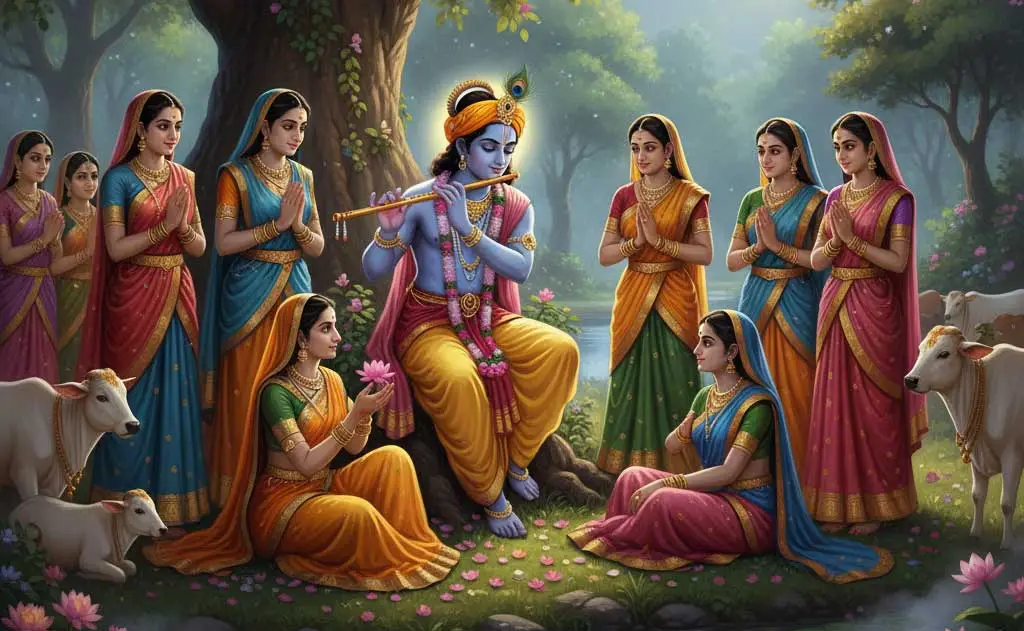
Dussehra / Vijayadashami 2026: Complete Guide — Date, Muhurat, Rituals & Meaning
Dussehra (Vijayadashami) 2026 is on Tuesday, 20 October — the tenth day of Sharad Navratri. This complete HinduTone guide covers the date and muhurat, the Rama–Ravana and Durga–Mahishasura legends, Ayudha/Shami/Saraswati Puja, Ravana Dahan, Golu and Mysore Dasara.
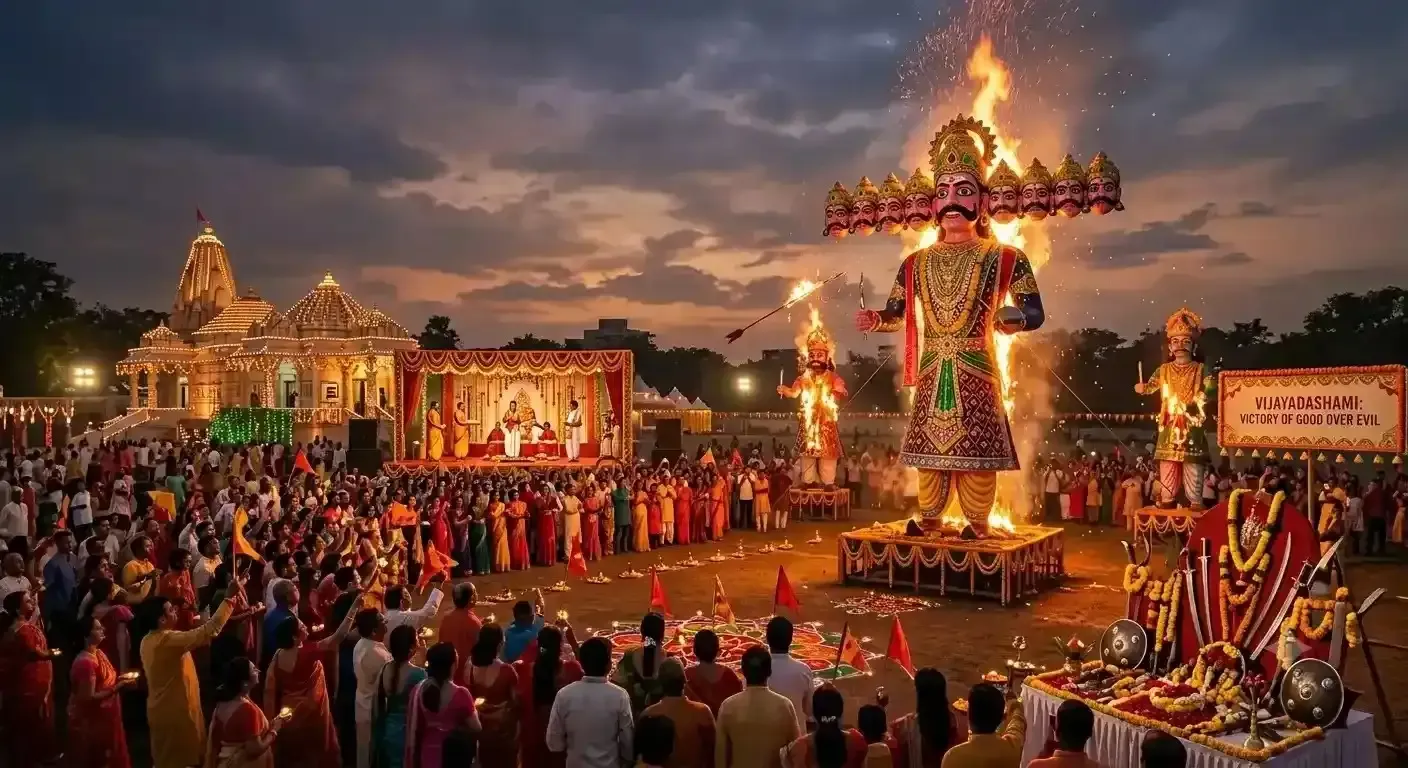
Dussehra — Vijayadashami — is one of the most significant festivals in Sanatana Dharma, celebrating the triumph of good over evil. In 2026, Dussehra falls on Tuesday, 20 October, marking the tenth day of the Sharad Navratri (11–20 October 2026). It commemorates two great victories: Lord Rama’s triumph over Ravana, and Goddess Durga’s slaying of the demon Mahishasura.
This HinduTone pillar guide is the complete reference for Dussehra / Vijayadashami 2026 — the date and muhurat, the two legends, the rituals (Ayudha Puja, Shami Puja, Vidyarambham), Ravana Dahan, Golu / Bommala Koluvu, the famous Mysore Dasara, and how the festival is celebrated by the Hindu diaspora.
Quick answer: Dussehra (Vijayadashami) 2026 is on Tuesday, 20 October 2026 — the culmination of Sharad Navratri (11–20 October). The aparahna (afternoon) period is traditionally auspicious for Vijayadashami rituals. Confirm exact city-wise timings against a reliable panchang close to the date.
Dussehra 2026 Around the World
Local Dussehra dates, Vijay Muhurat and temples for 42 countries — Vijayadashami is Tuesday 20 October in most of the world and Wednesday 21 October in Australia (east), New Zealand, Fiji and Japan:
- Dussehra 2026 in Australia (city by city)
- Dussehra 2026 in Austria
- Dussehra 2026 in Bahrain
- Dussehra 2026 in Bangladesh
- Dussehra 2026 in Belgium
- Dussehra 2026 in Bhutan
- Dussehra 2026 in Canada (province by province)
- Dussehra 2026 in Denmark
- Dussehra 2026 in Dubai & UAE (emirate by emirate)
- Dussehra 2026 in Europe (country by country)
- Dussehra 2026 in Fiji
- Dussehra 2026 in Finland
- Dussehra 2026 in France
- Dussehra 2026 in Germany
- Dussehra 2026 in Guyana
- Dussehra 2026 in Hong Kong
- Dussehra 2026 in Indonesia
- Dussehra 2026 in Ireland
- Dussehra 2026 in Italy
- Dussehra 2026 in Japan
- Dussehra 2026 in Kenya
- Dussehra 2026 in Kuwait
- Dussehra 2026 in Malaysia (state by state)
- Dussehra 2026 in Mauritius
- Dussehra 2026 in Nepal
- Dussehra 2026 in The Netherlands
- Dussehra 2026 in New Zealand
- Dussehra 2026 in Norway
- Dussehra 2026 in Oman
- Dussehra 2026 in Poland
- Dussehra 2026 in Portugal
- Dussehra 2026 in Qatar
- Dussehra 2026 in Saudi Arabia
- Dussehra 2026 in Singapore
- Dussehra 2026 in South Africa
- Dussehra 2026 in Spain
- Dussehra 2026 in Sri Lanka
- Dussehra 2026 in Suriname
- Dussehra 2026 in Sweden
- Dussehra 2026 in Switzerland
- Dussehra 2026 in Tanzania
- Dussehra 2026 in Thailand
- Dussehra 2026 in Trinidad and Tobago
- Dussehra 2026 in Uganda
- Dussehra 2026 in UK (region by region)
- Dussehra 2026 in USA (state by state)
Dussehra 2026 City Guides
City-by-city Dussehra guides with local Vijay Muhurat, Dashami timings and verified temples:
USA cities
- Dussehra 2026 New York City
- Dussehra 2026 Edison
- Dussehra 2026 Jersey City
- Dussehra 2026 Parsippany
- Dussehra 2026 Philadelphia
- Dussehra 2026 Pittsburgh
- Dussehra 2026 Boston
- Dussehra 2026 Hartford
- Dussehra 2026 Albany
- Dussehra 2026 Buffalo
- Dussehra 2026 Washington DC
- Dussehra 2026 Baltimore
- Dussehra 2026 Richmond
- Dussehra 2026 Raleigh
- Dussehra 2026 Charlotte
- Dussehra 2026 Atlanta
- Dussehra 2026 Orlando
- Dussehra 2026 Tampa
- Dussehra 2026 Miami
- Dussehra 2026 Jacksonville
- Dussehra 2026 Detroit
- Dussehra 2026 Columbus
- Dussehra 2026 Cleveland
- Dussehra 2026 Cincinnati
- Dussehra 2026 Indianapolis
- Dussehra 2026 Chicago
- Dussehra 2026 Nashville
- Dussehra 2026 Minneapolis
- Dussehra 2026 Milwaukee
- Dussehra 2026 St. Louis
- Dussehra 2026 Kansas City
- Dussehra 2026 Houston
- Dussehra 2026 Dallas
- Dussehra 2026 Austin
- Dussehra 2026 San Antonio
- Dussehra 2026 Denver
- Dussehra 2026 Salt Lake City
- Dussehra 2026 Phoenix
- Dussehra 2026 Las Vegas
- Dussehra 2026 Los Angeles
- Dussehra 2026 San Diego
- Dussehra 2026 Irvine
- Dussehra 2026 San Jose
- Dussehra 2026 San Francisco
- Dussehra 2026 Fremont
- Dussehra 2026 Sacramento
- Dussehra 2026 Seattle
- Dussehra 2026 Portland
- Dussehra 2026 Honolulu
- Dussehra 2026 Louisville
UK cities
- Dussehra 2026 London
- Dussehra 2026 Leicester
- Dussehra 2026 Birmingham
- Dussehra 2026 Manchester
- Dussehra 2026 Leeds
- Dussehra 2026 Bradford
- Dussehra 2026 Coventry
- Dussehra 2026 Wolverhampton
- Dussehra 2026 Slough
- Dussehra 2026 Reading
- Dussehra 2026 Milton Keynes
- Dussehra 2026 Luton
- Dussehra 2026 Nottingham
- Dussehra 2026 Preston
- Dussehra 2026 Southampton
- Dussehra 2026 Bristol
- Dussehra 2026 Cardiff
- Dussehra 2026 Glasgow
- Dussehra 2026 Edinburgh
- Dussehra 2026 Belfast
Canada cities
- Dussehra 2026 Toronto
- Dussehra 2026 Brampton
- Dussehra 2026 Mississauga
- Dussehra 2026 Markham
- Dussehra 2026 Oakville
- Dussehra 2026 Hamilton
- Dussehra 2026 Kitchener-Waterloo
- Dussehra 2026 London
- Dussehra 2026 Windsor
- Dussehra 2026 Ottawa
- Dussehra 2026 Montreal
- Dussehra 2026 Halifax
- Dussehra 2026 Winnipeg
- Dussehra 2026 Regina
- Dussehra 2026 Saskatoon
- Dussehra 2026 Calgary
- Dussehra 2026 Edmonton
- Dussehra 2026 Vancouver
- Dussehra 2026 Surrey
- Dussehra 2026 Victoria
Australia cities
- Dussehra 2026 Sydney
- Dussehra 2026 Parramatta
- Dussehra 2026 Newcastle
- Dussehra 2026 Wollongong
- Dussehra 2026 Melbourne
- Dussehra 2026 Geelong
- Dussehra 2026 Ballarat
- Dussehra 2026 Bendigo
- Dussehra 2026 Brisbane
- Dussehra 2026 Gold Coast
- Dussehra 2026 Sunshine Coast
- Dussehra 2026 Toowoomba
- Dussehra 2026 Townsville
- Dussehra 2026 Cairns
- Dussehra 2026 Perth
- Dussehra 2026 Adelaide
- Dussehra 2026 Canberra
- Dussehra 2026 Hobart
- Dussehra 2026 Launceston
- Dussehra 2026 Darwin
Dussehra 2026 State by State
Dates, city-wise Vijay Muhurat and local traditions for every state and union territory (Vijayadashami is Tuesday 20 October 2026; Bengal-tradition Bijoya Dashami is Wednesday 21 October):
States
- Dussehra 2026 in Andhra Pradesh
- Dussehra 2026 in Arunachal Pradesh
- Dussehra 2026 in Assam
- Dussehra 2026 in Bihar
- Dussehra 2026 in Chhattisgarh
- Dussehra 2026 in Goa
- Dussehra 2026 in Gujarat
- Dussehra 2026 in Haryana
- Dussehra 2026 in Himachal Pradesh
- Dussehra 2026 in Jharkhand
- Dussehra 2026 in Karnataka
- Dussehra 2026 in Kerala
- Dussehra 2026 in Madhya Pradesh
- Dussehra 2026 in Maharashtra
- Dussehra 2026 in Manipur
- Dussehra 2026 in Meghalaya
- Dussehra 2026 in Mizoram
- Dussehra 2026 in Nagaland
- Dussehra 2026 in Odisha
- Dussehra 2026 in Punjab
- Dussehra 2026 in Rajasthan
- Dussehra 2026 in Sikkim
- Dussehra 2026 in Tamil Nadu
- Dussehra 2026 in Telangana
- Dussehra 2026 in Tripura
- Dussehra 2026 in Uttar Pradesh
- Dussehra 2026 in Uttarakhand
- Dussehra 2026 in West Bengal
Union Territories
- Dussehra 2026 in Andaman & Nicobar Islands
- Dussehra 2026 in Chandigarh
- Dussehra 2026 in Dadra & Nagar Haveli and Daman & Diu
- Dussehra 2026 in Delhi
- Dussehra 2026 in Jammu & Kashmir
- Dussehra 2026 in Ladakh
- Dussehra 2026 in Lakshadweep
- Dussehra 2026 in Puducherry
Dussehra 2026 — Date & Key Days at a Glance
- Sharad Navratri: 11–20 October 2026 (nine nights of Devi worship)
- Durga Ashtami / Maha Ashtami: around 18 October 2026
- Maha Navami: around 19 October 2026 (Ayudha Puja and Saraswati Puja: Drik lists them on 20 October; some families keep them on the 19th)
- Dussehra / Vijayadashami: Tuesday, 20 October 2026
- Auspicious time: the aparahna (afternoon) kaal and Vijaya muhurat on Vijayadashami
The Two Great Legends of Dussehra
Rama’s Victory over Ravana
After a fierce battle, Lord Rama vanquished the ten-headed demon king Ravana of Lanka to rescue Sita — the victory of dharma over adharma. This is commemorated across North India with Ramlila performances and the dramatic burning of towering Ravana effigies (Ravana Dahan) on Vijayadashami evening.
Durga’s Victory over Mahishasura
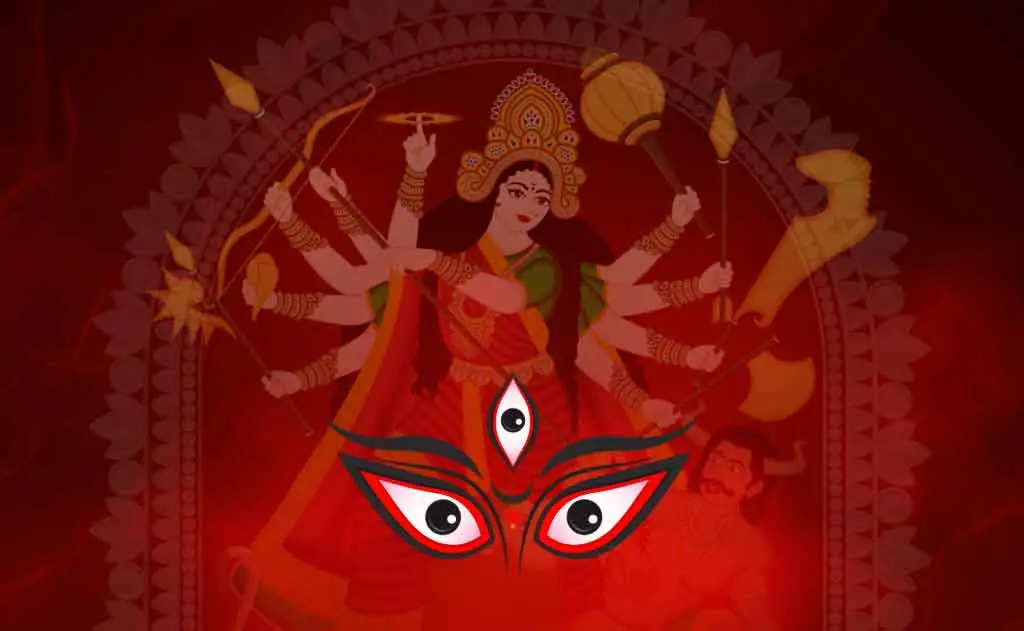
After a nine-day battle, Goddess Durga slew the buffalo-demon Mahishasura on the tenth day, restoring cosmic order. This is the heart of Sharad Navratri and Durga Puja, especially in eastern India, culminating in Vijayadashami and the immersion of Durga idols.
The Rituals of Vijayadashami
Ayudha Puja & Vahana Puja
On Maha Navami / Vijayadashami, tools, instruments, books and vehicles are cleaned and worshipped — honouring the divine in the implements of our work and livelihood. It is especially observed in South India.
Shami Puja & the Jammi Leaf
The Shami (Jammi) tree is worshipped on Vijayadashami, recalling the Pandavas who retrieved their hidden weapons from a Shami tree at the end of their exile. In Telangana and Andhra, exchanging Jammi leaves (as "gold") is a cherished Dussehra custom.
Saraswati Puja & Vidyarambham
Vijayadashami is considered highly auspicious for new beginnings in learning. Children are initiated into education (Vidyarambham / Aksharabhyasam), and Saraswati, goddess of knowledge, is worshipped — a tradition strong across South India.
Ravana Dahan & Ramlila
Across North India, the days of Navratri feature Ramlila — dramatic re-enactments of the Ramayana — culminating on Vijayadashami with the burning of giant effigies of Ravana, Kumbhakarna and Meghnad. The blazing effigies symbolise the destruction of ego, evil and ignorance.
Golu / Bommala Koluvu
In South India, Navratri is marked by Golu (Bommala Koluvu) — an artistic, tiered display of dolls and figurines depicting gods, saints and scenes from daily life. Families visit one another’s Golu, exchange gifts and tamboolam, and celebrate the divine feminine through the nine nights.
Mysore Dasara — A Royal Spectacle
Karnataka’s Mysore Dasara is among the grandest celebrations, with the illuminated Mysore Palace and the famous Jamboo Savari procession featuring caparisoned elephants. It is a 400-year-old tradition and a major draw for devotees and travellers alike. In 2026 the Jamboo Savari takes place on Wednesday, 21 October — a day after most of India marks Vijayadashami — because the Mysuru panchanga follows the Dashami tithi at sunrise. The floral tribute to the deity is fixed for 4:10–4:35 pm, and the day ends with the torchlight parade at Bannimantap.
Dussehra Around the World — The Diaspora
Wherever Hindus live, Vijayadashami is celebrated — Durga Puja pandals, Ramlila, Garba/Dandiya nights and Ravana Dahan events take place across the USA, UK, Canada, Australia and beyond. As this cluster grows, HinduTone will add dedicated guides:
- Sharad Navratri to Dussehra 2026 — the 10-day journey explained
- Ayudha Puja, Vahana Puja & Shami Puja — Vijayadashami vidhi
- Saraswati Puja & Vidyarambham on Vijayadashami
- Bommala Koluvu / Golu 2026 — setup & meaning
Dussehra 2026 guides by country
Detailed 2026 dates and local Vijay Muhurat for your city:
- Dussehra 2026 USA — state-by-state muhurat
- Dussehra 2026 Canada — province by province
- Dussehra 2026 UK — region by region
- Dussehra 2026 Australia — city by city
- Dussehra 2026 Singapore — area by area
- Dussehra 2026 Malaysia — state by state
- Dussehra 2026 Europe — country by country
- Bathukamma & Dasara 2026 Dubai and UAE
- Mysore Dasara 2026 — day by day
- Dasara 2026 Karnataka — district wise
- Navarathri 2026 Tamil Nadu — district wise
- Dussehra & Bathukamma 2026 USA
More Dussehra & Navratri 2026 guides
- Navratri 2026 colours: 9-day list
- Durga Puja 2026 dates (Kolkata): Mahalaya to Sindoor Khela
- Kanya Pujan 2026: Ashtami & Navami date and vidhi
- Ayudha Puja 2026 date & Shastra Puja vidhi
- Ravan Dahan 2026: date, time & Vijay Muhurat by city
- Bathukamma 2026 dates: Engili Pula to Saddula
- Dussehra 2026 wishes, messages & quotes
- Dussehra essay for students (100, 200, 500 words)
Vijayadashami 2026 mantras and Navratri day guides
- Vijayadashami 2026 mantras: Aparajita and Shami puja vidhi
- Day 9 (19 Oct): Maa Siddhidatri — mantra, colour, bhog and puja
More Navratri and Dussehra 2026 guides
- Dussehra 2026 for women: Shakti, puja and new beginnings
- Ayudha Puja 2026 (Tue 20 Oct): tools, vehicles, books and laptops
- Navratri 2026 wishes, messages and captions
Share the Vijayadashami 2026 blessing
Vijayadashami is the day dharma wins. As commonly told, Maa Durga triumphed over Mahishasura and Lord Rama over Ravana, and with them light overcame darkness. When we share a blessing today, we pass that victory on to the people we love, wishing them courage, clarity and peace. Choose a message below, add a loving word of your own, and send a Vijayadashami blessing to your family, your elders and your friends.
Shami shloka for Vijayadashami
शमी शमयते पापं शमी शत्रुविनाशिनी। अर्जुनस्य धनुर्धारी रामस्य प्रियदर्शिनी॥
Shami shamayate papam shami shatru-vinashini, arjunasya dhanurdhari ramasya priyadarshini.
Meaning: The Shami tree takes away sin and destroys enemies; it held Arjuna's bow and is dear to Lord Rama. Many families recite this while offering Shami (Jammi) leaves on Vijayadashami.
Rama mantra to chant on Dussehra
रामाय रामभद्राय रामचन्द्राय वेधसे। रघुनाथाय नाथाय सीतायाः पतये नमः॥
Ramaya ramabhadraya ramachandraya vedhase, raghunathaya nathaya sitayah pataye namah.
Meaning: Salutations to Rama, to Ramabhadra, to Ramachandra the creator, to the lord of the Raghu clan, to the husband of Sita.
Vijayadashami 2026 messages to share
Happy Dussehra to our dear family 🙏 May the victory of good fill our home with peace, good health and togetherness, today and all through the year. Share on WhatsApp
To my beloved parents and elders: your blessings are my true strength. On this Vijayadashami I bow to you with love and gratitude. Happy Dussehra! 🙏 Share on WhatsApp
Happy Vijayadashami, my friend! 🪔 May every fear in your heart fall away like Ravana's effigy and may courage and joy walk with you always. Share on WhatsApp
Warm Dussehra wishes to you and your family. May this festival of victory bring you fresh energy, clear goals and happy days ahead. Share on WhatsApp
May Maa Durga, who defeated Mahishasura, give you the strength to overcome every obstacle and keep your family safe in her loving care. Jai Mata Di! 🌺 Share on WhatsApp
May Lord Rama, protector of dharma, guide your every step with truth and patience, and bless your home with harmony. Jai Shri Ram! Happy Dussehra 🏹 Share on WhatsApp
A short Vijayadashami prayer
Maa Durga, Mother of all strength, and Lord Rama, upholder of dharma, I come before you with folded hands on this Vijayadashami. Give me the courage to face my fears, the wisdom to choose what is right, and the patience to walk your path. Remove anger, pride and negativity from my heart and from my family. Keep us united, humble and grateful, and let your light guide our home always.
Use the share buttons on this page to send these blessings to your family and friends.
Also read: Dussehra 2026 recipes by region, Dussehra story for kids, the ten heads of Ravana explained and Diwali 2026 date and Lakshmi Puja muhurat.
Also read: Navadurga mantras for all nine days and Telangana Hindu festivals 2026.
Also read: Kota Dussehra Mela, Ramnagar Ramlila, Kulasekarapattinam Dasara and Cuttack Durga Puja.
Also read: Dasara 2026 at major temples, Dussehra 2026 Ravan Dahan events in the USA and Kolkata Durga Puja 2026 pandal themes and news.
Also read: Ayudha Puja for cars and bikes: mantras and vehicle puja vidhi.
Frequently Asked Questions (FAQ)
When is Dussehra Vijayadashami in 2026?
Dussehra (Vijayadashami) is on Tuesday 20 October 2026 in India, the day after Sharad Navratri, which runs from Sunday 11 to Monday 19 October. Drik Panchang also lists 20 October for the USA, Canada and the UK.
What is the auspicious time for Vijayadashami rituals in 2026?
The aparahna (afternoon) period and the Vijaya muhurat on Vijayadashami are traditionally considered auspicious. Exact timings differ by city, so check your local panchang close to the date.
Why is Dussehra celebrated?
As commonly told, Dussehra marks Lord Rama's victory over Ravana and Goddess Durga's victory over the buffalo-demon Mahishasura on the tenth day. Both stories celebrate the triumph of dharma over adharma.
When are Durga Ashtami, Maha Navami and Ayudha Puja in 2026?
In India, Durga Ashtami and Maha Navami both fall on Monday 19 October 2026. Drik Panchang lists Ayudha Puja on Tuesday 20 October 2026; some families perform it on Mon 19 October (Maha Navami) — follow your family/temple tradition.
What is Shami Puja on Vijayadashami?
Shami Puja is the worship of the Shami (Jammi) tree on Vijayadashami, recalling how the Pandavas recovered their hidden weapons from a Shami tree after their exile, as commonly told. In Telangana and Andhra Pradesh, Jammi leaves are exchanged as symbolic gold.
What is the significance of Ravana Dahan?
Ravana Dahan is the burning of giant effigies of Ravana, Kumbhakarna and Meghnad on Vijayadashami evening after Ramlila performances. The blazing effigies symbolise the destruction of ego, evil and ignorance.
Final Word
Dussehra 2026, on 20 October, is a celebration of dharma’s victory — through Rama, through Durga, and within ourselves. Whether you burn the Ravana effigy, arrange a Golu, perform Ayudha Puja, or begin a child’s education, may the festival bring the triumph of good over evil into your life. Shubh Vijayadashami!
May Goddess Durga and Lord Rama bless you with courage and victory over every obstacle. Bookmark this guide — we will keep it updated with final timings closer to the date.
Explore More on HinduTone
- Sharad Navratri 2026 — Nine Nights of Devi Worship
- Vinayaka Chavithi / Ganesh Chaturthi 2026 — Complete Guide
- Soundarya Lahari & Devi Stotras
- Hindu Festivals 2026 — Complete Calendar
Share this with family and friends
Send it on WhatsApp, post it, or copy the link.
More from Festivals
- Vasant Panchami 2027 (Saraswati Puja, Basant Panchami, Sri Panchami): Date, Panchami Tithi, Puja Muhurat by City, Vidhi and Story
- Holi 2027: Date, Holika Dahan Muhurat City-Wise, Bhadra Timings, Puja Vidhi and Holi Abroad
- Makar Sankranti 2027: Date, Punya Kaal Timings City-Wise, Bhogi, Pongal, Kanuma, Lohri and Uttarayan
- Dev Deepawali 2026 Varanasi: Date, Purnima Time, Ganga Aarti, Story, Puja Vidhi and Deep Daan
- Kartik Purnima 2026: Date, Purnima Time, Snan, Deep Daan, Puja Vidhi and Significance
You might also like
Dussehra 2026 Date, Puja Muhurat, Significance and Celebrations Around the World
Must-Perform Rituals in Karthika Masam 2026: Complete State-Wise Guide for Devotees Across India
Tulsi Vivah 2026: Date, Puja Vidhi, Samagri, Katha and Significance