

Sharad Navratri 2026 — 20-29 September: Dates, Ghatasthapana Muhurat, Nine Nights, Puja Vidhi & Deep-Dive Hub
Sharad Navratri 2026 begins Sun 20 September, ends Tue 29 September; Vijayadashami Wed 30 September. Day-by-day nine goddesses, colours, Ghatasthapana muhurat, Sandhi Puja, regional traditions and NRI country guides — all cross-linked.

Sharad Navratri 2026 begins Sun 20 September, ends Tue 29 September; Vijayadashami Wed 30 September. Day-by-day nine goddesses, colours, Ghatasthapana muhurat, Sandhi Puja, regional traditions and NRI country guides — all cross-linked.
Sharad Navratri 2026 begins on Sunday, 20 September 2026 with Ghatasthapana and culminates on Tuesday, 29 September 2026 with Mahanavami. Vijayadashami (Dussehra) follows on Wednesday, 30 September 2026. Nine nights of devotion to Devi in her nine Navadurga forms — Shailaputri, Brahmacharini, Chandraghanta, Kushmanda, Skandamata, Katyayani, Kalaratri, Mahagauri and Siddhidatri.
This is HinduTone's primary Navratri 2026 hub. See the linked deep-dives below for each aspect — Navadurga, colours, fasting, Durga Puja, Ashtami-Navami, Golu — all already covered in our published cluster.
Sharad Navratri 2026 — Day-by-Day Calendar (verified)
- Day 1 · Pratipada · Sun 20 Sep 2026: Ghatasthapana (Kalash Sthapana). Devi Shailaputri. Colour: Grey.
- Day 2 · Dwitiya · Mon 21 Sep: Devi Brahmacharini. Colour: Orange.
- Day 3 · Tritiya · Tue 22 Sep: Devi Chandraghanta. Colour: White.
- Day 4 · Chaturthi · Wed 23 Sep: Devi Kushmanda. Colour: Red.
- Day 5 · Panchami · Thu 24 Sep: Devi Skandamata. Colour: Royal Blue. Lalita Panchami.
- Day 6 · Shashthi · Fri 25 Sep: Devi Katyayani. Colour: Yellow. Durga Shashthi in Bengal.
- Day 7 · Saptami · Sat 26 Sep: Devi Kalaratri. Colour: Green. Maha Saptami; pandal darshan begins in Bengal.
- Day 8 · Ashtami · Sun 27 Sep: Devi Mahagauri. Colour: Peacock Green. Durga Ashtami; Kanjak/Kumari Pujan; Sandhi Puja.
- Day 9 · Navami · Mon 28 Sep: Devi Siddhidatri. Colour: Purple. Mahanavami; Havan; hom.
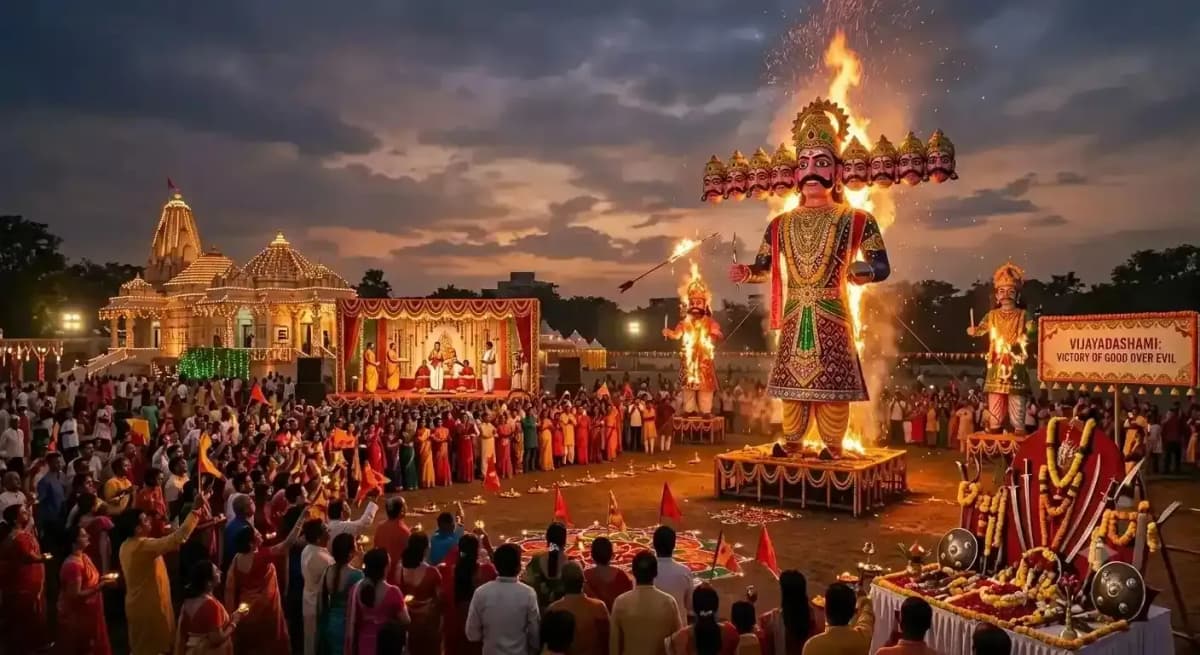
- Day 10 · Vijayadashami · Wed 30 Sep: Dussehra. Ravana Dahan. Durga visarjan in Bengal. Shami puja.
Ghatasthapana Muhurat 20 Sep 2026: ~6:15 AM to 7:45 AM IST (Chitra nakshatra window). Verify local Panchang for exact minutes.
Sandhi Puja (Ashtami-Navami transition): Mon 28 Sep 2026, ~11:00 AM to 12:30 PM IST.
Deep-dive Guides (already published)
- Nine Colours of Navratri 2026 — Day-by-Day — colour for each day, meaning, regional variations.
- Navadurga — Nine Forms of Goddess Durga — full iconography, mantras, offerings for Shailaputri through Siddhidatri.
- Navratri 2026 Fasting Rules & Foods — what to eat, what to avoid, regional practices.
- Navratri 2026 Vrat Recipes — 30+ NRI-Friendly Ideas — sabudana, kuttu, singhare, rajgira recipes.
- Durga Puja 2026 — Bengali Calendar & Rituals — Shashti to Dashami; pandal traditions.
- Durga Ashtami or Maha Navami 2026? — which day to observe.
- Navratri Golu at Home — Step-by-Step for Beginners — the South Indian doll display tradition.
- Ravana Dahan Timings — Major Indian Cities — Vijayadashami evening muhurat by city.
- Mahalaya Amavasya 2026 — pitru paksha ends, Navratri begins.
NRI Country Guides (already published)
Full country hubs for the diaspora — verify local Sandhi Puja timings against Kolkata / Delhi + your city's sunrise:
- Navratri 2026 USA Guide • USA — how Gujaratis & South Indians celebrate
- Navratri 2026 UK Guide • UK — how Gujaratis & South Indians celebrate
- Navratri 2026 Canada Guide • Canada community celebrations
- Sharadiya Durga Navratri 2026 Australia • Navratri in Australia
- Sharadiya Durga Navratri 2026 Germany
- Sharadiya Durga Navratri 2026 Europe
- Sharadiya Durga Navratri 2026 South Africa
- Dussehra 2026 Singapore • Dussehra 2026 Malaysia • Dussehra 2026 USA
Ghatasthapana — Sunday 20 September 2026
Ghatasthapana is the most important ritual of Navratri — the invocation of Devi at your home altar for nine days. The muhurat window on 20 Sep 2026 is roughly 6:15 AM to 7:45 AM IST. Steps:
- Purify the puja space; place a small mound of soil on a plate
- Sow barley seeds (Jav / Yava) evenly across the soil; sprinkle water
- Place a small clay pot (kalash) at the centre of the soil
- Fill the kalash with Ganga jal + akshat + supari + coin + a leaf
- Cover the mouth of the kalash with mango leaves (5)
- Place a coconut wrapped in red cloth on top of the leaves
- Tie a mauli (red thread) around the kalash
- Invoke Devi with "Om Aim Hreem Kleem Chamundaye Vichche"
- Light the akhand jyot (continuous lamp) — must remain lit all 9 days
- Perform arati and offer prasad
The barley seeds sown on Pratipada will sprout by the ninth day — a living blessing to be distributed as prasad on Vijayadashami.
Regional Traditions
- North India (UP, MP, Bihar, Rajasthan): Ghatasthapana + akhand jyot at home; Ramlila performances in the evenings; kanjak/kanya pujan on Ashtami.
- Gujarat: Garba every night, with the Garbi lamp at centre. Traditional dance-worship of the goddess.
- West Bengal: Durga Puja — massive pandals, Shashti to Dashami. Sandhi Puja is the peak.
- Karnataka (Mysore Dasara): Royal Mysore Palace processions; the Vijayadashami elephant march.
- Tamil Nadu: Golu (Kolu) display — dolls of gods, kings, sages arranged on stepped platforms.
- Andhra Pradesh / Telangana: Bathukamma (though this precedes Navratri); Devi puja at Indrakeeladri, Vijayawada.
- Maharashtra: Ghatasthapana; nightly Devi bhajan; Vijayadashami as a day for new beginnings.
- Kerala: Vidyarambham on Vijayadashami — the day children begin formal learning.
This is a hub — for full details on any topic, follow the deep-dive links above. If your search intent isn't covered, tell us in comments.
Related
See the main Dussehra & Vijayadashami 2026 complete guide for the date (20 October), Vijaya muhurat and full rituals.
You might also like

Navratri 2026 USA: Dates, Garba, Dandiya, Durga Puja & NRI Celebration Guide
Bathukamma and Dasara 2026 in Australia: Dates, Telangana Association Celebrations, Muhurat and City-by-City Guide
Navratri 2026: 9 Days, Colors, Goddess Names, Puja & Significance