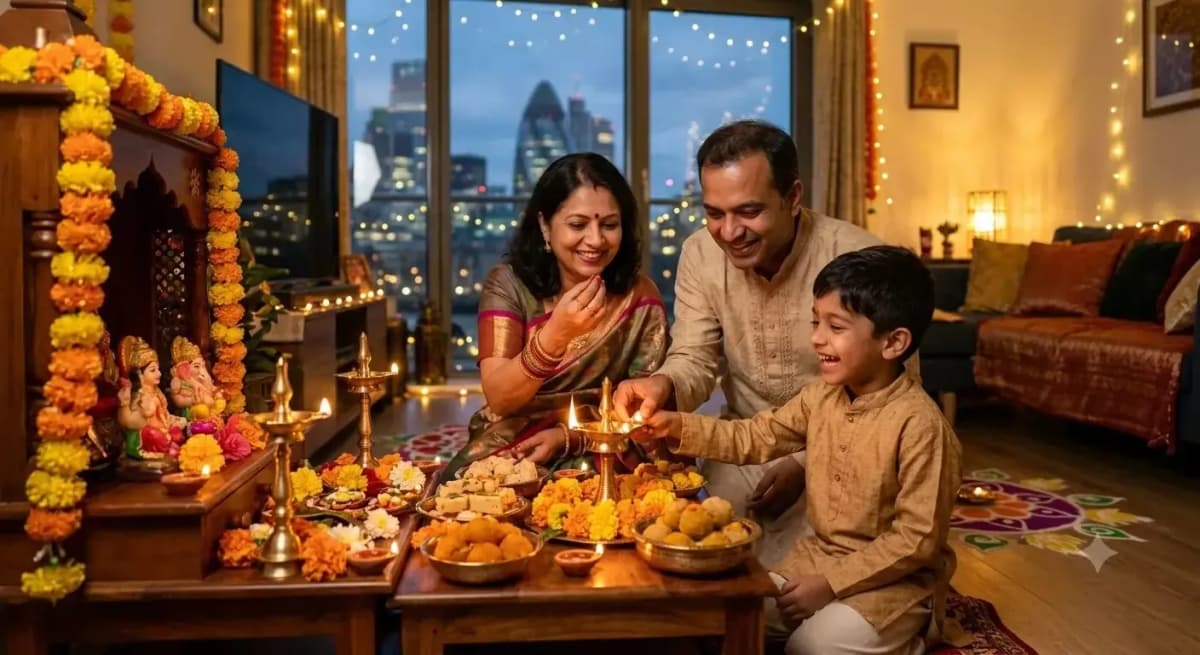
Radha Ashtami 2026: Date, Radha Rani Puja Vidhi, Story and Significance
Radha Ashtami 2026 is on Saturday 19 September — the appearance day of Radha Rani at Barsana. Here is the midday puja vidhi, vrat, story and its significance across the Gaudiya, Nimbarka, Vallabha and Radha Vallabha traditions.

Radha Ashtami 2026 is on Saturday 19 September — the appearance day of Radha Rani at Barsana. Here is the midday puja vidhi, vrat, story and its significance across the Gaudiya, Nimbarka, Vallabha and Radha Vallabha traditions.
Quick answer: Radha Ashtami 2026 is observed on Saturday 19 September 2026, on Bhadrapada Shukla Ashtami, marking the appearance of Radha Rani at Barsana — fifteen days after Krishna Janmashtami. Devotees keep a vrat and perform a midday (madhyahna) puja with abhishek, jhulan and chappan bhog. Please confirm the exact tithi and any muhurat from your local panchang, as timings shift by region and city.
Radha Ashtami celebrates the appearance of Shrimati Radha Rani, the beloved of Bhagavan Sri Krishna, who according to tradition manifested at Barsana in the Braj region of Uttar Pradesh. Falling on the Ashtami (eighth day) of the bright fortnight of Bhadrapada month, it comes exactly a fortnight after Krishna Janmashtami, and for many Vaishnava devotees it is considered as dear as Janmashtami itself. In 2026 the day falls on a Saturday, which is a happy coincidence for families and diaspora communities abroad — a weekend appearance day makes it far easier to attend temple abhishek, kirtan and darshan without taking leave from work or school.
Across Braj and in Radha-centred sampradayas, the emphasis is not on Radha as a mythological figure but as the very embodiment of bhakti and divine love (prema) — the shakti and hladini (bliss-giving) energy of Krishna. To honour Radha is understood as the surest way to reach Krishna. The observance blends a personal vrat, a midday puja, joyous jhulan (swing) and kirtan, and an offering of chappan bhog (fifty-six food items) in larger temples.
- Festival: Radha Ashtami (Radhashtami)
- Date 2026: Saturday, 19 September 2026
- Tithi: Bhadrapada Shukla Ashtami
- Appearance place: Barsana, Braj (Uttar Pradesh)
- Preferred puja time: Madhyahna (midday) — confirm locally
- Main deity: Shrimati Radha Rani with Sri Krishna
- Observance: Vrat, abhishek, jhulan, chappan bhog
- Please note: Confirm exact tithi/muhurat from a local panchang
When is Radha Ashtami 2026?
Radha Ashtami 2026 is observed on Saturday, 19 September 2026, on Bhadrapada Shukla Ashtami. Because Hindu tithis are lunar and begin and end at different clock moments depending on your longitude, the Ashtami tithi may start on the previous evening and extend into the festival day. Most communities take the day on which the Ashtami tithi is present at midday (madhyahna), since Radha Rani is traditionally said to have appeared at noon. For that reason, always confirm the exact tithi window and any preferred puja muhurat from a panchang published for your own city, especially if you live outside India.
| Detail | Radha Ashtami 2026 |
|---|---|
| Gregorian date | Saturday, 19 September 2026 |
| Hindu date | Bhadrapada Shukla Ashtami |
| Days after Janmashtami | Fifteen (a fortnight) |
| Preferred worship | Madhyahna / midday |
| Weekend note | Saturday — convenient for temple attendance |
Radha Ashtami sits within the wider Bhadrapada festival season. If you are mapping out the month, see our Bhadrapada month pillar and the full September 2026 Hindu festival calendar to place it alongside Ganesh Chaturthi, Anant Chaturdashi and the start of Pitru Paksha.
The story of Radha Rani's appearance
The katha retold in Braj tradition tells that Vrishabhanu, a devout gopa chieftain of Barsana, and his wife Kirti longed for a child. One day, going to bathe or by the banks of a water body, Vrishabhanu is said to have found a radiant infant girl resting upon a lotus, whom they lovingly raised as their daughter and named Radha. In many retellings the child did not open her eyes until Krishna himself came before her — a tender image cherished by devotees, signifying that Radha's whole being was oriented toward Krishna alone. This is a narrative retelling from devotional tradition, not a verbatim scripture, and different sampradayas cherish slightly different tellings, all of which are held as equally valid.
Theologically, Radha is not merely Krishna's consort in these traditions but his hladini-shakti — the very power of divine bliss and love through which Krishna is approached. Her name is invoked before Krishna's (Radha-Krishna, Radhe-Shyam) precisely to honour bhakti as the doorway to the divine.
Radha Rani puja vidhi (how to observe)
The observance can be as simple or as elaborate as your circumstances allow. A sincere heart matters more than scale; those who cannot manage a full vrat or a temple visit may keep a simple remembrance at home. A typical sequence is:
- Sankalpa: after a morning bath, take a simple resolve (sankalpa) to observe the Radha Ashtami vrat, keeping the mind on Radha-Krishna.
- Prepare the altar: clean the puja space, place an image or deity of Radha with Krishna, and decorate with fresh flowers, tulsi and a swing (jhulan) if you keep one.
- Abhishek: at or approaching midday, offer a gentle abhishek (bathing of the deity) with water and, in many homes, panchamrit — a mix of milk, curd, ghee, honey and sugar.
- Shodashopachara: offer the sixteen upacharas as able — vastra, chandan, kumkum, flowers, incense, deepa, and naivedya (food offering).
- Bhoga and chappan bhog: offer bhoga; larger temples present chappan bhog, the traditional array of fifty-six items, though a small heartfelt offering at home is equally accepted.
- Jhulan and kirtan: place the deities on a decorated swing, sing bhajans and kirtan, and read or recite Radha stuti or the Radha-Krishna lilas.
- Aarti and prasad: conclude with aarti, then honour and distribute the prasad; those keeping a fast usually break it after the midday or evening worship as their tradition prescribes.
The vrat
Many devotees keep a fast on Radha Ashtami. Some observe nirjala or phalahara (fruit and milk) until the midday puja; others keep a lighter fast. There is no single binding rule — the vrat is a personal and family choice, and health, age and circumstance should always guide it. No fast is required to earn Radha's grace; devotion and remembrance are what the tradition celebrates.
Significance across sampradayas
Radha Ashtami is especially cherished by the Radha-centred Vaishnava traditions, each of which honours her in its own theological voice — and all of these are held as equally valid expressions of bhakti:
- Gaudiya Vaishnava: following Sri Chaitanya Mahaprabhu, Radha is worshipped as Krishna's hladini-shakti; her mood of loving devotion is the highest ideal.
- Nimbarka Sampradaya: among the earliest to place Radha alongside Krishna as inseparable (Radha-Krishna as the one divine reality); Radha Ashtami is a principal festival.
- Vallabha (Pushtimarg): in the Shrinathji tradition, seva to the divine child and to Radha-Krishna is offered with great tenderness and rich shringar.
- Radha Vallabha Sampradaya: founded by Sri Hita Harivansh, this tradition places Radha at the very centre, with Krishna as Radha-Vallabha (the beloved of Radha).
- ISKCON and global temples: ISKCON centres worldwide observe Radhashtami with abhishek, kirtan, feast and often the Deity's midday darshan, making it a widely marked day in the diaspora.
Beyond any one lineage, Radha Ashtami invites every devotee to reflect on prema-bhakti — love offered to the divine without expectation. If you are unsure which reckoning your family follows for the tithi, our guide on Amanta vs Purnimanta calendars and which panchang NRIs should follow can help you decide.
Related reading
- Bhadrapada Masam 2026 — month pillar
- September 2026 Hindu festival calendar
- Anant Chaturdashi 2026
- Pitru Paksha 2026
- Amanta vs Purnimanta explained
- Which panchang should NRIs follow?
Frequently Asked Questions
When is Radha Ashtami in 2026?
Radha Ashtami 2026 falls on Saturday, 19 September 2026, on Bhadrapada Shukla Ashtami. Because the tithi is lunar and shifts by longitude, confirm the exact window and any preferred puja time from a panchang published for your own city.
Why is Radha Ashtami celebrated at midday?
Tradition holds that Radha Rani appeared at Barsana around noon, so many communities prefer the madhyahna (midday) time for the main abhishek and puja, and choose the day on which the Ashtami tithi is present at that hour.
How many days after Janmashtami is Radha Ashtami?
Radha Ashtami comes fifteen days — a fortnight — after Krishna Janmashtami. Janmashtami is on Krishna Paksha Ashtami of Bhadrapada, and Radha Ashtami on the Shukla Paksha Ashtami of the same month.
Where did Radha Rani appear?
By tradition, Radha Rani appeared at Barsana in the Braj region of Uttar Pradesh, in the family of the gopa chieftain Vrishabhanu and his wife Kirti. Barsana remains a major centre of Radha Ashtami celebrations.
Do I have to fast on Radha Ashtami?
No. Many devotees keep a vrat — some until the midday puja, some lighter — but fasting is a personal and family choice guided by health and circumstance. Devotion and remembrance matter more than the strictness of any fast.
What is chappan bhog?
Chappan bhog is a traditional offering of fifty-six food items presented to the deity, common in larger temples on major festivals. At home, a small heartfelt bhoga is equally accepted; the number is an ideal, not a requirement.
Which sampradayas especially celebrate Radha Ashtami?
The Gaudiya, Nimbarka, Vallabha (Pushtimarg) and Radha Vallabha traditions especially cherish Radha Ashtami, and ISKCON temples worldwide observe it. Each honours Radha in its own theological voice, and all are equally valid expressions of bhakti.
Can I observe Radha Ashtami simply at home?
Yes. A clean altar, an image of Radha-Krishna, fresh flowers, a gentle abhishek with panchamrit, a bhoga offering, and heartfelt kirtan are enough. Those who cannot manage a full vrat or temple visit may keep a simple remembrance.
You might also like

Rama Ekadashi 2026: Date, Vrat Katha, Puja Vidhi & Significance

Jagaddhatri Puja 2026: Dates, Chandannagar's Dazzling Lights & Significance

Champa Shashthi 2026: Date, Khandoba Worship & Jejuri's Golden Festival