Rakhi Thali Decoration: What to Keep, How to Arrange and Design Ideas
Everything that goes on the rakhi thali and how to arrange it beautifully — a traditional layout, a minimal version, a kids-made one, and 15 decoration ideas for Raksha Bandhan 2026.
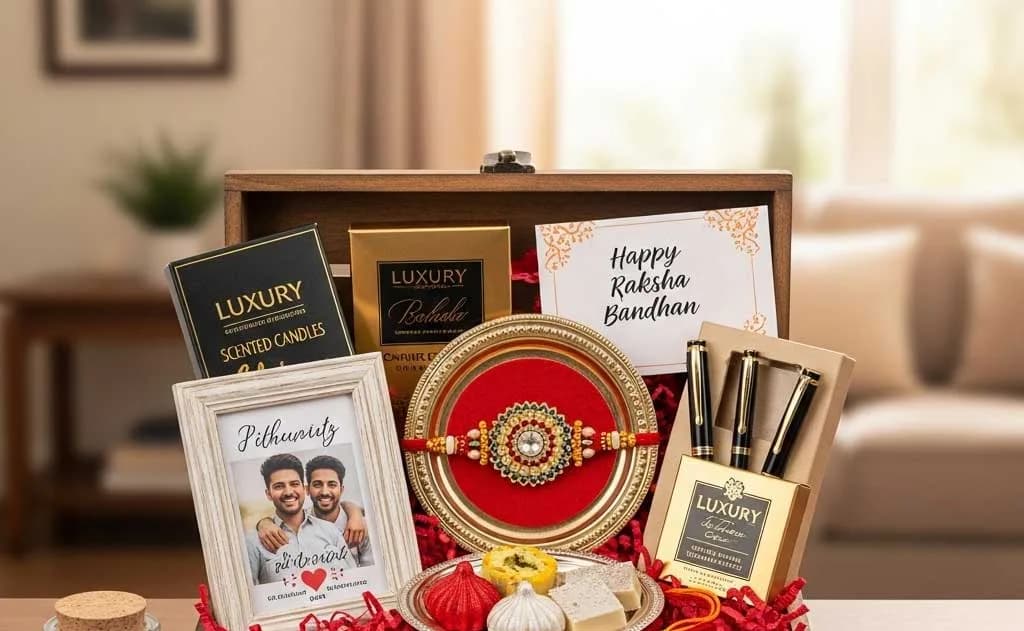
Everything that goes on the rakhi thali and how to arrange it beautifully — a traditional layout, a minimal version, a kids-made one, and 15 decoration ideas for Raksha Bandhan 2026.
Quick answer: For Raksha Bandhan 2026 (Friday, 28 August), a rakhi thali holds the rakhi, roli or kumkum, akshat (unbroken rice), a lit diya, sweets and a coin or small gift. Arrange them in a clockwise order so the tilak, aarti and rakhi-tying flow smoothly. Add flowers, a small kalash and diyas for beauty.
The rakhi thali is the quiet heart of Raksha Bandhan. Before a single word is spoken, the thali says everything — a small plate carrying love, blessing and intention. Whether you are a sister tying a rakhi on a brother, a sister honouring a sister, cousins and friends celebrating chosen family, or someone remembering a sibling who is no longer here, the thali can be shaped around your own bond. There is no single correct thali; there is only the one that feels true to you.
This guide walks through what to keep on the thali and why, then gives you three ready arrangements — a full traditional layout, a minimal five-item version, and a joyful kids-made one — followed by fifteen decoration ideas you can mix and match. Raksha Bandhan 2026 falls on Friday, 28 August, so you have time to plan the look in advance.
What to keep on the rakhi thali
A classic thali carries six essentials. Each has a role in the small ceremony of tying the rakhi, so it helps to understand them rather than simply piling things on.
- Rakhi: the sacred thread itself, kept ready to tie
- Roli or kumkum: red paste for the tilak on the forehead
- Akshat: unbroken rice grains, often mixed with a little kumkum
- Diya: a lit lamp for the aarti
- Sweets: mithai to sweeten the mouth after tying
- Coin or gift: a token of blessing given in return
Beyond the six, many families add a small kalash of water, a few flowers, a supari, a cotton wick, agarbatti, and a handkerchief or cloth to place under the receiver's hand. None of these are compulsory. If you have no sibling to tie to, some people tie a rakhi to a deity's photo, a plant, a soldier through a seva drive, or simply keep the thali as a small act of gratitude.
How to arrange the thali
Arrangement matters because the ceremony moves in a sequence: tilak first, then akshat, then aarti, then the rakhi, then sweets, then the gift. Lay the items so your hand travels naturally from one step to the next. A widely followed approach places the diya at the centre or top, the roli and akshat together on one side, the rakhi on a clean cloth or leaf, and the sweets and coin along the front edge.
| Ceremony step | Item used | Where to place it |
|---|---|---|
| Tilak | Roli / kumkum | Front-right, easy to reach first |
| Blessing rice | Akshat | Beside the roli |
| Aarti | Lit diya | Centre or top of the thali |
| Tying | Rakhi | On a leaf or cloth, left of centre |
| Sweetening | Mithai | Front-left |
| Return gift | Coin / envelope | Front edge or a small bowl |
The full traditional arrangement
Take a steel or brass thali and line it with a small cloth or a fresh banana or betel leaf. Place a lit diya slightly above centre. To its right, keep two little bowls — one of roli, one of akshat. Rest the rakhi on the leaf to the left of the diya. Along the front, arrange a few pieces of mithai and a coin or wrapped gift. Tuck a couple of flowers and a burning agarbatti at the back rim. A tiny kalash of water at the top completes it. The effect is layered and warm without being crowded.
The minimal five-item version
If you want something clean and modern, keep only five things: rakhi, kumkum, akshat, one diya and a couple of sweets. Use a plain white or single-colour plate, place the diya at the top, the kumkum and rice as two small mounds, the rakhi in the middle, and the sweets in front. A single flower or one rose petal is enough. This version photographs beautifully and is quick to reset between multiple rakhis.
The kids-made version
Let children own a thali. Give them a paper or steel plate and safe materials — a battery tea-light instead of a flame, sticker bindis, glitter glue, coloured rice, and paper flowers. Kids can tie the rakhi to the plate rim, draw a heart in the centre, and add their own drawing for the sibling. The wobbly, hand-made result is often the most loved thali on the table.
15 rakhi thali decoration ideas
- Line the thali with a bright dupatta scrap or embroidered runner for instant texture.
- Make a rangoli border around the rim using coloured rice, roli and turmeric.
- Float a single diya and a few rose petals in a shallow water bowl at the centre.
- Use fresh marigold and jasmine to edge the whole plate.
- Add tiny tealight diyas around the rim for an evening aarti glow.
- Tie the rakhi to a small decorated betel leaf so it sits upright.
- Fold sweets into little foil or leaf cups to keep the plate tidy.
- Add a mini brass kalash with a coconut and mango leaves for a temple feel.
- Sprinkle gold or silver sequins and a few pearls for a festive shimmer.
- Use a mirror-work or bandhani cloth base for a Rajasthani look.
- Place the coin or envelope inside a tiny decorated potli bag.
- Add a handwritten note or a small card tucked at the edge.
- For a pastel theme, keep white flowers, a white plate and soft-pink kumkum.
- Make it eco-friendly with a leaf plate, clay diya and real flowers only.
- Personalise with a photo, a favourite chocolate, or an object that means something to you both.
Regional touches are all equally lovely. In many homes a coconut is offered along with the rakhi; in parts of the south the day overlaps with Avani Avittam and the thali may look quite different; some families keep a chandan tilak instead of roli. Follow the custom your family loves, and feel free to borrow an idea you find beautiful.
A note on the date and Bhadra
Raksha Bandhan 2026 is on Friday, 28 August. By tradition, rakhi is tied after the Bhadra period ends, so many families simply plan the tying for the clear window on the 28th. This is a matter of custom and comfort, not fear. For exact local timings always confirm from a trusted panchang, and see our dedicated pages linked below.
Related reading
- Raksha Bandhan 2026: complete guide
- Raksha Bandhan 2026 muhurat timings
- Is Raksha Bandhan on 27 or 28 August 2026?
- Bhadra Kaal and Raksha Bandhan 2026
- Raksha Bandhan 2026 NRI guide
Frequently Asked Questions
What should I keep on a rakhi thali?
The six essentials are the rakhi, roli or kumkum, akshat (unbroken rice), a lit diya, sweets and a coin or small gift. Many families also add flowers, a small kalash of water, agarbatti and a cloth to place under the receiver's hand. Keep only what feels meaningful to your bond.
How do I arrange the rakhi thali step by step?
Arrange items in the order of the ceremony: roli and akshat at the front-right for the tilak, the diya at the centre or top for aarti, the rakhi on a leaf or cloth left of centre, and sweets and the gift along the front edge. This lets your hand move smoothly through tilak, aarti, tying and sweets.
What is the meaning of each item on the thali?
Roli marks the tilak of blessing, akshat represents prosperity and completeness, the diya invokes light and the divine for aarti, the rakhi is the thread of protection and love, sweets share joy, and the coin or gift is a blessing returned. Together they turn a plate into a small ceremony.
Can I make a simple rakhi thali without many items?
Yes. A clean minimal thali needs only five things — rakhi, kumkum, akshat, one diya and a couple of sweets. Use a plain plate, add a single flower, and it will look elegant and photograph beautifully. There is no rule that a thali must be crowded.
What if I have no sibling to tie a rakhi to?
The thali still belongs to you. Some people tie a rakhi to a deity's photo, a plant or a soldier through a seva drive, or simply keep the thali as a quiet act of gratitude and self-blessing. Sisters tie to sisters, and friends and chosen family celebrate the bond too — every version is valid.
How can kids help decorate the rakhi thali?
Give children a paper or steel plate with safe materials — a battery tea-light instead of a flame, sticker bindis, glitter glue, coloured rice and paper flowers. Let them draw a heart, add their own artwork and tie the rakhi to the rim. Their hand-made thali is often the most treasured one.
When is Raksha Bandhan 2026 and when should I tie the rakhi?
Raksha Bandhan 2026 is on Friday, 28 August. By tradition the rakhi is tied after the Bhadra period ends, so many families plan the tying for the clear window on the 28th. This is custom, not a warning — always confirm exact local timings from a trusted panchang.
What are some easy decoration ideas for the thali?
Line the plate with a colourful cloth, make a rangoli border of coloured rice and roli, float a diya and rose petals in a water bowl, edge the plate with marigold and jasmine, add tiny tealights, tuck the coin into a small potli, or add a handwritten note. Pastel, eco-friendly leaf-plate and mirror-work themes all look lovely.
Related guides you may find helpful
You might also like

Navratri 2026: 9 Days, Colors, Goddess Names, Puja & Significance
Navratri 2026 USA: Dates, Garba, Dandiya, Durga Puja & NRI Celebration Guide

Indian Temple Flowers: Sacred Blooms & What Each Deity Loves