




Ratha Saptami 2026: Temple Celebrations & Significance
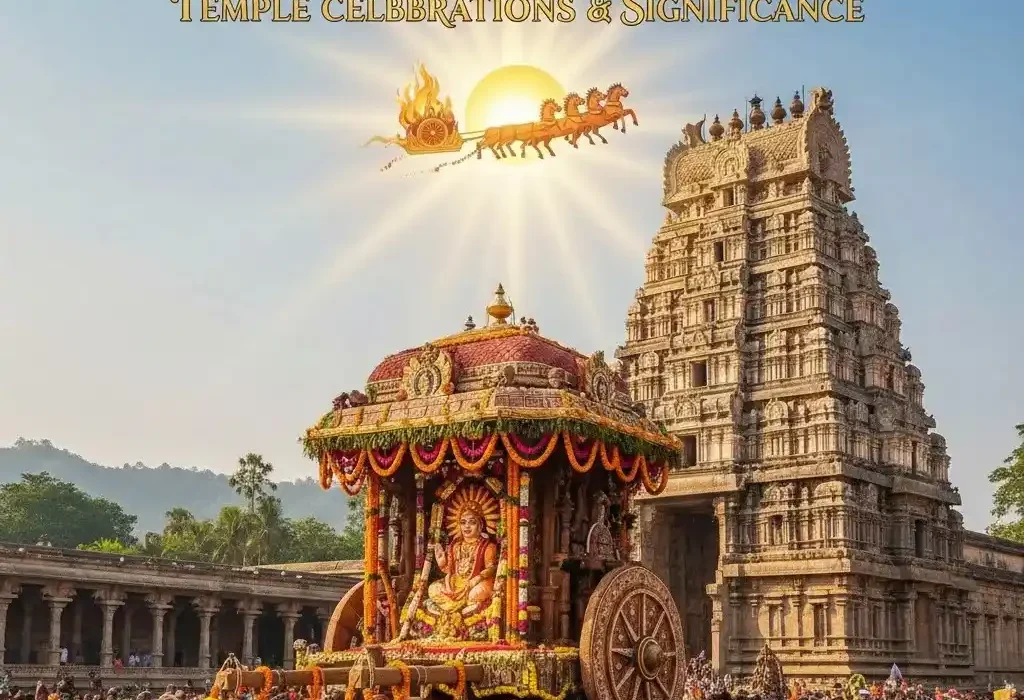
Ratha Saptami 2026: Temple Celebrations & Significance
In the radiant embrace of Sanatana Dharma, where every sunrise whispers the glory of the Divine, Ratha Saptami stands as a luminous beacon of hope, health, and spiritual awakening. This sacred festival, also revered as Surya Jayanti or Arogya Saptami, honors Lord Surya Bhagavan—the eternal source of light, life, and cosmic energy. As the Rig Veda proclaims, “Suryaḥ pratyakṣa devatā” (the Sun is the visible deity), reminding us that He is the visible manifestation of the Supreme Brahman, sustaining all creation with His divine rays.
On January 25, 2026, which fell on a blessed Sunday, devotees across Bharat experienced the profound grace of Ratha Saptami. Temples reverberated with chants of “Om Suryaya Namah,” processions carried the divine forms on ornate chariots, and millions offered Arghya to the rising Sun. This day marked the symbolic northward journey of Surya’s Ratha (chariot), heralding Uttarayan—the auspicious six-month period of light and growth. Rooted in the timeless wisdom of the Vedas, Puranas, and Itihasas, Ratha Saptami invites us to align our inner light with the cosmic Sun, purifying body, mind, and soul for health, vitality, and moksha.
This comprehensive guide explores the spiritual essence, scriptural foundations, and vibrant temple celebrations of Ratha Saptami 2026. With practical rituals drawn from tradition, it serves as a devotional companion for seekers, inspiring deeper bhakti toward Suryanarayana—the protector and illuminator of all.
Spiritual Meaning of Ratha Saptami
Ratha Saptami transcends mere ritual; it embodies the eternal journey of the soul toward divine enlightenment. The festival symbolizes Lord Surya’s chariot, drawn by seven horses (representing the seven colors of the rainbow, seven chakras, or seven days of the week), turning northward on Magha Shukla Saptami. This northward turn signifies the victory of light over darkness, the awakening of prana (life force), and the onset of spring’s regenerative energies.
In Vedic lore, as described in the Rig Veda (Mandala 10, Hymn 85), Surya travels in a celestial chariot, His path illuminating the universe. The Padma Purana extols this day for its potency in devotion and restraint, promising relief from ailments and sins through sincere worship. The Bhavishya Purana narrates the story of Samba, son of Lord Krishna, who suffered from leprosy. Guided by Krishna, Samba performed rigorous penance and Surya worship on Ratha Saptami at the Chandrabhaga River (near Konark), attaining complete healing. This leela underscores the festival’s boon of arogya (health) and divine grace.
Spiritually, the Ratha (chariot) represents the human body or mind, with the seven horses as senses. Controlling them through sadhana directs us toward the Divine. As the Sun rises daily without fail, He teaches unwavering dharma and selfless service. Observing Ratha Saptami with faith invokes Surya’s blessings for physical well-being, mental clarity, and spiritual progress, aligning us with the cosmic rhythm.
Auspicious Date and Timings in 2026
In 2026, Ratha Saptami was celebrated on January 25, coinciding with Magha Shukla Saptami. This Sunday amplified its sanctity, as Sunday (Ravivar) is Surya’s own day. Key muhurats (based on standard panchang for India):
- Snan Muhurat (Holy Bath): Early morning, approximately 5:00 AM to 7:00 AM (varies by location; in Tirupati ~5:26 AM onward).
- Sunrise: Around 6:45 AM in South India, ideal for Arghya.
- Saptami Tithi Duration: From previous midnight to evening.
Devotees woke before dawn for Magh Snan, offering Arghya during sunrise. The day culminated in evening prayers, with many fasting or consuming sattvic meals.
Major Temples’ Celebrations in Ratha Saptami 2026
Across Bharat, temples dedicated to Surya and Vishnu (as Suryanarayana) came alive with devotion. Massive crowds converged, creating an atmosphere of collective bhakti.
Tirumala Tirupati Balaji Temple
The hill shrine of Lord Venkateswara at Tirumala witnessed unprecedented fervor on January 25, 2026. Known as Ardha Brahmotsavam or Mini Brahmotsavam, the day featured a grand one-day festival with Lord Malayappa Swamy (processional deity), Sridevi, and Bhudevi carried on seven magnificent vahanams (vehicles) through the four mada streets.
The celebrations began at dawn with Suryaprabha Vahanam, where the deity was adorned on a sun-chariot vehicle. Tens of thousands gathered at the south-west corner to witness the first rays of the Sun touching Lord Malayappa Swamy’s lotus feet—a divine moment evoking tears of ecstasy and chants of “Govinda!” Subsequent processions included Chinna Sesha Vahanam, Hanumantha Vahanam, Garuda Vahanam, Kalpavriksha Vahanam, Sarvabhoopala Vahanam, and Chandraprabha Vahanam concluding at night.
Over 3.45 lakh devotees witnessed the Vahana Sevas, with queues stretching kilometers. Despite traffic challenges and long walks (some pilgrims trekked 4-5 km), the spiritual aura prevailed. TTD provided free food, water, and beverages. Special aartis echoed through the hills, with Suprabhata, Sahasranama, and Surya-specific stotras chanted. This celebration, blending Vaishnava and Surya worship, reinforced Tirumala’s role as a beacon of devotion.
Konark Sun Temple, Odisha
The UNESCO World Heritage Site, architecturally a colossal chariot, hosts fervent Ratha Saptami observances. On January 25, 2026, devotees performed elaborate Surya puja at the sanctum, offering Arghya, flowers, and fruits. Traditional Odissi dances and bhajans filled the air, symbolizing the Sun God’s chariot. Crowds thronged the black pagoda-like structure, meditating on the rising Sun aligned with the temple’s design. Rituals included lighting lamps and reciting Adityahridayam, invoking healing energies.
Arasavalli Suryanarayana Swamy Temple, Andhra Pradesh
Declared a state festival in recent years, Arasavalli saw grand celebrations. The temple’s Surya idol received special abhishekam with sacred waters. Processions carried the deity, and devotees bathed in the temple tank. Thousands participated in mass Surya Namaskar sessions, fostering community health and devotion.
Other Notable Temples
- Modhera Sun Temple, Gujarat: Ancient rituals honored Surya with classical music and dances.
- Suryanar Kovil, Tamil Nadu: Navagraha temple focused on Surya puja, with devotees offering sesame and wheat.
- Regional Observances: In Mysore and Melkote, ceremonial processions carried Surya icons; in Mangalore, Rathotsava at Venkataramana Temple.
These temples blended Vedic chants, aartis, and processions, drawing lakhs of devotees seeking blessings.
Traditions, Aarti, and Rituals in Temples
Temple traditions on Ratha Saptami emphasize Surya worship integrated with Vishnu bhakti.
- Morning Rituals: Pre-dawn baths, followed by Surya Arghya. In Tirumala, the first rays’ touch on the deity is central.
- Vahana Processions: Deities paraded on chariots, symbolizing Surya’s Ratha.
- Aarti and Chanting: Morning Suprabhatam, midday Surya Aarti with lamps and camphor, evening Mangala Aarti. Popular stotras: Adityahridayam (from Ramayana), Suryashtakam, Gayatri Mantra.
- Offerings: Red flowers, wheat, jaggery, red sandalwood paste, and Arka leaves.
- Crowd Management: In major shrines like Tirumala, TTD arranged darshan slots, free amenities, and medical aid amid massive gatherings.
These practices foster unity, health, and spiritual elevation.
Crowds and Devotional Atmosphere in 2026
Ratha Saptami 2026 saw record crowds, especially in Tirumala (over 3.45 lakh) and Konark. Devotees braved early queues for darshan, creating vibrant energy with bhajans and conch sounds. Despite logistical strains, the shared devotion transformed challenges into tapasya. Families, elders, and youth united in prayer, embodying Sanatana Dharma’s timeless appeal.
Practical Guide: Observing Ratha Saptami at Home
To invoke Surya’s blessings:
- Wake Early: Before sunrise for Magh Snan.
- Holy Bath: Use Arka leaves on head, shoulders, knees, feet while chanting: “Om Suryaya Namah.”
- Arghya: Face east, offer water from copper vessel with red flowers.
- Puja Steps:
- Light ghee lamp.
- Offer fruits, sweets, wheat.
- Chant Adityahridayam or Gayatri 108 times.
- Fasting: Consume sattvic food; avoid salt in some traditions.
- Surya Namaskar: Perform 12 rounds for health.
- Charity: Donate red items, food to the needy.
May these acts purify and illuminate your life.
Benefits of Ratha Saptami Worship
Scriptures promise relief from diseases, longevity, prosperity, and sin removal. Regular observance enhances vitality, focus, and inner light.
Ratha Saptami 2026 reminded us of Surya’s eternal grace. As we carry this light forward, may Lord Suryanarayana bless all with health, wisdom, and devotion.
Hari Om Suryaya Namah.
For More Devotional Journey, Follow
- Temples
https://hindutone.com/temples/ - Tirumala Updates
https://hindutone.com/tirumala/ - Sabarimala Yatra
https://hindutone.com/category/sabarimala-yatra/ - Pooja, Slokas & Mantras
https://hindutone.com/pooja-slokas-and-mantras/ - Hindu Gods
https://hindutone.com/hindu-gods/
Related posts:
 Nagula Chavithi 2025 in Middle East: Complete Celebration Guide for Hindu Diaspora in UAE, Qatar, Oman & Gulf Countries
 Poli Swargam 2025: A Sacred Journey of Faith, Devotion, and Divine Light
 Vaikuntha Ekadashi 2025 in Germany: Complete Guide for German Hindus
 Vaikuntha Ekadashi & Moksha: Can One Day Truly Change Your Karma?
 Vaikunta Ekadashi Celebrations in New York: Temples, Events, Significance, Rituals & Guide for Devotees in 2025
 Makar Sankranti 2026: A Complete Celebration Guide for Hindu Americans




 ︎
︎

