Makar Sankranti 2026: A Complete Celebration Guide for Hindu Americans
Makar Sankranti 2026: A Complete Celebration Guide for Hindu Americans Introduction: Honoring Traditions Across Continents Makar Sankranti represents one of…
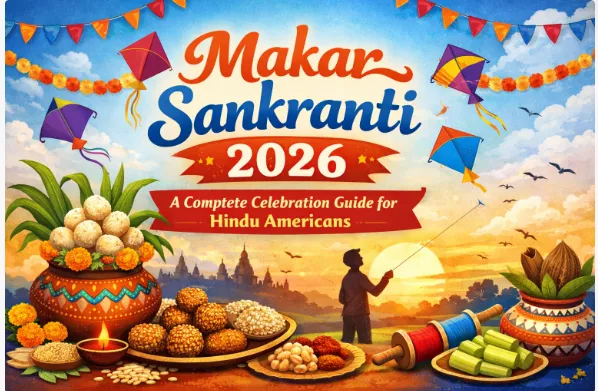
Makar Sankranti 2026: A Complete Celebration Guide for Hindu Americans Introduction: Honoring Traditions Across Continents Makar Sankranti represents one of…
Makar Sankranti 2026: A Complete Celebration Guide for Hindu Americans
Introduction: Honoring Traditions Across Continents
Makar Sankranti represents one of the most significant harvest festivals in Hindu tradition, marking the Sun's transition into Capricorn and the beginning of Uttarayan. For Hindu Americans, this festival offers a meaningful opportunity to connect with cultural roots while sharing traditions with the broader community. Unlike most Hindu festivals that follow the lunar calendar, Makar Sankranti follows the solar cycle, making it one of the few festivals with a consistent date each year.
Makar Sankranti 2026: Date and Timing for USA
Festival Date
Makar Sankranti 2026 will be celebrated on Wednesday, January 14, 2026 across all time zones in the United States.
Auspicious Muhurat Times (Converted for USA Time Zones)
The sacred Sankranti moment occurs at 03:13 PM IST (India Standard Time). Here are the converted times for major USA time zones:
Eastern Standard Time (EST)
- Sankranti Moment: 4:43 AM
- Punya Kaal Muhurta: 4:43 AM to 7:15 AM
- Maha Punya Kaal Muhurta: 4:43 AM to 6:28 AM
Central Standard Time (CST)
- Sankranti Moment: 3:43 AM
- Punya Kaal Muhurta: 3:43 AM to 6:15 AM
- Maha Punya Kaal Muhurta: 3:43 AM to 5:28 AM
Mountain Standard Time (MST)
- Sankranti Moment: 2:43 AM
- Punya Kaal Muhurta: 2:43 AM to 5:15 AM
- Maha Punya Kaal Muhurta: 2:43 AM to 4:28 AM
Pacific Standard Time (PST)
- Sankranti Moment: 1:43 AM
- Punya Kaal Muhurta: 1:43 AM to 4:15 AM
- Maha Punya Kaal Muhurta: 1:43 AM to 3:28 AM
Note: Many Hindu American families choose to perform rituals during daytime hours for practicality, which remains spiritually meaningful. The entire day of January 14th carries auspicious energy.
Understanding Makar Sankranti: Spiritual and Cultural Significance
Astronomical Foundation
Makar Sankranti marks a pivotal astronomical event where the Sun begins its northward journey (Uttarayan), continuing for six months. This transition symbolizes the movement from darkness toward light, representing spiritual awakening and the triumph of knowledge over ignorance.
Mythological Connections
According to the Mahabharata, Bhishma Pitamah chose to depart his mortal body during Uttarayan, as souls departing during this period are believed to attain moksha (liberation). This belief has established Uttarayan as a spiritually significant period in Hindu tradition.
The Harvest Connection
The festival celebrates the rabi crop harvest, expressing gratitude for nature's abundance. For Hindu Americans, this theme resonates universally as a time to appreciate prosperity and share blessings with the community.
Regional Names and How They're Celebrated in USA
Hindu American communities celebrate Makar Sankranti in diverse ways, reflecting India's regional traditions:
Uttarayan (Gujarat and Rajasthan Communities)
Gujarati Americans transform January 14th into a grand kite-flying celebration. Cities with significant Gujarati populations like Edison NJ, Houston TX, and the San Francisco Bay Area host community kite festivals in parks and open spaces.
Pongal (Tamil Communities)
Tamil American communities, particularly strong in New Jersey, California, and Texas, celebrate the four-day Pongal festival. Many Tamil Sangams organize:
- Community Pongal cooking ceremonies
- Cultural programs featuring Bharatanatyam and traditional music
- Kolam (rangoli) competitions
- Cattle appreciation events (adapted for American settings)
Magh Bihu (Assamese Communities)
Assamese Americans gather for community feasts called Bhoj, prepare traditional dishes, and organize cultural programs featuring Bihu dance performances.
Lohri and Makar Sankranti (North Indian Communities)
Punjabi, Haryana, and Himachal communities celebrate Lohri on January 13th evening with bonfire gatherings, followed by Makar Sankranti celebrations on January 14th.
Maharashtra and Karnataka Traditions
Marathi and Kannada communities exchange tilgul (sesame-jaggery sweets) with the traditional saying "Tilgul ghya, god god bola" or "Ellu bella thindu, olle maathadi" (eat sweets and speak sweet words).
Where to Celebrate: Hindu Temples and Community Centers in USA
Major Temple Celebrations
Many Hindu temples across America host special Makar Sankranti celebrations:
East Coast:
- BAPS Shri Swaminarayan Mandir, Robbinsville, NJ
- Hindu Temple Society of North America, Flushing, NY
- Sri Venkateswara Temple, Penn Hills, PA
- Sri Siva Vishnu Temple, Lanham, MD
South:
- Sri Meenakshi Temple, Pearland, TX
- Hindu Temple of Atlanta, Riverdale, GA
- Hindu Society of North Carolina, Morrisville, NC
Midwest:
- Hindu Temple of Greater Chicago, Lemont, IL
- Bharatiya Temple, Troy, MI
West Coast:
- Fremont Hindu Temple, Fremont, CA
- Sri Venkateswara Temple, Malibu, CA
- Hindu Temple and Cultural Center, Bothell, WA
Community Organizations
Contact your local Hindu American community organizations for celebration information:
- Hindu American Foundation chapters
- Regional cultural associations (Tamil Sangam, Telugu Association, Gujarat Samaj, etc.)
- University Hindu student associations
Traditional Recipes Adapted for American Kitchens
Finding Ingredients in USA
Most ingredients are readily available at:
- Indian grocery stores (Patel Brothers, India Bazaar, Apna Bazaar)
- International sections of Whole Foods, Trader Joe's, or Walmart
- Online retailers like Amazon, iShopIndian, or Weee!
Til Ladoo (Sesame Balls)
Ingredients:
- 1 cup white or black sesame seeds (available at Indian stores or health food stores)
- 3/4 cup jaggery powder or organic jaggery
- 1/4 cup roasted peanuts, crushed
- 2 tablespoons ghee
- 1/2 teaspoon cardamom powder
Method:
- Dry roast sesame seeds in a pan over low heat until fragrant and golden
- Roast peanuts separately and crush coarsely
- Melt jaggery with 2 tablespoons water until it reaches soft ball consistency
- Mix in roasted sesame, peanuts, and cardamom
- Allow to cool slightly, shape into balls with greased palms
- Store in airtight containers for up to two weeks
Til Chikki (Sesame Brittle)
Ingredients:
- 1 cup sesame seeds
- 3/4 cup jaggery (or substitute brown sugar for easier availability)
- 2 tablespoons water
- 1 tablespoon ghee
- 1/4 teaspoon cardamom powder
Method:
- Toast sesame seeds for 5 minutes until lightly golden
- Heat jaggery with water and ghee until it forms a syrup (test by dropping in cold water—it should form a hard ball)
- Quickly mix in sesame seeds and cardamom
- Pour onto a greased baking sheet or parchment paper, flatten with a rolling pin
- Cut into squares while warm, cool completely before storing
Peanut Chikki (American-Friendly Alternative)
Since peanuts are more familiar to American palates, this variation makes a great introduction to Makar Sankranti sweets:
Ingredients:
- 2 cups roasted unsalted peanuts
- 1 cup jaggery or brown sugar
- 2 tablespoons water
- 1 tablespoon butter or ghee
Method: Same as til chikki, substituting peanuts for sesame seeds.
Khichdi (Rice and Lentil Comfort Bowl)
Ingredients:
- 1 cup basmati rice
- 1/2 cup split yellow moong dal (yellow lentils)
- 1 tablespoon ghee
- 1 teaspoon cumin seeds
- 1 small onion, chopped
- Mixed vegetables (carrots, peas, cauliflower)
- Turmeric, salt, and ginger to taste
Method:
- Wash rice and lentils together
- Heat ghee, add cumin seeds and onion
- Add vegetables, rice, lentils, and spices
- Add water (3 cups) and cook until soft and creamy
- Serve hot with yogurt or pickle
Sweet Pongal (For Tamil Celebrations)
Ingredients:
- 1 cup rice
- 1/4 cup split yellow moong dal
- 1 cup jaggery
- 3 cups milk
- 1/4 cup ghee
- Cashews, raisins, cardamom
Method:
- Cook rice and dal in milk until soft
- Melt jaggery with water, strain
- Mix jaggery syrup with cooked rice
- Fry cashews and raisins in ghee, add to mixture
- Add cardamom powder and extra ghee
Kite Flying in America: Adapting the Tradition
Finding Locations
Organize kite flying at:
- Public parks and open fields
- Beaches
- School playgrounds (with permission)
- Private backyards with ample space
Safety Note: Always check local regulations and avoid areas near airports or power lines.
Where to Buy Kites
- Indian grocery stores often stock traditional kites during Makar Sankranti season
- Online retailers: Amazon, Etsy, or specialty kite stores
- Local kite shops or toy stores
Eco-Friendly Kite Flying
- Use cotton string instead of manja (glass-coated thread) which is illegal in many USA states
- Choose biodegradable paper kites
- Clean up fallen kites and strings to protect wildlife
- Consider LED light-up kites for evening flying
Organizing Community Kite Events
Many Hindu American communities organize large kite-flying gatherings. If you're planning one:
- Reserve park space in advance
- Arrange for food trucks or potluck
- Create a family-friendly atmosphere with music
- Include kite-making workshops for children
- Award prizes for best-decorated kites or longest flight
Celebrating at Home: Family Activities
Morning Rituals for American Households
Simplified Surya Puja (Sun Worship):
- Wake up early and take a ritual shower
- Face east during sunrise (check sunrise times for your location)
- Light a diya (oil lamp)
- Offer water to the sun with folded hands
- Chant simple mantras like "Om Suryaya Namaha"
- Meditate briefly on gratitude and new beginnings
Teaching Children About Makar Sankranti
Story Time: Share age-appropriate stories about:
- Why we celebrate harvest festivals
- The significance of the sun's journey
- Bhishma Pitamah's choice in the Mahabharata
- Regional diversity in Indian celebrations
Hands-On Activities:
- Make til ladoos together
- Create colorful rangoli with colored rice or flower petals
- Decorate kites with markers and stickers
- Watch videos of Makar Sankranti celebrations in India
- Video call relatives in India during the festival
Creating a Festive Atmosphere
Decorations:
- Hang torans (door garlands) made from marigolds or artificial flowers
- Create rangoli designs at the entrance
- Display colorful kites indoors
- Light diyas in the evening
- Play devotional or folk music
Dress Code: Wear traditional Indian attire—sarees, salwar kameez, kurta pajamas—in bright, festive colors like yellow, orange, and red.
Community Engagement and Charity
The Tradition of Daan (Charitable Giving)
Charity remains central to Makar Sankranti. Hindu Americans can honor this tradition through:
Food Donations:
- Volunteer at local food banks
- Donate to organizations like Feeding America
- Prepare meals for homeless shelters
- Contribute to community kitchens at temples
Clothing Drives:
- Donate warm winter clothing to shelters
- Organize coat drives at temples or community centers
- Support organizations serving homeless populations
Educational Support:
- Sponsor underprivileged students
- Donate books to libraries
- Support literacy programs
Cash Donations:
- Hindu American Foundation humanitarian initiatives
- India-focused charities (ASHA for Education, Akshaya Patra)
- Local community service organizations
Volunteering Opportunities
Consider group volunteering as a family or community:
- Serve meals at soup kitchens
- Participate in winter shelter programs
- Organize food or clothing collection drives
- Support refugee resettlement programs
Interfaith and Cross-Cultural Sharing
Sharing Traditions with Non-Hindu Friends
Makar Sankranti offers a wonderful opportunity for cultural exchange:
Host a Celebration:
- Invite neighbors and coworkers to a kite-flying party
- Organize a Makar Sankranti potluck
- Share til ladoos and other sweets at work
- Explain the festival's significance to interested friends
School Presentations:
- Offer to present about Makar Sankranti at children's schools during cultural awareness programs
- Bring traditional sweets for classmates
- Demonstrate kite flying or rangoli making
Social Media Sharing:
- Post photos and stories about your celebrations
- Share recipes and traditions
- Use hashtags: #MakarSankranti2026 #HinduAmerican #IndianFestivals
Universal Themes
Emphasize aspects that resonate across cultures:
- Gratitude for nature's bounty (like Thanksgiving)
- Seasonal transitions (similar to winter solstice celebrations)
- Community bonding through shared meals
- The joy of outdoor activities
Virtual Celebrations: Staying Connected
For Those Unable to Attend In-Person Events
Virtual Temple Celebrations: Many temples now livestream their Makar Sankranti pujas and celebrations on YouTube or Facebook.
Video Calls with Family in India: Coordinate times to connect with relatives during their celebrations (keeping time differences in mind).
Online Cooking Classes: Join virtual workshops teaching traditional Makar Sankranti recipes.
Social Media Communities: Engage with Hindu American groups on Facebook, Instagram, or WhatsApp where celebrations are shared and discussed.
Balancing American Life and Hindu Traditions
When January 14th Falls on a Weekday
Since Makar Sankranti 2026 falls on Wednesday, many families face work and school commitments:
Solutions:
- Perform brief morning prayers before work
- Pack traditional sweets for lunch
- Celebrate fully on the weekend before or after
- Attend evening temple programs after work
- Share sweets with coworkers during lunch break
Weekend Celebrations
Many Hindu American communities organize celebrations on the nearest Saturday or Sunday for maximum participation. Check with local temples and cultural organizations for scheduled events.
Teaching Second-Generation Hindu Americans
Making Traditions Relevant
For children born and raised in America, connecting with Makar Sankranti requires thoughtful approaches:
Connect to American Experiences:
- Compare to harvest festivals like Thanksgiving
- Emphasize universal values: gratitude, sharing, family
- Make it fun with kite flying and sweet making
Bilingual Explanations:
- Teach key terms in Hindi or other Indian languages
- Explain concepts in English while using traditional terminology
- Share stories that blend Indian wisdom with American context
Create New Traditions:
- Develop family-specific Makar Sankranti rituals that blend cultures
- Allow children to contribute ideas for celebrations
- Document celebrations through photos and journals
Health and Wellness: Modern Adaptations
Nutritional Benefits of Traditional Foods
Sesame Seeds: Rich in calcium, iron, magnesium, and healthy fats—excellent for bone health and winter nutrition.
Jaggery: Contains iron and minerals, helps cleanse the liver, and provides sustained energy without refined sugar spikes.
Ghee: Provides essential fatty acids and fat-soluble vitamins.
Dietary Adaptations
For Vegan Celebrations:
- Replace ghee with coconut oil
- Use dairy-free alternatives in recipes
- Focus on sesame-based sweets which are naturally vegan
For Gluten-Free Needs:
- Traditional til ladoos and chikki are naturally gluten-free
- Use rice flour instead of wheat for certain recipes
Portion Control: While enjoying traditional sweets, maintain balance with physical activities like kite flying and outdoor celebrations.
Sustainable and Eco-Conscious Celebrations
Environmental Responsibility
Hindu Americans can lead by example in eco-friendly celebrations:
Kite Flying:
- Use only biodegradable kites
- Never use glass-coated manja
- Clean up all fallen kites and strings
- Organize community cleanup drives post-celebration
Food Practices:
- Source organic ingredients when possible
- Minimize food waste
- Compost organic scraps
- Use reusable containers for distributing sweets
Decorations:
- Use natural materials for rangoli
- Choose fresh flowers over plastic decorations
- Avoid single-use plastics
- Reuse decorative items year after year
Planning Checklist for Makar Sankranti 2026
Two Weeks Before (Late December)
- Check local temple schedules for celebrations
- Purchase kites, string, and flying accessories
- Order special ingredients if not locally available
- Plan your charity contributions
- Coordinate with family and friends
One Week Before (Early January)
- Shop for sesame seeds, jaggery, and other ingredients
- Prepare frozen dough or pre-measured ingredients
- Confirm attendance at community events
- Purchase or prepare traditional clothing
- Book park space if organizing kite flying
Day Before (January 13th)
- Prepare sweets that can be made ahead
- Set up decorations at home
- Lay out traditional clothing
- Prepare puja materials
- Clean and organize celebration space
Day Of (January 14th)
- Wake early for Surya Puja if observing
- Prepare fresh dishes
- Attend temple celebrations or community events
- Fly kites with family and friends
- Share sweets with neighbors and coworkers
- Perform charitable acts
- Connect with loved ones near and far
Resources for Hindu Americans
National Organizations
- Hindu American Foundation (HAF)
- Vishwa Hindu Parishad of America (VHPA)
- Hindu Swayamsevak Sangh (HSS)
Educational Resources
- Hindu Students Council chapters at universities
- Online platforms: Hindu Academy, Dharma Civilization Foundation
- YouTube channels featuring Hindu festivals and traditions
Online Shopping
- Indian groceries: Patel Brothers online, Weee!, iShopIndian
- Religious items: Vedic Vaani, Puja Shoppe
- Traditional clothing: Utsav Fashion, Kalkifashion
Conclusion: Bridging Two Worlds
Makar Sankranti 2026 offers Hindu Americans a beautiful opportunity to honor ancient traditions while embracing contemporary American life. Whether you're flying kites in a suburban park, cooking Pongal in a modern kitchen, performing Surya Puja before heading to work, or sharing til ladoos with coworkers, you're participating in a celebration that has connected generations for thousands of years.
The festival's core message—gratitude for abundance, the triumph of light over darkness, and the importance of community—resonates universally. By celebrating Makar Sankranti, Hindu Americans not only preserve their cultural heritage but also enrich the diverse tapestry of American society.
As you prepare for January 14, 2026, remember that authenticity doesn't require perfection. Adapt traditions to fit your circumstances, teach younger generations with patience and creativity, share your culture with openness, and most importantly, embody the spirit of "speaking sweet words" that lies at the heart of this festival.
May Makar Sankranti bring warmth, prosperity, and joy to your family. May the sun's northward journey illuminate your path and may your celebrations strengthen bonds across continents and generations.
Tilgul ghya, god god bola! (Take these sweets and speak sweet words!)
This guide is designed to help Hindu Americans celebrate Makar Sankranti meaningfully while navigating the unique context of life in the United States. We encourage you to adapt these suggestions to your family's needs, regional community, and personal circumstances.
🌸 For More Devotional Journey, Follow
- Temples
/temples/ - Tirumala Updates
/tirumala/ - Sabarimala Yatra
/category/sabarimala-yatra/ - Pooja, Slokas & Mantras
/pooja-slokas-and-mantras/ - Hindu Gods
/hindu-gods/
Frequently Asked Questions
When is Makar Sankranti 2026?
Makar Sankranti 2026 falls on January 14, 2026.
What is the significance of Makar Sankranti?
Makar Sankranti 2026: A Complete Celebration Guide for Hindu Americans Introduction: Honoring Traditions Across Continents Makar Sankranti represents one of the most significant harvest festivals in Hindu tradition, marking the Sun's transition into Capricorn and the beginning of Uttarayan. For Hindu Americans, this festival offers a meaningful opportunity t
How is Makar Sankranti celebrated?
Devotees observe it with puja, fasting or special offerings, visiting temples, chanting mantras, and gathering with family. Customs vary by region and tradition.
What should devotees do on Makar Sankranti?
Take a sacred bath, perform the day's puja and charity (dana), observe any prescribed fast, and chant mantras with sincere devotion.
You might also like
Happy Pongal, Makar Sankranti & Lohri 2026: Wishes for Hindu Americans
Gita Jayanti 2026 Prasad Recipes — Tulsi-Honoring Sweets, Krishna's Favourites & December 20 Bhog Plate
Maha Shivratri 2026 Vrat Recipes — Sabudana Khichdi, Singhada Halwa, Phalahara Foods Complete Fasting Guide