Tamil New Year Day 2025: Significance, Traditions & Celebrations | HinduTone.com
Tamil New Year Day 2025 (Puthandu) – A Sacred Beginning Tamil New Year Day, also known as Puthandu or Chithirai Thirunaal, marks the beginning of the Tamil…
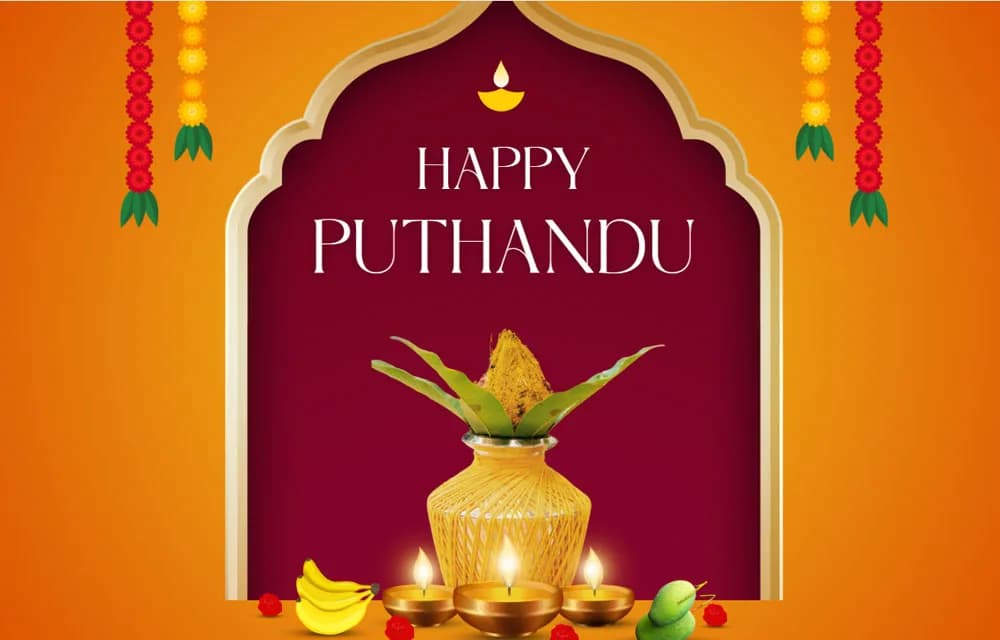
Tamil New Year Day 2025 (Puthandu) – A Sacred Beginning Tamil New Year Day, also known as Puthandu or Chithirai Thirunaal, marks the beginning of the Tamil…
Tamil New Year Day 2025 (Puthandu) – A Sacred Beginning
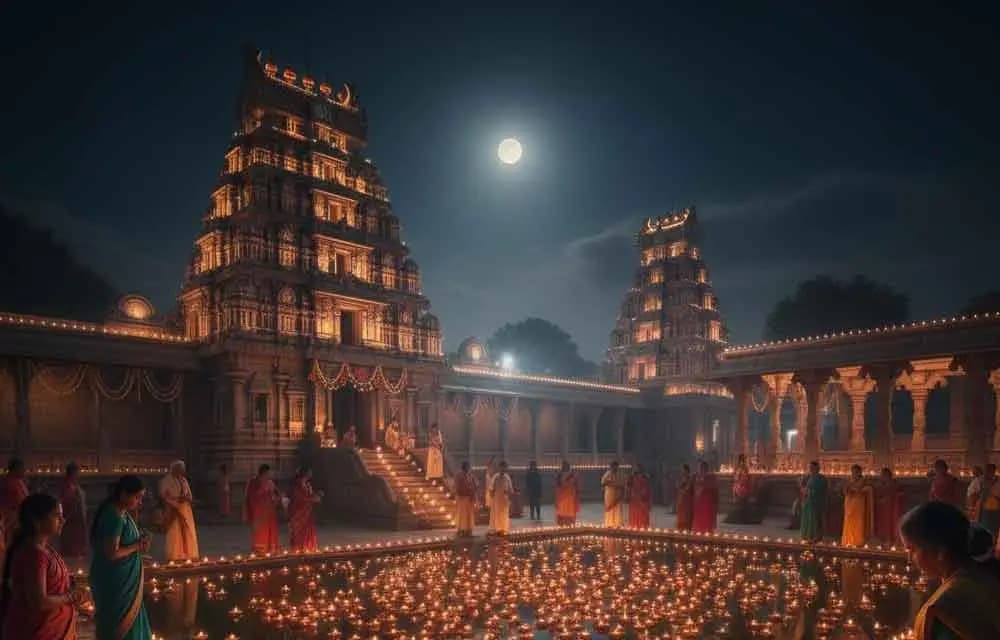
Tamil New Year Day, also known as Puthandu or Chithirai Thirunaal, marks the beginning of the Tamil calendar year. In 2025, Tamil New Year falls on April 14. It is a time of new beginnings, spiritual cleansing, family bonding, and honoring traditions that reflect the rich heritage of Tamil culture.
Spiritual Significance of Tamil New Year
Tamil New Year is not just a change in date; it is a spiritual reset. The day is dedicated to Lord Brahma, the creator of the universe, and is seen as a time to start afresh with positive thoughts, good deeds, and divine blessings.
According to Hindu astrology, the Tamil New Year begins when the Sun enters the zodiac sign of Aries (Mesha Rashi), symbolizing energy, action, and a fresh cycle of life.
Rituals and Celebrations
Kanni (Auspicious Sight):
One of the most sacred rituals is seeing the "Kanni" (a collection of auspicious items like fruits, flowers, betel leaves, gold, mirror, and holy books) the first thing in the morning. It is believed to bring prosperity and good luck.
Temple Visits:
Devotees visit temples to seek blessings from deities like Lord Vishnu, Lord Shiva, and Goddess Mariamman. Special Puthandu prayers and archanas are performed.
Mangai Pachadi – A Special Dish:
Families prepare Mangai Pachadi, a unique dish made from raw mango, neem flowers, jaggery, and tamarind. It symbolizes the six flavors of life – happiness, anger, fear, sadness, disgust, and surprise.
Family Gatherings and Cultural Events:
Tamil New Year is a day of joy, where people wear new clothes, decorate their homes with Kolams (rangoli), light lamps, and participate in cultural performances, music, and dance.
Tamil New Year and Hindu Dharma
At HinduTone.com, we believe that festivals like Tamil New Year are a way to connect with Sanatana Dharma. It teaches the values of gratitude, spiritual introspection, cultural pride, and renewed faith in the divine order of the cosmos.
Tamil New Year Wishes (Puthandu Vazthukal)
"Puthandu Vazthukal! May this Tamil New Year bring happiness, health, wealth, and peace to your life."
People share wishes and blessings with loved ones, emphasizing unity and divine blessings.
Tamil New Year Around the World
Tamilians across the globe – from Tamil Nadu to Sri Lanka, Singapore, Malaysia, and beyond – celebrate Puthandu with great enthusiasm, keeping the spiritual and cultural flame alive.
Embracing New Beginnings
Puthandu encourages us to:
- Cleanse our hearts and homes
- Reflect on our past actions
- Recommit to Dharma (righteousness)
- Start the year with prayers, humility, and hope
Join the Tamil New Year Celebrations with HinduTone
Stay connected with HinduTone.com to explore more about Hindu festivals, rituals, temple traditions, and spiritual insights. Let’s celebrate our rich heritage and pass it on to the next generation with pride.
What is the astronomical basis of Puthandu and how does Mesha Sankranti determine its date?
Tamil New Year is astronomically anchored to Mesha Sankranti — the precise moment the Sun (Surya) transitions from Meena Rashi (Pisces) into Mesha Rashi (Aries). This solar ingress is calculated using the Surya Siddhanta, one of the oldest surviving astronomical treatises in Sanskrit, which outlines planetary motion with remarkable precision. Because the Tamil calendar follows the Sayana solar reckoning tied to the sidereal zodiac, Puthandu consistently falls on April 14 in most years.
The twelve Tamil months begin with Chithirai and each corresponds to the Sun's transit through one of the twelve rashis. The Chithirai month, in which Puthandu falls, takes its name from the Chitra nakshatra (Spica), which was historically prominent during this period. This deep integration of stellar observation with festival timing reflects the sophisticated jyotisha knowledge embedded in Tamil Sanatana tradition.
The Panchangam — the traditional Tamil almanac — is formally read aloud in temples and households on this day. Priests recite the Puthandu Panchangam publicly after sunrise, announcing the year's name (each of the 60 Tamil years in the Brahaspati cycle carries a unique name), the ruling planet, predicted rainfall, and auspicious periods. In 2025, the Tamil year is Krodhi, the 27th in the 60-year cycle.
Which scriptures and Puranas give authority to celebrating the solar new year?
The Vishnu Purana describes Surya as the very soul of the universe — 'Surya Atma Jagatastasthushascha' — affirming that the Sun's movement governs all of creation's rhythms. Celebrating the Sun's entry into Aries is therefore not a mere cultural custom but a recognition of this cosmic governance. The Skanda Purana, which has extensive sections devoted to South Indian sacred geography and practice, also acknowledges Mesha Sankranti as a highly meritorious day for charity, river bathing, and temple worship.
The concept of Yugadi — the beginning of an age — resonates through Puthandu as well. The Dharmasindhu and Nirnayasindhu, authoritative Sanskrit texts on Hindu observances (nibandha literature), classify Mesha Sankranti as a Punya Kala, a spiritually potent window during which dana (charitable giving) and snana (ritual bathing) yield multiplied merit. Tamil Shaiva texts such as the Tirumantiram by Thirumoolar also celebrate the Sun's northward and zodiacal movements as expressions of Lord Shiva's grace permeating time itself.
How is Puthandu celebrated differently across Tamil Nadu's major temple cities?
At the Ranganathaswamy Temple in Srirangam — one of the 108 Divya Desams and the largest functioning Hindu temple complex in the world — Puthandu is marked by a special Thiruvanandal (recitation of the Nalayira Divya Prabandham) and the ceremonial presentation of the Panchangam before Lord Ranganatha. Devotees gather from across Tamil Nadu to witness the Surya puja performed as sunlight enters the temple's inner sanctum.
In Madurai, the Meenakshi Amman Temple conducts elaborate Puthandu archanas dedicated to Goddess Meenakshi and Lord Sundareswarar. The temple's ritual calendar treats Chithirai as its most sacred month — the grand Chithirai Festival, celebrating the celestial wedding of Meenakshi and Sundareswarar, begins just days after Puthandu, making the entire first fortnight of Chithirai a continuous period of devotion.
In Kanchipuram, the Ekambareswarar Temple and the Varadharaja Perumal Temple both perform special homams on Puthandu morning. Kanchipuram's weavers, who produce the renowned Kanchivaram silk sarees, consider this day auspicious to begin new weaving projects, often offering the first thread to the deity before commencing work — a living example of how spiritual and livelihood traditions remain woven together in Tamil culture.
What is the deeper spiritual symbolism behind the Kanni (Kani) ritual?
The Kanni ritual — waking before sunrise and gazing upon an arranged tray of auspicious objects — is a form of Mangala Darshan, the auspicious first sight that sets the tone for an entire year. The assembled items are not arbitrary: gold represents Lakshmi and material prosperity, the mirror (kannadi) reflects the self and symbolises self-awareness, ripe fruits represent the fruits of past karma ripening into abundance, and neem flowers acknowledge that life contains bitterness alongside sweetness.
The inclusion of a holy scripture — typically the Thirukural or a Vishnu Sahasranama text — in the Kanni tray is particularly significant. It signals that wisdom and dharmic knowledge must be the first intellectual nourishment of the new year. The oil lamp (vilakku) placed alongside represents the dispelling of avidya (ignorance) through the light of jnana. Collectively, the Kanni is a microcosm of Sanatana values: wealth, health, self-reflection, sweetness, bitterness, and wisdom held together in balance.
Traditionally, the eldest woman of the household arranges the Kanni the night before and wakes first to light the lamp, signifying her role as the guardian of the family's spiritual well-being. Children are gently guided to the Kanni while still half-asleep, so that the auspicious sight truly is the first conscious image of their new year — a tender and intentional pedagogical act passing tradition from one generation to the next.
How does Mangai Pachadi encode a philosophical teaching about the nature of life?
Mangai Pachadi — prepared from raw mango (sourness), neem flowers (bitterness), jaggery (sweetness), tamarind (tanginess), salt, and chili (heat and pungency) — is a culinary embodiment of the Shad Rasa (six tastes) philosophy found in Ayurveda and Sanskrit aesthetics. By consuming all six flavours in a single dish on the year's first day, the Tamil tradition makes a conscious declaration: life will bring every kind of experience, and the wise person receives them all with equanimity.
This teaching echoes a central theme of the Bhagavad Gita, where Lord Krishna counsels Arjuna in Chapter 2 to remain 'sama' (equanimous) in pleasure and pain, success and failure. The Pachadi is thus not merely food but a ritual act of philosophical preparation — a reminder that one should enter the new year without the illusion that only sweetness awaits. Neem (Azadirachta indica), called Veppam in Tamil, holds particular sacred status and is associated with Goddess Mariamman; its inclusion links the dish to the divine mother's blessing of health and protection.
How is Tamil New Year connected to the broader pan-Indian Yugadi and solar new year celebrations?
Puthandu is part of a constellation of solar new year celebrations observed across India around the same period. Vishu in Kerala, Baisakhi in Punjab, Bohag Bihu in Assam, Pana Sankranti in Odisha, and Ugadi in Karnataka and Andhra Pradesh all cluster around the Sun's entry into Aries. This simultaneous occurrence across geographically and linguistically diverse regions is a testament to the unifying astronomical and dharmic framework of Sanatana civilization, which used the solar calendar as a shared sacred reference.
While the celebrations differ in their local flavour — Ugadi features Bevu-Bella (neem and jaggery), Vishu has the Vishukkani, and Baisakhi marks the harvest — their shared astronomical root in Mesha Sankranti reveals a common spiritual grammar. Ancient trade routes, pilgrimage networks, and the circulation of Sanskrit astronomical knowledge through texts like the Surya Siddhanta helped synchronise these observances across the subcontinent over millennia.
For Tamil diaspora communities in Malaysia, Singapore, Sri Lanka, Mauritius, South Africa, and across Western nations, Puthandu serves as a powerful cultural anchor. Tamil cultural associations in cities such as Kuala Lumpur, London, and Toronto organise Kolam competitions, classical Bharatanatyam performances, and communal Pachadi preparation, ensuring that the festival's spiritual depth and cultural continuity are preserved far beyond the shores of Tamil Nadu.
Frequently Asked Questions
When is Tamil New Year Day?
Tamil New Year Day is observed on its traditional tithi in the Hindu lunar calendar; refer to the year's panchang for the exact date in your region.
What is the significance of Tamil New Year Day?
Tamil New Year Day 2025 (Puthandu) – A Sacred Beginning Tamil New Year Day, also known as Puthandu or Chithirai Thirunaal , marks the beginning of the Tamil calendar year. In 2025, Tamil New Year falls on April 14 .
How is Tamil New Year Day celebrated?
Devotees observe it with puja, fasting or special offerings, visiting temples, chanting mantras, and gathering with family. Customs vary by region and tradition.
What should devotees do on Tamil New Year Day?
Take a sacred bath, perform the day's puja and charity (dana), observe any prescribed fast, and chant mantras with sincere devotion.
You might also like
June 2026 Hindu Festival Calendar — Complete Dates, Vrat & Puja Guide for NRIs
Shani Deva Temples Worldwide & Must-Performed Rituals — Complete Devotee's Guide
Karthika Masam 2026: Dates, Rituals, Vrat, Festivals & North vs South India Guide