Ugadi 2026 Date, Panchang Details, Significance & Traditions – Telugu New Year
Ugadi 2026, also known as Yugadi or Telugu/Kannada New Year, falls on Thursday, March 19, 2026.

Ugadi 2026, also known as Yugadi or Telugu/Kannada New Year, falls on Thursday, March 19, 2026.
Ugadi 2026, also known as Yugadi or Telugu/Kannada New Year, falls on Thursday, March 19, 2026. It marks the beginning of the Hindu lunisolar New Year in the month of Chaitra (Chaitra Shukla Pratipada), celebrated primarily in Andhra Pradesh, Telangana, and Karnataka (and as Gudi Padwa in Maharashtra).
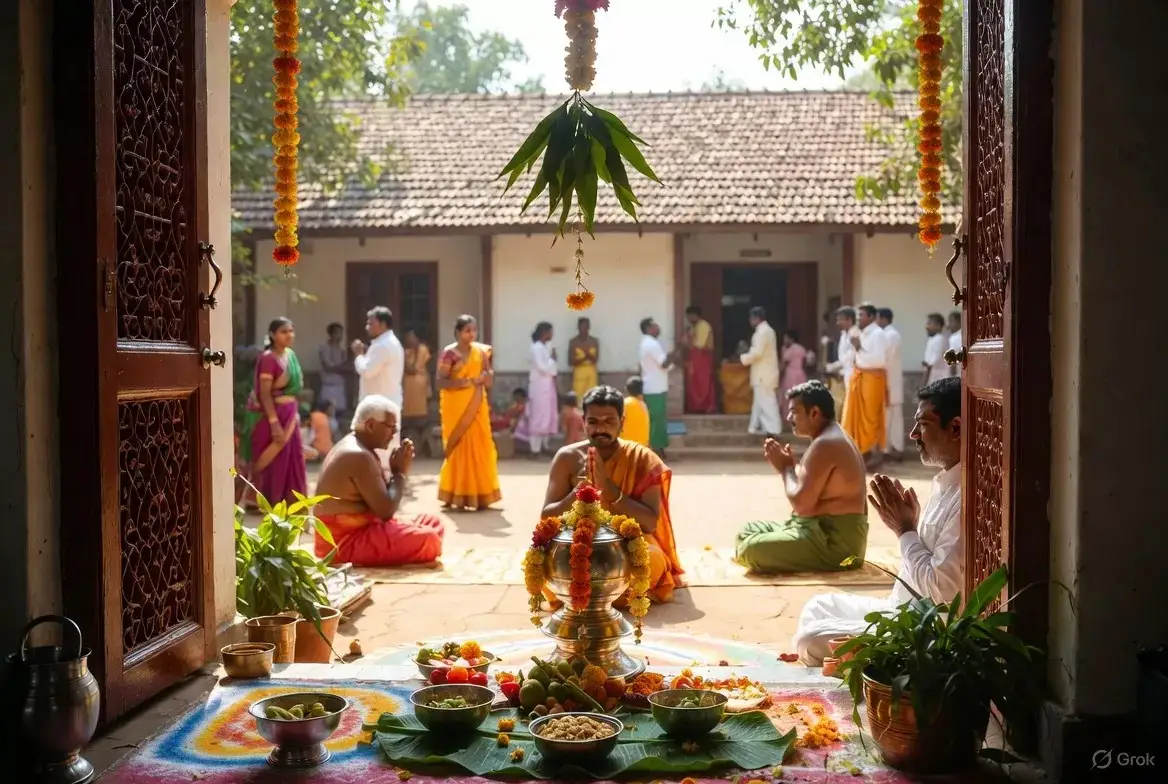
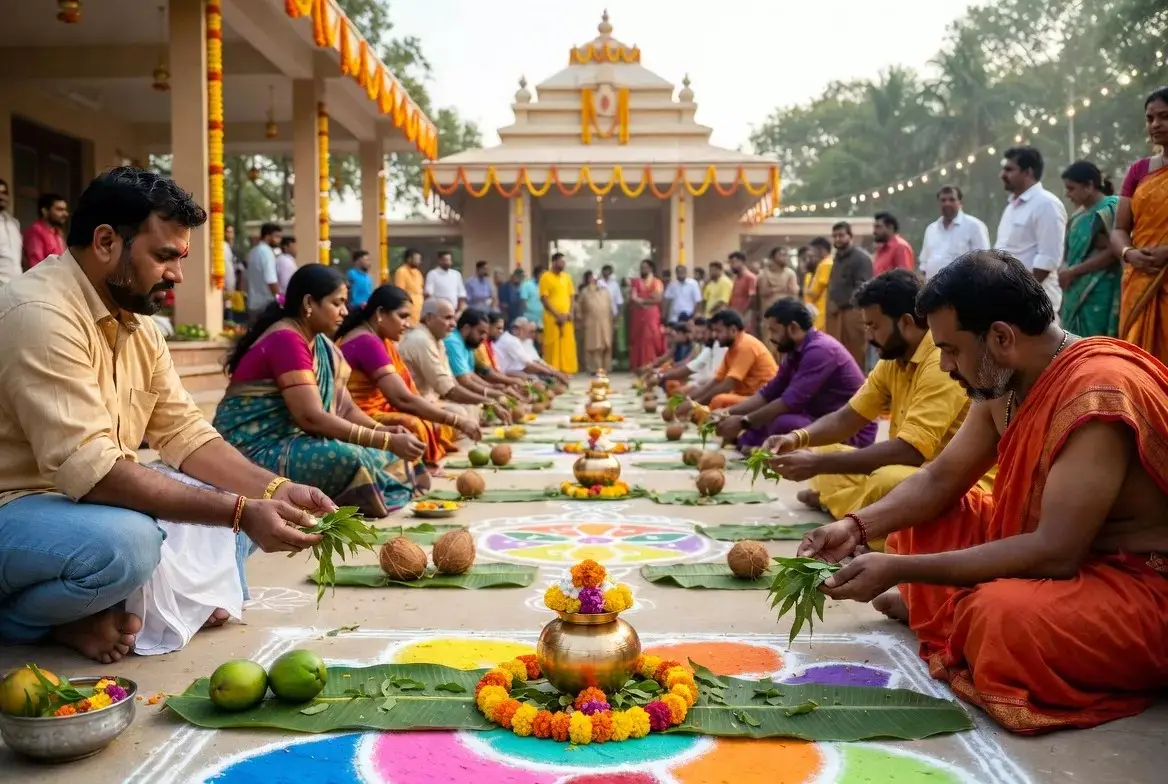
According to details from www.hindutone.com (a Hindu devotional and cultural site covering festivals, Panchang insights, and traditions), Ugadi 2026 is highlighted in their festival sections with articles on its date, muhurat, significance, recipes, wishes, and more. They emphasize it as a day of new beginnings, prosperity, hope, rituals like Ugadi Pachadi (symbolizing life's six tastes: sweet, sour, salty, bitter, astringent, spicy), oil baths, mango leaf torana decorations, rangoli/muggulu, temple visits, and Panchanga Sravanam (reading of the year's almanac for predictions on weather, harvest, and fortunes).
Key Panchang Details for Ugadi 2026 (Chaitra Shukla Pratipada)
The core five elements (Panchang limbs) for the day, based on standard Vedic calculations for India (e.g., New Delhi/Ujjain timings, which align closely with sources referenced on hindutone.com and cross-verified Panchang sites):
- Tithi (Lunar Day): Chaitra Shukla Pratipada (Padyami / 1st day of the bright fortnight).
- Begins: Approximately 6:52 AM on March 19, 2026
- Ends: Approximately 4:52 AM on March 20, 2026 (This Pratipada Tithi is the defining one for Ugadi celebrations.)
- Nakshatra (Lunar Constellation): Varies by exact time, but on Ugadi day it typically transitions (often Ashwini or Bharani around sunrise; precise local Panchang consultation recommended for hour-by-hour details).
- Yoga (Auspicious/Inauspicious Combination of Sun-Moon): Specific Yoga for the day (e.g., often Siddhi or similar auspicious ones on Pratipada; full daily Yoga sequence available in detailed Panchang apps or priests' readings during Panchanga Sravanam).
- Karana (Half-Tithi): Bava (first half) or similar movable Karana on Pratipada (Karanas cycle through 11 types; often auspicious for new beginnings on this tithi).
- Vara (Weekday): Thursday (Guruvara / ruled by Jupiter, considered favorable for new ventures and wisdom).
- Samvatsara Name: The year beginning on Ugadi 2026 is Vishwavasu (or Siddharthi in some regional reckonings; hindutone.com notes variations like Vishwavasu for Telugu/Kannada calendars, with yearly predictions shared via Panchanga Sravanam).
Hindutone.com provides related content such as:
- Ugadi 2026 Date, Muhurat & Gold Buying Guide (auspicious timings for purchases like gold, often on Pratipada).
- Special Recipes (e.g., Ugadi Pachadi variations, Bobbatlu, Pulihora, Payasam).
- Significance & History (spiritual meaning tied to Lord Brahma's creation, life's mixed flavors via Pachadi).
For the most precise location-specific (e.g., Hyderabad) timings, Nakshatra/Yoga transitions, or full daily Panchang (including sunrise/sunset, Rahu Kalam, Gulikai, Yamaganda, etc.), refer directly to hindutone.com's festival/Ugadi articles or consult a local astrologer/Panchangam, as minor variations occur by region and ayanamsa used.
Ugadi Greetings! May the New Year bring health, joy, and prosperity. [image: 🥭] [image: 🌿]
Which Samvatsara (Year Name) does Ugadi 2026 Inaugurate?
Ugadi 2026 inaugurates the Samvatsara named Vikrama (also transliterated as Vikāri or Viśvāvasu depending on the regional Panchang tradition — readers should confirm with their local almanac). The 60-year cycle of Samvatsaras, rooted in the Jovian calendar (Bārhaspatya Māna), assigns each year a Sanskrit name that carries its own astrological and cultural character. The name Vikrama connotes courage, valor, and dynamic enterprise, suggesting a year propitious for bold new undertakings.
In the tradition of Panchanga Sravanam performed on Ugadi morning, the officiating priest or scholar formally announces the new Samvatsara name along with predictions about rainfall (varsha phala), agricultural yield (dhanya phala), health (ārogya phala), and political conditions (rāja phala). This announcement draws on principles codified in texts like the Brihat Samhita of Varahamihira, which systematically links planetary positions at the start of each lunar year to worldly conditions. Families gather to hear this recitation, understanding it as both a spiritual orientation and a practical guide for the coming twelve months.
The Mythological Roots of Ugadi: Why Chaitra Pratipada is Creation Day
The Brahma Purana states that Lord Brahma began the act of creation — Srishti — on Chaitra Shukla Pratipada, making this tithi literally the birthday of measured time itself. The verse 'Chaitra māsi jagad Brahmā sasarja prathame ahani' (On the first day of Chaitra month, Brahma created the universe) is frequently cited during Panchanga Sravanam recitations to underscore why this day carries such cosmological weight. It is not merely a calendrical convention but a commemoration of the moment when kāla (time) was set in motion.
A second layer of mythology connects Ugadi to the return of Sri Rama to Ayodhya after his fourteen-year exile, which popular tradition places around this period of the lunar calendar. Additionally, the Skanda Purana and regional oral traditions associate the day with the onset of spring (Vasanta Ritu), when the earth itself is said to renew its creative energy — a theme that directly mirrors the personal and communal sense of fresh beginnings that Ugadi rituals express.
Ugadi Pachadi: The Spiritual Symbolism Behind Each of the Six Tastes
Ugadi Pachadi is prepared by combining six distinct ingredients, each corresponding to one of the shad-rasas (six tastes) recognized in both Ayurveda and Sanskrit poetics: raw mango pieces (sour / amla), jaggery (sweet / madhura), neem flowers (bitter / tikta), tamarind juice (astringent / kashāya), green chili or pepper (pungent / katu), and a pinch of salt (salty / lavana). Consuming all six together at the start of the new year is a deliberate philosophical act: it encodes the teaching that life in the coming year will inevitably contain sorrow and joy, loss and gain, challenge and comfort — and that equanimity before all of them is the mark of a mature soul.
Neem flowers (vepa puvvu in Telugu) deserve special mention because their bitterness is the most counter-intuitive ingredient. Yet neem is celebrated in the Charaka Samhita for its purifying, anti-inflammatory properties, and ingesting neem blooms at the start of spring is considered both a medical practice to strengthen immunity for the warmer months ahead and a spiritual reminder that difficulty, honestly faced, is also a teacher. The Pachadi is traditionally made fresh on Ugadi morning and consumed before any other food, reinforcing the idea that one begins the year with clear-eyed acceptance rather than wishful thinking.
Panchanga Sravanam: How the New Year's Almanac Reading is Conducted
Panchanga Sravanam — literally 'the listening to the five limbs' — is performed on Ugadi morning at homes, temples, and community gatherings across Andhra Pradesh, Telangana, and Karnataka. A learned Jyotishi (Vedic astrologer) or family priest reads aloud from the newly published regional Panchang, which incorporates the positions of all nine grahas (Navagrahas) at the precise moment of the year's commencement. Sri Venkateswara Swamy temples, including the Tirumala Tirupati Devasthanams complex in Tirupati, Andhra Pradesh, conduct elaborate official Panchanga Sravanam ceremonies that draw large congregations.
The recitation covers several categories of annual prediction: the ruling graha of the year (Varshadhipati), the graha governing rainfall (Meghadhipati), the graha governing crops (Dhanyādhipati), and so on. Each assignment is derived from specific calculations set out in classical Jyotisha Shastra. Families listening are advised on which gemstones, charitable acts (dāna), and worship practices (upāsana) would be most beneficial during the year, making Panchanga Sravanam a uniquely practical expression of Vedic knowledge in daily life.
Regional Parallels: How Gudi Padwa, Sajibu Nongmapanba, and Navreh Share the Same Tithi
Chaitra Shukla Pratipada is observed as a new year festival across a remarkable range of Indian communities. In Maharashtra, the same day is celebrated as Gudi Padwa, marked by the raising of the Gudi — a brass or silver pot placed atop a decorated bamboo pole outside homes, symbolizing victory and auspiciousness. In Manipur, the Meitei community celebrates Sajibu Nongmapanba as their new year, combining Vaishnavite traditions with indigenous Sanamahism. Kashmiri Pandits observe Navreh on the same tithi, carrying Puja thalis filled with walnuts, rice, and a Panchang as the first objects sighted in the new year.
This geographical spread — from the Deccan Plateau to the foothills of the Himalayas — reflects the deep structural unity of the Vedic lunisolar calendar, even as each community expresses it through distinct ritual vocabularies. The Vishnu Purana's declaration that Chaitra Pratipada is the sacred beginning of the year (shubha ādi tithi) provided the theological common ground upon which all these regional traditions independently built their celebratory forms. Recognizing these parallels enriches the Ugadi observance by situating it within a pan-Indian tapestry of spring renewal and sacred time.
Auspicious Practices and Charitable Acts Recommended on Ugadi 2026
Dharmashastra texts recommend several specific acts of merit (punya karma) on Chaitra Pratipada. Tailabhyanga — the oil bath taken before sunrise — is considered purifying for both body and mind, and is mentioned in the Hemadri's Chaturvarga Chintamani as appropriate to new-year observances. Following the bath, worshipping the Navagrahas and performing a short Satyanarayana Katha or recitation of the Vishnu Sahasranama sets a devotional tone for the entire year.
Dāna (charitable giving) on Ugadi carries heightened spiritual merit. Classical texts specifically recommend gifting sesame seeds, jaggery, new clothes, and books of knowledge on auspicious tithis at the start of the year. Feeding Brahmins, Sadhus, or the economically vulnerable on this day is described in the Dharma Sindhu as accruing punya equivalent to many ordinary days of charity. On a practical note, many families in Hyderabad, Vijayawada, and Bengaluru use Ugadi 2026 as the occasion to register new business ventures, sign property documents, or begin construction — all acts that benefit from the day's inherent auspiciousness according to traditional Muhurta Shastra.
Frequently Asked Questions
What does this Ugadi Date, Panchang Details, Significance & cover?
Ugadi 2026, also known as Yugadi or Telugu/Kannada New Year, falls on Thursday, March 19, 2026 . It marks the beginning of the Hindu lunisolar New Year in the month of Chaitra ( Chaitra Shukla Pratipada), celebrated primarily in Andhra Pradesh, Telangana, and Karnataka (and as Gudi Padwa in Maharashtra).
Should I read my Sun sign or Moon sign?
Vedic astrology uses your Janma Rashi — your natal Moon sign — not the Western Sun sign. Read the predictions for your Moon sign for the most accurate guidance.
Are these predictions guaranteed?
Vedic predictions indicate general tendencies and supportive remedies, not certainties. They are best used as guidance alongside sincere effort and devotion.
What remedies are suggested?
Common supportive practices include relevant mantra chanting, fasting on the appropriate day, charity (dana), and temple worship; specifics depend on your birth chart.
You might also like
Ugadi 2026 Celebrations in India: Traditions, Rituals and Auspicious Beginnings
Ugadi 2026 Worldwide: Devotional Vibes of Parabhava Hindu Year Across Borders

Ugadi Celebrations in the UK & Ireland: City-Wise Guide for Indian Diaspora & NRIs – 2026 Edition