

Varalakshmi Vratam Tambulam: What to Give, How Many and to Whom
A warm, practical guide to preparing tambulam for Varalakshmi Vratam — typical contents, traditional counts, inviting married women, and adapting when you live far from a community.
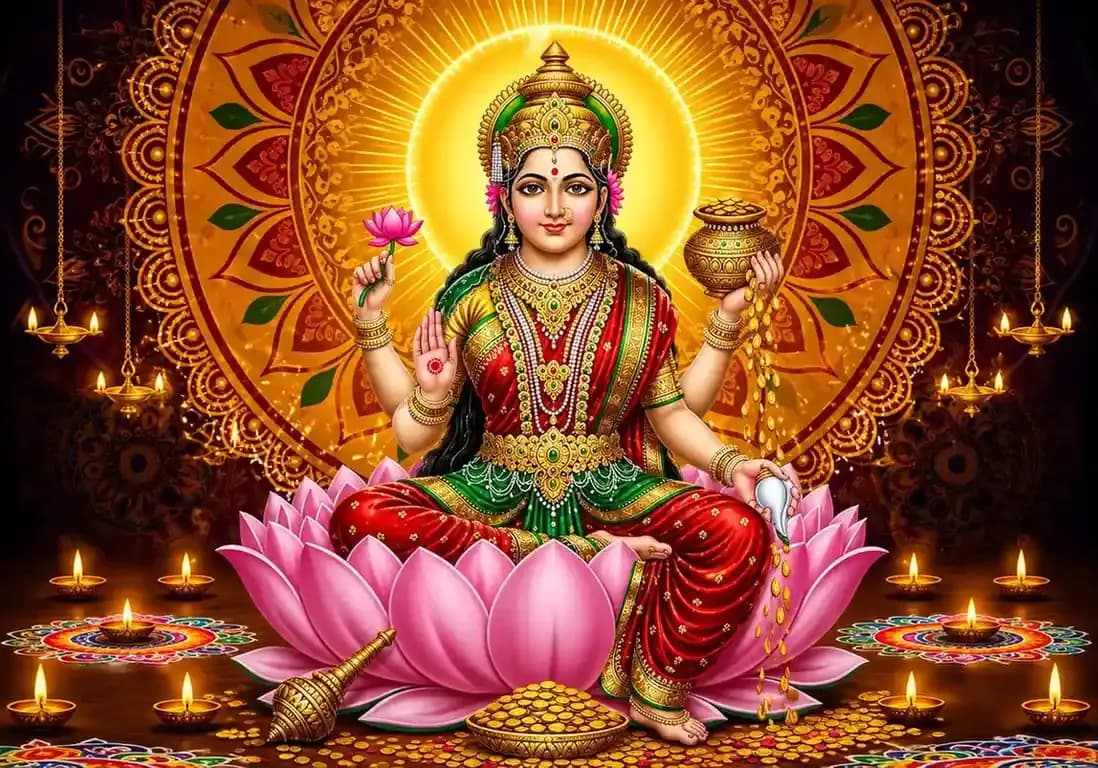
A warm, practical guide to preparing tambulam for Varalakshmi Vratam — typical contents, traditional counts, inviting married women, and adapting when you live far from a community.
Quick answer: Tambulam for Varalakshmi Vratam is a gift tray offered to invited married women (muthaiduva), typically holding betel leaves, areca nut, fruit, a blouse piece, kumkum-turmeric and dakshina. Families prepare an auspicious count — often 2, 5, 9 or 11 — and adapt gracefully if few women are nearby.
Tambulam (also spelled thamboolam) is one of the warmest parts of Varalakshmi Vratam. After the puja, married women of the household prepare small gift trays and offer them to other married women (muthaiduva) whom they invite home, as a mark of respect for the auspicious married state (saubhagya). The tray is simple in its parts but rich in meaning, and there is no single 'correct' list — every family, region and kula does it a little differently.
This guide walks through what usually goes into a tambulam, the traditional counts families follow, whom to invite and how, and — importantly for readers in the diaspora — how to keep the spirit of the custom alive when you do not have a large circle of married women nearby. The idea is to help you feel confident and unhurried, not to add pressure.
- Festival: Varalakshmi Vratam 2026
- Observed on: Friday 21 August 2026 (most Telugu/Tamil/Kannada panchangs) or Friday 28 August 2026 (some panchangs)
- Custom: Tambulam (thamboolam) gift tray
- Given to: Invited married women (muthaiduva)
- Typical counts: 2, 5, 9 or 11 (follow family tradition)
- Core items: Betel leaves, areca nut, fruit, blouse piece, kumkum, dakshina
The two possible dates matter, so plan ahead. Depending on the panchang your family follows, Varalakshmi Vratam 2026 falls on either Friday 21 August 2026 (followed by most Telugu, Tamil and Kannada panchangs) or Friday 28 August 2026 (followed by some panchangs). Neither is wrong — follow your family, kula or local-temple tradition. See the detailed date explainer if you are unsure which Friday applies to you.
What goes into a tambulam
A tambulam is usually arranged on a small plate, tray or in a folded cloth. The contents are symbolic of abundance, auspiciousness and the married state. Below is a typical set — treat it as a starting point, not a rulebook. Many families add or drop items freely.
| Item | Why it is included | Common quantity per tray |
|---|---|---|
| Betel leaves (tamalapaku) | Symbol of hospitality and auspiciousness | 2 leaves (a pair) |
| Areca nut (vakka / supari) | Paired with betel leaves as a traditional offering | 1-2 whole nuts |
| Fruit | Symbol of abundance and sweetness | 1 banana or seasonal fruit |
| Blouse piece / cloth (ravike gudda) | Gift of clothing to a married woman | 1 piece |
| Kumkum and turmeric | Marks of saubhagya (auspicious married status) | Small packets |
| Dakshina (a small coin or note) | Token of respect and goodwill | As per your comfort |
| Bangles / small mirror / comb (optional) | Symbols of the married state | 1 as available |
| Sweet or coconut (optional) | Sweetness and completeness | 1 |
You do not need every row above. In many homes a tambulam is simply betel leaves, areca nut, a fruit, kumkum and a small dakshina — that is complete and dignified. If your budget is modest, keep it modest; the offering is about respect and blessing, not display.
How many tambulams to prepare
There is no fixed rule, and no outcome is guaranteed by any number — this is tradition observed as tradition. Most families choose an auspicious odd count, or simply prepare as many as there are women they plan to invite. Common choices include:
- Two (2) — a simple, common minimum, often exchanged between two households
- Five (5) — a frequently chosen auspicious count
- Nine (9) — associated with completeness in many families
- Eleven (11) — chosen by those who host a larger gathering
- As many as guests — the most practical approach when your circle is a known number
If you have heard a specific number in your family, follow that. If not, five or nine are safe, gracious choices. And if you can only prepare one or two, that is completely acceptable — quality of intention matters more than count.
Whom to invite and how
Tambulam is traditionally offered to married women (muthaiduva / sumangali). The gesture honours the auspicious married state and builds warmth between households. Here is a simple flow many families follow:
- Decide your date first (21 or 28 August 2026, per your panchang) and note the puja window your family keeps.
- A few days ahead, invite married women — neighbours, relatives, friends — in person, by phone or message. A warm, informal invitation is perfectly fine.
- Apply kumkum and offer the tambulam tray to each guest, ideally after your puja.
- Exchange good wishes; many families also touch the elders' feet and receive blessings.
- Send tambulam to those who could not come, through a family member, so no one is left out.
For the ritual sequence around the puja itself, see our step-by-step puja vidhi. Puja and inviting times are location-specific, so check locally rather than relying on a single clock time.
Adapting when no local circle of women is nearby
This is a very real situation for many families in the diaspora, in new cities, or after a move. If you cannot gather married women in person, the custom can still be honoured warmly and meaningfully. Here are gentle, tradition-respecting ways to adapt:
- Invite across faiths of friendship, not just relatives — colleagues, temple-community contacts, or a neighbour you know can be your muthaiduva guests.
- Keep it small — even one guest, or a mother-daughter or sister pair within the home, upholds the spirit.
- Send tambulam by courier or hand it to a friend to pass on, if distance is a barrier.
- Do a video-call tambulam — apply kumkum on screen, show the tray, and exchange wishes with family back home.
- Offer the tambulam to the Goddess and to the women of your own household if no outside guests are possible; the intention is what is honoured.
- Join a local temple or community Varalakshmi gathering, where tambulam is exchanged collectively.
Diaspora families often ask about doing the whole vratam with fewer materials. If sourcing a kalasam or specific items is hard where you live, our vratam without a kalasam guide and the NRI observance guide show simple, respectful adaptations.
A note on regional variation
Tambulam contents and counts differ across Andhra, Telangana, Tamil Nadu, Karnataka and among individual families. Some include a small mirror or comb; some add sweets or a coconut; some keep it to betel-and-nut plus dakshina. Eligibility to give and receive is understood differently in different communities. Treat all these as a spectrum of valid practice — there is no single gatekept 'right way', and no one should feel excluded. When in doubt, ask an elder in your family or your local temple.
Related reading
- p[object Object]
- p[object Object]
- p[object Object]
- p[object Object]
- p[object Object]
Frequently Asked Questions
What is tambulam in Varalakshmi Vratam?
Tambulam is a small gift tray offered to invited married women (muthaiduva) after the Varalakshmi puja. It typically holds betel leaves, areca nut, fruit, a blouse piece, kumkum and a small dakshina. The gesture honours the auspicious married state and shares blessings between households as a warm mark of respect.
How many tambulams should I prepare?
There is no fixed rule. Many families choose an auspicious count such as 2, 5, 9 or 11, while others simply prepare as many trays as guests they invite. Follow your family tradition if you know one; otherwise five or nine are gracious choices, and even one or two is perfectly acceptable.
Whom do I give tambulam to?
Tambulam is traditionally offered to married women (muthaiduva or sumangali) whom you invite home. In practice, families invite neighbours, relatives and friends. Communities differ on eligibility, so treat it as a spectrum of valid practice, invite warmly, and send a tray to anyone who could not attend so no one is left out.
What items go inside a tambulam tray?
A typical tambulam holds betel leaves, areca nut, a fruit such as a banana, a blouse piece or cloth, kumkum and turmeric, and a small dakshina. Optional additions include bangles, a small mirror, a comb, a sweet or a coconut. A simple tray of betel, nut, fruit and kumkum is complete and dignified.
When is Varalakshmi Vratam in 2026?
Depending on the panchang your family follows, Varalakshmi Vratam 2026 falls on either Friday 21 August 2026, followed by most Telugu, Tamil and Kannada panchangs, or Friday 28 August 2026, followed by some panchangs. Neither is wrong — follow your family, kula or local-temple tradition and confirm on our date page.
Can I do tambulam if no married women live nearby?
Yes. You can keep it small with even one guest, invite friends or temple-community contacts, courier a tray, or do a video-call tambulam with family back home. If no outside guests are possible, offer the tambulam to the Goddess and to women of your own household. The intention is what is honoured.
Is there a required amount for dakshina?
No. Dakshina is a token of respect and goodwill, not a fixed sum. Give a small coin or note as per your comfort and budget. The custom is about blessing and warmth, not display, so a modest dakshina is entirely appropriate and no specific amount guarantees any outcome.
How do I invite muthaiduva women respectfully?
Invite a few days ahead, in person, by phone or message — a warm, informal invitation is perfectly fine. After your puja, apply kumkum and offer the tambulam tray to each guest, exchange good wishes, and receive blessings from elders. Send a tray to those who could not come so everyone feels included.
You might also like

Indian Temple Flowers: Sacred Blooms & What Each Deity Loves

Indian Flower Festivals: 10 Beautiful Celebrations Beyond Bathukamma

Bathukamma Flowers: Meaning, Symbolism & the Wisdom Behind Each Bloom