

Why Is Goddess Lakshmi Worshipped as Varalakshmi?
Varalakshmi means the boon-granting Lakshmi. Learn why this loving form of Maha Lakshmi is invoked in Shravana and how she is said to hold the Ashta Lakshmi within her.
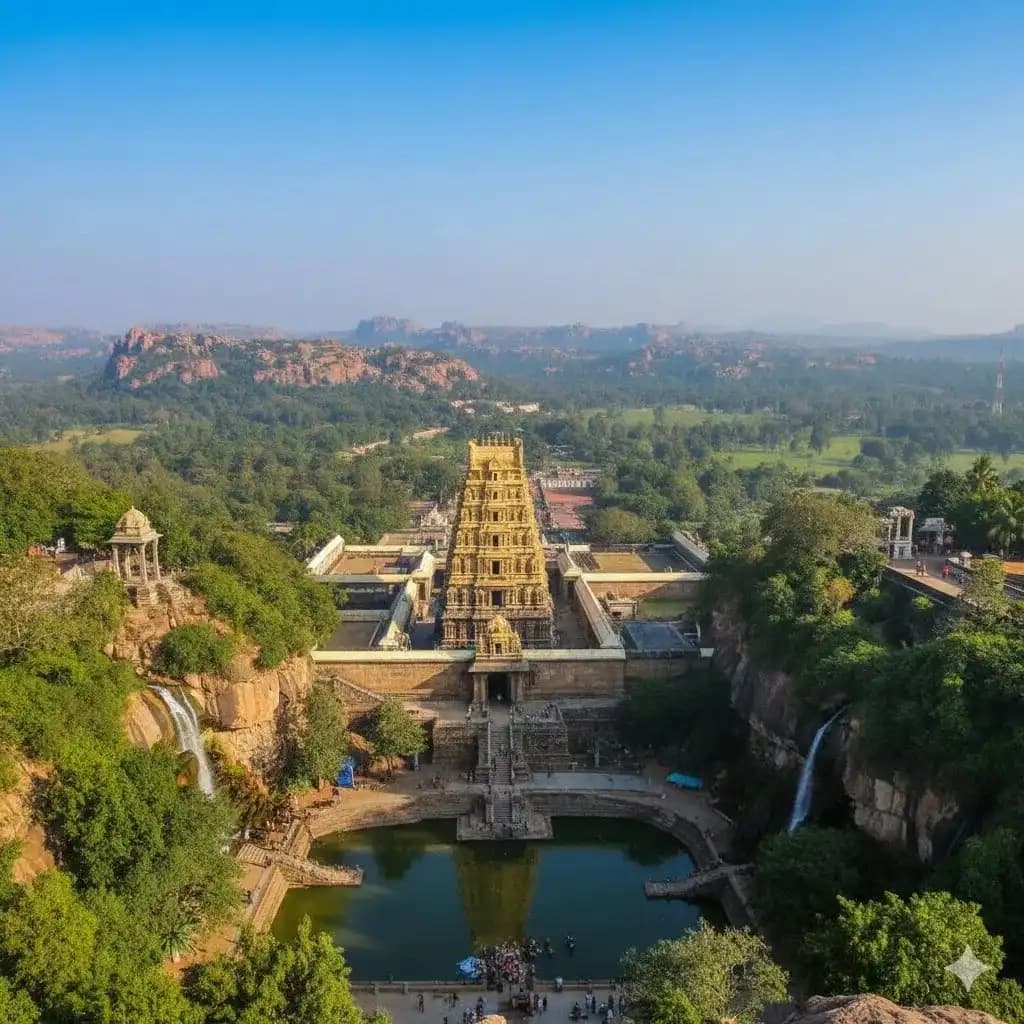
Varalakshmi means the boon-granting Lakshmi. Learn why this loving form of Maha Lakshmi is invoked in Shravana and how she is said to hold the Ashta Lakshmi within her.
Quick answer: Lakshmi is worshipped as Varalakshmi because vara means boon; Varalakshmi is the boon-granting form of Maha Lakshmi who fulfils sincere prayers. Invoked especially in the month of Shravana, she is revered as one who holds within herself the collective grace of the eight Ashta Lakshmi forms.
When devotees gather on a Shravana Friday to knot a sacred thread and light lamps before a decorated kalasam, they are not worshipping a different goddess. They are calling upon Maha Lakshmi in one of her most tender and approachable moods: Varalakshmi, the giver of boons. The very name answers the question in this article's title. Vara means a boon, a blessing, a granted wish; and Lakshmi is the goddess of auspiciousness, abundance and well-being. Put together, Varalakshmi is the Lakshmi who says yes to the sincere heart.
This article gently unpacks why the tradition settled on this particular form, why the worship is timed to the sacred month of Shravana, and how the goddess is understood to embody the collective blessings of the Ashta Lakshmi. Wherever practices differ by region, kula (family lineage) or temple custom, treat what follows as one devotional understanding among several valid ones rather than a single rule.
What Does the Name Varalakshmi Mean?
In Sanskrit, vara carries the sense of a boon freely given, a wish granted, or an act of divine favour. It is the same root that appears in words like varada (boon-granting) and varadana (the gift of a boon). Adding it to Lakshmi produces a name that describes an action and a relationship, not merely an identity. Varalakshmi is Lakshmi in the act of blessing.
This matters devotionally. Many forms of the Divine Mother are named for what they hold or where they dwell. Varalakshmi is named for what she does for the devotee. That is why her image and vratam are so beloved in households: she is approached as the one who listens, who receives the humble offerings of a family, and who grants the everyday boons that make a home flourish.
Varalakshmi Is Maha Lakshmi in a Boon-Granting Mood
Hindu tradition does not treat Lakshmi's many names as separate goddesses competing for attention. They are understood as facets of one supreme Shakti, the consort and creative power of Vishnu, appearing in the mood, or bhava, that a particular occasion calls for. On Deepavali she is invoked as the bringer of prosperity into the home; in temples she stands beside Vishnu as Shri; in the Shravana vratam she is invited as Varalakshmi, the one who grants boons.
Think of it as the same mother turning her full attention to a child who has asked for something. The goddess does not change; the relationship and the mood do. This is why elders often say the Varalakshmi you worship at home on a Shravana Friday is the very same Maha Lakshmi worshipped everywhere, only met in her most giving disposition.
Why Is She Invoked in the Month of Shravana?
Shravana (roughly July-August) is regarded across many traditions as an especially auspicious month for devotion. It falls within Chaturmasya, the four-month period when spiritual disciplines, fasting and worship are given special weight. Fridays, long associated with Lakshmi, gain added sanctity in this month, and so the Friday before the full moon of Shravana is chosen for Varalakshmi Vratam.
For 2026, Varalakshmi Vratam falls on Friday, 21 August 2026 in most Telugu, Tamil and Kannada panchangs, while some panchangs observe it on Friday, 28 August 2026. Neither reading is wrong; the difference comes from how the Shravana Shukla and the presiding Friday are reckoned. Please follow your family, kula or local-temple tradition, and confirm the exact Varalakshmi Vratam 2026 date.
| Aspect | Devotional Understanding |
|---|---|
| Name meaning | Vara (boon) + Lakshmi — the boon-granting goddess |
| Underlying deity | Maha Lakshmi, consort of Vishnu, in her giving mood |
| Sacred month | Shravana, within Chaturmasya; Friday before the full moon |
| 2026 date | Fri 21 Aug (most panchangs) or Fri 28 Aug (some panchangs) |
| Special grace | Said to hold the collective blessings of the Ashta Lakshmi |
How Varalakshmi Embodies the Ashta Lakshmi
One of the most beautiful teachings around this vratam is that worshipping Varalakshmi is said to be equal to worshipping all eight forms of Lakshmi together. The Ashta Lakshmi are the eight expressions through which the goddess showers different kinds of well-being, and Varalakshmi is understood to hold them all within herself.
- Adi Lakshmi — the primordial form, the source and origin of all abundance.
- Dhana Lakshmi — the giver of wealth and material sufficiency.
- Dhanya Lakshmi — the grace of grain, nourishment and food.
- Gaja Lakshmi — royal and animal wealth, strength and dignity.
- Santana Lakshmi — the blessing of progeny and family continuity.
- Veera (Dhairya) Lakshmi — courage, valour and inner strength.
- Vijaya (Jaya) Lakshmi — victory and success in righteous endeavour.
- Vidya Lakshmi — the wealth of knowledge, learning and wisdom.
When a devotee ties the sacred thread and invokes Varalakshmi upon the kalasam, tradition says she is inviting this entire spectrum of grace at once. This is why a single Friday's sincere worship is held in such high regard: it is not narrow, but a request for wholeness of life.
How the Boon-Granting Form Is Honoured at Home
The worship reflects the goddess's giving nature. Households welcome her the way one welcomes an honoured, generous guest, and the simplicity of the rite is part of its beauty.
- A kalasam (sacred pot) or a decorated image is set up and invoked as the seat of the goddess.
- A pasupu (turmeric) thread or sacred cord is worshipped and later worn, symbolising her protecting grace.
- Lamps, flowers, kumkum, fruits and sweets are offered with a clean and grateful heart.
- The vrata katha (story) is heard, and the Ashta Lakshmi are remembered.
- Married women, and increasingly all sincere devotees, perform the vratam according to family custom.
If your household observes the vratam without a formal kalasam, or you are unsure who may perform it, both concerns are addressed gently in tradition. You can read about performing the vratam without a kalasam and who is traditionally eligible to perform Varalakshmi Vratam. These are presented as a range of respectful views, not a single restriction.
A Boon Is a Relationship, Not a Guarantee
It is worth saying clearly: the tradition speaks of grace, faith and inner transformation, never of guaranteed outcomes. To worship Varalakshmi is to cultivate gratitude, generosity and devotion, qualities that themselves make a life more abundant. The boon she is said to grant is best understood as the flowering of a sincere relationship with the Divine Mother, not a transaction. Approached this way, her worship is deeply nourishing regardless of external results.
Related reading
- Varalakshmi Vratam 2026: date, meaning and observance
- Varalakshmi Vratam 2026 date — 21 or 28 August?
- Varalakshmi Vratam 2026 puja vidhi (step-by-step)
- Varalakshmi Vratam 2026 NRI guide
- Which panchang should NRIs follow?
Frequently Asked Questions
What does Varalakshmi mean?
Varalakshmi combines vara, meaning a boon or granted wish, with Lakshmi, the goddess of auspiciousness and abundance. Together the name describes Lakshmi in the act of blessing her devotees. She is therefore worshipped as the boon-granting form of Maha Lakshmi, approached as the mother who listens and fulfils sincere prayers.
Is Varalakshmi different from Maha Lakshmi?
No. Varalakshmi is not a separate goddess but Maha Lakshmi herself in her boon-granting mood. Hindu tradition sees Lakshmi's many names as facets of one supreme Shakti appearing according to the occasion. On a Shravana Friday she is invoked as Varalakshmi, the same mother met in her most giving and generous disposition.
Why is Varalakshmi worshipped in Shravana?
Shravana, roughly July to August, falls within the sacred four-month Chaturmasya period when worship carries special weight. Fridays are traditionally linked to Lakshmi, so the Friday before Shravana's full moon is chosen for Varalakshmi Vratam. The month's auspiciousness and Lakshmi's Friday association together make it the natural time to invoke her boon-granting form.
When is Varalakshmi Vratam in 2026?
Varalakshmi Vratam 2026 falls on Friday, 21 August 2026 in most Telugu, Tamil and Kannada panchangs, while some panchangs observe it on Friday, 28 August 2026. Both readings are valid and arise from how the Shravana Shukla and presiding Friday are reckoned. Please follow your family, kula or local-temple tradition and confirm the exact date.
How does Varalakshmi embody the Ashta Lakshmi?
Tradition holds that worshipping Varalakshmi equals worshipping all eight Ashta Lakshmi forms together. These are Adi, Dhana, Dhanya, Gaja, Santana, Veera, Vijaya and Vidya Lakshmi, each granting a different kind of well-being. By invoking Varalakshmi upon the kalasam, a devotee is understood to request this entire spectrum of grace in a single worship.
Why is a thread tied during the vratam?
A pasupu (turmeric) thread or sacred cord is worshipped and then worn as a symbol of the goddess's protecting and boon-granting grace. Tying it expresses the devotee's bond with Varalakshmi and a prayer for well-being. The exact form of the thread and how it is worn varies by family and regional custom, so follow your own tradition.
Can the vratam be done without a kalasam?
Yes, many households observe Varalakshmi Vratam without a formal kalasam, using a decorated image or simpler arrangement invoked with the same devotion. Tradition values sincerity and heart over elaborate materials. If you are unsure how to adapt the rite, our dedicated guide on performing the vratam without a kalasam explains gentle, respectful alternatives to try.
Does worshipping Varalakshmi guarantee wealth?
No. Hindu tradition speaks of grace, faith and inner transformation, never of guaranteed material outcomes. Worshipping Varalakshmi cultivates gratitude, generosity and devotion, qualities that themselves enrich life. The boon she is said to grant is best understood as the flowering of a sincere relationship with the Divine Mother, deeply nourishing regardless of external results.
You might also like
Diwali 2026 in Nepal: Date, Lakshmi Puja Muhurat & City-by-City Celebration Guide
Diwali 2026 in Fiji: Date, Lakshmi Puja Muhurat & City-by-City Celebration Guide
Diwali 2026 in Guyana: Date, Lakshmi Puja Muhurat & City-by-City Celebration Guide