

Why Is Sravana Masam the Most Sacred Month for Lakshmi Worship?
Sravana Masam ties the goddess of abundance to the season of plenty. Here is why its Fridays, its rains and its Varalakshmi Vratam make it Lakshmi's own month.

Sravana Masam ties the goddess of abundance to the season of plenty. Here is why its Fridays, its rains and its Varalakshmi Vratam make it Lakshmi's own month.
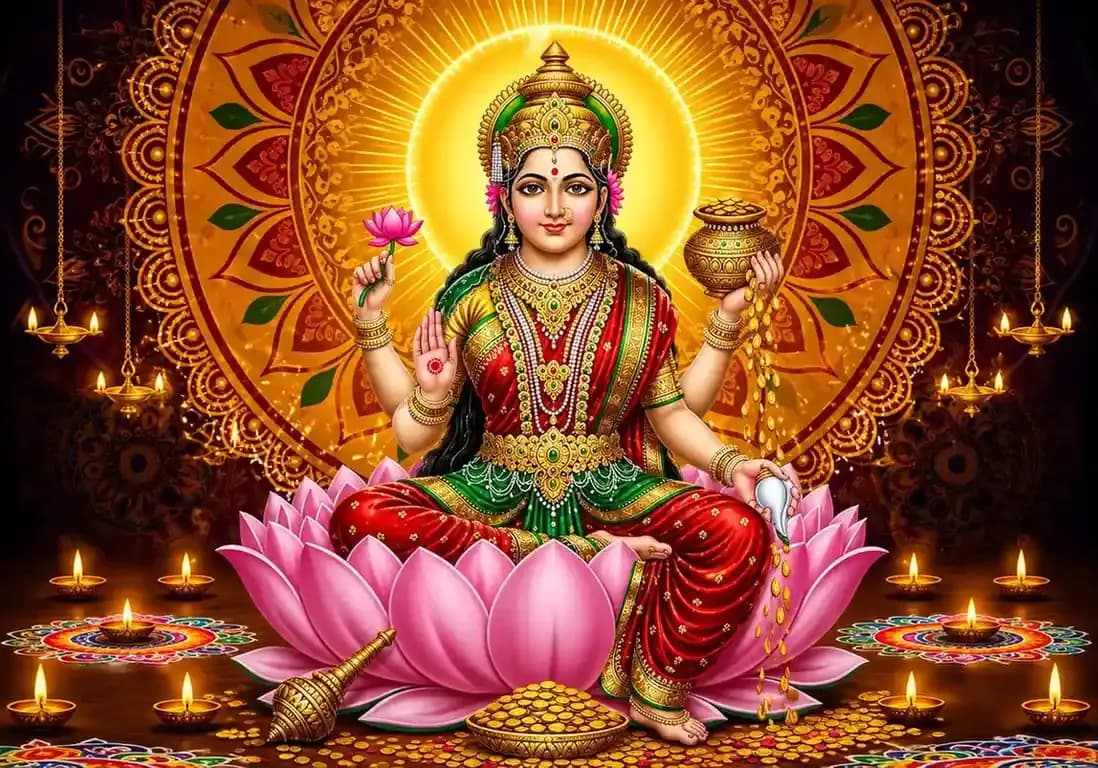
Quick answer: Sravana Masam is considered the most sacred month for Lakshmi worship because its Fridays (Sravana Sukravaram) are traditionally dedicated to the goddess of prosperity, the monsoon's abundance mirrors her blessings, and Varalakshmi Vratam falls within it. Together these make Shravana a natural season for invoking Lakshmi at home.
Ask any grandmother in a Telugu, Tamil or Kannada household which month belongs to Goddess Lakshmi, and the answer arrives without hesitation: Sravana Masam. Falling roughly across August in the Gregorian calendar, this lunar month sits at the height of the monsoon, when fields are green, rivers run full and the earth itself seems to overflow. In the traditional imagination, that visible abundance is not a coincidence — it is Lakshmi walking the land.
But the association runs deeper than good weather. Sravana weaves together three threads — the Friday devotion to Lakshmi, the symbolism of monsoon plenty, and the great vow of Varalakshmi Vratam — into a single sacred season. This article explains why devotees across South India and the wider Hindu diaspora treat Shravana as the goddess's own month, and how the observances of the month fit together.
The Friday–Lakshmi connection
In Hindu tradition, each day of the week is associated with a deity, and Friday (Sukravaram in Telugu, Velli in Tamil) has long been linked with Goddess Lakshmi and the feminine, nourishing energy of prosperity. Fridays throughout the year are considered auspicious for Lakshmi puja, but the Fridays that fall within Sravana Masam carry a special weight. They are known as Sravana Sukravaram — the Lakshmi Fridays.
On these Fridays, many households light the evening lamp with extra care, offer flowers, fruit and turmeric-kumkum, and recite hymns in praise of the goddess. The kitchen hearth, the doorway threshold decorated with muggu or kolam, and the family shrine all become points where the goddess is welcomed. It is a gentle, home-centred devotion rather than a grand temple spectacle — and that intimacy is part of why the month feels so personal to families.
Why Fridays feel especially potent in Shravana
- The lunar month is traditionally seen as ruled by nourishing, watery energy that resonates with Lakshmi's abundance.
- Multiple Fridays fall within the month, giving families several occasions to renew their devotion.
- Varalakshmi Vratam itself is observed on a Friday, anchoring the whole month around Lakshmi Fridays.
- The monsoon setting reinforces the imagery of fullness, growth and grace.
Monsoon abundance and its symbolism
Sravana arrives when the monsoon has settled in. For an agrarian civilisation, this was the most hopeful time of year: the rains that would decide the harvest had come, the soil was fertile, and the promise of a full granary hung in the air. Lakshmi is not only the goddess of gold and coins — she is Dhana-Lakshmi and Dhanya-Lakshmi, the goddess of wealth and of grain, of cattle, health, offspring and every form of well-being.
So the monsoon month became her natural home. The overflowing rivers echo the pot of abundance she holds; the fresh green shoots echo new prosperity; the very fullness of the season becomes a living image of what devotees ask her to bring into their homes. This symbolic harmony — a month of visible plenty dedicated to the goddess of plenty — is a large part of why Shravana is called Lakshmi's month.
| Aspect of Sravana | How it connects to Lakshmi |
|---|---|
| Monsoon rains | Abundance and nourishment, mirroring Lakshmi's blessings of plenty |
| Green fields and grain | Dhanya-Lakshmi, goddess of harvest and food |
| Full rivers and water | The overflowing pot (akshaya patra) imagery of prosperity |
| Sravana Sukravaram (Fridays) | Days traditionally dedicated to Lakshmi puja |
| Varalakshmi Vratam | The central vow inviting the boon-granting form of Lakshmi home |
Sravana Sukravaram: the Lakshmi Fridays
Sravana Sukravaram refers to the Fridays that occur during the month. Across regions, families use these Fridays in slightly different ways — some perform a simple daily lamp and hymn, others reserve one particular Friday for a fuller Lakshmi puja. There is no single 'correct' schedule; regional and family customs vary widely, and that variety is itself part of the living tradition. What unites them is the intention: to invite the goddess of well-being into the household and to give thanks for what has been received.
For many families the culmination of these Fridays is Varalakshmi Vratam, observed on the Friday before the full moon of the month. The word Vara means boon or blessing, and Varalakshmi is the boon-granting form of the goddess. Placing this vow among the Lakshmi Fridays gives the whole month a rising rhythm — several Fridays of quiet devotion leading up to one great, festive vow.
How Varalakshmi Vratam sits at the heart of the month
If Sravana is Lakshmi's month, Varalakshmi Vratam is its beating heart. On this day, women (and increasingly whole families) install a kalasam or a decorated image of the goddess, offer nine-thread sacred cords, sweets, fruit and flowers, and recite her praises. It is one of the most cherished home vratams of the year — warm, colourful and centred on gratitude and family well-being rather than fear or bargaining.
In 2026, Varalakshmi Vratam falls on Friday, 21 August 2026 according to most Telugu, Tamil and Kannada panchangs, while some panchangs observe it on Friday, 28 August 2026. Neither date is 'wrong' — the difference comes from how different almanacs calculate the tithi. The wise course is to follow your family, kula or local-temple tradition. You can read the full explanation on our Varalakshmi Vratam 2026 date guide, and if you split time between countries, our which panchang NRIs should follow may help.
Preparing for the month at home
- Mark the Fridays of Sravana Masam on your calendar and confirm your Varalakshmi Vratam date with your family or local temple.
- Clean and prepare the puja space; a bright, tidy shrine is itself an invitation to the goddess.
- Gather simple offerings you can sustain across several Fridays — a lamp, flowers, turmeric, kumkum, and fruit.
- Decide whether you will observe a full Varalakshmi Vratam with a kalasam or a simpler form suited to your circumstances.
- Involve children and elders so the devotion becomes a shared family memory, not a solo chore.
Not every household can arrange a full kalasam setup, and that is perfectly acceptable — devotion matters more than elaborate arrangement. If you need a lighter approach, see our guide to observing Varalakshmi Vratam without a kalasam. And if you are wondering about eligibility, our note on who can perform Varalakshmi Vratam presents the range of traditional views without excluding anyone.
A month of gratitude, not fear
It is worth remembering that the spirit of Sravana Masam is gratitude, not anxiety. The goddess is invited not to ward off disaster but to be thanked for the fullness of the season and asked to keep the household in health and harmony. There are no guaranteed material outcomes promised by tradition — rather, the month offers a rhythm of remembrance, cleanliness, hospitality and family togetherness that has its own quiet rewards.
This is also why the observances scale so gracefully. A student in a hostel can light a single lamp on a Friday; a large joint family can host an elaborate vratam; an NRI household can adapt timings to a working week abroad. The month bends to the devotee's circumstances rather than demanding a fixed form — which is exactly why it has remained beloved across generations and across continents.
Related reading
- Varalakshmi Vratam 2026 date — 21 or 28 August?
- Varalakshmi Vratam 2026 — the complete pillar guide
- Varalakshmi Vratam 2026 puja vidhi
- Varalakshmi Vratam 2026 NRI guide
- Which panchang should NRIs follow?
Frequently Asked Questions
Why is Sravana Masam considered Lakshmi's month?
Sravana Masam falls during the monsoon, when fields are green and the earth appears abundant — a natural image of Lakshmi, goddess of prosperity. Its Fridays (Sravana Sukravaram) are traditionally dedicated to Lakshmi puja, and the great Varalakshmi Vratam is observed within the month. Together these give Shravana its reputation as the goddess's own sacred season.
What is Sravana Sukravaram?
Sravana Sukravaram refers to the Fridays that fall within Sravana Masam. Friday is traditionally associated with Goddess Lakshmi, so these Fridays are treated as especially auspicious for her worship. Families may light lamps, offer flowers and turmeric-kumkum, and recite hymns. Customs vary by region and family, and Varalakshmi Vratam usually falls on one of these Fridays.
When is Varalakshmi Vratam in 2026?
Varalakshmi Vratam 2026 falls on Friday, 21 August 2026 according to most Telugu, Tamil and Kannada panchangs, while some panchangs observe it on Friday, 28 August 2026. The difference comes from how almanacs calculate the tithi. Neither date is wrong; follow your family, kula or local-temple tradition, or check the dedicated date page for a full explanation.
Why is Friday linked to Goddess Lakshmi?
In Hindu tradition, each weekday is associated with a deity, and Friday is linked with Lakshmi and the nourishing, feminine energy of prosperity. Fridays throughout the year are considered auspicious for Lakshmi puja, but those within Sravana Masam carry added significance, forming the sequence of Lakshmi Fridays known as Sravana Sukravaram.
How does the monsoon connect to Lakshmi worship?
Lakshmi is the goddess of wealth, grain, cattle, health and every form of well-being — not gold alone. The monsoon brings the rains that decide the harvest, filling rivers and greening the fields. This visible abundance mirrors the prosperity devotees ask Lakshmi to bring home, so the monsoon month of Sravana became her natural and most fitting season of worship.
Can Varalakshmi Vratam be done without a kalasam?
Yes. While a decorated kalasam is a common centrepiece, devotion matters more than elaborate arrangements, and many families observe a simpler form using an image or picture of the goddess. Circumstances such as small homes, travel or limited resources are fully understood in tradition. See our dedicated guide on observing Varalakshmi Vratam without a kalasam for practical options.
Who is allowed to observe Sravana Fridays and Varalakshmi Vratam?
Traditionally married women observe Varalakshmi Vratam for family well-being, but views vary widely, and many families welcome unmarried women, widows and whole households to participate. Sravana Friday devotion at home is open to all who wish to honour the goddess. Our note on who can perform the vratam presents the range of regional views without excluding anyone.
How should NRIs observe Sravana Masam and its Fridays?
NRIs can adapt the timings to their local week while honouring the spirit of the month. Confirm your date using a trusted panchang and your family tradition, since observance may shift by a week. Simple Friday lamps, hymns and offerings travel well across borders. Our NRI guide and panchang guide help you align dates and customs when living abroad.
You might also like

Champa Shashthi 2026: Date, Khandoba Worship & Jejuri's Golden Festival
Diwali 2026 in Nepal: Date, Lakshmi Puja Muhurat & City-by-City Celebration Guide
Diwali 2026 in Fiji: Date, Lakshmi Puja Muhurat & City-by-City Celebration Guide