99 Baby Names Inspired by Goddess Durga for Your Navratri Baby
As Navratri 2025 approaches on October 3, the air fills with devotion to Maa Durga, the embodiment of divine feminine power, strength, and protection.
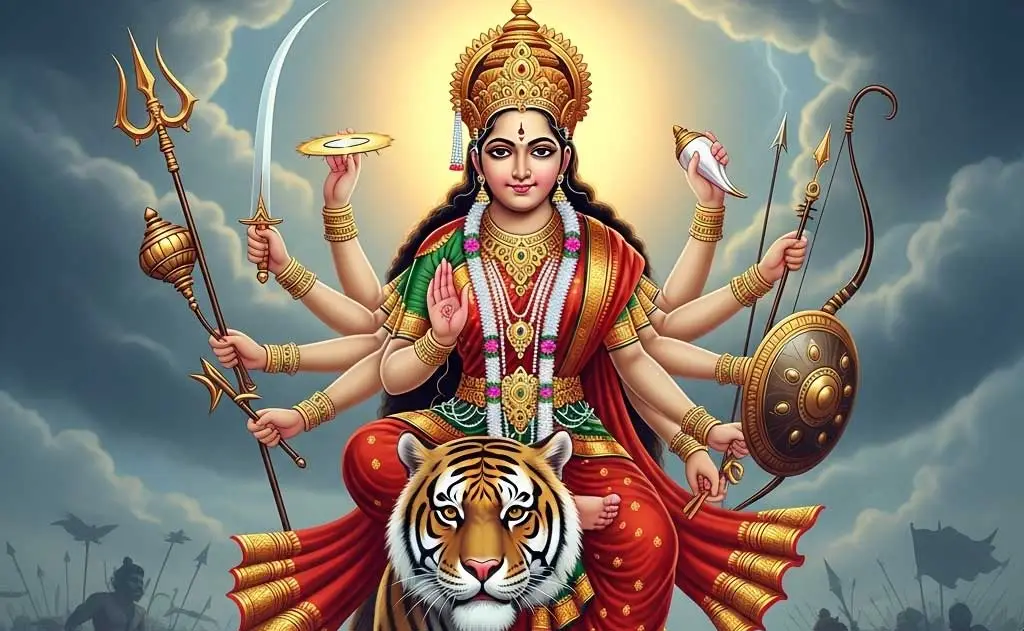
As Navratri 2025 approaches on October 3, the air fills with devotion to Maa Durga, the embodiment of divine feminine power, strength, and protection. For expecting parents, this auspicious festival is the perfect time to choose a baby name that honors the goddess's eternal grace. If you're searching for Hindu baby girl names inspired by Goddess Durga, look no further. These Durga-inspired baby names draw from her nine sacred forms (Navdurga) and myriad attributes, blending spirituality with modernity. Whether you're welcoming a little warrior princess or a serene soul, this curated list of 99 unique Navratri baby names offers meaningful choices that are easy to pronounce and highly shareable. Celebrate the festival by naming your bundle of joy after the slayer of evil—empowering her from day one!
Understanding the Forms of Goddess Durga: A Quick Guide
Goddess Durga manifests in various forms, each symbolizing a unique aspect of power and benevolence. The most revered are the Navdurga, worshipped during Navratri:
- Shailaputri: Daughter of the mountains, symbolizing stability.
- Brahmacharini: The ascetic, representing devotion.
- Chandraghanta: Bell-adorned warrior, embodying courage.
- Kushmanda: Creator of the universe, denoting vitality.
- Skandamata: Mother of Skanda, signifying nurturing.
- Katyayani: Fierce protector, invoking justice.
- Kalaratri: Destroyer of darkness, warding off fears.
- Mahagauri: Pure and radiant, promoting peace.
- Siddhidatri: Bestower of siddhis (powers), granting fulfillment.
Many names below connect directly to these forms, while others reflect Durga's broader essence—like invincibility, beauty, and compassion. We've included meanings and connections for each to help you choose wisely.
99 Empowering Baby Names Inspired by Goddess Durga
Here's a comprehensive table of Durga baby names for girls, optimized for your search. Each entry includes the name, its profound meaning, and the specific form of Durga it connects to (or "Goddess Durga" for general inspirations). Perfect for Navratri baby naming ideas!
...
Where does Goddess Durga appear in the Vedas and Puranas?
Durga's earliest textual root is in the Rigveda, where the hymn 'Durga Suktam' (sometimes identified with the Aghamarshana Suktam) invokes a fierce feminine force that removes obstacles and enemies. The name 'Durga' itself appears explicitly in the Taittiriya Aranyaka of the Krishna Yajurveda, where she is described as the one who is difficult to approach (dur = difficult, ga = to go) — a fortress-goddess who both protects devotees and is impenetrable to adversaries.
The Devi Mahatmyam, embedded within the Markandeya Purana (chapters 81–93), is the most authoritative scripture dedicated to Durga. Composed of 700 verses, it is also called the Saptashati or Chandi. It narrates three great battles: Durga's defeat of Madhu-Kaitabha, Mahishasura, and the demon duo Shumbha-Nishumbha. Parents drawing names from these episodes are connecting their child to one of Hinduism's oldest continuous liturgical traditions, still recited daily in temples from Varanasi to Kanchipuram.
The Devi Bhagavata Purana, one of the 18 Mahapuranas, expands further on the cosmology of the Devi, placing her as the supreme Brahman in feminine form — 'Adya Shakti,' the primal energy from whom Brahma, Vishnu, and Shiva themselves draw their power. Names like Adya, Ambika, and Parameshwari found in baby-name lists derive directly from this exalted theological identity.
What is the story behind Mahishasura Mardini — and why does it matter for naming?
The killing of the buffalo-demon Mahishasura is the central narrative that defines Durga's iconographic and literary identity. According to the Devi Mahatmyam, the gods — unable to defeat Mahishasura who had received a boon that no male could kill him — combined their individual energies (tejas) into one blinding light. From that cosmic confluence emerged Durga, each god bestowing a weapon: Shiva gave his trident (trishula), Vishnu his discus (sudarshana chakra), Indra his thunderbolt (vajra), and Varuna his conch (shankha).
The name 'Mahishasura Mardini' literally means 'she who tramples the buffalo-demon' and is itself one of the 108 names (Ashtottara Shatanamavali) of the goddess recited during Navratri worship. Names like Mardini, Chamunda (her form after slaying Chanda and Munda), and Jayanti ('the ever-victorious one') are drawn directly from this episode. Naming a daughter after these epithets is traditionally seen as invoking the goddess's protective shakti upon the child from birth.
In the Mahishasura Mardini Stotram, attributed in popular tradition to Adi Shankaracharya, each verse addresses a distinct martial or benevolent quality of the goddess using vivid compound Sanskrit epithets. Lines like 'jaya jaya he mahishasura mardini ramyakapardini shailasute' have been sung at dawn in households and temples for centuries, keeping these names alive in living memory rather than as mere textual artefacts.
Which major temples celebrate Navratri with traditions that inspire baby names?
The Vaishno Devi Shrine in the Trikuta Mountains of Jammu is among the most visited Shakti Pithas in India, drawing millions of pilgrims during both Chaitra Navratri (spring) and Sharada Navratri (autumn). The presiding deity is worshipped in three natural rock formations representing Mahakali, Mahalakshmi, and Mahasaraswati — the three faces of the Devi. Names like Trikuta, Vaishno, and Bhavani derive from this sacred geography and are popular Navratri naming choices in northern India.
The Kamakhya Temple in Guwahati, Assam — one of the 51 Shakti Pithas mentioned in the Devi Bhagavata Purana — houses the goddess in her most primal, Tantric form. The annual Ambubachi Mela held there in June celebrates the Devi's creative power, and names like Kamakhya, Ambika, and Tripura Sundari are venerated here. In South India, the Meenakshi Amman Temple in Madurai and the Chamundeshwari Temple atop Chamundi Hills in Mysuru are major centres where Navratri is observed with processions and recitation of the Lalita Sahasranama — a treasury of 1,000 names of the goddess, each a potential baby name.
The Kolkata Durga Puja, recognised by UNESCO as an Intangible Cultural Heritage of Humanity, is arguably the world's largest annual festival dedicated to the goddess. The five-day celebration culminates in Vijaya Dashami, the day Durga is believed to depart for her husband Shiva's abode on Mount Kailash. Names like Durgatinashini ('destroyer of misfortune') and Vijaya ('victorious') are especially popular among families celebrating Navratri babies in West Bengal.
How do the 108 names and 1,000 names of Durga serve as a naming resource?
The Ashtottara Shatanamavali — the 108 names of Durga — and the Lalita Sahasranama — her 1,000 names — are liturgical hymns recited during daily and festival worship. Far from being mere lists, each name encodes a theological statement: 'Sarvamangala' means 'she who is auspicious in all ways'; 'Bhadrakali' means 'the auspicious Kali'; 'Bhavani' means 'she who gives life to all beings.' These names have been in continuous liturgical use for well over a millennium, ensuring they carry both spiritual resonance and cultural familiarity.
For parents, these two texts offer an unparalleled naming resource because every name is authenticated by scripture and has a precise, documented meaning. The Lalita Sahasranama, found in the Brahmanda Purana and central to the Sri Vidya tradition of worship, uses names that range from the accessible — Ambika ('little mother'), Uma ('light'), Gauri ('fair/radiant one') — to the deeply philosophical, such as Chidananda Rupini ('she whose form is consciousness and bliss'). Shorter, melodious forms of these names are ideal for modern baby naming.
A practical approach many families follow is consulting a family priest (purohit) who can cross-reference the child's birth nakshatra (lunar asterism) with auspicious name syllables from the 108 or 1,000 names of Durga. This ensures the name is both spiritually connected to the goddess and aligned with the child's Jyotisha (Vedic astrology) chart — a meaningful bridge between ancient tradition and personal identity.
What Sanskrit roots and meanings should parents understand before finalising a Durga-inspired name?
Many Durga names are compound Sanskrit words (samasa), and understanding their components helps parents choose with full awareness. 'Chandraghanta' breaks into Chandra (moon) + ghanta (bell), describing the crescent moon adorning her forehead and the bell shape of her third eye — a name conveying both beauty and warrior readiness. 'Kushmanda' is interpreted as ku (a little) + ushma (energy/warmth) + anda (cosmic egg), signifying the goddess who created the universe from the smallest spark of her smile.
Grammatical gender in Sanskrit ensures that names ending in 'a' (long ā sound, written ā) are inherently feminine — Durgā, Umā, Gauri — and thus naturally suit girl children without requiring modification. Names ending in 'i' (like Shakti, Bhakti, Siddhi) are also grammatically feminine and carry the '-ti' suffix common to abstract nouns denoting power or quality. Parents who understand this can create elegant variants: Shaktipriya ('beloved of Shakti'), Gauri Devi, or Ambikā Nandini ('daughter of Ambika').
It is worth noting that some names from the Durga tradition have homophones or near-synonyms in other regional languages. 'Ambe' in Gujarati and Marathi refers to the same goddess worshipped as Amba in Sanskrit texts, making it particularly beloved in Maharashtra and Gujarat. 'Sherawali' ('the one with the lion') is a popular Hindi-Punjabi epithet used devotionally but rarely as a given name — though its components Shera (lion) and Wali (owner/master) inspire compound names like Singhavahini ('she who rides the lion'), which is entirely scriptural.
Are there boy names or gender-neutral names connected to the Durga tradition?
While the Navdurga and most Durgā epithets are feminine, the tradition surrounding the goddess does generate meaningful names for sons. Skanda or Kartikeya — the son born to Parvati (Durga's peaceful form) and Shiva — is directly honoured in the Navdurga form 'Skandamata,' and names like Skanda, Kartik, and Subrahmanya are traditional choices for boys born during Navratri. These names carry the blessing of the goddess in her maternal aspect while being unmistakably masculine.
The devotee tradition also yields boy names: Durgadasa ('servant of Durga'), Durgaprasad ('gift of Durga'), and simply Durgas — all widely used in Odisha, West Bengal, and Rajasthan. The name Mahesh, while primarily a Shaiva name meaning 'great lord' (Shiva), appears frequently alongside Durga in liturgy since Shiva is her eternal consort; similarly, names like Rudra and Bhairava appear in Shakta Tantra as the masculine energies inseparable from the Devi.
Gender-neutral choices inspired by the broader Shakta tradition include Jaya ('victory'), Shakti ('power'), and Chandi — though the last is more commonly feminine. In modern usage, names like Tara (a form of the goddess in both Shakta and Buddhist Tantra), Jyoti ('flame/light'), and Ananda ('bliss') are assigned to both boys and girls. For parents seeking a name that honours Navratri regardless of gender, these options offer meaningful connectivity to the Devi's universal, non-gendered cosmic essence.
Frequently Asked Questions
Which forms of Durga can baby names be taken from?
Names can come from the nine Navdurga forms worshipped in Navratri: Shailaputri, Brahmacharini, Chandraghanta, Kushmanda, Skandamata, Katyayani, Kalaratri, Mahagauri and Siddhidatri. Broader attributes such as invincibility, beauty and compassion also inspire names.
Where can parents find authentic Durga names with meanings?
The Ashtottara Shatanamavali (108 names of Durga) and the Lalita Sahasranama (1,000 names of the goddess) are the main sources. Names like Sarvamangala, Bhadrakali, Bhavani, Ambika, Uma and Gauri each carry a documented meaning.
What does the name Mahishasura Mardini mean?
It means 'she who tramples the buffalo-demon' and is one of the 108 names of the goddess recited during Navratri worship. Names like Mardini, Chamunda and Jayanti are drawn from the same episode.
How do families choose a Durga name using the birth nakshatra?
Many families consult a family priest (purohit), who matches the child's birth nakshatra with auspicious name syllables from the 108 or 1,000 names of Durga. This keeps the name linked to the goddess and to the child's Jyotisha chart.
Are there regional Durga-inspired names tied to famous temples?
Yes. Names like Trikuta, Vaishno and Bhavani come from the Vaishno Devi shrine in Jammu, while Kamakhya, Ambika and Tripura Sundari are linked to Kamakhya Temple in Guwahati. Vijaya is popular among families celebrating Durga Puja in West Bengal.
Why is the Sanskrit root of a Durga name worth checking?
Many Durga names are Sanskrit compounds, so knowing their parts helps in choosing with awareness. Chandraghanta, for example, combines Chandra (moon) and ghanta (bell), while Kushmanda is read as ku, ushma and anda.
Share this with family and friends
Send it on WhatsApp, post it, or copy the link.
More from Hindu Gods
- Goddess Renuka Yellamma: Story, Worship and Major Temples
- Devi Mahatmya (Durga Saptashati): A Complete Guide to the 13 Chapters
- The Ten Mahavidyas: Complete Guide to the Ten Wisdom Goddesses, Their Forms, Meaning and Temples
- Goddess Kali: Complete Guide to Her Origins, Forms, Symbolism, Mantra and Kali Puja 2026
- Sri Varada Ganesha Swami Dhyanam – For Removal of Obstacles, Prosperity & Fulfillment of Wishes
You might also like
Navratri 2026 — Sharad Navaratri Dates (October 11-19), 9 Goddess Forms, Garba Events & Complete NRI Celebration Guide
Nine Nights, Nine Forms: Navratri as the Diaspora's Most Sustainable Festival
Matsya Avatar — The First Incarnation of Vishnu: Story, Significance, Sacred Geography & Lessons for 2026