


Mookambika Amma – The Divine Fusion of Knowledge and Power

Introduction to Goddess Mookambika
Goddess Mookambika, one of the most revered deities in South India, symbolizes the fusion of Shakti (power), Saraswati (knowledge), and Lakshmi (wealth). Worshipped primarily in Karnataka and Kerala, She is believed to bestow wisdom, strength, and prosperity upon Her devotees. With roots in ancient scriptures, Mookambika Devi holds a unique position as the embodiment of feminine divine energy.
Historical Origins of Mookambika Devi
According to Hindu mythology, Mookambika emerged to defeat the demon Mookasura, who had disrupted cosmic balance. The goddess is said to be a divine amalgamation of the three goddesses—Durga, Lakshmi, and Saraswati—making Her a powerful force of divine feminine strength. Adi Shankaracharya, the great philosopher and spiritual reformer, is believed to have consecrated the Sri Chakra at Her temple, further enhancing Her spiritual significance.
Kollur Mookambika Temple – Sacred Abode
Located in the Udupi district of Karnataka, the Kollur Mookambika Temple is nestled in the Western Ghats. Surrounded by natural beauty and spiritual serenity, the temple draws lakhs of devotees every year. Its architecture reflects traditional South Indian styles, and the sanctum sanctorum houses the linga said to be created by divine energies. The temple is not only a center of worship but also a destination of spiritual pilgrimage.
Symbolism and Iconography of Mookambika
Mookambika is depicted with four arms, holding a conch, discus, and other symbolic weapons. Her calm yet powerful demeanor represents the balanced energies of Durga, Lakshmi, and Saraswati. The idol and surrounding murals often show Her with a golden aura, indicating divine light and energy. The fusion of multiple deities in one form makes Her an object of deep metaphysical reverence.
Festivals Celebrated in Honor of Mookambika Amma
Navaratri is the most prominent festival dedicated to Mookambika, celebrated with grandeur at Kollur and in households across South India. Saraswati Pooja, which falls during Navaratri, is especially significant for students. Other festivals like Rathotsava (car festival) and the temple’s annual Brahmotsavam also attract thousands of devotees who participate in traditional rituals, music, and dance.
Rituals and Worship Practices
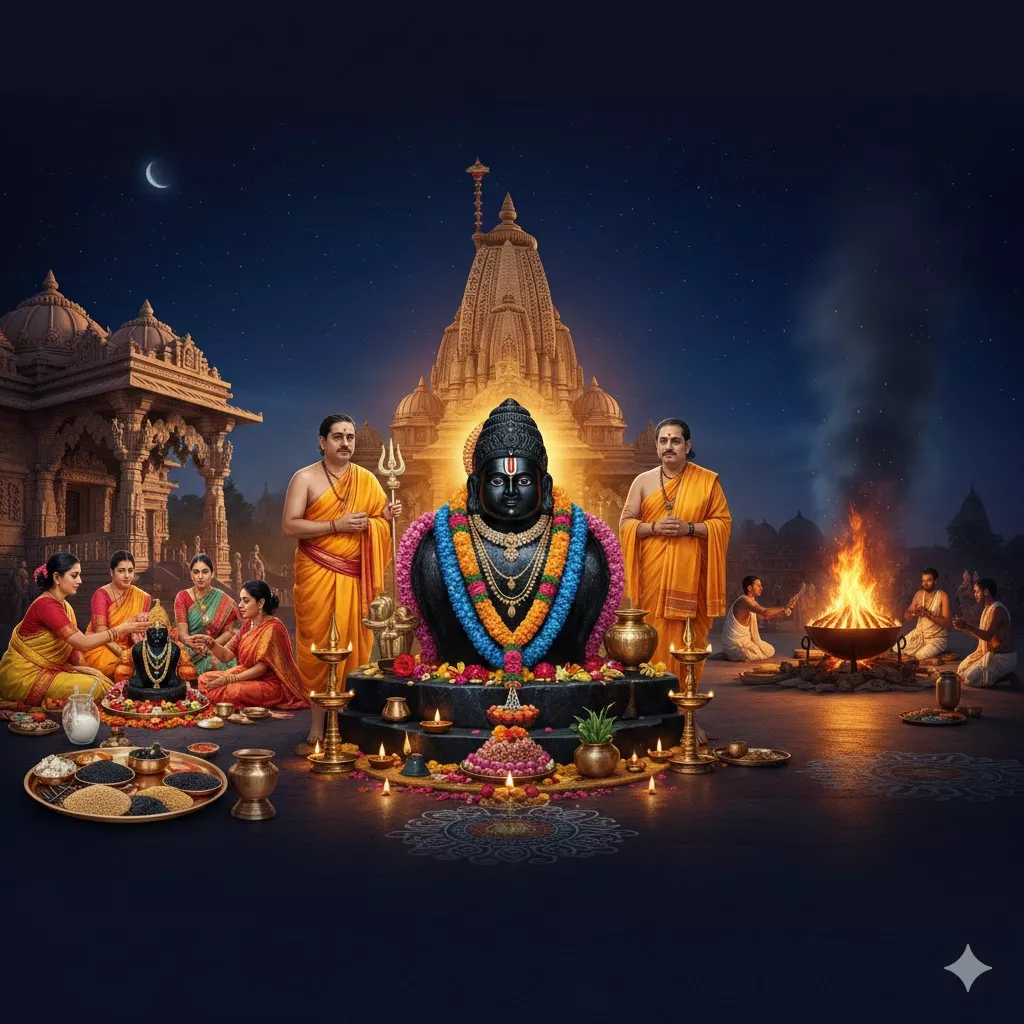
Worship of Mookambika involves daily poojas, abhishekams, and archanas. One of the most sacred rituals is Vidyarambham, where young children are initiated into the world of letters by writing their first alphabets under Her guidance. Offerings include coconuts, flowers, betel leaves, and traditional South Indian prasadam.
Role of Mookambika in Child Education and Learning
As the goddess of knowledge, Saraswati’s essence in Mookambika makes Her especially revered by students. Parents bring their children to the Kollur temple to seek Her blessings for academic success and intellectual growth. Schools and educational institutions also invoke Her presence during Saraswati Pooja and other knowledge-centered ceremonies.
Adi Shankaracharya and His Devotion to Mookambika
Adi Shankaracharya is believed to have been divinely guided to Kollur, where he installed the Sri Chakra in the sanctum. His devotion to Mookambika is immortalized through several hymns and philosophical works. It is said that the goddess appeared to him in a vision and granted Her divine energy to the temple, establishing it as a major spiritual center.
Unique Beliefs and Local Traditions
In Kerala and coastal Karnataka, Mookambika Amma is deeply embedded in local customs. Devotees undertake pilgrimages from Kerala, often walking long distances to reach Kollur. Special family rituals, regional songs, and folklore further enrich Her cultural significance. The belief that She grants both spiritual and material fulfillment resonates deeply among Her followers.
Stories and Miracles Associated with Mookambika
Numerous devotees recount miraculous interventions by Mookambika in their lives—from healing diseases to granting children and academic success. Local legends tell of Her divine presence protecting the village and temple from calamities. These stories continue to inspire faith and devotion across generations.
Pilgrimage Details for Devotees
Kollur is accessible by road, rail, and air. The nearest major cities include Mangalore and Udupi. Regular buses, taxis, and trains connect devotees to the temple town. Pilgrims often also visit nearby temples such as Maranakatte and Udupi Krishna Temple, making their spiritual journey more enriching.
Mookambika in Modern Times
Despite changing times, Mookambika’s relevance remains strong. She is worshipped not only in temples but also through home shrines, online platforms, and virtual poojas. Devotees from across the globe, especially from the Indian diaspora, celebrate Her festivals and perform rituals via livestreams and temple websites.
Media and Digital Presence
The digital age has amplified Mookambika Amma’s reach. Numerous devotional YouTube channels, websites, and mobile apps offer bhajans, pooja guides, and temple live darshan. Online services for archana bookings, donations, and prasadam delivery have made it easier for devotees to stay connected.
Conclusion: Eternal Power and Grace of Mookambika Amma
Mookambika Amma stands as a timeless symbol of strength, wisdom, and grace. Her temple, traditions, and teachings continue to inspire millions, offering divine solace and empowerment. Whether through education, devotion, or miracles, Her presence remains an eternal light guiding seekers toward truth and fulfillment.
SEO Metadata
Meta Title: Mookambika Amma – Divine Power & Knowledge | Hindutone.com
Meta Description: Discover the divine energy of Mookambika Amma, the embodiment of Saraswati, Lakshmi & Durga. Explore Her story, temple, rituals, and miracles.
Frequently Asked Questions (FAQs)
- Who is Mookambika Amma?
Mookambika Amma is a Hindu goddess representing the combined powers of Saraswati, Lakshmi, and Durga, worshipped for knowledge, strength, and prosperity. - Where is the Mookambika temple located?
The temple is located in Kollur, Karnataka, near the Western Ghats and is a major pilgrimage center in South India. - What is Vidyarambham and how is it related to Mookambika?
Vidyarambham is a ritual initiating children into learning, often performed at the Mookambika temple during Navaratri. - What festivals are celebrated at the Kollur Mookambika Temple?
Major festivals include Navaratri, Saraswati Pooja, Rathotsava, and annual temple Brahmotsavam. - How can I participate in online worship of Mookambika Amma?
Many websites and YouTube channels offer virtual darshan, pooja bookings, and devotional content for global devotees.
Related posts:
 Here are some engaging blog ideas on Hindu Gods that cater to diverse interests, from mythology and spirituality to cultural significance:
 Shiva’s Many Forms: From Nataraja to Bhairava
 Butter Offerings to Hanuman: Ramayana Origins & Spiritual Meaning
 5 Fascinating Facts About Lord Hanuman Every Devotee Should Know
 Lessons from Hanuman: A Guide for the Spiritual Seeker
 Surya Deva’s Eight Verses: Unlocking the Eight Rays of Divine Wisdom


 ︎
︎

