Why Adhika Masam Comes Once in 3 Years — The Hidden Science Behind the Hindu Extra Month
Discover the astronomy, mathematics and mythology behind Adhika Masam (Purushottam Maas / Mal Maas). Why is an extra month added every 32–33 months? Lunar vs solar calendar explained simply.
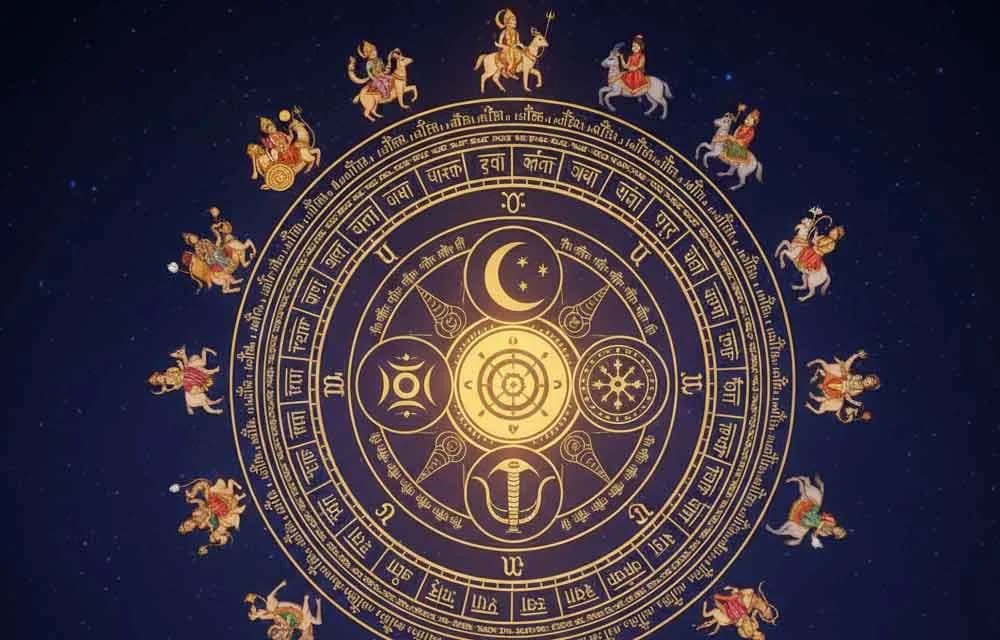
Discover the astronomy, mathematics and mythology behind Adhika Masam (Purushottam Maas / Mal Maas). Why is an extra month added every 32–33 months?
“Kalāya Tasmai Namaha” — Salutations to Time itself. The Hindu calendar does not merely count days; it breathes with the cosmos.
Introduction: The Month That Appears and Disappears
Imagine waking up one year to discover that the month of Shravan arrives twice — or that Bhadrapada lingers longer than expected. For millions of Hindus across India and the global diaspora, this is not magic. It is ancient astronomical precision, encoded into the sacred Hindu Panchang thousands of years ago.
This mysterious “extra month” is called Adhika Masam (अधिक मास) — also known as Purushottam Maas, Mal Maas or the Hindu Leap Month — and it is one of the most brilliant and spiritually profound features of the Vedic timekeeping system.
But why does it come? Why every 32–33 months specifically? Is it truly scientific or just tradition? And why do the sages call it the holiest month of all? In this deep-dive guide we answer every question with astronomy, mythology, mathematics and spiritual wisdom.
What Is Adhika Masam? — The Simple Answer
Adhika (अधिक) in Sanskrit means extra or additional. Masam (मासम्) or Maas (मास) means month. So Adhika Masam = an intercalary month inserted into the Hindu lunar calendar to keep it aligned with the solar year and the seasons.
In Western terms, it is similar to a leap year — but instead of one extra day every four years, Hinduism adds an entire extra month roughly every 32–33 months (about 2 years and 8–9 months).
When Adhika Masam occurs, it takes the name of the lunar month it precedes. For example:
- Adhika Shravan — extra Shravan month
- Adhika Ashwin — extra Ashwin month
- Adhika Bhadrapada — extra Bhadrapada month
The Astronomy Behind Adhika Masam — Where Science Meets Dharma
🌙 The Lunar Year vs ☀️ The Solar Year — The Core Problem
Solar year (one Earth orbit around the Sun) = 365.25 days. One lunar month (new moon to new moon) = 29.53 days. Lunar year (12 lunar months) = 354.37 days.
The lunar calendar therefore falls behind the solar calendar by about 10.88 days every year. Left uncorrected, this drift would eventually push Diwali into summer and Holi into monsoon within decades.
- After 1 year — about 11 days behind.
- After 3 years — about 33 days behind (one full lunar month).
- After 9 years — about 99 days behind.
- After 30 years — nearly a full year behind.
🧮 The Mathematical Fix — Adding a Full Month
Vedic astronomers solved this with elegance. Since 10.88 × 3 ≈ 32.64 days ≈ one full lunar month (29.53 days), after roughly 32–33 months the accumulated lag equals one full lunar month. So the Panchang inserts a complete extra month rather than nudging by tiny daily corrections (as the Gregorian calendar does with leap days).
This system — Metonic-adjacent intercalation — is documented in the Vedanga Jyotisha, Surya Siddhanta and Aryabhatiya, well before the Greek astronomer Meton (432 BCE).
Simple Example: Understanding the Drift
🕰️ The Mismatched Clocks Analogy
Imagine two wall clocks. Clock A (solar) is perfect. Clock B (lunar) loses about 11 days a year. After three years, Clock B is roughly 33 days behind — more than one full lunar “tick.” Push Clock B forward by one full cycle (one extra month) and the two clocks re-align. That is Adhika Masam.
🌾 The Seasons Analogy
In ancient India, the calendar was agricultural survival. Farmers needed to know when monsoon would arrive, when to sow seeds, and when to harvest. Adhika Masam ensured Ashadha never drifted into peak summer and Kartik never landed in monsoon — keeping seasons and months in their proper sacred alignment for eternity.
Lunar vs Solar Calendar — A Clear Comparison
- Gregorian Solar Calendar — 365.25 days/year. Leap day every 4 years. High seasonal accuracy. Festivals tied to solar dates.
- Pure Lunar Calendar — 354.37 days/year. No self-correction. Drifts ~11 days/year. Festivals tied only to tithis.
- Hindu Luni-Solar Calendar (with Adhika Masam) — Adjusts dynamically. Adds one full month every 32–33 months. High seasonal accuracy and tithi-based festivals. The most sophisticated of the three because it honours both the Moon and the Sun.
How Is the Adhika Masam Month Determined? — The Surya Sankranti Rule
Not every lunar month qualifies as an Adhika Masam. The rule:
A lunar month in which no Surya Sankranti (the Sun’s entry into a new zodiac sign) occurs is declared the Adhika Masam.
The Sun moves through 12 Rashis in a year, spending ~30–31 days in each. A normal lunar month (29.53 days) sits comfortably within one solar month, so a Sankranti almost always lands inside it. Occasionally a lunar month passes without any Sankranti — the Sun “skips” that lunar month, and that orphan becomes the Adhika Masam. Think of it as a month without a solar birthday.
Naming: the Adhika Masam takes the name of the next regular lunar month that does have a Sankranti — Adhika Shravan, Adhika Ashwin, etc.
Mythology: The Story of Adhika Masam and Lord Vishnu
🔱 The Abandoned Month — Mal Maas’s Plea to Vishnu
When the extra month was first added, it felt ashamed and outcast. Every other month had a presiding deity — Chaitra had Brahma, Vaishakh had Vishnu, Shravan had Shiva. But this extra month had no deity, no festivals, no Sankranti. Filled with grief, it approached Lord Vishnu in Vaikuntha and wept:
“O Lord, I am unwanted. No festival belongs to me. No deity accepts me. I am called Mal Maas — the impure month. Please grant me dignity.”
Lord Vishnu, moved by compassion, declared:
“From this day forward, you shall bear My own name — Purushottam, the Supreme Being. I Myself am your presiding deity. Whoever observes devotion, fasting, charity and spiritual practice in your days shall receive the merit of all the other months combined. You are not the least — you are the greatest.”
From that moment Mal Maas became Purushottam Maas — the Month of the Supreme Lord — and is considered the most spiritually potent time for Vishnu bhakti, seva, fasting and charity.
🪷 The Significance in the Puranas
- Padma Purana — describes the greatness of Purushottam Maas in detail and lists thirty-three specific merits of devotional practice during this month.
- Skanda Purana — narrates King Prithu’s story in which observing Adhika Masam Vrat saved his kingdom from drought and famine.
- Vishnu Purana — confirms Lord Vishnu’s divine ownership of Adhika Masam and the moksha granted to sincere devotees.
🌟 Other Mythological Connections
Some scholars note that the Pandavas spent one of their twelve years of vanvas during an Adhika Masam year, effectively extending their exile — a karmic settlement that reinforced dharma. Regional traditions also link Lord Rama’s journey to Lanka with an Adhika Masam, lending this extra month a connection to the divine victory of truth over evil.
Why Is Adhika Masam Called “Mal Maas”? — Clearing the Misconception
“Mal” in Sanskrit can mean impurity, leading to a common belief that Adhika Masam is inauspicious for all activities. The nuanced truth:
- Common belief: “Mal Maas is inauspicious for all activities.”
- Reality: only worldly samskara ceremonies (weddings, sacred-thread, griha pravesh) that require Sankranti-aligned muhurtas are deferred.
- Common belief: “No puja can be done.”
- Reality: daily puja, japa and personal sadhana are highly encouraged.
- Common belief: “Mal Maas brings bad luck.”
- Reality: spiritually, it is the most powerful month for devotion and merit.
The restriction is only on Nitya-Naimittika Karmas tied to solar Sankrantis. For personal spiritual growth, devotion and seva, Adhika Masam is unparalleled.
The 19-Year Metonic Cycle — Ancient Wisdom Confirmed by Modern Science
Modern astronomy confirms a remarkable cycle: 19 solar years = 235 lunar months (almost exactly). After 19 solar years, the lunar and solar calendars realign perfectly. Within these 19 years, seven Adhika Masams are added — one every ~32–33 months. The Vedanga Jyotisha (~1400 BCE) documented this cycle nearly a millennium before Meton (432 BCE), and the Surya Siddhanta provides solar-year and lunar-month figures accurate to within seconds of modern measurements.
Adhika Masam Across Different Hindu Communities
- North India 🪔 — Purushottam Maas Vrat: 30-day fasting, daily Vishnu puja and reading the Purushottam Maas Katha. Vrindavan and Mathura see massive pilgrimages.
- South India 🌺 — Called Adhika Masam in Telugu (Andhra, Telangana) and Adhikam in Tamil. Special Vishnu temples conduct 30-day programmes; Sumangalis observe vrats for family well-being.
- Maharashtra & Gujarat 🏮 — Adhik Mahina: kirtans, satsangs, pravachans and emphasis on daan (donations of food, clothes and essentials).
- Karnataka 🪷 — Daily Vishnu Sahasranama recitations and special Abhishekas through the month.
- Diaspora 🌍 — USA, UK, Australia: online kathas, temple programmes, virtual satsangs and charity drives via BAPS, VHP and local mandirs.
What to Do During Adhika Masam — Complete Spiritual Guide
🙏 Daily Practices
- Recite Vishnu Sahasranama every morning.
- Chant “Om Namo Bhagavate Vasudevaya” 108 times.
- Light a ghee lamp before Lord Vishnu’s image at sunrise and sunset.
- Read one chapter of the Bhagavad Gita daily.
🍽️ Fasting & Diet
- Observe Ekadashi fasts (both Ekadashis within Adhika Masam carry double merit).
- Many devotees fast every alternate day on water, fruits or a single sattvic meal.
- Avoid meat, alcohol, garlic and onion through the month.
💛 Charity & Seva (Daan)
- Feed the needy — annadanam during Adhika Masam is considered equal to a hundred yagnas.
- Donate yellow items (turmeric, yellow cloth, ghee) in honour of Jupiter and Vishnu.
- Support a local temple’s community kitchen.
- Sponsor scriptural texts (Gita, Ramayana) for distribution.
📖 Scriptural Study
- Read or listen to Purushottam Maas Katha.
- Study Srimad Bhagavatam — especially Prahlada, Dhruva and Gajendra moksha.
- Attend temple discourses on Vishnu’s leelas.
🚫 What to Avoid
- New business launches tied to muhurta-based samskaras.
- Wedding ceremonies and engagements.
- Griha Pravesh (housewarming).
- Major financial investments based on traditional muhurtas.
Adhika Masam vs Leap Year — Side-by-Side
- Gregorian Leap Year — adds 1 day (Feb 29) every 4 years; instituted by Julius Caesar in 46 BCE; minimal cultural impact.
- Hindu Adhika Masam — adds 1 full month (~30 days) every 32–33 months; takes the name of the following month; presided over by Lord Vishnu (Purushottam); first documented in the Vedanga Jyotisha (~1400 BCE); reshapes the entire Hindu festival calendar.
When Is the Next Adhika Masam?
After Adhika Shravan (2023), the next Adhika Masam is expected in 2026, with the specific month confirmed by Panchang calculations closer to the date. The subsequent occurrence is expected around 2028–2029.
Pro tip for diaspora Hindus: always confirm exact dates via a reliable Panchang app (Drik Panchang or your local temple’s Panchang) in your local time zone — the Adhika Masam begins and ends on the Amavasya per regional convention.
The Deeper Spiritual Message of Adhika Masam
🌕 Time Is Not Linear — It Is Cyclical and Divine
The very existence of Adhika Masam tells us that Kala (Time) is not a straight line marching forward, but a sacred, breathing cycle — expanding and contracting like the universe itself.
🪷 The Rejected Become the Most Sacred
The story of Mal Maas becoming Purushottam Maas teaches that what society considers imperfect or unwanted can become the holiest of all when touched by divine grace. Your perceived inadequacy is not a limitation; it is an invitation for divine transformation.
⏳ Spiritual Time Is Different from Clock Time
Adhika Masam invites us to experience kairos — sacred, purposeful time — rather than chronos (mere clock time). The extra month is a gift of thirty additional days for spiritual practice, reflection and devotion that ordinary life rarely permits.
Conclusion — Ancient Precision, Eternal Wisdom
The Hindu Panchang is a living, astronomically precise luni-solar system that has kept seasons, festivals and spiritual life in perfect harmony for over 3,000 years — without a single calendar reform (unlike the Gregorian calendar that replaced the Julian in 1582 CE).
Adhika Masam is the calendar’s heartbeat — the moment, every 32–33 months, when time pauses, the cosmos recalibrates, and Lord Vishnu Himself presides over a month of extraordinary spiritual opportunity. When it next arrives, do not grumble about the “extra month.” Welcome it. Use it wisely. Use it devotionally. Use it to come home to yourself.
🙏 Om Namo Bhagavate Vasudevaya · Jai Purushottam · Om Shanti Shanti Shanti
Frequently Asked Questions
What is Adhika Masam meaning in English?
Adhika Masam means “extra month” in Sanskrit. It is an intercalary month added to the Hindu lunar calendar every 32–33 months to synchronise it with the solar year. It is also called Purushottam Maas or Mal Maas.
Why is Adhika Masam called Mal Maas?
Originally this extra month lacked a presiding solar deity (no Sankranti), making it ritually “incomplete.” Lord Vishnu adopted it as His own month, transforming it into the most spiritually potent month — Purushottam Maas.
Can we do pooja during Adhika Masam?
Yes. Personal puja, japa, meditation, charity and Vishnu bhakti are not only permitted but highly encouraged. What is deferred are samskara ceremonies like weddings and housewarmings that require solar Sankranti-based muhurtas.
Why does Adhika Masam come every 32–33 months specifically?
The lunar year (354.37 days) is about 11 days short of the solar year (365.25 days). After 32–33 months the accumulated deficit equals one full lunar month (~30 days), which is then inserted as Adhika Masam.
What is the difference between Adhika Masam and a leap year?
A Gregorian leap year adds one day every four years. Adhika Masam adds an entire month every 32–33 months — a more sophisticated correction that synchronises both lunar and solar cycles simultaneously.
Which God is worshipped during Adhika Masam?
Lord Vishnu, specifically in His form as Purushottam (the Supreme Being). The Padma Purana states that Vishnu Himself claimed this month as His own.
Is Adhika Masam the same in all Hindu communities?
The astronomical basis is the same; regional names and observance vary — Adhika Masam in Telugu, Adhik Mahina in Hindi/Marathi, Adhikam in Tamil and Purushottam Maas in Vaishnava traditions.
When is the next Adhika Masam after 2023?
The next Adhika Masam is expected in 2026; consult your regional Panchang for exact dates in your time zone.
Disclaimer: dates and astronomical calculations in this article are based on traditional Vedic Panchang systems. Minor variations may exist between regional Panchangs. Always consult your local temple’s Panchang for authoritative dates.
You might also like
Hindu Unity and Temple Pride: X Buzz Ignites Passion Amid Diwali Fever

Sravana Masam Mondays: Spiritual Significance, Poojas, Vratas, Mantras & Temple Visits

AI & Quantum Computing in the Vedas: How Ancient Hindu Wisdom Predicted Modern Science