Hindu Eco-Spirituality: Sustainable Living Through Sanatana Dharma
Sustainability as a Sacred Duty In an age of climate change and environmental decline, Hindu eco-spirituality offers timeless guidance on living in harmony…

Sustainability as a Sacred Duty
In an age of climate change and environmental decline, Hindu eco-spirituality offers timeless guidance on living in harmony with nature. Rooted in Sanatana Dharma—Hinduism’s eternal path—sustainability isn’t a modern trend but a spiritual responsibility.
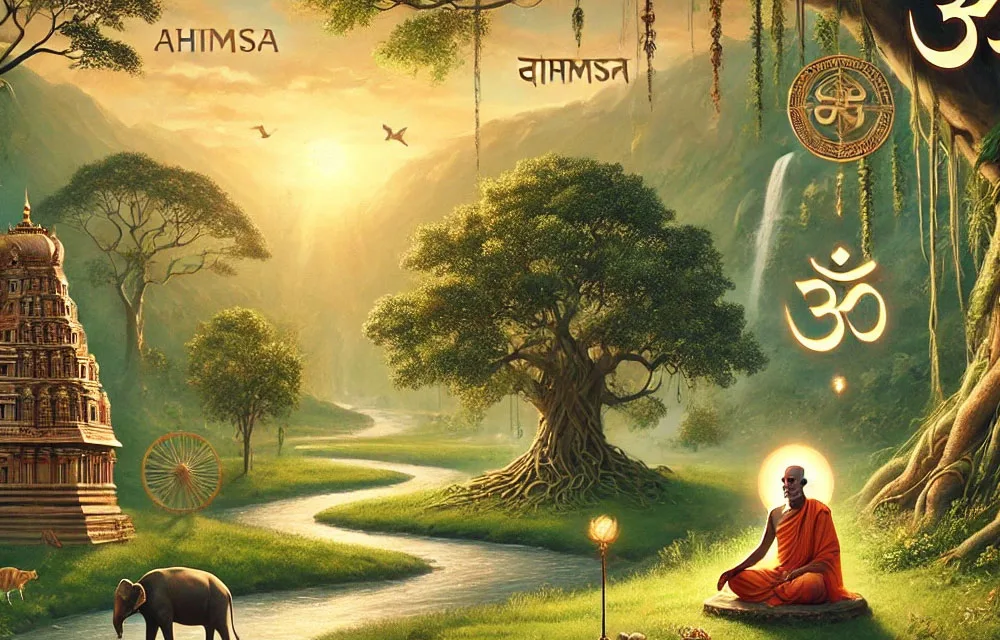
From the principle of Ahimsa (non-violence) to reverence for the Pancha Mahabhutas (five elements), Hindu philosophy teaches us that protecting nature is a divine act.
Hindu Scriptures That Celebrate Nature
Hindu sacred texts are rich with ecological wisdom and environmental ethics:
The Vedas
The Rig Veda personifies rivers, trees, and celestial bodies as divine. The Earth is revered as Bhoomi Devi, a goddess to be cherished and protected.
The Aranyakas
Known as the "forest treatises," these texts emphasize meditative life in the wilderness, encouraging a retreat from materialism and promoting deep communion with forests and wildlife.
The Upanishads
The Upanishads teach non-duality, asserting that Atman (individual soul) and Brahman (universal soul) exist in all beings—fostering profound respect for all life forms.
Ahimsa: A Foundation for Green Living
The principle of Ahimsa extends far beyond human interaction—it urges minimal harm to all beings, including plants, animals, and ecosystems.
Hindu eco-friendly expressions of Ahimsa include:
- Vegetarianism to reduce environmental impact
- Minimalism to avoid overconsumption
- Eco-conscious rituals using organic dyes, natural flowers, and biodegradable materials
Tree Worship and Sacred Groves
In Hinduism, trees are not just botanical life forms—they are spiritual entities.
Peepal, Banyan, and Neem trees are venerated for their healing and symbolic value. Sacred groves (Devrai) are preserved forest areas around temples, acting as community-managed biodiversity zones that protect flora and fauna.
Water as a Sacred Element
Water is revered in Hinduism not merely as a resource, but as a holy presence.
Eco-spiritual water practices include:
- Tirtha Yatras – Pilgrimages to rivers like Ganga, Yamuna, and Godavari to inspire reverence and cleanliness
- Temple tanks – Ancient systems for rainwater harvesting
- Rain-invoking rituals – Mantras and festivals like Varsha Ritu Puja express gratitude to monsoon deities
Eco-Conscious Festivals
Hindu festivals celebrate the interplay between seasons, agriculture, and spirituality, making them inherently eco-friendly:
- Makar Sankranti – A solar festival honoring harvest and sunlight
- Van Mahotsav – A modern tree-planting celebration with ancient roots
- Tulsi Vivah – A symbolic marriage of the sacred Tulsi plant, honoring plant life
These festivals align with agricultural rhythms and ecological balance, fostering environmental awareness.
Sanatana Dharma’s Environmental Ethics
Sanatana Dharma teaches that nature is not a commodity, but a relative—a divine sibling in the spiritual family.
Each of the five elements is personified:
- Vayu (Air)
- Jal (Water)
- Agni (Fire)
- Prithvi (Earth)
- Akasha (Space)
These aren’t just metaphysical symbols—they’re guardians of ecological balance, honored in rituals and daily life.
Harmony Between Tradition and Sustainability Goals
Many traditional Hindu practices naturally align with today’s global sustainability goals:
Practical Eco-Living Tips Inspired by Hinduism
Ready to embrace eco-spiritual living? Start with these simple, impactful steps:
- Practice Ahimsa – Choose cruelty-free, ethical products
- Celebrate green rituals – Use reusable thalis and natural materials in pujas
- Plant a sacred tree – Grow a Tulsi, Peepal, or Neem in your home
- Join a community cleanup – Protect the sanctity of local water bodies and forests
- Observe fasting and reduce waste – A step toward mindful consumption
Conclusion: Earth as a Divine Mother
Hinduism’s eco-spirituality is not just about saving nature—it’s about serving it. Sanatana Dharma teaches that Earth is not merely our habitat, but our divine mother, to be treated with love, reverence, and gratitude.
By reawakening these sacred principles, we don’t just protect the planet—we transform our relationship with it, creating a sustainable future grounded in spiritual harmony.
FAQs
1. What is Hindu eco-spirituality?
It’s a spiritual approach to sustainability, rooted in values like Ahimsa, non-attachment, and nature worship.
2. Which Hindu scriptures promote environmentalism?
The Vedas, Aranyakas, and Upanishads all emphasize the sanctity of nature.
3. Are there Hindu festivals that promote green living?
Yes! Makar Sankranti, Van Mahotsav, and Tulsi Vivah are deeply eco-conscious celebrations.
4. Can Hindu eco-spirituality influence today’s green movements?
Absolutely. It offers a value-based, spiritual foundation that complements modern environmental efforts.
5. Is tree worship still practiced?
Yes, especially in rural India, where sacred groves are actively preserved and venerated.
Frequently Asked Questions
What is Hindu Eco?
Sustainability as a Sacred Duty In an age of climate change and environmental decline, Hindu eco-spirituality offers timeless guidance on living in harmony with nature. Rooted in Sanatana Dharma —Hinduism’s eternal path—sustainability isn’t a modern trend but a spiritual responsibility .
What are the key points about Hindu Eco?
From the principle of Ahimsa (non-violence) to reverence for the Pancha Mahabhutas (five elements), Hindu philosophy teaches us that protecting nature is a divine act. Hindu Scriptures That Celebrate Nature Hindu sacred texts are rich with ecological wisdom and environmental ethics: The Vedas The Rig Veda personifies rivers, trees, and ce
Why does Hindu Eco matter in Hinduism?
It reflects core values of Sanatana Dharma and offers practical and spiritual guidance that remains relevant across generations.
How can devotees apply Hindu Eco in daily life?
By reflecting on its teaching, incorporating the related practices or observances into daily routine, and approaching it with sincere devotion and understanding.
Share this with family and friends
Send it on WhatsApp, post it, or copy the link.
More from Hinduism
- AI and the Sanskrit Revival in 2026: Language Models, Manuscript OCR, Translation Tools and What AI Still Gets Wrong
- Can a Robot Perform Puja? Robot Aarti, AI in Rituals and What Hindu Tradition Says
- GitaGPT and AI Bhagavad Gita Chatbots: How Accurate Are They, and What Does Hindu Tradition Say?
- Robotic Elephants and AI in Hindu Temples: Kerala's Mechanical Tuskers, Tirumala's AI Command Centre and the Debate
- Quantum Computing Explained for Hindus: Qubits, Superposition and Entanglement, with Vedanta Analogies (Not Equivalences)
You might also like
Hindu Eco-Spirituality: Embracing Sustainable Living Through Sanatana Dharma
Hinduism: The Path to Eternal Spirituality & The Role of Hinduism in Indian Culture

Traditional Hindu Attire: Sacred Symbols of Spirituality, Purity, and Devotion