RSS Chief's Bold Claim: ‘India Is a Hindu Rashtra – And All Indians Are Hindus’
Unity or Division?** Hook: On November 25, RSS Sarsanghchalak Mohan Bhagwat reignited a national debate by declaring that India is a “Hindu Rashtra”—and that…
Unity or Division?**
Hook: On November 25, RSS Sarsanghchalak Mohan Bhagwat reignited a national debate by declaring that India is a “Hindu Rashtra”—and that every Indian, by culture, is a Hindu. The statement drew applause from supporters and sharp criticism from detractors.
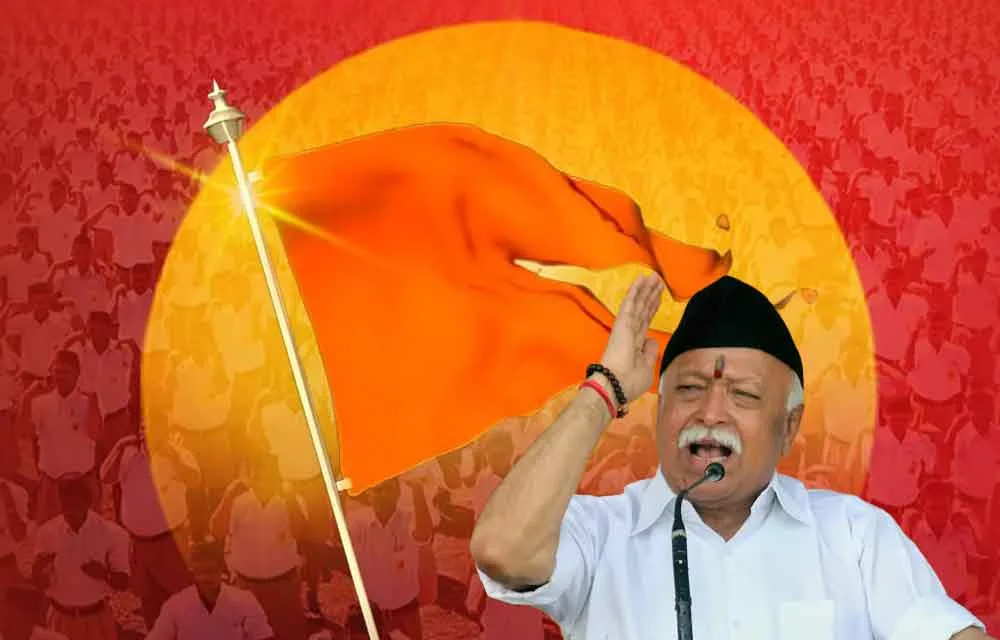
During the historic flag-hoisting at Ayodhya’s Ram Mandir, Bhagwat reiterated that the idea of a Hindu Rashtra is not about exclusion, but about recognizing India’s shared civilizational foundations. Delivered under the auspicious Abhijeet Muhurat, his remarks—echoing themes from earlier speeches in Lucknow, Guwahati, and Manipur—presented a vision of Bharat as an eternal Hindu society guided by dharma.
With Prime Minister Narendra Modi and Uttar Pradesh Chief Minister Yogi Adityanath offering prayers at the Ram Lalla Garbha Griha, the event symbolized not just an architectural achievement, but what many see as a cultural resurgence. Still, the proclamation has sparked a firestorm: Is this a call for unity rooted in heritage—or a divisive challenge to India’s secular Constitution?
Unpacking Bhagwat’s Vision: Ancestry, Land & Conditional Inclusivity
Bhagwat’s rhetoric is layered—framing “Hindu” not as a religious label, but as a broad cultural identity tied to ancestry, land, and dharma.
1. Ancestry as the Unbroken Thread
At the Divya Geeta Prerna Utsav in Lucknow (Nov 23), he stated:
“We are people of Bharat, a Hindu society and a Hindu Rashtra.”
He urged citizens to draw strength from the Bhagavad Gita’s 700 shlokas, calling them timeless guides in an era of moral confusion.
In Guwahati (Nov 18), he expanded the definition of Hindu to include all who love Bharat—Muslims, Christians, and others—arguing that all share the same ancient lineage. At Manipur (Nov 21), he declared Hindu society “immortal”, warning that without Hindus, the world itself would falter.
Historians note this narrative mirrors 19th-century ideas of Hindu civilization as an unbroken chain—from Vedic rishis to the present day—resilient where older civilizations like Greece, Egypt, or Rome declined.
2. Land as Sacred Inheritance
For Bhagwat, Bharat is both punyabhumi (holy land) and pitribhumi (fatherland)—synonymous with Hindu ethos. He argues no official declaration is necessary because the civilization itself expresses Hindu values.
At the Ayodhya event, he highlighted the symbols on the saffron flag—Om, the Sun, and the Kovidara tree—as representing purity, prosperity, and Ram Rajya.
Yet this land-centric worldview also calls for strict attention to “illegal infiltration” and “unregulated conversions,” themes he repeated in Assam.
3. Inclusivity—with Boundaries
Bhagwat’s inclusivity rests on shared cultural pride—but with caution. He advocates:
- a three-child norm for Hindus,
- responsible digital behavior, and
- unity without erasing diversity.
Critics call this assimilationist; supporters call it a call for apanatva (belonging) that strengthens the nation.
Backlash: A Threat to Secularism?
Opposition parties, minority groups, and civil society organizations strongly pushed back.
The Catholic Bishops’ Conference of India (CBCI) rejected the claim that all Indians are Hindu culturally:
“Indian Christians are proud Indians and Bharateeya—but not Hindu.”
They warned against turning India into a Hindu Rashtra, calling such attempts “nefarious,” and cited Supreme Court warnings against terminology that excludes non-Hindus.
Political reactions were swift:
- D. Raja (CPI) invoked Ambedkar’s rejection of a Hindu Rashtra as a “calamity.”
- Jairam Ramesh (Congress) called the claim “divisive propaganda” that undermines the Constitution.
- Asaduddin Owaisi (AIMIM) termed it an “insult to other religions.”
- Moulana Sajid Rashidi emphasized that India is governed by the Constitution, not scriptures.
TMC’s Mahua Moitra warned of a creeping majoritarianism linked to laws on citizenship and conversion, arguing that minorities are increasingly marginalized.
Historians Weigh In: Cultural Truth or Political Mythmaking?
Experts offer mixed interpretations.
Critical Views
- Romila Thapar argues that the narrative of a singular Hindu identity ignores centuries of migration and cultural exchange.
- Journalist Aakar Patel, in Our Hindu Rashtra, argues that India is already functioning like a Hindu state, with secular values weakened since Independence.
Supportive Views
Some scholars, like Koenraad Elst, defend the civilizational perspective, arguing that Hindutva merely seeks to restore India’s pre-colonial identity—not establish a theocracy.
The core academic question remains:
Was India ever a unified Hindu polity—or always a mosaic of cultures and faiths?
RSS’s Evolving Messaging: Softer Tone, Same Core
As the RSS completes 100 years in 2025, its messaging shows both continuity and change.
Founded in 1925, the RSS once carried a reputation for exclusivism. But recent narratives emphasize “harmony,” “self-reliance,” and “environmental protection.”
Bhagwat’s Panch Parivartan—five societal transformations—reflects this shift. At Vigyan Bhawan (August 2025), he spoke of organizing “the entire society,” including critics, reflecting an attempt to blend inclusivity with cultural nationalism.
Yet core ideologies from Savarkar’s Essentials of Hindutva remain central, defining “Hindu” by cultural allegiance rather than faith.
Supporters see this as civilizational confidence. Critics call it rebranded majoritarianism.
Reader Debate: Unity or Division?
So where do you stand?
Is Bhagwat’s vision a celebration of India’s shared civilizational soul, capable of uniting a diverse nation?
Or does it pose a risk to India’s secular fabric, blurring the lines between culture, faith, and nationality?
Share your thoughts below—respectfully.
Will this lead to cultural cohesion—or deepen the divides within the Republic?
Hindutone.com welcomes diverse perspectives. Comments will be moderated for civility.
Frequently Asked Questions
What did Mohan Bhagwat say about Hindu Rashtra?
RSS Sarsanghchalak Mohan Bhagwat declared that India is a Hindu Rashtra and that every Indian is culturally Hindu. He said the idea is about India's shared civilizational foundations, not exclusion.
Where did Bhagwat make these remarks?
He spoke during the flag-hoisting at Ayodhya's Ram Mandir, and echoed the theme in Lucknow on November 23, Guwahati on November 18 and Manipur on November 21.
How does Bhagwat define who is a Hindu?
He treats Hindu as a broad cultural identity tied to ancestry, land and dharma. In Guwahati he extended it to all who love Bharat, including Muslims and Christians, arguing they share the same ancient lineage.
How did Christian groups and opposition parties respond?
The Catholic Bishops' Conference of India said Indian Christians are proud Indians but not Hindu. Jairam Ramesh called the claim divisive propaganda, and Asaduddin Owaisi called it an insult to other religions.
What do the symbols on the Ram Mandir saffron flag represent?
The flag carries Om, the Sun and the Kovidara tree. Bhagwat described them as representing purity, prosperity and Ram Rajya.
What do historians say about the Hindu Rashtra idea?
Romila Thapar argues a singular Hindu identity ignores centuries of migration and cultural exchange. Koenraad Elst defends the civilizational view, saying Hindutva seeks to restore India's pre-colonial identity rather than a theocracy.
Share this with family and friends
Send it on WhatsApp, post it, or copy the link.
More from Hinduism
- Robotic Elephants and AI in Hindu Temples: Kerala's Mechanical Tuskers, Tirumala's AI Command Centre and the Debate
- Madhava of Sangamagrama and the Kerala School: The Infinite Series for Pi, Sine and Arctangent, Worked Out Step by Step
- Vedic Mathematics: Myth vs Fact. Bharati Krishna Tirtha's 16 Sutras, Where They Come From, and What Still Works
- Pingala and Binary Numbers: Laghu-Guru Patterns, Prastara and the Meru Prastara (Pascal's Triangle) Explained
- Did NASA Say Sanskrit Is the Best Language for Computers? What Rick Briggs' 1985 Paper Actually Said
You might also like
Quantum Computing Explained for Hindus: Qubits, Superposition and Entanglement, with Vedanta Analogies (Not Equivalences)
AI and the Sanskrit Revival in 2026: Language Models, Manuscript OCR, Translation Tools and What AI Still Gets Wrong

Can a Robot Perform Puja? Robot Aarti, AI in Rituals and What Hindu Tradition Says