Hindus in Germany 2026 — Complete Country Guide: Frankfurt, Munich, Berlin Communities, Temples, Festivals & Indian Tech Diaspora
Hindus in Germany 2026 — Indian tech diaspora, Frankfurt/Munich/Berlin communities, temples, festivals, Opportunity Card visa, EU Blue Card, language guide.
Hindus in Germany 2026 — Indian tech diaspora, Frankfurt/Munich/Berlin communities, temples, festivals, Opportunity Card visa, EU Blue Card, language guide.
Quick Answer: As of 2026, an estimated 250,000-300,000 Indians live in Germany, with the Hindu population approximately 180,000-220,000 — concentrated in Frankfurt am Main (the largest), Munich, Berlin, Stuttgart, Hamburg, and Düsseldorf. The community is heavily tech-employed (IT, automotive, pharma) and has grown rapidly since Germany's 2022 Skilled Immigration Act and the 2024 Opportunity Card programme. Hindu temples exist in Frankfurt (Sri Ganesh Hindu Tempel), Hamm (Sri Kamadchi Ampal — the largest Hindu temple in Europe), and Berlin (BAPS opened 2023). Festival celebrations and satsang networks have multiplied since 2020.
The Indian-German Hindu community is among Europe's fastest-growing — driven by Germany's acute skilled-labour shortage and India's surplus of tech talent. Unlike older diaspora communities (UK, USA, Canada), Germany's Hindu community is overwhelmingly first-generation, with median tenure under 8 years. The community is still actively forming its institutional identity in 2026.
1. The 2026 Hindu Population in Germany
Estimated total Indians: 250,000-300,000
Estimated Hindus: 180,000-220,000 (75% of Indian population)
Other significant Indian religions: Sikh (~20,000), Muslim (~50,000), Christian (~20,000), Jain/Buddhist (~5,000)
Growth rate: ~15-20% annually since 2022 (driven by Opportunity Card)
Median age: 32 (young diaspora)
Education: ~90% hold college degrees; ~60% engineering or tech-related
Median household income: €70,000-85,000 (tech professionals)
Distribution by region
- Hesse (Frankfurt) — ~50,000 Indians; largest concentration
- Bavaria (Munich) — ~40,000 Indians; second-largest
- North Rhine-Westphalia (Düsseldorf, Cologne, Hamm) — ~35,000
- Berlin — ~30,000
- Baden-Württemberg (Stuttgart, Karlsruhe) — ~25,000
- Hamburg — ~15,000
- Lower Saxony (Hannover, Wolfsburg) — ~10,000
2. Hindu Temples in Germany 2026
Major temples
- Sri Kamadchi Ampal Tempel, Hamm-Uentrop — the largest Hindu temple in continental Europe. Sri Lankan Tamil tradition. Established 2002. Hosts the annual Hamm Tempelfest (June) drawing 25,000+ devotees.
- Sri Ganesh Hindu Tempel Frankfurt — the main Frankfurt area Hindu temple. Pan-Hindu (North + South Indian + Tamil traditions). Frankfurt's Indian-Hindu community converges here for major festivals.
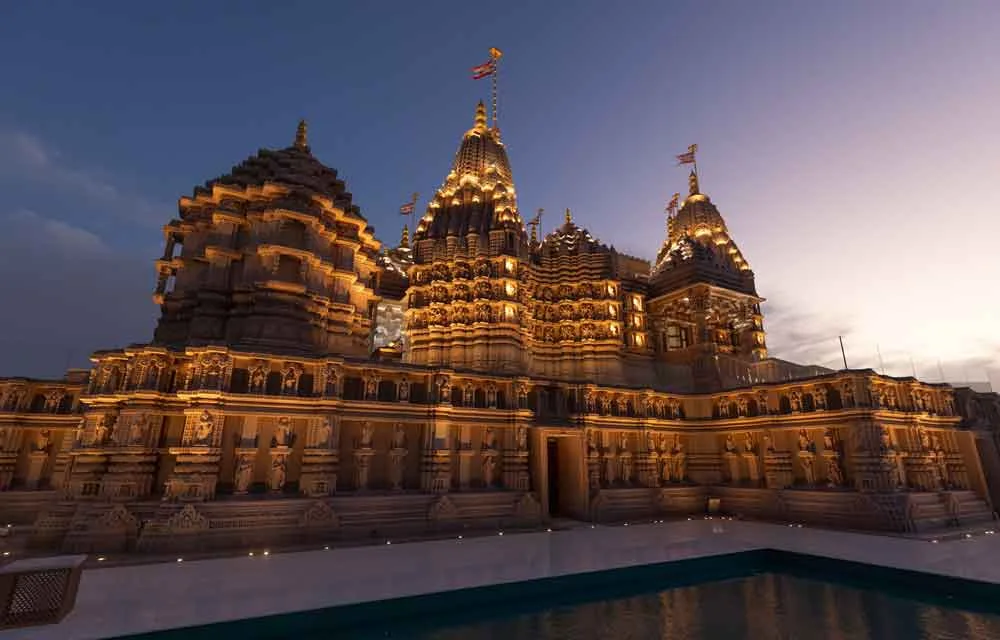
- BAPS Shri Swaminarayan Mandir Berlin — opened 2023. Berlin's first Swaminarayan temple. Growing rapidly with new community members.
- Berlin Hindu Temple (Brahmari Mandir) — Tamil-tradition temple in Berlin's Tempelhof district.
- Sri Sivayoga Mandir, Cologne — Sri Lankan Tamil community temple.
Smaller centres and community pujas
- Munich: Multiple Indian community centres; pujas held at rented community halls; no purpose-built Hindu temple yet (planning under discussion)
- Stuttgart: Indian Cultural Association (ICAS) Stuttgart organises festival pujas at Indian restaurant venues
- Hamburg: Indian Cultural Forum runs monthly pujas
- Düsseldorf: Indian community pujas at hotel venues for major festivals
- Karlsruhe: Growing community; pujas at SAP campus chapel area for Diwali, Holi
- Wolfsburg: Volkswagen-employed Indian community; community pujas at company-organised venues
Telugu / Tamil / Bengali / Marathi cultural societies
- Telugu Association of Germany (TAGD) — covers multiple cities
- Tamil Mandram Germany (multiple chapters)
- Bengali Cultural Association Frankfurt
- Marathi Mandal Munich
- Gujarati Samaj Germany (small but active)
3. City-by-City Community Guide
🏛 Frankfurt am Main — The largest Hindu community
Frankfurt is Germany's financial capital and Indian-tech-worker capital. ~50,000 Indians live in greater Frankfurt. The Sri Ganesh Hindu Tempel in Niederrad anchors the community. Frankfurt's Diwali Mela on the Römerberg (city centre square) has grown to 8,000+ attendees. Indian groceries cluster in Bahnhofsviertel (around the main station) and Sachsenhausen.
Indian neighbourhood: Niederrad, Sachsenhausen, around the airport
Indian groceries: Asia Markt Niederrad, Indian Grocery Bahnhof
Indian restaurants: Saravana Bhavan Frankfurt, Bombay Palace, Indian Garden
🏛 Munich — Second-largest, fastest-growing
Bavaria's capital has rapidly added Indian tech workers (BMW, Siemens, Allianz). ~40,000 Indians live in Munich greater area. No purpose-built Hindu temple yet — community organises festival pujas at rented community halls (Münchner Stadtsaal, Olympiapark).
Indian neighbourhood: Schwabing-West, Sendling, Pasing
Indian groceries: Asia Markt Munich, Indian Grocery Schwabing
Festival venues: Backstage Werk (Diwali), various Bavarian Schützenfest halls
🏛 Berlin — Cultural capital with growing community
Berlin's cosmopolitan reputation attracts more Indian creative professionals (designers, artists, startup founders) than tech workers per se. ~30,000 Indians. BAPS Berlin (opened 2023) anchors the Swaminarayan community.
Indian neighbourhood: Charlottenburg, Mitte, Kreuzberg, Tempelhof
Indian groceries: Asien Markt Berlin, Indian Bazaar
Festival venues: Tempodrom, Volksbühne
🏛 Stuttgart — Auto-industry diaspora
Mercedes, Porsche, and Bosch employ thousands of Indian engineers. ~25,000 in Stuttgart metro. The Indian Cultural Association (ICAS) Stuttgart is the community anchor.
🏛 Hamburg — Northern hub
Hamburg's port-industry tech corridor employs growing Indian workforce. Indian Cultural Forum Hamburg.
🏛 Düsseldorf / Cologne — North Rhine-Westphalia
Hamm (NRW) hosts the major Sri Kamadchi Ampal temple. Düsseldorf and Cologne have growing tech and pharma communities.
🏛 Hamm — Tamil temple hub
The town of Hamm hosts continental Europe's largest Hindu temple. Annual Tempelfest in late June draws devotees from across Europe — 25,000+ attendees during peak.
4. Festival Celebrations — What's Available Locally
Major celebrations
Diwali (Nov 8, 2026):
- Frankfurt Diwali on Römerberg (city centre)
- Munich Diwali at Olympiapark
- Berlin Diwali at Tempodrom
- Hamburg Diwali at Indian Cultural Forum
- BAPS Berlin Annakut
Navratri (Oct 11–19, 2026):
- Frankfurt Garba (organised by Gujarati Samaj)
- Munich Garba (smaller scale, hotel venues)
- Berlin Devi Puja at BAPS
Holi (Mar 3, 2026):
- Indian Cultural Centres in major cities organise Holi events
- Holi Festival of Colors tours (commercial events) in summer
Janmashtami (Sep 3, 2026):
- ISKCON Berlin
- ISKCON Munich (smaller centre)
- Community pujas
Ganesh Chaturthi (Sep 14, 2026):
- Maharashtra community in Munich, Stuttgart
- BAPS centres
Tamil festivals (Thaipusam, Pongal):
- Sri Kamadchi Ampal Hamm — full programme
- Tamil Mandram cities
Tempelfest Hamm (late June each year):
- One of Europe's largest Hindu cultural events
- 25,000-30,000 attendees
- Drawing devotees from Germany, Netherlands, Belgium, France
5. Immigration Reality — Visas in 2026
Opportunity Card (Chancenkarte) — opened 2024
Germany's points-based skilled-worker visa. Indian professionals can apply with:
- Bachelor's degree (verified by Anabin)
- 2+ years professional experience
- A1-level German (or higher) is strongly favoured
- Job offer not required (but recommended)
Validity: 1 year initial, extendable. Convertible to EU Blue Card or employer-sponsored visa once employed.
EU Blue Card (Blaue Karte EU)
For tech/STEM/medical professionals with:
- University degree
- Job offer at salary above the threshold (~€48,300/year in 2025; updated 2026)
- 4 years to permanent residency
Family reunification
Spouse and minor children can join EU Blue Card holders typically within 3-6 months. Children attend German schools (free public education).
Permanent Residency (Niederlassungserlaubnis)
- 4 years on EU Blue Card with B1 German
- 33 months on EU Blue Card with A1 German + integration course
- 5 years on standard work visa
- Permanent residency leads to citizenship in 5 more years
Citizenship
Germany's 2024 citizenship reform allows dual citizenship; processing is improving. Indian-origin permanent residents now apply for German citizenship without renouncing Indian citizenship (but India does not recognise dual citizenship — practical complication for OCI status).
6. Language Barrier — The German Reality
Unlike English-speaking diaspora destinations (USA, UK, Canada, Australia, Singapore), Germany requires significant German-language acquisition for true integration:
- A1 level required for spouse visa and basic life
- B1 level required for permanent residency under expedited paths
- B2-C1 practically needed for German-language work, public services, medical care, schools
Resources for Indians learning German:
- Goethe-Institut courses (in major Indian cities — Hyderabad, Bengaluru, Delhi, Mumbai, Chennai, Pune, Kolkata)
- Online platforms: Lingoda, Babbel, Speakly (German specialty)
- VHS (Volkshochschule) integration courses (in Germany; often subsidized)
- Apps: Lingoda speak, Drops, Anki for vocabulary
The reality of life in Germany:
- Work in English is possible (especially in tech, automotive R&D, pharma R&D, international business)
- Daily life — supermarket, post office, doctor — is in German
- Children's school is in German
- Bureaucracy is in German
- Most Indian-origin professionals report needing 3-5 years to achieve functional German
7. Tech Employment Landscape
Major employers of Indian Hindu professionals:
- SAP (Walldorf) — long-established Indian engineering presence
- Siemens (Munich) — large India-Germany engineer flow
- BMW, Daimler/Mercedes (Stuttgart, Munich) — automotive software
- Bosch (Stuttgart) — robotics, automotive
- Allianz (Munich) — tech and analytics
- Volkswagen (Wolfsburg) — automotive tech
- Bayer (Leverkusen) — pharma tech
- Deutsche Bank, ECB (Frankfurt) — financial technology
- Multiple startups in Berlin (food-tech, fintech, AI)
Salary ranges 2026 (gross):
- Junior software engineer: €55,000-70,000
- Senior software engineer: €85,000-110,000
- Tech lead / architect: €110,000-140,000
- Principal engineer: €140,000-180,000
- Management / Senior Director: €180,000+
Note: Germany's high tax rate (~40-45%) means take-home is lower than equivalent US compensation. Healthcare, schools, public services compensate at higher quality than US norms.
8. Community Organisations and Satsang Networks
Cultural / advocacy:
- Indian-Hindu Forum Germany
- Hindu Council Germany
- BAPS Swaminarayan
- ISKCON Germany (Berlin, Munich)
Professional networks:
- Tie-Germany (entrepreneurs)
- IIT Alumni Association Germany
- Indian Engineers Forum Germany
Cultural / language-specific:
- Telugu Association of Germany (TAGD)
- Tamil Mandram chapters
- Bengali Cultural Association (multiple cities)
- Maharashtra Mandal Munich
- Gujarati Samaj Germany
- Punjabi Cultural Society Germany
Satsang circles (semi-formal):
- WhatsApp-organised satsang in most cities
- Monthly Gita study circles in Frankfurt, Munich, Berlin
- ISKCON Sunday programmes
- BAPS Sunday gatherings
9. Education and Children
Schools for Indian-origin children:
- German public schools (free; German-medium)
- International schools (English-medium; €15,000-25,000/year tuition)
- Indian community Sunday schools (Hindi/Sanskrit + cultural)
Children's Hindu education challenges in Germany:
- Hindu festivals don't have school holidays
- Religious education in German schools is typically Catholic/Protestant
- Cultural transmission depends heavily on parents and weekend community programmes
Bal Vihar / weekend programmes:
- BAPS Berlin Sunday Bal Vihar
- ISKCON Berlin children's programme
- Several community-run cultural classes
10. The Future — Hindus in Germany 2026-2030
Projected growth: Indian population to reach ~400,000-500,000 by 2030, with Hindu population approximately 300,000-380,000.
Key trends:
- Munich temple construction: Discussions underway for a major Hindu temple project; likely to materialise 2027-2028
- Frankfurt temple expansion: Sri Ganesh Mandir planning expansion
- Berlin community growth: Tech-startup Indians driving rapid Berlin growth
- G2 emergence (just beginning): First children of 2018-2020 arrivals approaching school age — will mature as a meaningful diaspora cohort by 2030
- Return-migration tension: Many tech professionals reconsidering Germany due to language barrier; some returning to India or moving to UK/USA
- More structured satsang networks: Pan-Germany online satsang circles forming
- Sanskrit and Hindi school programmes: Frankfurt and Munich community organising regular language classes
- Hindu chaplaincy programmes: Hospitals and prisons in NRW and Bavaria beginning to add Hindu chaplain referral networks
- Indian restaurant explosion: Quality and authenticity increasing rapidly; major German cities now have authentic regional Indian cuisine
Final Words
Hindus in Germany 2026 represent a young, talent-dense, rapidly forming diaspora. Unlike older Hindu American or Hindu British communities with three generations of established institutions, the German Hindu community is in active first-generation institutional building. The next 5-10 years will determine whether Germany becomes a major European centre of Hindu life or remains a temporary stop on the global Indian professional's journey.
The German Hindu community needs more temples, more satsang networks, more weekend cultural programmes, more Hindu visibility in the German public sphere. For those who have made Germany their home — Frankfurt's bankers, Munich's BMW engineers, Berlin's startup founders, Stuttgart's automotive software developers, Hamm's Tamil-rooted families — building Sanatana Dharma's German chapter is the work of this generation.
Sarve Bhavantu Sukhinah, Sarve Santu Niramayah,
Sarve Bhadrani Pashyantu, Ma Kaschit Duhkha Bhaag Bhavet.
May all beings be happy. May all be healthy. May all see the auspicious. May none suffer.
Jai Hind! Sanatana Dharma ki jai! Frankfurt-Munich-Berlin Hindu Sangam!
HinduTone Editorial Team · Tags: Hindus in Germany 2026, Indians in Germany, Frankfurt Hindu Tempel, Munich Hindu Community, Berlin BAPS, Opportunity Card, EU Blue Card, Sri Kamadchi Ampal Hamm, Hindu Tempelfest
Frequently Asked Questions
Where is Hindus in Germany located?
As of 2026, an estimated 250,000-300,000 Indians live in Germany , with the Hindu population approximately 180,000-220,000 — concentrated in Frankfurt am Main (the largest), Munich, Berlin, Stuttgart, Hamburg, and Düsseldorf . The community is heavily tech-employed (IT, automotive, pharma) and has grown rapidly since Germany's 2022 Skilled Immigration Act an
Who is the presiding deity of Hindus in Germany?
The temple's presiding deity and its significance are described in the guide above.
What are the timings and how do I reach Hindus in Germany?
Temples typically open early morning and evening; confirm current darshan timings before visiting. The nearest airport, railway station and road routes are covered in the guide above.
What is the best time to visit Hindus in Germany?
Major festival days and the cooler months are popular, though weekday mornings offer a calmer darshan. Plan around the temple's key festivals for the most vibrant experience.
You might also like

Hindus in New Zealand 2026 — Complete Country Guide: Auckland, Wellington, Christchurch Communities, Temples, Festivals & Indo-Kiwi State of the Nation
Hindus in Malaysia 2026 — Complete Country Guide: Batu Caves, Sri Mahamariamman Temple, Tamil Community & 175-Year Hindu Heritage
Hindu Priest Jobs Germany 2026 — Frankfurt, Munich, Berlin Pandit Vacancies & Visa Guide