Sarvam Maya Climax: A Profound Hindu Spiritual Exploration of Maya, Moksha, and Atman-Brahman Unity
*For www.hindutone.com – Where Sanatana Dharma Meets Modern Cinema* The 2025 Malayalam film *Sarvam Maya*, starring Nivin Pauly as Prabhendhu Namboothiri,…
*For www.hindutone.com – Where Sanatana Dharma Meets Modern Cinema* The 2025 Malayalam film *Sarvam Maya*, starring Nivin Pauly as Prabhendhu Namboothiri,…
*For www.hindutone.com – Where Sanatana Dharma Meets Modern Cinema*
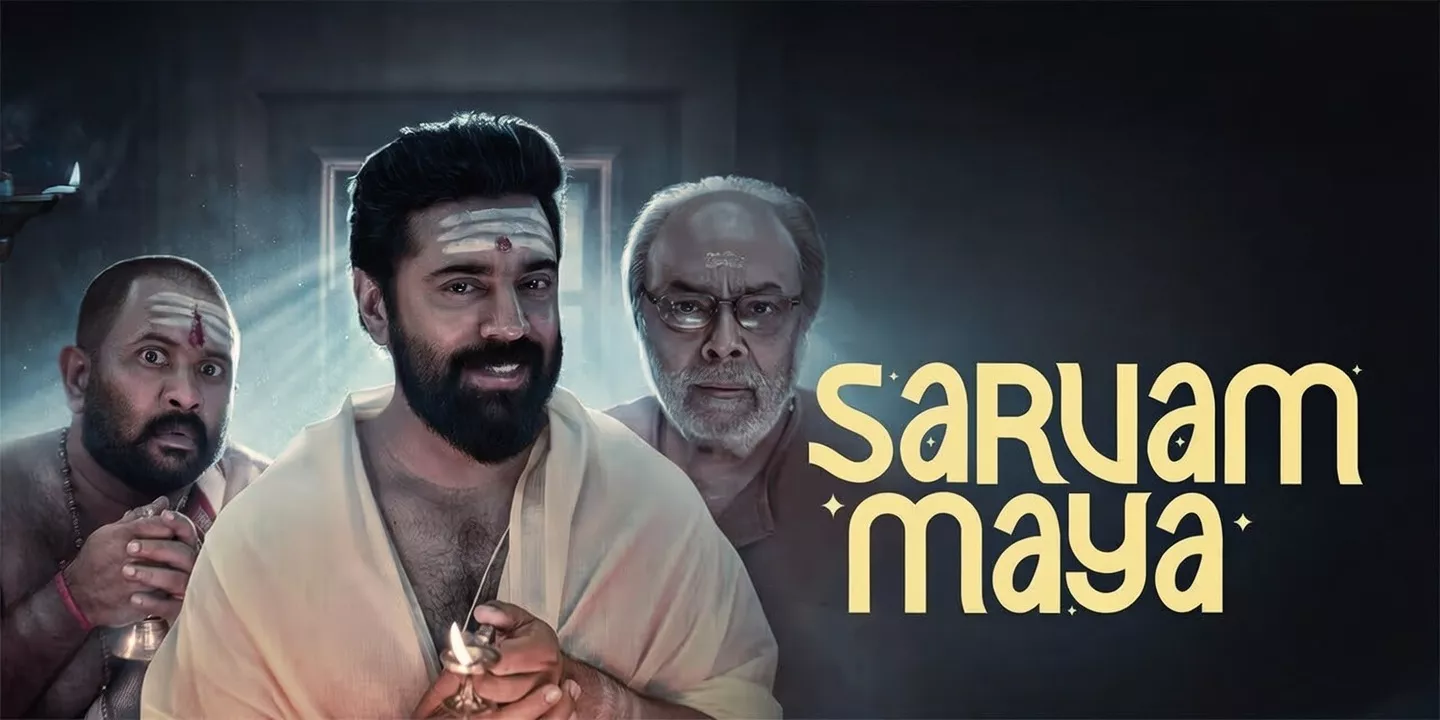
The 2025 Malayalam film *Sarvam Maya*, starring Nivin Pauly as Prabhendhu Namboothiri, masterfully weaves a supernatural comedy with timeless **Hindu philosophical truths**. Directed by Akhil Sathyan, the title itself — **Sarvam Maya** ("Everything is Illusion") — echoes the core teaching of **Advaita Vedanta**: the world of names and forms (nama-rupa) is illusory, veiling the singular, eternal **Brahman**.
In the emotional climax, Delulu (the ghost) confesses her love, reveals her identity as Maya Mathew — a young woman who died in an accident with unresolved desires — hugs Prabhendhu, transfers her memories, finds peace, and fades away. Prabhendhu then visits her mother, offers compassionate closure ("Yes" to her question of connection), and pursues his musical dreams, forever transformed. A gentle breeze lingers, symbolizing subtle divine presence.
This ending is not mere sentiment; it is a cinematic Upanishadic revelation. Here are deeper **Hindu spiritual interpretations**, rooted in Vedanta, Bhakti, Karma, and Moksha:
### 1. **Advaita Vedanta: Piercing the Veil of Maya for Atman-Brahman Realization**
Adi Shankaracharya's Advaita declares: **Brahma satyam jagat mithya** — Brahman alone is real; the world is illusory (mithya). **Maya** is the creative power (shakti) of Brahman that projects multiplicity, causing the jiva (individual soul) to mistake the unreal for real through avidya (ignorance).
Delulu/Maya embodies trapped Maya — bound by unfulfilled kama (desire) and unresolved karma, she lingers in a bardo-like state between death and liberation. Her "ghost" form is the ultimate symbol of superimposed illusion (adhyasa): appearing separate, yet part of the one reality.
The pivotal hug is the moment of **jnana** (knowledge). When Prabhendhu experiences her memories and accepts her truth, the veil drops. Maya dissolves — not annihilated, but realized as non-separate from the whole. This mirrors the mahavakya **Tat Tvam Asi** ("Thou art That"): the individual (jiva) recognizes identity with Brahman. Her peaceful fade signifies **videha mukti** (liberation upon dropping the body/ego), while Prabhendhu's transformation reflects living liberation (jivan mukti) — he now sees beyond dualities, pursuing dharma-aligned dreams (music over forced priesthood).
The mother's scene is compassionate upaya (skillful means): Prabhendhu affirms connection to ease her duhkha, echoing Advaita's teaching that in ultimate truth, all is one — no real separation exists between lover, beloved, or griever.
### 2. **Karmic Resolution and Pitru Rina: Releasing Bound Souls Through Compassion**
Hinduism teaches that unresolved karma binds the atman across lives or in preta-loka (ghost realm). A soul with intense attachments (like Maya's unexpressed love) cannot attain sadgati without closure.
Prabhendhu becomes the unwitting instrument of her **karmic release**. By absorbing her pain (through the hug) and providing pitru tarpana-like empathy to her mother, he pays off shared rina (karmic debt). This act of selfless love (nishkama bhakti) frees her soul, allowing punya to flow. The breeze at the end evokes Vayu (prana/life force) or subtle presence of liberated atman — a reminder that departed souls bless those who aid their moksha.
This resonates with Garuda Purana teachings on post-death states: compassion from the living dissolves pretatva, granting the soul higher lokas or merger.
### 3. **Bhakti Yoga: Transcendent Love Beyond Death and Form**
In Vaishnava and Shaiva traditions, bhakti transcends physicality. Maya's love for Prabhendhu, born in limbo, is pure prema — free from ego or expectation. Her confession and fade echo the Gita's teaching (9.29-31): divine grace accepts even the most imperfect devotee.
Prabhendhu's hesitation, then acceptance, mirrors the bhakta's surrender. He doesn't "possess" her but honors the divine spark in their bond. His ongoing inner remembrance of Maya (carrying her in his heart) is smarana bhakti — constant awareness of the beloved, leading to union with the Divine.
The open question — Did he love her back? — invites viewers to reflect: True love in Sanatana Dharma is not possession but liberation of the other.
### 4. **Upanishadic Dream Analogy: Waking from the Dream of Samsara**
The Mandukya Upanishad compares waking life to a dream. Prabhendhu's journey is this: initially atheist and confused, he navigates "ghostly" illusions (family pressure, unfulfilled dreams). Delulu is the dream-figure guiding him to awakening.
The climax hug is the moment of waking — memories flood as dream dissolves. Maya fades like a dream character upon realization. Prabhendhu awakens to his true svadharma (music as creative expression of atman), embodying **"Sarvam khalvidam Brahma"** — All this is verily Brahman.
The gentle breeze symbolizes turiya — the fourth state beyond waking, dreaming, and deep sleep — subtle, ever-present awareness.
### 5. **Antahkarana Shuddhi: Purification Through Acceptance and Letting Go**
Vedantic sadhana purifies the mind (antahkarana). Prabhendhu, from priestly lineage yet atheist, confronts attachments (to dreams, fears, identity). Maya's presence forces emotional integration — grief, love, loss.
Her release purifies him: he lets go of resistance, embraces compassion, and channels energy into sattvic pursuit (music). This is true spiritual evolution — from tamas/rajas to sattva, leading toward moksha.
*Sarvam Maya* is more than entertainment; it's a modern parable reminding us: Attachments bind, knowledge liberates. In embracing illusion with love and wisdom, we glimpse the eternal.
What Hindu scripture or teaching does the climax evoke for you? Share in the comments below. Watch *Sarvam Maya* on JioHotstar and reflect on your own Maya. Hari Om.
Frequently Asked Questions
What happens in the climax of Sarvam Maya?
Delulu the ghost confesses her love and reveals she is Maya Mathew, who died in an accident with unresolved desires. She hugs Prabhendhu, transfers her memories, finds peace and fades away, and he then comforts her mother and pursues music.
What does the title Sarvam Maya mean in Hindu philosophy?
Sarvam Maya means everything is illusion. It echoes Advaita Vedanta, where the world of names and forms is illusory and veils the one eternal Brahman.
How does the hug relate to Advaita Vedanta?
The hug is read as the moment of jnana, or knowledge, when the veil drops. It mirrors the mahavakya Tat Tvam Asi, where the individual recognizes identity with Brahman.
What does the gentle breeze at the end symbolize?
The breeze is read as Vayu, the life force, or the subtle presence of a liberated atman. It is also linked to turiya, the fourth state of awareness beyond waking, dreaming and deep sleep.
Who stars in Sarvam Maya and who directed it?
Nivin Pauly plays Prabhendhu Namboothiri in the 2025 Malayalam film, directed by Akhil Sathyan. It is a supernatural comedy.
Where can I watch Sarvam Maya?
Sarvam Maya can be watched on JioHotstar, where viewers can reflect on their own Maya afterwards.
You might also like
What Does Sarva Mangala Mean? | Significance and Spiritual Meaning in Lalita Sahasranama
Vat Savitri Vrat & Snana Yatra June 29 2026 – Complete Devotional Guide: Savitri’s Story, Rituals & Jagannath Significance
Nirjala Ekadashi June 25 2026 – The King of Ekadashis: Complete Guide with Bhima’s Story, Rituals, Mantras & Benefits