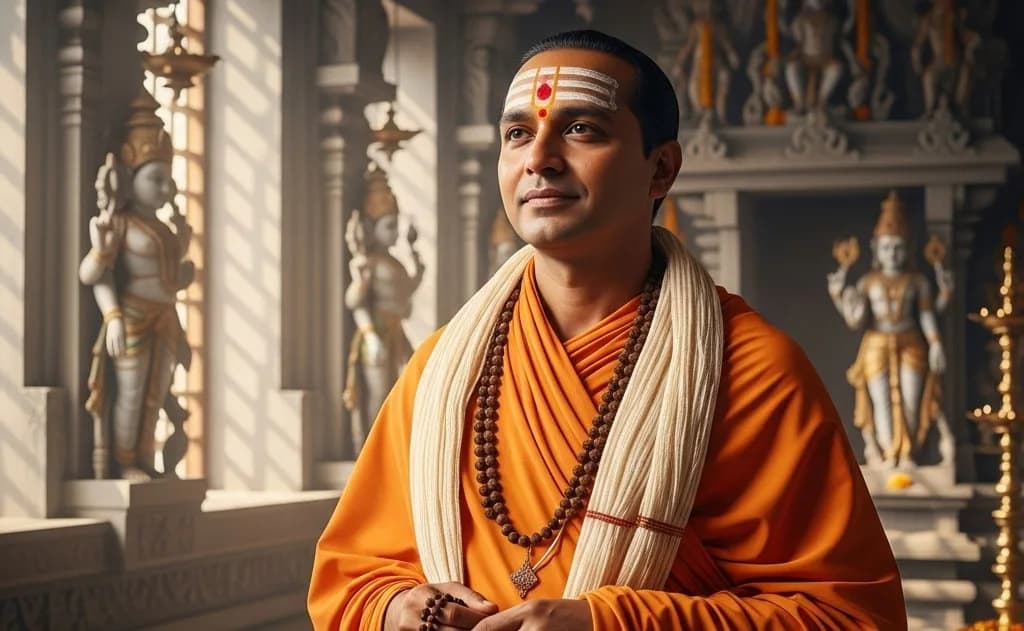
Triveni Sangamam: A Sacred Confluence of Spirituality for Hindus
The Triveni Sangamam, located in Prayagraj (formerly Allahabad), is one of the most spiritually significant places for Hindus.

The Triveni Sangamam, located in Prayagraj (formerly Allahabad), is one of the most spiritually significant places for Hindus.
The Triveni Sangamam, located in Prayagraj (formerly Allahabad), is one of the most spiritually significant places for Hindus. It is the confluence of three rivers—Ganga, Yamuna, and the mythical Saraswati. This sacred meeting point holds immense religious and cultural importance, as it is believed to be a gateway to spiritual purification and salvation.
Symbolism of the Three Rivers
Each river in the Triveni Sangamam represents a deeper spiritual aspect:
Ganga symbolizes purity and washes away sins. Yamuna is associated with love and devotion. Saraswati, the invisible river, signifies wisdom and knowledge.
The convergence of these three rivers is seen as the merging of these qualities, providing a unique spiritual experience that allows devotees to connect with the divine.
Spiritual Benefits of Bathing at Triveni Sangamam
Hindus believe that taking a dip in the waters of Triveni Sangamam during auspicious occasions, particularly during the Kumbh Mela, can cleanse one of past sins and lead to moksha (liberation from the cycle of life and death). This act of bathing is viewed as a symbolic purification of both the body and soul.
Mythological Significance
According to Hindu mythology, the Triveni Sangamam is the place where drops of Amrit, the nectar of immortality, spilled during the celestial event of Samudra Manthan. This has made it a potent spot for spiritual rejuvenation. The waters here are believed to carry divine blessings, making it a destination for millions of pilgrims seeking spiritual upliftment.
A Hub for Pilgrimage and Festivals
The Triveni Sangamam is the focal point of the Kumbh Mela, one of the largest religious gatherings in the world. Devotees come here from all corners of the globe to participate in this festival, seeking blessings and enlightenment. The spiritual energy at this confluence is considered heightened during these festivals, making it a highly revered destination.
Gateway to the Soul's Liberation
For Hindus, the Triveni Sangamam is not just a place of physical pilgrimage but a journey towards spiritual awareness and inner transformation. It represents the unity of body, mind, and spirit, drawing devotees to experience the divine connection between the material world and the eternal.
In conclusion, the Triveni Sangamam is a symbol of the profound spiritual essence of Hinduism, where nature, faith, and mythology converge to offer devotees a path to purity and spiritual liberation.
What do the Vedas and Puranas say about Prayagraj as Tirtharaja?
Prayagraj holds the distinguished title of Tirtharaja — the King of all sacred pilgrimage sites — a recognition enshrined in the Matsya Purana and the Padma Purana. The Matsya Purana declares that merit accumulated by visiting all other tirthas combined still falls short of the merit earned at Prayagraj. The Rigveda references the sacred confluence in the hymn addressing the Saraswati as a mighty, nourishing river flowing between the Yamuna and the Sutlej, lending ancient scriptural weight to the site's sanctity.
The Prayaga Mahatmya, a dedicated section within the Matsya Purana, describes in precise detail the boundaries of the sacred kshetra, identifying the stretch from the Pratishthana ghats to the Vasuki Kund as a region where every grain of sand is considered a lingam of Shiva. The text further states that even a contemplation of Prayagraj, without physically visiting it, grants the devotee freedom from the accumulated sins of seven previous lifetimes — an unusually expansive spiritual claim that underscores how deeply this location was venerated by the compilers of the Puranic tradition.
How does the invisible Saraswati river connect to Vedic cosmology?
The Saraswati's presence at Triveni Sangamam is described as antarvahini — a subterranean, invisible current flowing beneath the earth to merge at Prayagraj. This concept appears in the Skanda Purana, which calls the hidden river Vipasha, 'the unbound one,' suggesting a metaphysical dimension beyond physical geography. In Vedic thought, the Saraswati governs Vak (sacred speech) and Prajna (discernment), and her invisible confluence symbolises the idea that true wisdom operates beneath the visible surface of existence.
The Rigveda dedicates several suktas (hymns 1.3, 6.61, and 7.95, among others) to Saraswati, celebrating her as ambitame, naditame, devitame — the best of mothers, the best of rivers, and the best of goddesses. Later Vedic literature, particularly the Shatapatha Brahmana, describes rituals in which priests made offerings specifically at points where the Saraswati was believed to flow underground. This tradition of honouring an unseen yet spiritually potent presence reached its most powerful expression at Prayagraj, where the invisible river becomes an object of faith rather than mere geography.
What is the astronomical basis of the Kumbh Mela timing at Prayagraj?
The timing of the Kumbh Mela at Prayagraj is determined by a precise celestial alignment: the entry of Jupiter (Brihaspati) into the zodiac sign of Vrishabha (Taurus) while the Sun occupies Makara (Capricorn) and the Moon moves toward Amavasya (new moon). This configuration is calculated through the Jyotisha Vedanga — the limb of the Vedas concerned with astronomy and auspicious timings — and results in a cycle of approximately twelve years between successive Purna Kumbha Melas at Prayagraj. The Ardha Kumbha occurs every six years, and the Maha Kumbha, the rarest, every 144 years.
The specific bathing dates within the Kumbh Mela, called Shahi Snan or Amrit Snan, are calculated when planetary positions are most potent. Classical texts on Muhurta (auspicious timing) such as the Muhurta Chintamani explain that during these windows the gravitational and subtle cosmic forces are thought to heighten the purificatory power of the river waters. The alignment of Jupiter with the Kumbha (pitcher) symbol also mirrors the mythological narrative of the Amrit Kumbha — the pitcher of nectar — that was carried across the sky during the Samudra Manthan, directly linking the astronomical event to the founding myth of the pilgrimage.
Which specific rituals do pilgrims perform at the Sangam, and what is their meaning?
Beyond bathing, pilgrims at Triveni Sangamam perform Tarpana — the offering of water cupped in the palms and released while reciting the names of deceased ancestors. This rite, described in detail in the Grihyasutras and elaborated upon in the Dharmashastra literature, is believed to nourish the pitrs (ancestral souls) and release them from lingering karmic debts. The belief is that the triple sanctity of the Sangam amplifies the efficacy of Tarpana, making Prayagraj one of the foremost sites for Pitru Paksha observances.
Pilgrims also engage in Kalpavasa — a practice of residing at the Sangam for an entire month (typically the month of Magha in the Hindu calendar), observing austerities such as one meal per day, sleeping on the ground, and bathing three times daily at dawn, noon, and dusk. The Magha Mahatmya within the Padma Purana calls this period 'the thirty-day pilgrimage in one place,' stating that a single month of Kalpavasa at Prayagraj equals the spiritual merit of performing the Ashwamedha Yajna a thousand times. Tens of thousands of devotees still undertake this demanding practice each year, erecting temporary settlements of tents and huts along the riverbanks.
How have saints and philosopher-saints shaped the spiritual legacy of Triveni Sangamam?
Adi Shankaracharya, the 8th-century Advaita Vedanta philosopher, is believed to have held philosophical debates (shastrartha) at Prayagraj as part of his Digvijaya — his pan-India journey to revitalize Sanatana Dharma. The Dasha Nami Sannyasi orders he founded maintain a prestigious presence at the Kumbh Mela to this day, with their ceremonial processions — including the Naga Sadhus of the Juna Akhara — forming the centrepiece of the Shahi Snan.
The medieval saint-poet Tulsidas, author of the Ramcharitmanas, spent significant time at Prayagraj and drew upon the symbolism of the Sangam in his writings, likening the confluence of Gyan (knowledge), Bhakti (devotion), and Vairagya (detachment) to the meeting of the three rivers. Later, Swami Vivekananda visited Prayagraj and reportedly meditated at the Sangam, reflecting on the confluence as an emblem of the unity underlying apparent diversity — a theme central to Advaita philosophy. These associations have ensured that Triveni Sangamam functions not merely as a bathing ghat but as a living philosophical symbol that continues to inspire seekers across traditions within Hinduism.
Frequently Asked Questions
What is Triveni Sangamam?
The Triveni Sangam am, located in Prayagraj (formerly Allahabad), is one of the most spiritually significant places for Hindus. It is the confluence of three rivers—Ganga, Yamuna, and the mythical Saraswati .
What are the key points about Triveni Sangamam?
This sacred meeting point holds immense religious and cultural importance, as it is believed to be a gateway to spiritual purification and salvation. Symbolism of the Three Rivers Each river in the Triveni Sangamam represents a deeper spiritual aspect: Ganga symbolizes purity and washes away sins.
Why does Triveni Sangamam matter in Hinduism?
It reflects core values of Sanatana Dharma and offers practical and spiritual guidance that remains relevant across generations.
How can devotees apply Triveni Sangamam in daily life?
By reflecting on its teaching, incorporating the related practices or observances into daily routine, and approaching it with sincere devotion and understanding.
You might also like

Purushottam Maas 2026: Lord Vishnu's Sacred Gift of Spiritual Multiplication & Divine Grace
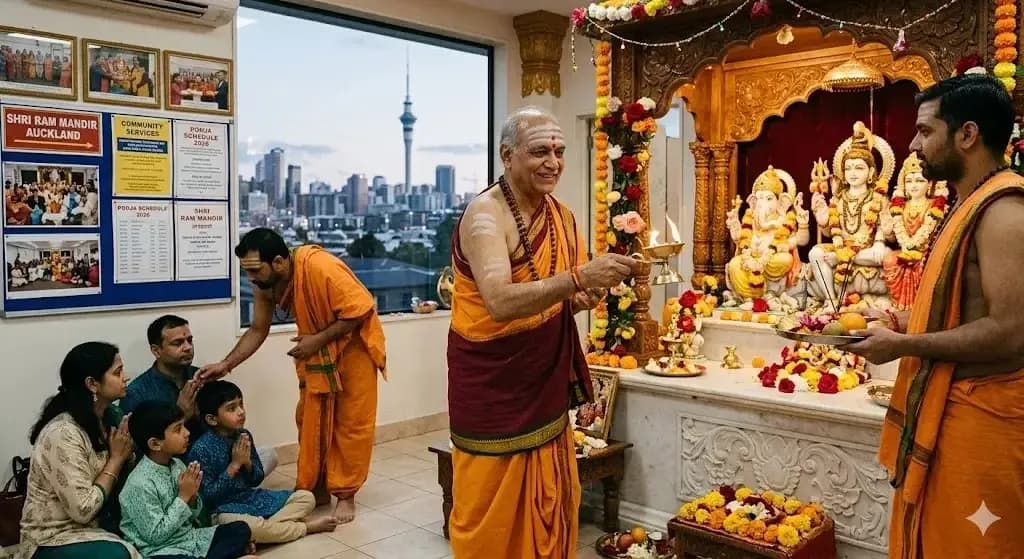
Hindu Priest Jobs New Zealand 2026 — Auckland, Wellington, Christchurch Vacancies & NZ Religious Worker Visa Guide
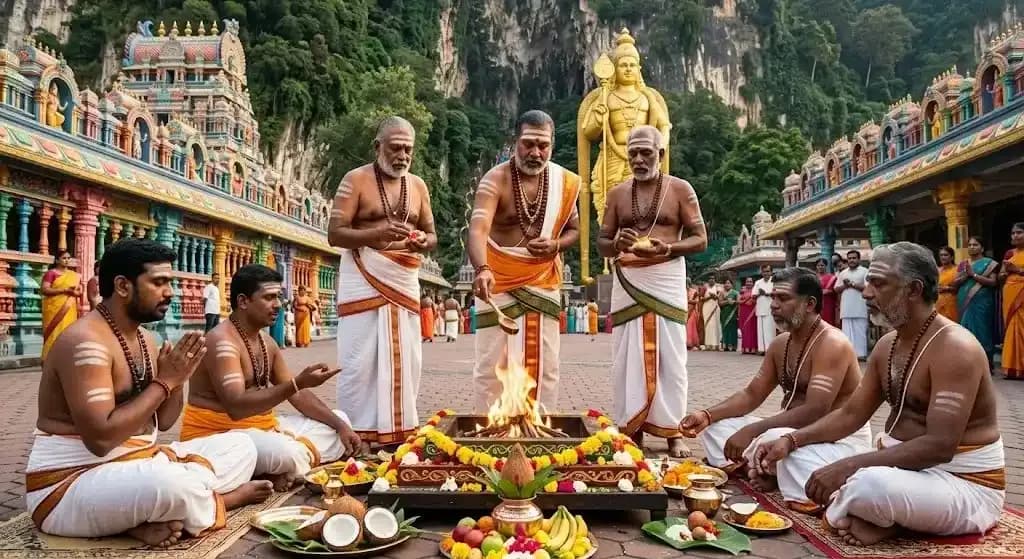
Hindu Priest Jobs Malaysia 2026 — Batu Caves, KL, Penang Vacancies & Tamil Hindu Career Guide