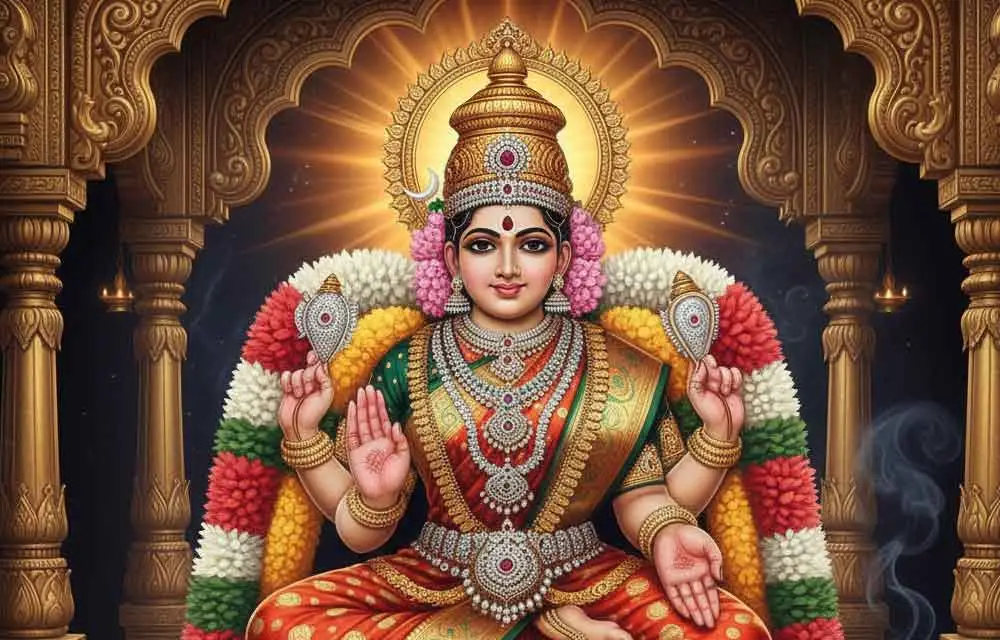
Mata Amritanandamayi (Amma) — Life, Teachings, the Hugging Saint & Global Devotional Legacy in 2026
Mata Amritanandamayi (Amma) — Kerala-born saint, the 'hugging saint' who has embraced 40+ million devotees. Amritapuri ashram, global humanitarian network, teachings.
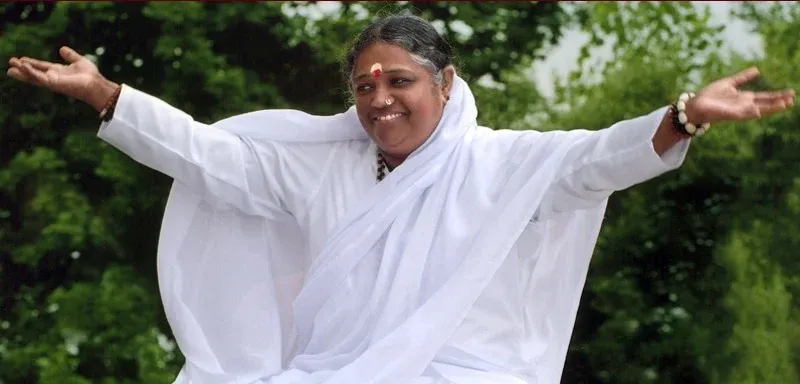
Mata Amritanandamayi (Amma) — Kerala-born saint, the 'hugging saint' who has embraced 40+ million devotees. Amritapuri ashram, global humanitarian network, teachings.
Quick Answer: Mata Amritanandamayi Devi (born September 27, 1953, as Sudhamani Idamannel), known universally as Amma ("Mother"), is among modern Hinduism's most globally beloved saints. Born to a poor fisherman family in Parayakadavu (now Amritapuri), Kerala, she emerged in the 1970s as a saint whose primary practice is darshana via physical embrace — the "hugging saint". She is estimated to have personally embraced over 40 million people across decades. Her ashram Amritapuri is among the largest Hindu ashrams in the world; the Mata Amritanandamayi Math (MA Math) runs hospitals, universities (Amrita University), schools, environmental programmes, disaster relief, and humanitarian projects across 100+ countries. She is recognised globally — addressing the UN World Parliament of Religions multiple times, receiving honorary degrees from major universities, named to "100 Most Influential People" lists. Her teaching emphasises bhakti (devotion), seva (service), and the personal mother-child relationship between the divine and the soul — making her tradition particularly accessible to those who relate to the feminine divine principle.
1. Early Life — Sudhamani of Parayakadavu
Born September 27, 1953 in the small fishing village of Parayakadavu (now Amritapuri), Kerala, to Sugunanandan (a fisherman) and Damayanti (his wife). The family was poor; Sudhamani was the fourth of thirteen children. Her dark complexion was considered inauspicious by some family members; she was treated more harshly than other siblings.
From early childhood, Sudhamani showed unusual qualities:
- Spontaneous devotional song — she composed and sang Krishna-Devi bhajans from age 5
- Intense compassion for animals and the poor — she would give away family food to the hungry
- Periods of trance-like states when contemplating Krishna or Devi
- Refusal to attend school beyond fourth grade — her family employed her as housekeeper-cum-servant
Her teenage years involved extreme household labour, occasional abuse from family members who considered her religious practices madness, and continuing intense devotional intensity. She would sleep in fields, speak with cows as if they were beloved family, and enter prolonged samadhi states.
2. The Spiritual Awakening and Identity as Devi
By her mid-teens, Sudhamani's spiritual experiences intensified. In her own narrative (as relayed by ashram teachers), she began to experience the Krishna identity — feeling herself merged with Krishna's consciousness, sometimes singing Krishna bhajans while in identification states.
By age 21 (~1975), the experience expanded to include Devi (Mother) identity — direct experience of being the Divine Mother. This became her core spiritual identity from that point forward.
She began to give public darshan — speaking of her experiences and embracing devotees. Initially small gatherings; gradually larger as her reputation spread across Kerala and then India and globally.
Note: Some critics have questioned the literal interpretation of these claims. The Hindu tradition is generally accommodating of saints' subjective experiences while not requiring all devotees to accept literally what specific saints say about their own divinity. Amma's devotees relate to her as Devi-manifestation; others relate to her as deeply realised saint without requiring the literal-Devi framework.
3. The Hugging Tradition Explained
The defining practice of Amma's mission is darshana via physical embrace. The pattern:
- Devotees queue (sometimes for hours; sometimes for days during major events)
- When their turn comes, they approach Amma seated on a small platform
- Amma embraces them — face-to-face, often whispering a personal word
- The embrace lasts 5-30 seconds typically
- Many devotees report intense emotional release, spiritual experience, or unexpected clarity following the embrace
The practice has been performed continuously for 50+ years. Amma has personally embraced an estimated 40+ million people — possibly the most extensive personal-darshan practice in modern religious history. She has done full darshan tours where she embraces tens of thousands of people consecutively, sometimes for 12-20 hours without break.
The theological significance: in Devi traditions, the mother's physical embrace is the supreme communicator of divine love. Amma's embodiment of this — at industrial scale — translates the abstract Hindu concept of Devi-as-Mother into immediate physical experience for ordinary devotees.
4. Amritapuri Ashram and Mata Amritanandamayi Math
The Amritapuri Ashram (Kerala, near Kollam) is Amma's primary residence and the global headquarters of her organisation. Established 1981, the ashram has grown into one of the largest Hindu ashrams in the world:
- Resident community: ~3,000-5,000 sadhakas, brahmacharis, brahmacharinis, lay devotees living on grounds
- Daily visitors: 500-2,000+
- Major festivals: Onam, Krishna Janmashtami, Devi Bhava Darshan, Amma's birthday (Sep 27)
- Facilities: meditation halls, schools, hospital, university campuses, ashram dormitories, community kitchen
- Visitor accessibility: open to devotees globally; advance registration possible
The Mata Amritanandamayi Math (MA Math) is the parent charitable organisation. Major institutions under MA Math:
- Amrita University (Amrita Vishwa Vidyapeetham) — major Indian university with multiple campuses
- Amrita Hospitals — Kerala, Karnataka, NCR; particularly Amrita Institute of Medical Sciences (AIMS, Kochi)
- Amrita Schools — primary and secondary education across Kerala and India
- AMMACHI Labs — vocational training for rural women
- Embracing the World — international humanitarian arm
5. Global Humanitarian Work
Beyond purely devotional activities, Amma's organisation runs major humanitarian programmes:
Healthcare
- Free heart surgeries — thousands annually
- Free medical camps in rural India
- Cancer treatment subsidies
- HIV/AIDS care programmes
Education
- Free or subsidised education for tens of thousands of poor students
- Scholarships, school construction, teacher training
Housing
- Amrita Kuteeram — homes built for the poor; over 100,000 homes constructed
- Particularly after disasters (2004 Tsunami response, Bhuj earthquake, Kerala floods)
Environmental
- Tree planting campaigns
- Cauvery river restoration
- Plastic-free programmes
Disaster relief
- 2004 Indian Ocean Tsunami — major response in Kerala/Tamil Nadu
- 2018 Kerala floods — massive relief operation
- Multiple other major disaster responses
The organisation's scale of action — combining devotional centre and humanitarian operation — is the defining feature of Amma's tradition.
6. Teachings and Message
Amma's teaching is consistent across decades:
Love is the supreme principle
Compassionate love — for family, neighbours, strangers, all beings — is the foundation of authentic spiritual practice. Without love, ritual is hollow.
Seva (service) is worship
Service to others — particularly the poor and suffering — is the practical expression of love. Amma's tradition combines devotional practice with extensive humanitarian work.
The mother principle
The Divine is most accessibly approached as Mother. The mother-child relationship is the easiest doorway to devotional life.
Inner work alongside outer service
External service must be paired with internal practice — meditation, mantra, scripture, satsang. Without inner work, external service becomes ego-driven activism.
Practical accessible spirituality
Amma's teaching avoids elaborate philosophical exposition; her message is practical, devotional, action-oriented. This makes her tradition particularly accessible to ordinary working people who don't have time for advanced Vedanta study.
Inter-faith respect
Amma frequently emphasises that her tradition welcomes people of all backgrounds. Her UN speeches and global events explicitly embrace people of all religions.
7. Amma's Global Tour Pattern
Amma typically conducts global darshan tours twice yearly:
- Spring tour (March-May): India + USA + occasional other countries
- Autumn tour (September-November): Europe + USA
Typical 2026 tour pattern (subject to change; verify with MA Math)
- March-May: India cities + US East Coast + US West Coast
- September-November: Europe + UK + US Midwest + Canada
How to attend
- Free to all — no tickets required for darshan
- Programmes typically free; the ashram welcomes donations and volunteer service
- Darshan tokens distributed on arrival; queue management for hours-long darshan sessions
- MA Math national chapters organise local events
- Online programmes also offered for those who can't travel
8. Major NRI Centres and Accessibility
USA
- Amma Center USA (M.A. Center, San Ramon, California) — primary US base; major retreats
- MA Centers in Chicago, Washington DC, New York, Boston, Atlanta, Houston, Seattle
- Annual US tours include 4-8 city stops
UK
- Amma UK Programme held in London + occasionally other cities
- Major retreats at country estates outside London
Canada
- Toronto, Vancouver M.A. Centres
- Annual or biennial visits
Australia
- Sydney, Melbourne, Brisbane M.A. groups
- Programmes in major cities
Germany / Europe
- Berlin, Munich, Hamburg programmes
- Major retreat in Hamm (combined with Sri Kamadchi Ampal Temple programmes)
GCC
- Dubai-based Amma Center
- Programmes occasionally held in UAE during India tours
Singapore / Malaysia
- M.A. groups in Singapore and KL
- Occasional darshan visits
For specific 2026 tour dates and event information, amma.org is the official source.
9. Lessons for NRI Hindus in 2026
Lesson 1: Embodied divinity is accessible
Amma's hugging practice demonstrates that divinity can be experienced through physical embodied contact, not just philosophical study. For NRI Hindus who feel distant from traditional ritualism, this embodied approach offers a complementary doorway.
Lesson 2: Devotion + service together
The Amma model combines bhakti and karma yoga structurally — devotional practice generates the energy and motivation for sustained humanitarian service. NRI Hindus interested in social impact can integrate spiritual practice with their work.
Lesson 3: A woman saint
Amma's prominence is part of the broader story of women's spiritual leadership in Hindu tradition. For NRI Hindu women navigating their place in religious life, Amma's example confirms that women can be saints of the highest order in modern Hinduism.
Lesson 4: Practical accessibility
Amma's teaching does not require advanced philosophical background. Anyone — from PhD-holders to manual labourers — can engage her tradition. NRI Hindus often start with elaborate Hindu philosophy and lose connection with simple devotional practice; Amma's tradition recovers this.
Lesson 5: Don't wait for proof
Many people approach saints and gurus with skepticism, waiting for unmistakable proof. Amma's hugging tradition bypasses this — the experience is direct; assessment can happen later. For NRI Hindus who have over-intellectualised their spiritual practice, this is a powerful corrective.
Lesson 6: Critical engagement is still appropriate
Like all religious phenomena, Amma's tradition deserves both genuine engagement and critical assessment. The hagiographic claims (born-divine narratives, certain miracle accounts) merit careful consideration; the practical fruits (humanitarian work, devotional fruits in practitioners' lives) are more easily evaluated.
Lesson 7: Service at scale
Few modern saints have built organisations of MA Math's scale. The teaching: combining personal saintliness with administrative capability multiplies impact. NRI Hindus active in community organisations can study how MA Math has scaled.
10. FAQs
Q: When is Amma's birthday?
A: September 27 — celebrated globally as Amma's annual celebration. In 2026: Sunday, September 27.
Q: Can I attend her darshan if I'm not Hindu?
A: Absolutely. Amma's events welcome people of all backgrounds. Her global appeal includes many non-Hindu attendees who relate to her as a universal spiritual figure.
Q: How do I find Amma's current tour schedule?
A: amma.org is the official source. M.A. Center websites for specific regions also publish schedules.
Q: Is Amma's organisation transparent about finances?
A: MA Math publishes annual reports of charitable activities. Like most large religious organisations, total financial transparency is partial; significant philanthropic impact is documented.
Q: Are there controversies surrounding Amma?
A: Like most modern global religious figures, criticisms exist — primarily around organisational practices, claims about her status as Devi-incarnation, and operational details. These have been litigated in public; readers should engage independent sources.
Q: What does Amma's tradition teach about karma and rebirth?
A: Standard Hindu framework — karma and rebirth doctrines as taught in mainstream Vedanta, Bhakti, and Devi traditions.
Q: Can NRI Hindus visit Amritapuri?
A: Yes. The ashram welcomes visitors year-round. Most NRI families plan a 3-7 day visit during major celebrations or quieter periods. Online registration recommended.
Q: How does Amma compare with Sadhguru, Sri Sri Ravi Shankar, other modern gurus?
A: Different teachers different emphases. Amma emphasises bhakti + seva via personal embrace and humanitarian work. Sadhguru emphasises yogic technique. Sri Sri emphasises breath work and global service. Multiple paths; each draws different practitioners.
Final Words
Mata Amritanandamayi represents a particular Hindu civilisational answer to the question: How does divine love become physically present in a hurting world? Her answer — for over 50 years — has been to embrace people, one at a time, by the tens of millions. The hospitals her organisation has built, the homes for the poor, the schools, the disaster response operations — all flow from the same underlying conviction that love made physical changes the world more powerfully than any abstract teaching.
For NRI Hindus in 2026 — often professionally accomplished but spiritually distant from the kind of embodied devotional life their grandparents took for granted — Amma's tradition offers something simple and powerful. You don't need to master Sanskrit. You don't need to debate Advaita vs Dvaita. You don't need to undertake elaborate yogic practices. You can attend her darshan when she visits your city. You can let yourself be embraced. You can join the local M.A. Center for service projects. You can read her short teachings before bed. You can chant the simple mantras her devotees use.
The fruits, by widespread testimony, are real.
Om Amriteshwaryai Namah. Sarve Bhavantu Sukhinah.
Jai Amma! Jai Devi! Embracing the World — embracing every being.
HinduTone Editorial Team · Tags: Mata Amritanandamayi, Amma, Hugging Saint, Amritapuri Ashram, Embracing the World, MA Math, Kerala Saint, Devi Bhakti, Modern Hindu Saint
Frequently Asked Questions
What is Mata Amritanandamayi (Amma)?
Mata Amritanandamayi Devi (born September 27, 1953 , as Sudhamani Idamannel ), known universally as Amma ("Mother"), is among modern Hinduism's most globally beloved saints. Born to a poor fisherman family in Parayakadavu (now Amritapuri), Kerala , she emerged in the 1970s as a saint whose primary practice is darshana via physical embrace — the "hugging sain
What are the key points about Mata Amritanandamayi (Amma)?
She is estimated to have personally embraced over 40 million people across decades. Her ashram Amritapuri is among the largest Hindu ashrams in the world; the Mata Amritanandamayi Math (MA Math) runs hospitals, universities (Amrita University), schools, environmental programmes, disaster relief, and humanitarian projects across 100+ count
Why does Mata Amritanandamayi (Amma) matter in Hinduism?
It reflects core values of Sanatana Dharma and offers practical and spiritual guidance that remains relevant across generations.
How can devotees apply Mata Amritanandamayi (Amma) in daily life?
By reflecting on its teaching, incorporating the related practices or observances into daily routine, and approaching it with sincere devotion and understanding.
You might also like

Sundar Pichai & Satya Nadella — Hindu Values in Tech Leadership: How Two Indian-Born CEOs Lead Google and Microsoft With Dharmic Principles
Ratan Tata — Life, Legacy & Dharmic Business Philosophy: The Industrialist Who Lived Hindu Values in 2026 Memorial
Amma Mata Amritanandamayi: Biography & Teachings