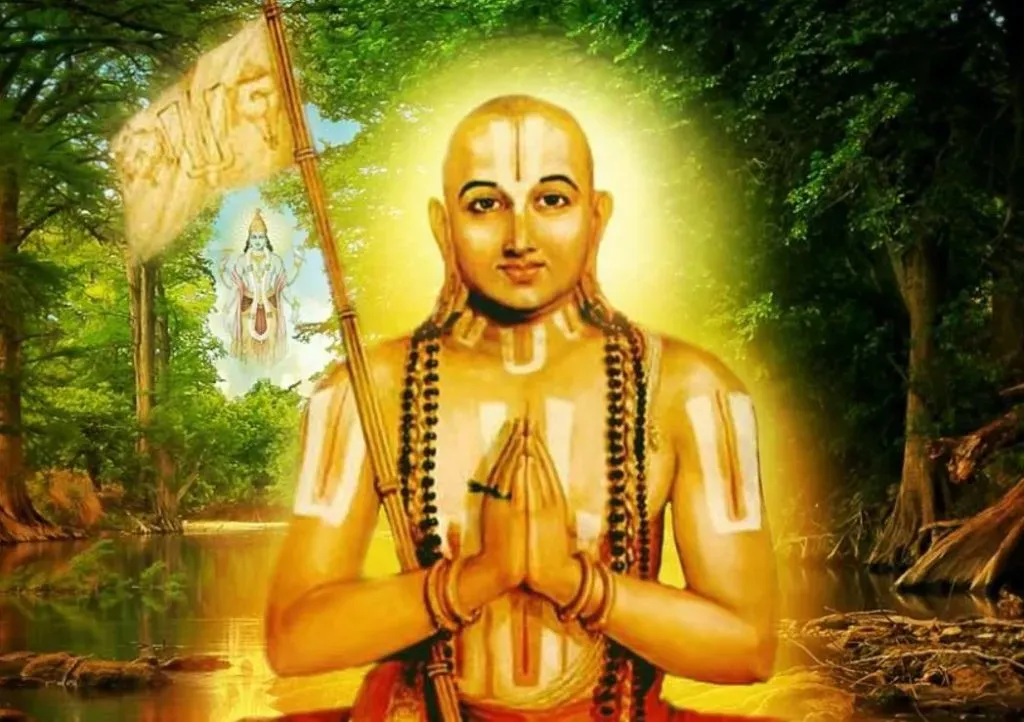
Sri Sri Ravi Shankar — Life, Teachings, Art of Living Foundation & Global Mission in 2026
Sri Sri Ravi Shankar — founder of the Art of Living Foundation, creator of Sudarshan Kriya breathwork, global wellness teacher. Bangalore ashram, AOL mission.
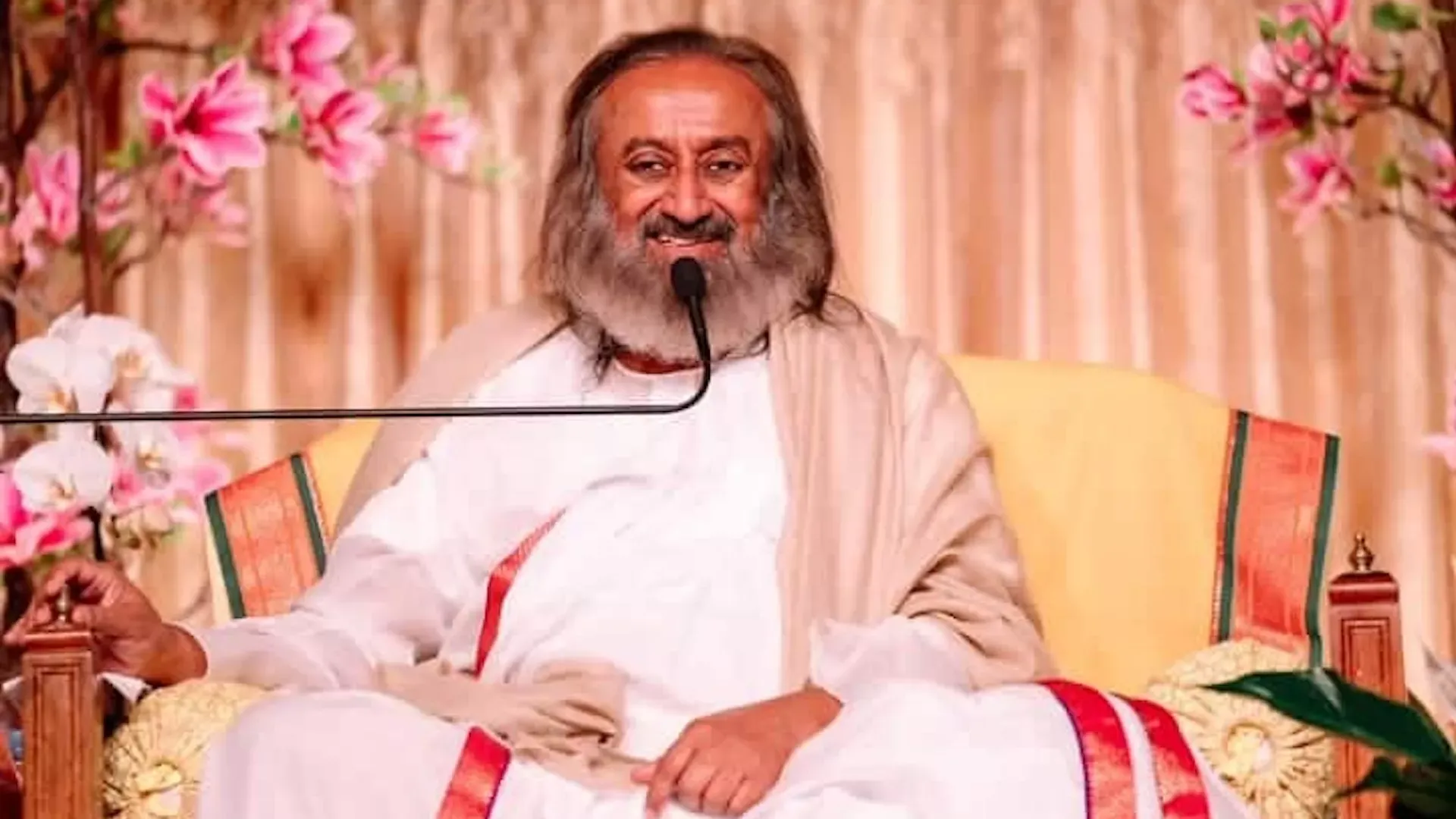
Sri Sri Ravi Shankar — founder of the Art of Living Foundation, creator of Sudarshan Kriya breathwork, global wellness teacher. Bangalore ashram, AOL mission.
Quick Answer: Sri Sri Ravi Shankar (born May 13, 1956) is the founder of the Art of Living Foundation (established 1981/1982), creator of the Sudarshan Kriya breathwork practice, and one of modern Hinduism's most globally visible spiritual teachers. Based at his Bangalore International Center (Ved Vignan Maha Vidya Peeth) in Karnataka, he leads a global network reaching an estimated 800+ million people across 180+ countries through Art of Living courses, the International Association for Human Values (IAHV), the Hindi University, multiple educational and humanitarian programmes, and high-profile peace and reconciliation initiatives. His distinctive practice — Sudarshan Kriya — is a structured rhythmic breathing technique that has become one of the most-practiced yoga-derived breathwork systems globally. Sri Sri's broader contribution combines Hindu spiritual teaching, global diplomacy (he has mediated multiple international conflicts), and large-scale humanitarian work — making him a complex modern figure whose impact extends well beyond conventional religious teacher categories.
1. Early Life — Ravi Shankar of Papanasam
Born May 13, 1956 in Papanasam, Tamil Nadu, to a wealthy Vaishnava family. His parents — particularly his father — were learned Vedic Sanskritists. The family environment was steeped in spiritual practice from his earliest years.
Sri Sri's reported childhood qualities:
- Spontaneous Vedic chanting from age 3
- Memorisation of the Bhagavad Gita by age 4 (per ashram biography)
- Spiritual reading, deep questions to parents and teachers
- Quiet, contemplative temperament
- Mathematics and physics education at university (he holds science degrees, contrary to some assumptions about purely spiritual figures)
He spent his university years studying both Vedic Sanskrit philosophy (under traditional teachers) and modern science (Bachelor's in Vedic Literature and Modern Science, BITS Pilani). This combination — Vedic depth + modern science fluency — has remained his signature.
In his early 20s (~1980), he received a transformative spiritual experience that included the spontaneous emergence of what he would later structure as Sudarshan Kriya. He immediately began teaching the practice to friends and family.
2. The Spiritual Emergence and Sudarshan Kriya
The Sudarshan Kriya — Sri Sri's signature practice — emerged spontaneously during his early-1980s spiritual experiences. He described it as having "received" the breathing pattern in a state of deep meditation/silence.
The technique:
- A structured rhythmic breathing sequence of approximately 45 minutes
- Combines slow breathing, fast breathing, and natural breath cycles
- Performed in a specific sequence of phases
- Said to clear emotional and physiological stress accumulated at deep levels
- Best learned in person through the Art of Living's Happiness Programme
The practice has been studied in dozens of scientific papers; the documented benefits include reductions in cortisol, anxiety, depression symptoms; improvements in HRV, sleep quality, cognitive function. The Art of Living organisation actively cultivates scientific research; multiple peer-reviewed studies exist on Sudarshan Kriya's measurable effects.
For non-AOL practitioners: Sudarshan Kriya should be learned in the proper AOL Happiness Programme — not from books or YouTube alone. The proper instruction includes preparatory pranayama, the sequence itself, and integration practices.
3. Founding the Art of Living Foundation
The Art of Living Foundation was established in 1981 (or 1982 depending on source) with the explicit mission to:
- Teach Sudarshan Kriya globally
- Foster human values and stress reduction
- Build sustainable peace through individual transformation
- Combine spiritual practice with humanitarian service
The organisational growth has been steady and substantial:
- By 1990: Programmes in India + early international
- By 2000: Operations across 50+ countries
- By 2010: 100+ countries; major US presence
- By 2026: 180+ countries; an estimated 800+ million people touched through programmes, events, books, online content
Sister organisation International Association for Human Values (IAHV) was founded in 1997 specifically for humanitarian and educational work, complementing AOL's primarily teaching role.
4. Sudarshan Kriya — The Signature Practice
The Happiness Programme
The Art of Living's flagship course. Format:
- 3-4 day in-person programme (typically Friday-Sunday or 4 evening sessions)
- Cost varies by country: typically $150-300 in NRI countries; subsidies available
- No prerequisites required
- Includes: introduction to yoga, breathwork preparation, Sudarshan Kriya itself, and follow-up practices for daily home use
- After completion, daily practice (~30-45 min) is encouraged
Daily practice continuation
After learning Sudarshan Kriya in the Happiness Programme:
- Daily Sudarshan Kriya — typically morning, 30-45 minutes
- Follow-up meditation — 15-30 minutes
- Weekly Long Kriya — Sundays or another consistent day for the longer practice version
Variations
- Bhastrika Pranayama — preliminary breathwork
- Sudarshan Kriya — the structured rhythmic sequence
- Long Kriya — extended version typically practiced weekly
- Sahaj Samadhi Meditation — separate Art of Living programme combining mantra meditation
5. The Bangalore International Center
The Bangalore International Center (Ved Vignan Maha Vidya Peeth) is Sri Sri's primary residence and Art of Living's global headquarters. Located 21 km from Bangalore.
Features
- Vishalakshi Mantap — major meditation hall capable of seating thousands
- Sumeru Mantap — administrative and teaching centre
- Residential ashram — accommodating thousands of practitioners and seekers
- Meditation grottos and silent retreat areas
- Healthcare facilities — Ayurvedic centre, yoga therapy clinic
- Educational facilities — Sri Sri University, Sri Sri Ravi Shankar Vidya Mandir schools (multiple locations)
- Ashram facilities for residential courses and retreats
The ashram receives global visitors throughout the year, with peaks during major celebrations (Sri Sri's birthday May 13, Guru Purnima, major retreats).
6. Global Mission and Humanitarian Work
Art of Living's humanitarian operations extend across multiple domains:
Education
- Sri Sri Ravi Shankar Vidya Mandir schools — primary and secondary education across India
- Sri Sri University — Cuttack, Odisha
- Free schools in rural areas serving children of marginalised communities
- Teacher training programmes worldwide
Rural development
- Village adoption programmes (5 Sutra Programme)
- Self-help groups for women
- Sustainable agriculture programmes
- Water conservation projects
Healthcare
- Free medical camps in rural India
- Stress-reduction programmes in hospitals
- Ayurveda treatment centres
Specific initiatives
- Project Bhagirath — water resource management
- Stop Acid Attacks advocacy
- Anti-trafficking programmes
- Prison rehabilitation programmes (Sudarshan Kriya taught in prisons)
- Military stress relief programmes (US, India, other countries)
Climate / environmental
- Trees plantation drives
- Plastic-free Sundays campaign
- River cleanup projects
7. Conflict Mediation and Diplomacy
A distinctive feature of Sri Sri Ravi Shankar's mission is his role in international conflict mediation:
Iraq
- Multiple visits during Iraq War years; meetings with Sunni-Shia religious leaders
- Reconciliation programmes
Sri Lanka
- Engagement during the LTTE-Sri Lankan government conflict
- Post-war reconciliation programmes for Tamil and Sinhalese communities
India-Pakistan
- Multiple meetings with Pakistani religious and political leaders
- Promotion of Indo-Pak people-to-people dialogue
Colombia
- Mediation in FARC peace process discussions
- Programmes for FARC fighters' reintegration
Other engagements
- South Sudan dialogue
- Various Middle East peace efforts
- Brexit-era UK reconciliation projects
The role has been simultaneously praised (genuine peace work) and questioned (whether spiritual figures should engage in political processes, whether his impact has been substantive).
8. Major Teachings
Sri Sri Ravi Shankar's teaching distillations across decades:
"Truth is multi-dimensional"
A signature teaching — that simple binary thinking fails to capture truth's complexity. Multiple perspectives must be held simultaneously.
"Stress is the source of all problems"
Both personal and global problems often trace back to stress at individual nervous-system level. Therefore: practices that reduce stress have global impact.
"Wisdom + practice = transformation"
Knowing without practicing is useless; practicing without knowing is mechanical. The combination generates change.
"Service brings joy"
Seva is not duty; it is the source of meaningful joy that other activities cannot provide.
"The breath is the bridge"
Between body and mind, between physical and spiritual, the breath is the connecting practice. Hence Sudarshan Kriya's centrality.
"Be a sumiti — a smiling face"
Maintain pleasant cheerful disposition as practice. Negativity is itself a form of practice resistance.
9. Criticism and Complexity
Like most modern global religious figures, Sri Sri's organisation has faced criticism:
Financial transparency
Questions about AOL's overall financial transparency have been raised in various reports. The organisation publishes some financial information but full transparency is partial.
Conflict mediation efficacy
Whether Sri Sri's international mediation has produced concrete results is contested. Critics argue spiritual-political mixing is problematic; supporters note documented engagement with conflict parties.
Yamuna River project
A 2016 World Culture Festival event on the Yamuna floodplain in Delhi generated environmental controversy (alleged damage to ecosystem). National Green Tribunal levied a fine; AOL contested specific environmental damage claims.
Land controversies
Some land-acquisition allegations for AOL ashrams have been disputed in various jurisdictions.
Personal practices
Sri Sri's personal lifestyle (premium accommodations, private aircraft) has been questioned by some, defended as necessary for global mission by others.
These criticisms are noted for completeness; AOL's positive humanitarian impact (verifiable by multiple independent observers) is substantial. As with all modern religious figures, mature engagement involves both genuine appreciation and critical assessment.
10. Lessons for NRI Hindus in 2026
Lesson 1: Yoga is more than asana
Sri Sri's emphasis on breathwork and Sudarshan Kriya recovers a dimension of Hindu yoga that mainstream "yoga" in Western contexts often loses. NRI Hindus engaged in Western fitness yoga can recover the full practice by learning structured breathwork.
Lesson 2: Science-spirituality integration
Sri Sri's integration of Vedic teaching with modern science framing is genuinely valuable for educated NRI Hindus. His own background in BITS Pilani science combined with Vedic Sanskrit studies models the integration of both.
Lesson 3: Service as spiritual practice
The AOL model integrates spiritual practice with extensive humanitarian work. For NRI Hindus active in service or wanting to be, this combination is more powerful than either purely spiritual practice or purely secular philanthropy.
Lesson 4: Stress reduction is dharmic
Modern life's chronic stress is a structural problem. Hindu tradition has long held that mental balance is foundational to dharmic life. NRI Hindus dealing with H1-B stress, family pressure, career uncertainty — Sudarshan Kriya is one valid practical tool.
Lesson 5: Global Hindu mission
Sri Sri's reach across 180+ countries demonstrates that Hindu wisdom is genuinely communicable to non-Hindu audiences. The Hindu civilisational confidence to share teachings globally is appropriate.
Lesson 6: Spiritual life can be joyful
Sri Sri's signature emphasis on smiling, joyful living — not solemn spirituality — challenges some assumptions about religious depth. NRI Hindus burdened by overly grim spiritual practice can engage this tradition for lightness.
Lesson 7: Mature critical engagement
The combination of admiration + critical assessment is the mature stance. Sri Sri has done genuinely valuable work; he has also generated genuine controversies. Engaging him fully includes both.
11. FAQs
Q: When is Sri Sri Ravi Shankar's birthday?
A: May 13. In 2026: Wednesday, May 13.
Q: How can I learn Sudarshan Kriya?
A: Attend the Art of Living Happiness Programme — available in nearly all major cities globally. Check artofliving.org for schedules and registration.
Q: Can I learn Sudarshan Kriya from YouTube/books?
A: AOL strongly recommends learning from a certified teacher. Improper practice can be ineffective or counterproductive. The Happiness Programme is the proper introduction.
Q: How much does the Happiness Programme cost?
A: Varies by country. Approximate: $150-300 USD/equivalent. Subsidies and scholarships available for those who cannot afford full price.
Q: What's the difference between Sri Sri and Sadhguru / Amma / Mata Amritanandamayi?
A: Different teachers different emphases. Sri Sri: breathwork + global service + diplomacy. Sadhguru: yogic technique + cosmic teaching. Amma: bhakti via embrace + humanitarian work. Each tradition draws different practitioners.
Q: Can I visit Bangalore Ashram?
A: Yes — the ashram welcomes visitors. Programmes regularly held; one-day visits possible. Online registration recommended.
Q: Is Sri Sri the same as Pandit Ravi Shankar (the sitar player)?
A: No. Pandit Ravi Shankar (1920-2012) was the famous sitar maestro and George Harrison's teacher. Sri Sri Ravi Shankar (b. 1956) is the spiritual teacher and AOL founder. Different people.
Q: How does Sri Sri compare with Sadhguru's reach?
A: Both have reached tens of millions globally. Sri Sri's reach is somewhat broader through institutional programmes (AOL courses); Sadhguru's individual social-media reach is greater. Both are major modern Hindu figures.
Final Words
Sri Sri Ravi Shankar represents a distinctive modern Hindu offering: the spiritual teacher who is also a global civilian diplomat. His combination of Sudarshan Kriya teaching, Art of Living institutional building, humanitarian work across 180+ countries, and international conflict mediation creates a unique modern model that integrates spiritual practice with broad civic engagement.
For NRI Hindus in 2026 — particularly those working in stress-intensive careers, dealing with chronic anxiety, or seeking practical tools rather than abstract philosophy — Sri Sri's Sudarshan Kriya is among the most accessible Hindu practices available. The 3-day Happiness Programme transforms many practitioners' daily nervous system regulation in measurable ways. The community of AOL practitioners worldwide creates ongoing peer support for sustained practice.
The broader Sri Sri mission — that individual stress reduction connects to collective transformation, that breath connects body to mind, that wisdom must be paired with action, that the spiritual teacher can also be a global citizen engaged in real-world peace work — represents a particular kind of modern Hindu civilisational expression. Whether one accepts every dimension of the AOL framework is a personal question; engaging the work with mature critical appreciation is the appropriate posture.
Sa vidyaa yaa vimuktaye.
True knowledge is that which liberates.
Pranam Sri Sri Ravi Shankar. Pranam Art of Living. Pranam to all who practice the breath.
HinduTone Editorial Team · Tags: Sri Sri Ravi Shankar, Art of Living Foundation, Sudarshan Kriya, Bangalore Ashram, Happiness Programme, Yoga of Breath, Modern Hindu Teacher, Global Mediation, IAHV
Frequently Asked Questions
What is Sri Sri Ravi Shankar?
Sri Sri Ravi Shankar (born May 13, 1956 ) is the founder of the Art of Living Foundation (established 1981/1982), creator of the Sudarshan Kriya breathwork practice , and one of modern Hinduism's most globally visible spiritual teachers. Based at his Bangalore International Center (Ved Vignan Maha Vidya Peeth) in Karnataka, he leads a global network reaching
What are the key points about Sri Sri Ravi Shankar?
His distinctive practice — Sudarshan Kriya — is a structured rhythmic breathing technique that has become one of the most-practiced yoga-derived breathwork systems globally. Sri Sri's broader contribution combines Hindu spiritual teaching, global diplomacy (he has mediated multiple international conflicts), and large-scale humanitarian wo
Why does Sri Sri Ravi Shankar matter in Hinduism?
It reflects core values of Sanatana Dharma and offers practical and spiritual guidance that remains relevant across generations.
How can devotees apply Sri Sri Ravi Shankar in daily life?
By reflecting on its teaching, incorporating the related practices or observances into daily routine, and approaching it with sincere devotion and understanding.
You might also like
Mata Amritanandamayi (Amma) — Life, Teachings, the Hugging Saint & Global Devotional Legacy in 2026

Sundar Pichai & Satya Nadella — Hindu Values in Tech Leadership: How Two Indian-Born CEOs Lead Google and Microsoft With Dharmic Principles
Ratan Tata — Life, Legacy & Dharmic Business Philosophy: The Industrialist Who Lived Hindu Values in 2026 Memorial