Delicious Rama Navami Prasad Recipes for NRIs
Delicious Rama Navami Prasad Recipes for NRIs: Easy-to-Make Sweets from Pantry Staples NRI Festival Food Guide · Rama Navami 2026 🗓️ Thursday, March 26, 2026…
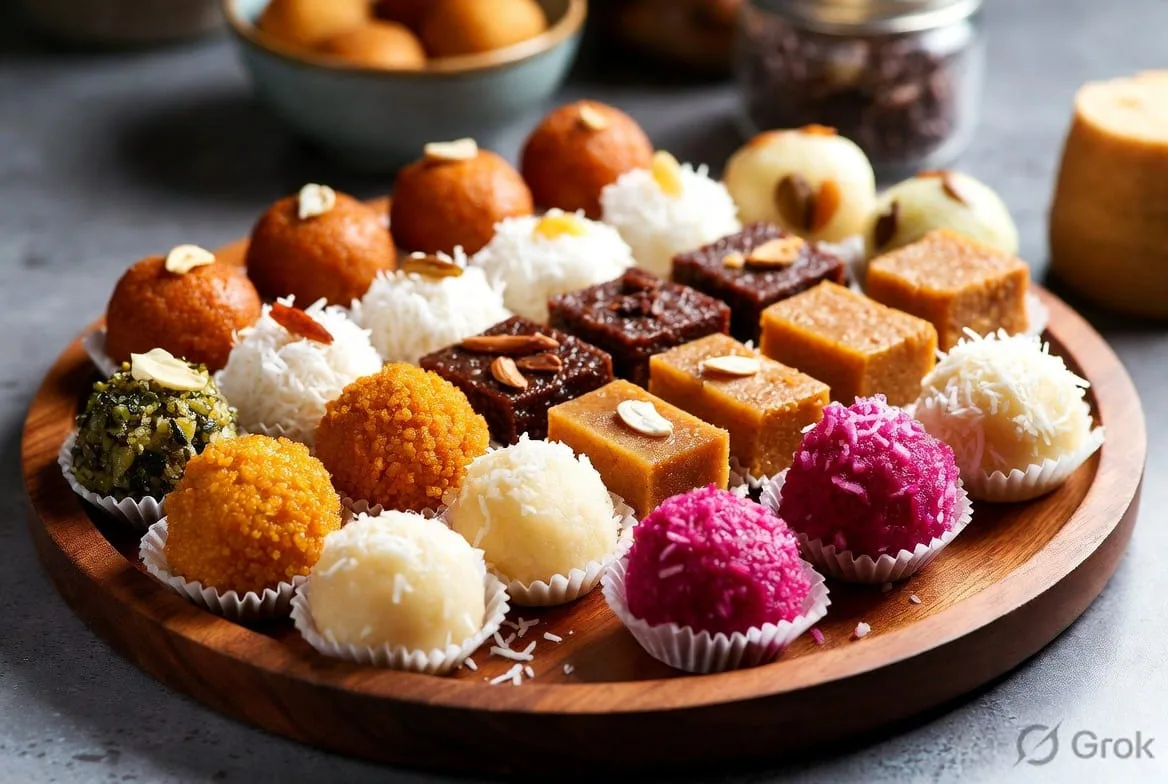
Delicious Rama Navami Prasad Recipes for NRIs: Easy-to-Make Sweets from Pantry Staples
NRI Festival Food Guide · Rama Navami 2026
🗓️ Thursday, March 26, 2026 · Make these the night before or morning of puja · All recipes serve 4–6
There is something irreplaceable about the smell of freshly made prasad — cardamom-sweetened milk warming on the stove, the sharp herbal bite of tulsi, the earthy sweetness of jaggery dissolving in cold water. It carries you home in an instant, no matter which continent you are standing on.
This guide is built for NRIs who want authentic Rama Navami prasad without a trip to a specialist Indian store. Every recipe below has been adapted for ingredients available at Walmart (USA), Tesco (UK), and Woolworths (Australia), with vegan swaps clearly marked and schema markup guidance included for bloggers publishing these recipes online.
Whether you are making prasad for a family puja, a community gathering, or simply to share a little piece of home with curious neighbours — these recipes are your kitchen companion. Jai Shri Ram! 🙏
1. The Tradition of Rama Navami Prasad
Rama Navami prasad is traditionally sattvic — pure, light, and made without onion, garlic, or non-vegetarian ingredients. The offerings reflect the foods associated with Lord Rama's birthplace of Ayodhya and the agricultural season of Chaitra (late March), when new harvests were just arriving: fresh cucumbers, lentils, jaggery from the last pressing of the season, and dairy at its richest.
The two most iconic prasad items are Panakam (a jaggery and pepper drink, particularly beloved in South India and the Vaishnava tradition) and Kosambari (a cucumber and soaked lentil salad). Together they form the foundation of the Naivedyam — the food offering placed before Lord Rama before being distributed to devotees.
Everything else in this guide — the kheer, the ladoo, the kesari — layers on top of that core, giving you a full prasad spread for a celebratory table.
💡 Sattvic Cooking Rules: No onion, garlic, or non-veg. Use rock salt (sendha namak) if cooking during your fast. Use regular salt for recipes that will be served after puja. Avoid heating honey — add it after cooling.
2. Your NRI Pantry Checklist
Stock up by March 19 to have everything ready. All items below are available at the stores listed — no specialist Indian store required (though if you have one nearby, the quality of jaggery and cardamom will be noticeably better).
🛒 Budget Tip: A full prasad spread for 6 people costs approximately $18–22 (USA) · £14–18 (UK) · AUD $22–28 (AU) using pantry staples. The biggest variable is saffron — it's optional in most recipes below.
3. Panakam — The Sacred Jaggery Drink
The soul of Rama Navami prasad. Panakam (also spelled Panakamu or Panagam) is a cooling jaggery drink spiced with black pepper, ginger, and cardamom. It is one of the five traditional offerings made to Lord Rama and is distributed as prasad after puja across South Indian temples. The combination of jaggery + black pepper is considered an excellent digestive tonic — ancient Ayurveda wisdom beautifully dressed as devotion.
Prep time: 5 minutes | No cooking required | Vegan ✅ | Gluten-free ✅
Ingredients (serves 6)
Method
- Dissolve jaggery in 1 cup of water first, stirring well. Do not heat — cold Panakam is traditional and more refreshing.
- Strain through a fine mesh sieve to remove any impurities.
- Add remaining 3 cups of cold water.
- Stir in black pepper, dry ginger, and cardamom.
- Add lime juice if using (South Indian Iyengar style — adds brightness).
- Drop in whole tulsi leaves.
- Taste and adjust sweetness. Serve in small cups as prasad, or over ice.
Tips & Variations
- Too sweet? Reduce jaggery to 3 tbsp and increase lime juice slightly.
- Can't find jaggery? Use 4 tbsp dark brown sugar + ½ tsp molasses for a closer flavour profile.
- North Indian style: Add a tiny pinch of black salt (kala namak) for a distinctive tangy twist.
- Make ahead: Prepare the jaggery base the night before. Add pepper and ginger just before serving.
📸 Pinterest Photo Tip: Photograph Panakam in a small brass or copper tumbler filled with ice, tulsi leaves resting on the rim, backlit by morning light. This image performs exceptionally well on Pinterest under "Navratri drinks" and "Indian festival recipes" boards.
4. Kosambari — Cucumber & Lentil Salad
The other half of the Rama Navami prasad duo. Kosambari is a Karnataka speciality — a fresh, cooling salad of soaked moong dal (or chana dal), cucumber, fresh coconut, and a quick tempering of mustard seeds. It is served in small portions alongside Panakam as the complete traditional Naivedyam offering. It takes about 15 minutes once the lentils are soaked, and it is one of the most refreshing things you will eat.
Soak time: 1–2 hours | Prep/Cook time: 15 minutes | Vegan ✅ | Gluten-free ✅
Ingredients (serves 6)
For tempering (tadka):
Method
- Soak moong dal in cold water for 1–2 hours. Drain completely and pat dry.
- In a bowl, combine soaked dal, diced cucumber, coconut, coriander, and green chilli.
- Add lemon juice and salt. Toss gently.
- Heat oil in a small pan until shimmering. Add mustard seeds — wait for them to pop (about 30 seconds).
- Add curry leaves and dried red chilli. Fry for 10 seconds.
- Pour tempering immediately over the salad. Toss and serve.
Tips & Variations
- No fresh coconut? Soak 3 tbsp desiccated coconut in 2 tbsp warm water for 10 minutes and use that.
- No moong dal? Yellow split peas work nearly identically after soaking. Chana dal (split chickpeas) gives a slightly firmer, nuttier version.
- Add carrot: Some Karnataka families add grated raw carrot for colour and sweetness — beautiful on camera.
- Skip the tadka for an even simpler version — the salad is delicious without it.
📸 Pinterest Photo Tip: Serve Kosambari in a small banana leaf cup or on a dark slate board alongside a small tumbler of Panakam. Natural light from a window, fresh coriander sprinkled over the top, a whole cucumber in the background. This "full Naivedyam" flat lay consistently drives saves from South Indian diaspora communities.
5. Charanamrit — The Divine Nectar
The prasad of Vaishnava temples. Charanamrit is the sacred liquid used to bathe the deity's feet (or the idol), then collected and distributed as a divine blessing. In home pujas, it is prepared specially and offered. It is simple, ethereal, and children absolutely love it — it tastes like lightly sweetened, fragrant warm milk with honey.
Prep/Cook time: 5 minutes | Not vegan (contains dairy and honey) | Gluten-free ✅
Ingredients (serves 8 — small portions only)
Method
- Combine milk and yoghurt in a clean bowl (room temperature — do not heat).
- Add sugar and stir until dissolved.
- Add ghee, cardamom, and saffron if using.
- Add honey last — never heat honey; add after everything else is combined at room temperature.
- Drop in whole tulsi leaves.
- Use a small portion for the ritual Abhishek (bathing the idol), then distribute the rest in very small cups or spoons as prasad.
⚠️ Important: Charanamrit is served in very small sips (about 1–2 tablespoons per person). It is not a beverage — it is a sacred blessing. A little goes a long way.
🌱 Vegan Swap: Replace dairy milk with full-fat oat milk, yoghurt with coconut yoghurt, ghee with coconut oil, and honey with date syrup or agave. The flavour is different but still meaningful as a devotional offering.
6. Rava Kesari — Semolina Halwa
The most requested prasad at South Indian temples. Rava Kesari (also called Sooji Halwa in North India, or Sheera in Maharashtra) is a saffron-orange semolina pudding made with ghee, sugar, and dry fruits. It is warm, fragrant, extraordinarily easy to make, and deeply satisfying. This is the recipe to make when you want your home to smell like a temple.
Prep time: 5 min | Cook time: 20 min | Vegetarian ✅ | Can be made vegan ✅
Ingredients (serves 6–8)
Method
- Roast the semolina: Heat 2 tbsp ghee in a heavy-bottomed pan over medium heat. Add semolina and roast, stirring constantly, for 8–10 minutes until it turns light golden and smells nutty. Do not rush this step — properly roasted semolina makes the halwa smooth, not lumpy. Transfer to a bowl and set aside.
- Fry the dry fruits: In the same pan, add 1 tbsp ghee. Fry cashews until golden. Add raisins and fry 30 seconds until plumped. Remove and set aside.
- Boil the liquid: Add 3 cups water (or water+milk) to the same pan. Bring to a boil. Add sugar, saffron water, and salt. Stir until sugar dissolves.
- Combine: Reduce heat to low. Slowly add the roasted semolina to the boiling liquid while stirring continuously — this is key to avoiding lumps. Stir vigorously for 2 minutes.
- Finish: Add remaining 1 tbsp ghee, cardamom, and half the dry fruits. Stir until halwa pulls away from the sides of the pan (about 5–7 minutes). Remove from heat.
- Serve: Spoon into a greased plate and smooth the top. Garnish with remaining cashews and raisins. Cut into diamond shapes once slightly cooled, or serve warm in small bowls.
Tips & Variations
- Lumps forming? Add liquid in a very thin stream while stirring constantly. If lumps still form, press them against the pan with the back of a spoon.
- Vegan version: Replace ghee with coconut oil (use refined, not virgin, for a neutral flavour) and use plant-based milk.
- Pineapple Kesari: A Bangalore speciality — add ½ cup finely diced pineapple with the liquid. The sweetness pairs beautifully with saffron.
- Make ahead: Rava Kesari reheats beautifully. Sprinkle 2 tbsp water over it, cover, and microwave for 60–90 seconds.
📸 Pinterest Photo Tip: Press warm Rava Kesari into a small round bowl, then invert onto a dark plate to create a moulded dome. Garnish with a saffron strand and a single cashew. A copper plate or banana leaf underneath adds 40% more saves according to Indian food Pinterest data.
7. Chana Dal Payasam — Lentil Kheer
Rich, golden, and deeply traditional. Chana Dal Payasam (also called Kadalai Paruppu Payasam in Tamil) is a festive kheer made from split chickpeas cooked in jaggery syrup and coconut milk. It is one of the most beloved temple prasad items in Kerala and Tamil Nadu. Unlike rice kheer, it has an earthy, slightly caramel depth from the jaggery, and the coconut milk makes it naturally dairy-free.
Prep time: 10 min | Cook time: 35 min | Vegan ✅ | Gluten-free ✅
Ingredients (serves 6)
Method
- Pressure cook or boil the dal: Rinse chana dal and add to a pressure cooker or saucepan with 2 cups water. Pressure cook 3–4 whistles (or simmer 30–35 minutes) until completely soft and mashable. Drain excess water and lightly mash — leave some texture.
- Instant Pot: Manual HIGH pressure, 15 minutes, quick release.
- Make jaggery syrup: In a wide pan, dissolve jaggery in ½ cup water over low heat. Bring to a gentle simmer for 3 minutes. Strain to remove impurities.
- Combine: Add the cooked, mashed dal to the jaggery syrup. Stir well over low heat for 5 minutes.
- Add coconut milk: Pour in the coconut milk. Add cardamom, dry ginger, and salt. Stir and simmer on very low heat for 8–10 minutes until slightly thickened. Do not boil vigorously after adding coconut milk — it can split.
- Tadka (tempering): Heat coconut oil in a small pan. Fry cashews until golden. Add raisins. Add toasted coconut flakes. Pour over the payasam.
- Serve warm or at room temperature as prasad.
Tips & Variations
- No pressure cooker? Soak chana dal overnight, then simmer for 35–40 minutes. It takes longer but works perfectly.
- Richer version: Swap ½ cup of water in step 3 for an extra ½ can of coconut milk.
- Jaggery substitute: 1 cup dark muscovado sugar + 1 tsp molasses is the closest approximation available at Western supermarkets.
- Freezes beautifully: Freeze in portions for up to 1 month. Reheat gently on the stove with a splash of coconut milk.
8. Dry Fruit Ladoo — No-Cook Prasad
The NRI's secret weapon. This no-cook ladoo is made entirely from ingredients available at any mainstream Western supermarket, requires zero cooking skill, takes 20 minutes, and keeps for 2 weeks at room temperature. It is the perfect prasad to make if you are time-poor, have children who want to "help," or need to bring something to a community gathering.
Prep time: 20 min | No cooking required | Vegan ✅ | Gluten-free ✅
Ingredients (makes 18–20 ladoos)
Method
- If dates are dry, soak in warm water for 10 minutes, then drain and pat dry.
- Pulse cashews, almonds, and pistachios in a food processor until coarsely ground (8–10 pulses). You want texture, not powder.
- Add dates, coconut, raisins, cardamom, ginger, and ghee. Process until the mixture clumps together (about 20–30 seconds). It should hold its shape when squeezed in your fist.
- Taste and adjust — add more cardamom or a pinch of salt if needed.
- Grease your palms with a tiny bit of ghee. Roll tablespoon-sized portions into smooth balls.
- Roll each ball in desiccated coconut to coat.
- Refrigerate for 15 minutes to firm up before offering as prasad.
Tips & Variations
- Mixture too dry? Add dates one at a time until it comes together, or add ½ tsp of water.
- Mixture too sticky? Add more desiccated coconut, 1 tbsp at a time.
- Festive garnish: Press a single saffron strand or silver-coloured dragée into the top of each ladoo before the coating sets.
- Chocolate twist (for kids): Add 1 tbsp raw cacao powder to the mixture. Still sattvic, and children will request it every year.
- Stores for 2 weeks at room temperature in an airtight container, or 1 month refrigerated.
📸 Pinterest Photo Tip: Stack 5–6 ladoos in a small brass bowl. Scatter a few loose cashews, a cinnamon stick, and a few cardamom pods around the base. Place next to a small diya on a wooden board. This composition reliably drives repins from Indian wedding and festival boards.
9. Vegan Coconut Kheer
A dairy-free kheer that doesn't taste like a compromise. This creamy, fragrant kheer is made with full-fat coconut milk, rice, jaggery, and cardamom — inspired by the South Indian Pal Payasam tradition but naturally vegan. It is richer, in some ways, than milk kheer, and it has been enthusiastically adopted by health-conscious NRI families.
Prep time: 5 min | Cook time: 35 min | Vegan ✅ | Gluten-free ✅
Ingredients (serves 6)
Method
- Combine rinsed rice, coconut milk, and water in a heavy saucepan. Bring to a gentle simmer over medium-low heat, stirring frequently.
- Cook uncovered, stirring every 3–4 minutes, for 25–30 minutes until rice is completely soft and kheer has thickened to a creamy consistency.
- Add jaggery, cardamom, and saffron water. Stir for 5 more minutes. The kheer will continue to thicken as it cools.
- Remove from heat. Stir in rose water if using.
- In a small pan, heat coconut oil and fry cashews until golden. Add raisins. Pour over kheer as garnish.
- Serve warm as prasad, or refrigerate overnight — it is extraordinary cold the next day.
💡 Consistency Tip: Coconut kheer thickens significantly on cooling. If serving cold, thin it out with 2–3 tbsp coconut milk just before serving.
10. Tulsi Lemon Sherbet — Quick Refresh Prasad
The most underrated Rama Navami prasad. A quick, cooling, fresh sherbet made from tulsi (holy basil), lemon, jaggery, and water. This is the prasad you make when time is short — it takes 5 minutes, requires almost nothing, and is deeply meaningful because tulsi is the holiest plant in Vaishnavism, personally associated with Lord Vishnu and Rama.
Prep time: 5 min | No cooking | Vegan ✅ | Gluten-free ✅
Ingredients (serves 6)
Method
- Muddle tulsi leaves in the bottom of a jug — press them gently with a spoon to release the oils. Do not tear aggressively.
- Dissolve jaggery in ¼ cup warm water. Add to jug.
- Add remaining cold water, lemon juice, black pepper, and salt.
- Stir well. Taste — it should be lightly sweet, sour, and herbal with a warm pepper finish.
- Serve over ice in small glasses as prasad.
💡 Can't find fresh tulsi? Add ¼ tsp dried tulsi (available on Amazon) to the jug and let it steep for 2 minutes before serving. The flavour is less vivid but still meaningful.
11. Pinterest & Visual Traffic Tips for NRI Creators
Pinterest is one of the highest-converting platforms for festival recipe content. NRI food bloggers who optimise for Pinterest consistently see 40–60% of their traffic from Pinterest alone during festival seasons. Here is how to make your Rama Navami content work on the platform:
Board Strategy
Create a dedicated board called "Rama Navami Recipes & Rituals 2026" and pin all your prasad recipes there. Also pin to broader boards: "Indian Festival Food," "Vegan Indian Recipes," "NRI Kitchen," and "Diwali & Hindu Festival Ideas" (the festival tag reaches audiences year-round).
Image Specifications for Maximum Saves
Photo Styling for Each Recipe
- Panakam: Brass tumbler + tulsi sprig + soft morning light = classic save-magnet
- Kosambari: Dark slate board + banana leaf cup + bright cucumber slices in background
- Rava Kesari: Orange-gold mound on copper plate + saffron strands + small diya in soft focus
- Ladoo: Pyramid stack in brass bowl + scattered nuts + wooden surface + natural window light
- Kheer: White bowl on dark wood + gold spoon + rose petals on top for colour contrast
Pinterest SEO — Keywords That Drive Traffic
Include these in your pin titles and descriptions:
Rama Navami prasad recipes 2026easy Ram Navami sweets at homePanakam recipe NRIIndian festival recipes for beginnersvegan Indian sweetsno-cook prasad recipeKosambari recipe for NavamiIndian recipes Walmart ingredients
Short Video Content (Reels / Idea Pins)
Pinterest's Idea Pins (video format) get 3× the organic reach of static pins. For each recipe, create a 30–60 second video showing:
- Ingredients laid out (5 seconds)
- The key technique — e.g., jaggery dissolving, semolina roasting (15 seconds)
- The finished prasad beautifully plated (5 seconds)
- The prasad being offered at the puja altar (5 seconds — highest emotional resonance)
Film on a phone in vertical format, natural light, no music required. Use Pinterest's built-in text overlay tool to add the recipe name and key steps directly on the video.
💡 NRI Mom Communities: Share your Pinterest boards in Facebook groups like "Indian Moms in USA," "Desi Moms UK," and "Indian Parents Australia." These communities actively share festival content and can generate hundreds of repins within hours of a festival. Post 48–72 hours before Rama Navami for maximum reach.
A Full Prasad Spread — Suggested Serving Menu
Here is how to combine these recipes into a beautiful, complete Naivedyam offering:
🕐 NRI Time-Saver Plan: On the evening of March 25, make the Chana Dal Payasam and Dry Fruit Ladoo. On the morning of March 26, make Charanamrit, Panakam, Kosambari, and Rava Kesari. The entire spread takes under 90 minutes of active cooking time spread across two days.
A Final Word
Food has always been one of the most powerful carriers of culture. When you make Panakam in your kitchen in Toronto or Tulsi Sherbet in your flat in Manchester, you are not just making a drink — you are preserving a practice, honouring an ancestor's knowledge, and teaching your children that their roots are as real and nourishing as the food on the plate.
May every bite of prasad on March 26, 2026 carry Lord Rama's blessings into your home.
🪔 Jai Shri Ram! Happy Rama Navami 2026! 🙏
All recipes are sattvic and suitable for Rama Navami vrat (use rock salt / Himalayan pink salt and avoid grains during fasting periods). Jaggery substitutes are noted where available. Vegan options clearly marked throughout. Recipes tested and adapted for pantry staples available at Walmart (USA), Tesco (UK), and Woolworths (Australia).
For the full NRI Rama Navami Puja Vidhi guide, see our companion article: How NRIs Can Celebrate Rama Navami 2026 at Home.
Frequently Asked Questions
What is Delicious Rama Navami Prasad Recipes for NRIs?
Delicious Rama Navami Prasad Recipes for NRIs: Easy-to-Make Sweets from Pantry Staples NRI Festival Food Guide · Rama Navami 2026 🗓️ Thursday, March 26, 2026 · Make these the night before or morning of puja · All recipes serve 4–6 There is something irreplaceable about the smell of freshly made prasad — cardamom-sweetened milk warming on the stove, the shar
What ingredients are needed for Delicious Rama Navami Prasad Recipes for NRIs?
The traditional ingredients and step-by-step method are given in the recipe above; most are easily available at Indian grocery stores, including for NRI families abroad.
Can Delicious Rama Navami Prasad Recipes for NRIs be offered as naivedya?
Yes — it is prepared sattvically (without onion or garlic) and offered to the deity first as naivedya, then distributed as prasad.
Can I make Delicious Rama Navami Prasad Recipes for NRIs abroad?
Yes. All key ingredients are available at Indian grocery stores across the USA, UK, Canada and Australia, making it easy to prepare at home for the puja.
Share this with family and friends
Send it on WhatsApp, post it, or copy the link.
More from Recipes
- North Indian Diwali Sweets 2026: Mawa Gujiya, Mathri, Coconut Ladoo and Kaju Katli
- Maharashtrian Diwali Faral 2026: Bhajani Chakli, Shankarpali, Karanji and Besan Ladoo
- Tamil Deepavali Recipes 2026: Murukku, Adhirasam, Ribbon Pakoda and Rava Laddu
- Telugu Deepavali Recipes 2026: Ariselu, Kajjikayalu, Gavvalu and Chekkalu
- Kanya Pujan Prasad Recipe: Suji Halwa, Puri and Kale Chane for Ashtami and Navami 2026