
Samak Rice Khichdi for Navratri Vrat: Vrat ke Chawal Khichdi, Pulao and Kheer
A standard home recipe for samak rice (barnyard millet, vrat ke chawal) khichdi for the Navratri fast, with water ratios for soft khichdi and fluffy pulao, a short samak kheer variation, substitutions and storage.
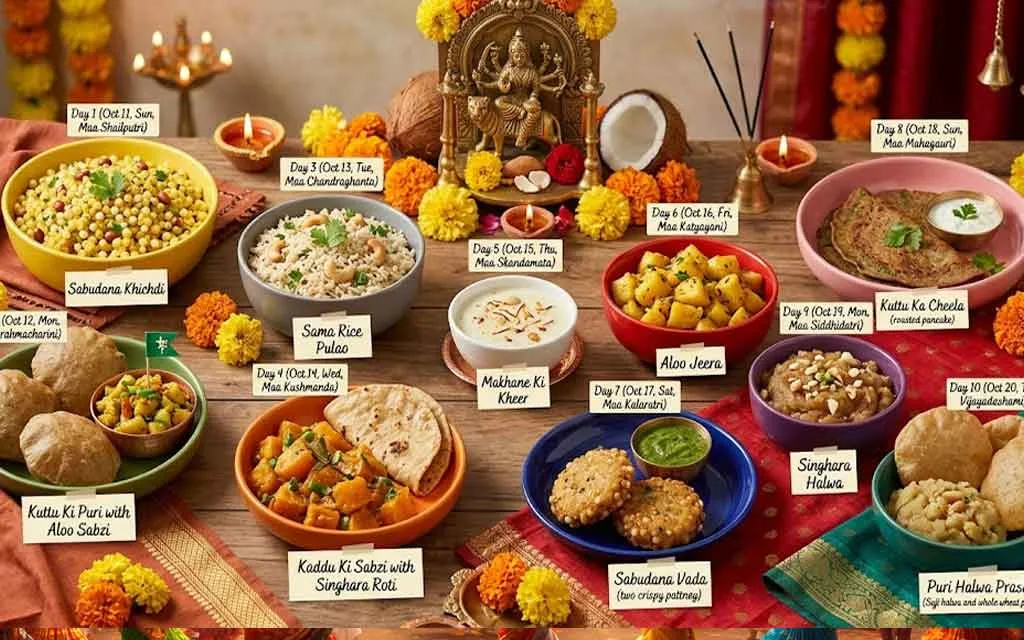
A standard home recipe for samak rice (barnyard millet, vrat ke chawal) khichdi for the Navratri fast, with water ratios for soft khichdi and fluffy pulao, a short samak kheer variation, substitutions and storage.
Quick answer: For samak rice khichdi, rinse 1/2 cup of samak (barnyard millet, vrat ke chawal) until the water is mostly clear, soak it for 15 minutes, then cook it in ghee with cumin, green chilli, ginger, potato and sendha namak (rock salt) in about 2 cups of water for 12 to 15 minutes. Use about 1 cup of water instead for a fluffy pulao. Finish with fried peanuts and lemon. It is a light, one-pot meal for the Navratri 2026 fast, 11 to 19 October 2026 in India.
Below are standard home recipes for samak khichdi and a quick samak kheer, with approximate quantities and timings, water ratios, substitutions and storage. For a full nine-day menu, see our Sharad Navratri 2026 day-wise vrat recipes.
What samak rice is
Samak is barnyard millet, known in different regions as sama, samvat, moraiyo or vrat ke chawal. It cooks quickly and tastes mild, so it takes the place of rice for many fasting families. Practice differs: some families who keep a strict phalahar vrat avoid millets altogether. Check our Navratri fasting rules 2026 guide and follow your family's custom.
Rinsing and water ratio
Samak can carry fine dust and tiny stones, so pick it over and rinse it well. A short soak helps it cook evenly.
| Texture | Samak : water (by volume) | Notes |
|---|---|---|
| Fluffy pulao | 1 : 2 | Do not stir after it boils; rest covered 5 minutes |
| Soft khichdi | 1 : 4 | Add hot water at the end to loosen |
| Kheer | About 3 tablespoons : 3 cups milk | Simmer slowly, stirring often |
The recipes
Samak Rice Khichdi (Vrat ke Chawal Khichdi)
Barnyard millet cooked soft with potato, roasted peanuts, cumin, green chilli, ginger and rock salt. A light, one-pot Navratri fasting meal.
Prep: about 10 minutes, plus 15 minutes soaking. Cook: about 20 minutes. Makes: Serves 2 to 3 (approximate).
Ingredients
- 1/2 cup (about 100 g) samak rice (barnyard millet, vrat ke chawal)
- About 2 cups (480 ml) water for soft khichdi (1 cup for pulao)
- 1 medium potato, peeled and cut into small cubes
- 1/4 cup (about 35 g) peanuts
- 1 tablespoon ghee
- 1 teaspoon cumin seeds
- 1 green chilli, chopped
- 1 teaspoon grated ginger
- 1/2 teaspoon sendha namak (rock salt), or to taste
- 1 teaspoon lemon juice
- 1 tablespoon chopped coriander leaves (optional)
Method
- Pick over the samak rice for tiny stones, then rinse it 2 or 3 times in a bowl of water, swirling gently, until the water is mostly clear. Soak in fresh water for 15 minutes and drain.
- Heat the ghee in a heavy pan or small pressure cooker over medium heat. Add the peanuts and fry for 2 to 3 minutes until golden, then lift them out.
- Add the cumin seeds to the same ghee and let them sizzle. Add the green chilli and ginger and stir for 30 seconds.
- Add the potato cubes and saute for 2 to 3 minutes.
- Add the drained samak rice and stir gently for 1 minute.
- Pour in the water (2 cups for soft khichdi, 1 cup for pulao), add the rock salt and bring to a boil.
- Cover and cook on low heat for 12 to 15 minutes, until the water is absorbed and the samak and potato are soft. In a pressure cooker, cook for 1 or 2 whistles on medium heat and let the pressure release naturally.
- Stir in the fried peanuts and lemon juice, add more hot water if you like a looser khichdi, garnish with coriander and serve hot with curd.
Tips: For the pulao version, use the lower amount of water, skip the extra water at the end and fluff it with a fork after resting. Samak thickens as it cools, so serve the khichdi slightly looser than you want it.
Samak Kheer (Quick Variation)
Barnyard millet simmered in milk with sugar and cardamom, a simple vrat sweet.
Prep: about 5 minutes, plus 15 minutes soaking. Cook: about 25 minutes. Makes: Serves 3 to 4 (approximate).
Ingredients
- 3 tablespoons samak rice, rinsed and soaked for 15 minutes
- 750 ml (3 cups) full-fat milk
- 3 to 4 tablespoons sugar
- 1/4 teaspoon cardamom powder
- 1 tablespoon chopped nuts
Method
- Bring the milk to a boil in a heavy pan.
- Add the drained samak and simmer on low heat for 15 to 20 minutes, stirring often, until the grains are soft and the milk thickens.
- Add the sugar and cardamom and simmer for 2 to 3 minutes more.
- Stir in the nuts and serve warm or chilled.
Tips: Samak absorbs milk quickly, so keep stirring and add a splash more milk if it thickens too much. For a jaggery version, use grated jaggery instead of sugar and stir it in off the heat after the kheer has cooled for a few minutes.
For a no-grain milk sweet, try our makhana kheer recipe, which also explains how to add jaggery without curdling the milk.
Substitutions
| Ingredient | Substitute | Note |
|---|---|---|
| Potato | Sweet potato or raw banana | Cut in small cubes so they cook with the samak |
| Peanuts | Cashews or roasted makhana | For peanut allergies |
| Ghee | Groundnut oil | Ghee gives the best flavour |
| Samak rice | Sabudana | A different dish; see our sabudana khichdi recipe |
If samak is not available, our sabudana khichdi recipe uses the same seasoning with tapioca pearls.
Fitting it into the nine days
Samak khichdi is gentle and quick, which makes it a common weekday dinner during Navratri, for example on Day 2 (Monday 12 October, Maa Brahmacharini) or Day 6 (Friday 16 October, Maa Katyayani). Serve it with curd and a side of sabudana vada or a rajgira paratha for a fuller meal.
Tips for cooking abroad
- Look for samak as 'barnyard millet', 'sama rice', 'samvat rice' or 'moraiyo' in Indian grocery stores. Check the label, since some millet blends mix several grains.
- Store opened packs airtight, in the fridge in warm climates.
- An Instant Pot or rice cooker works well for busy weekday dinners.
Storage
- Khichdi: best fresh; keeps a day in the fridge. Add hot water and warm gently, stirring.
- Kheer: up to 2 days in the fridge; loosen with warm milk.
- Uncooked samak: airtight in a cool, dry place.
Frequently asked questions
What is samak rice?
Samak rice, also called vrat ke chawal, sama, samvat or moraiyo, is barnyard millet. It looks like tiny, pale grains of rice, but many families treat it as a fasting food rather than a regular grain, and use it during Navratri and Ekadashi.
What is the water ratio for samak rice?
About 1 part samak to 2 parts water by volume for pulao-style grains, and about 1 to 4 for a soft khichdi. Brands and soaking time vary, so start there and add hot water at the end if you want it looser.
Why did my samak turn mushy or sticky?
Too much water, over-stirring, or overcooking. For separate grains, use the lower water ratio, do not stir after it comes to a boil, and let it rest covered for 5 minutes off the heat.
Is samak rice allowed in every Navratri fast?
It is widely used, but not universally. Some families who follow a stricter phalahar fast avoid all millets. Follow your family's custom, and see our fasting rules guide for common practice.
Can I make samak khichdi in a rice cooker or Instant Pot?
Yes. Saute the cumin, chilli, ginger and potato first using the saute setting if you have one, add samak and water in the same ratio, and cook on the rice or pressure setting. Timings vary by appliance, so check the first batch.
When is Navratri in 2026?
Sharad Navratri runs from Sunday 11 October to Monday 19 October 2026 in India (Drik Panchang), with Durga Ashtami and Maha Navami both on Monday 19 October and Dussehra on Tuesday 20 October.
Editor's note (8 October 2026)
We wrote this recipe page in October 2026 for Sharad Navratri. Dates follow Drik Panchang for India: Navratri from Sunday 11 to Monday 19 October 2026, Durga Ashtami and Maha Navami on Monday 19 October, and Dussehra on Tuesday 20 October. These are standard home recipes; quantities, timings and yields are approximate, and which foods are allowed in a vrat differs between families.
Related guides
You might also like
Sabudana Khichdi for Navratri Vrat: Soaking Ratio, Non-Sticky Method and Variations
Makhana Kheer for Navratri Vrat and Bhog: Creamy Fox Nut Kheer with Sugar or Jaggery
Kuttu Puri for Navratri Vrat: Buckwheat Puris with Potato Binder and Vrat Aloo Sabzi