
Sabudana Vada for Vrat: Crisp Fried or Air-Fryer Vadas with Vrat Green Chutney
A standard home recipe for crisp sabudana vada for the Navratri fast: soaked sabudana, boiled potato, crushed peanuts and rock salt, shaped and deep-fried or air-fried, with a vrat-friendly green chutney and curd dip.
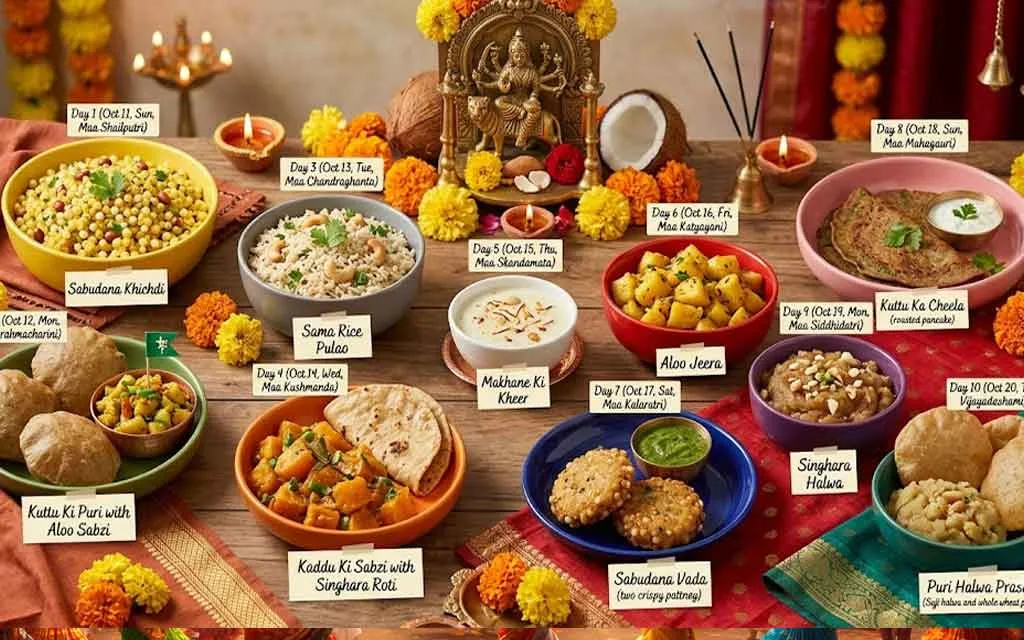
A standard home recipe for crisp sabudana vada for the Navratri fast: soaked sabudana, boiled potato, crushed peanuts and rock salt, shaped and deep-fried or air-fried, with a vrat-friendly green chutney and curd dip.
Quick answer: Sabudana vada is made by mixing well-drained soaked sabudana with mashed boiled potato, coarsely crushed roasted peanuts, green chilli, lemon and sendha namak (rock salt), shaping flat patties and deep-frying them in medium-hot ghee or oil for 3 to 4 minutes, or air-frying them at about 180 C. The secret to vadas that do not burst is a dry mixture and a test vada first. Serve them with a no-onion, no-garlic green chutney or curd during the Navratri 2026 fast (11 to 19 October 2026 in India).
This page has a standard home recipe for the vadas and a vrat green chutney, with approximate quantities and times, troubleshooting, substitutions and storage. For a nine-day menu, see our Sharad Navratri 2026 day-wise vrat recipes.
Before you start: the soak
Good vadas start with good soaking. Rinse the sabudana to remove surface starch, then soak it in water that only just covers the pearls. Over-soaked, wet sabudana makes a sticky mixture that soaks up oil and splits. The pearls are ready when one squashes completely between your fingers. Our sabudana khichdi recipe explains the soaking ratio and the press test in detail.
The recipes
Sabudana Vada (Vrat Style)
Crisp patties of soaked sabudana, mashed potato, crushed roasted peanuts, green chilli and rock salt, deep-fried or air-fried. A popular Navratri and Ekadashi fasting snack.
Prep: about 20 minutes, plus 4 to 6 hours soaking. Cook: about 20 minutes. Makes: About 12 vadas (serves 3 to 4) (approximate).
Ingredients
- 1 cup (about 160 g) medium sabudana (tapioca pearls)
- About 3/4 cup (180 ml) water for soaking
- 2 medium potatoes (about 300 g), boiled, peeled and mashed
- 1/2 cup (about 70 g) peanuts, dry-roasted and coarsely crushed
- 2 green chillies, finely chopped
- 1 teaspoon cumin seeds (optional)
- 1 teaspoon sendha namak (rock salt), or to taste
- 1 teaspoon lemon juice
- 2 tablespoons chopped coriander leaves
- Ghee or groundnut oil for deep-frying (or 1 to 2 tablespoons oil to brush, for the air-fryer)
Method
- Rinse the sabudana 2 or 3 times, then soak it in just enough water to come level with the pearls for 4 to 6 hours, until a pearl mashes fully between your fingers. Drain very well.
- In a large bowl, combine the soaked sabudana, mashed potato, crushed peanuts, green chillies, cumin, rock salt, lemon juice and coriander leaves.
- Mix and knead lightly with your hands until the mixture holds together. If it feels wet or sticky, add a little more crushed peanut or potato.
- Divide into about 12 portions. Wet your palms lightly and shape each into a smooth, flat patty about 1 cm thick, pressing the edges so there are no cracks.
- To deep-fry: heat ghee or oil over medium heat. Fry one test vada first. If it holds together, fry the rest 3 or 4 at a time for 3 to 4 minutes, turning once, until crisp and golden brown.
- Drain on a rack or paper towels.
- To air-fry instead: preheat the air-fryer to about 180 C (350 F). Brush the vadas lightly with oil on both sides and cook in a single layer for about 15 to 18 minutes, turning halfway, until golden. Times vary by machine.
- Serve hot with vrat green chutney or seasoned curd.
Tips: Use floury potatoes and mash them while warm, with no lumps. Boil them in their skins and let them steam dry, so they do not add water. Keep the oil at medium heat: too hot and the vadas brown before the centre cooks; too cool and they absorb oil or break.
Vrat Green Chutney (No Onion, No Garlic)
A fresh coriander chutney made with peanuts, green chilli, cumin and rock salt for fasting days.
Prep: about 10 minutes. Cook: no cooking. Makes: About 1/2 cup (approximate).
Ingredients
- 1 cup packed coriander leaves with tender stems
- 2 tablespoons roasted peanuts or fresh grated coconut
- 1 or 2 green chillies
- 1/2 teaspoon cumin seeds
- 1/2 teaspoon sendha namak (rock salt), or to taste
- 1 teaspoon lemon juice
- 2 to 4 tablespoons water
Method
- Put all the ingredients in a small blender jar with 2 tablespoons of water.
- Grind to a smooth paste, adding a little more water if needed.
- Taste and adjust salt and lemon. For a curd chutney, whisk it into 1/2 cup of plain curd.
Tips: If your family does not use coriander or cumin during the fast, a simple dip of curd with rock salt and a pinch of black pepper works well.
Frying versus air-frying
| Method | Result | Watch out for |
|---|---|---|
| Deep-frying | Evenly crisp, golden, traditional texture | Test one vada first; fry in small batches |
| Air-fryer | Crisp shell, slightly drier, paler patches | Brush oil on both sides; times vary by machine |
| Shallow-frying on a tawa | Crisp faces, softer edges | Flatten the patties a little more; cook on medium |
Substitutions
| Ingredient | Substitute | Note |
|---|---|---|
| Potato | Boiled sweet potato or arbi (colocasia) | Mash well; sweet potato makes softer vadas |
| Peanuts | Rajgira flour or roasted makhana powder | For peanut allergies; adds binding |
| Lemon juice | Leave out or use a little amchur if your family allows it | Adds tang |
| Ghee for frying | Groundnut oil | Many families use only these during vrat |
Where it fits in the nine days
Sabudana vada is a treat rather than an everyday meal for most families, so many make it once or twice in the nine days, often at the weekend. In 2026, the first weekend of Navratri is Day 1 (Sunday 11 October, Maa Shailaputri) and the second weekend covers Day 7 (Saturday 17 October, Maa Kalaratri) and Day 8 (Sunday 18 October, Maa Mahagauri). Pair the vadas with a lighter meal such as samak rice khichdi and a sweet like makhana kheer.
Tips for cooking abroad
- Look for sabudana labelled 'sago' or 'tapioca pearls' in Indian grocery stores; pick the medium Indian variety rather than tiny pudding tapioca.
- Russet or other floury potatoes work best; waxy salad potatoes make a wetter mixture.
- If your smoke alarm is sensitive, the air-fryer method is a practical option in apartments.
Storage
- Fried vadas: best eaten hot. Leftovers keep a day in the fridge; re-crisp in an air-fryer or oven rather than a microwave.
- Shaped, unfried vadas: freeze on a tray, then pack airtight for up to a month. Fry from frozen.
- Green chutney: 2 days in the fridge in a closed jar; the colour darkens over time.
Frequently asked questions
Why do my sabudana vadas break or burst in the oil?
Usually the mixture is too wet, the pearls were over-soaked, or the oil is not hot enough. Drain the sabudana well, add more crushed peanuts or potato to bind, press the edges smooth, and fry a test vada in medium-hot oil before the rest.
Can I make sabudana vada in an air-fryer?
Yes. Brush the shaped vadas with a little oil and air-fry at about 180 C (350 F) for 15 to 18 minutes, turning halfway. They come out crisp on the outside but less evenly golden than fried ones. Machines differ, so check after 12 minutes.
Is sabudana vada allowed in the Navratri fast?
In many families yes, as it uses sabudana, potato, peanuts and rock salt with no grains, onion or garlic. Some families avoid cumin, coriander or chilli during vrat, or eat only one fried item a day. Follow your own family's custom.
Can I prepare the mixture ahead?
You can mix it and refrigerate it, covered, for a few hours. Shape and fry just before serving. Shaped vadas can also be frozen on a tray, then packed, and fried from frozen over medium heat.
What do I serve with sabudana vada during vrat?
Vrat green chutney made without onion or garlic, plain curd with roasted cumin and rock salt, or a sweet curd. Many families serve it with a cup of tea or as part of a fasting thali.
When is Navratri in 2026?
Sharad Navratri runs from Sunday 11 October to Monday 19 October 2026 in India (Drik Panchang), with Durga Ashtami and Maha Navami both on Monday 19 October and Dussehra on Tuesday 20 October.
Editor's note (8 October 2026)
We wrote this recipe page in October 2026 for Sharad Navratri. Dates follow Drik Panchang for India: Navratri from Sunday 11 to Monday 19 October 2026, Durga Ashtami and Maha Navami on Monday 19 October, and Dussehra on Tuesday 20 October. This is a standard home recipe; quantities, timings and yields are approximate, and which ingredients are allowed during a vrat differs between families.
Related guides
You might also like
Sabudana Khichdi for Navratri Vrat: Soaking Ratio, Non-Sticky Method and Variations

Fafda-Jalebi Recipe for Dussehra 2026: Crisp Fafda, Jalebi, Sambharo and Kadhi Chutney
Samak Rice Khichdi for Navratri Vrat: Vrat ke Chawal Khichdi, Pulao and Kheer