
Huggi Recipe: Sweet Sihi Huggi and Savoury Khara Huggi
Quick answer: Huggi is Karnataka's dish of new rice and split moong dal cooked soft, made for Sankranti in two forms. Sihi huggi is sweet, with jaggery, ghee and often milk. Khara huggi is savoury, seasoned with pepper, cumin and ginger. Both are close cousins of Tamil pongal and take about 40 minut
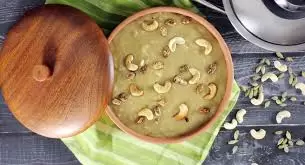
Quick answer: Huggi is Karnataka's dish of new rice and split moong dal cooked soft, made for Sankranti in two forms. Sihi huggi is sweet, with jaggery, ghee and often milk. Khara huggi is savoury, seasoned with pepper, cumin and ginger. Both are close cousins of Tamil pongal and take about 40 minutes.
Kitchen note: This recipe is not yet kitchen-tested by a HinduTone cook. The quantities and timings follow common home methods; judge doneness by look and texture, and adjust for your stove and ingredients.
| Key facts | |
|---|---|
| Dish | Rice and split moong dal cooked soft; sweet (sihi) or savoury (khara) |
| Region | Karnataka |
| Festival role | Cooked for Bhogi and Makara Sankranti (Makara Sankramana) |
| Makara Sankranti in India | 15 January 2027 in India per the panchang; some government lists mark 14 January |
| Serves | 4 (each version) |
| Prep time | 15 minutes, plus 15 minutes soaking (optional) |
| Cook time | 25 to 35 minutes on the stove; about 20 minutes in a pressure cooker |
| Allergens | Dairy (ghee, milk), cashews; asafoetida may contain wheat |
What is huggi?
Huggi is the Kannada name for rice and moong dal cooked together until soft. In Karnataka, Sankranti is also called Suggi Habba, the harvest festival, and the first rice of the season goes into the pot.
Karnataka Tourism lists both forms among the state's Sankranti foods. It describes sihi huggi (sihi means sweet) as harvest rice, moong dal, ghee and jaggery, often simmered in milk, and kara or khara huggi (khara means spicy or savoury) as the savoury counterpart seasoned with cumin, pepper and ginger. An All India Radio report from January 2025 says huggi, made of rice, split green gram and spices, is prepared on Bhogi, the day before Sankranti, in Karnataka.
For the rest of the festival in the state, including the ellu bella exchange, see our Makara Sankranti in Karnataka guide.
How is huggi related to Tamil pongal?
They belong to the same family. Rice and moong dal cooked soft, sweet or savoury, is pongal in Tamil Nadu, pongali in Andhra Pradesh and Telangana, and huggi in Karnataka. Karnataka Tourism itself calls sihi huggi "sweet pongal". South First, describing a Bengaluru Sankranti meal in January 2024, likewise calls sihi huggi sweet pongal and serves it as a payasa-like dessert.
The differences are of home style rather than fixed rules:
| Huggi (Karnataka) | Pongal (Tamil Nadu) | |
|---|---|---|
| Sweet version | Sihi huggi: jaggery and ghee, often cooked in milk | Sakkarai pongal: jaggery and ghee; milk in some homes |
| Savoury version | Khara huggi: pepper, cumin, ginger | Ven pongal: pepper, cumin, ginger |
| Festival day | Bhogi and Sankranti | Thai Pongal, when the pot is allowed to boil over |
| Texture in many homes | Soft and loose, eaten with a spoon | Soft; set firmer in some homes |
If you want the Tamil methods, see our ven pongal recipe and sakkarai pongal recipe. This page gives the Karnataka home versions.
Sihi huggi (sweet)
Ingredients
| Ingredient | Metric | US measure |
|---|---|---|
| Raw short-grain rice (new rice if you can get it) | 100 g | 1/2 cup |
| Split yellow moong dal | 50 g | 1/4 cup |
| Water | 500 ml | 2 cups |
| Milk | 250 ml | 1 cup |
| Jaggery, grated or broken | 150 to 180 g | 3/4 to 1 cup, packed |
| Water for the jaggery | 60 ml | 1/4 cup |
| Ghee | 3 to 4 tbsp | 3 to 4 tbsp |
| Cashews | 12 to 15 | 12 to 15 |
| Raisins | 1 tbsp | 1 tbsp |
| Dry coconut, thin slivers (optional) | 2 tbsp | 2 tbsp |
| Cardamom, powdered | 1/4 tsp | 1/4 tsp |
Stovetop method
- Roast the dal. Dry-roast the moong dal in a heavy pan on low heat for 3 to 4 minutes, until it smells nutty and turns a shade darker. Do not brown it.
- Wash. Wash the rice and roasted dal together two or three times. Soak for 15 minutes if you have time.
- Cook. Bring the water to a boil in a heavy pot. Add the rice and dal, cover partly and cook on low heat for 20 to 25 minutes, stirring now and then, until both are very soft. Add the milk and simmer 5 minutes more, mashing lightly with the back of the ladle.
- Melt the jaggery. In a small pan, warm the jaggery with 60 ml water until it melts. Strain it through a fine sieve to remove grit.
- Combine. Turn the heat under the rice to the lowest setting. Let the jaggery cool for a minute, then stir it in. Simmer 3 to 4 minutes until it thickens a little.
- Fry the nuts. Heat the ghee in a small pan. Fry the cashews until golden, then the raisins until they puff, then the coconut slivers for a few seconds.
- Finish. Pour the ghee and nuts over the huggi, add cardamom and stir. It thickens as it cools; loosen with warm milk if needed.
Pressure cooker or Instant Pot
- Roast and wash the dal and rice as above.
- Pressure-cook the rice and dal with the 500 ml water for 4 to 5 whistles on medium heat, or 12 minutes on high pressure in an Instant Pot, with natural release.
- Open, mash lightly, add the milk and simmer 5 minutes on the stove or on Sauté.
- Continue from step 4 of the stovetop method. Turn Sauté off before adding the jaggery.
Khara huggi (savoury)
Ingredients
| Ingredient | Metric | US measure |
|---|---|---|
| Raw short-grain rice | 100 g | 1/2 cup |
| Split yellow moong dal | 50 g | 1/4 cup |
| Water | 750 ml | 3 cups |
| Salt | 3/4 tsp, to taste | 3/4 tsp, to taste |
| Ghee | 3 tbsp | 3 tbsp |
| Whole black peppercorns, lightly crushed | 1 tsp | 1 tsp |
| Cumin seeds | 1 tsp | 1 tsp |
| Fresh ginger, finely chopped | 1 tbsp | 1 tbsp |
| Curry leaves | 1 sprig | 1 sprig |
| Cashews (optional) | 10 | 10 |
| Asafoetida (hing) | a pinch | a pinch |
| Grated fresh coconut (optional) | 2 tbsp | 2 tbsp |
Stovetop method
- Roast and wash. Dry-roast the dal lightly as for sihi huggi, then wash the rice and dal together.
- Cook. Boil the water, add the rice, dal and salt, and cook partly covered on low heat for 25 to 30 minutes, stirring now and then, until very soft. Mash lightly.
- Temper. Heat the ghee in a small pan. Add the cashews and fry until golden. Add the pepper and cumin; when the cumin sizzles, add the ginger and curry leaves and fry for a few seconds. Add the asafoetida last.
- Finish. Pour the tempering over the huggi, add the coconut if using, stir and cover for a few minutes. Add a little hot water if it is too thick.
Pressure cooker, Instant Pot or rice cooker
- Pressure cooker: cook the rice, dal, salt and water for 4 to 5 whistles, natural release, then mash and temper as above.
- Instant Pot: 12 minutes on high pressure, natural release.
- Rice cooker: use the porridge setting if your cooker has one, or the normal setting with the full amount of water; stir and add hot water at the end.
Huggi for naivedyam
Many families cook huggi on Bhogi or Sankranti morning and offer it at the household shrine before the meal. Cook the naivedyam portion first and keep it aside before anyone tastes it. Customs differ by family and region; follow your family practice or ask your priest. Our Makar Sankranti puja at home guide explains the morning offering.
Substitutions abroad
| Region | Rice | Moong dal and jaggery | Notes |
|---|---|---|---|
| USA and Canada | Indian sona masoori; Calrose or other short-grain rice also works | Indian grocers stock both; piloncillo or dark muscovado can stand in for jaggery | Muscovado gives a darker colour |
| UK | Sona masoori from Asian shops; pudding rice works | Asian shops; dark muscovado as a swap | |
| Australia | Indian grocers; medium-grain rice works | Indian grocers | |
| The Gulf | Easy to find | Easy to find | |
| South-East Asia | Local short- or medium-grain rice | Little India shops; palm sugar works but tastes different | Gula melaka gives a caramel taste |
Basmati is not ideal: it stays separate and does not turn creamy.
Vegan option
- Khara huggi: use a neutral oil or coconut oil instead of ghee.
- Sihi huggi: use coconut oil instead of ghee and thin coconut milk instead of milk. Add the coconut milk at the end on low heat so it does not split.
Common mistakes
- Milk curdling in sihi huggi: jaggery added to boiling milk can split it. Lower the heat and cool the jaggery syrup for a minute first.
- Gritty sweetness: jaggery often carries grit. Melt and strain it.
- Too thick on the plate: huggi keeps absorbing liquid. Take it off the heat looser than you want to serve it.
- Burnt bottom: use a heavy pot and stir, especially after adding milk or jaggery.
- Bitter pepper: fry the tempering briefly; burnt pepper and cumin taste bitter.
- Hard dal: old moong dal takes longer. Soak it or give the pressure cooker an extra whistle.
Storage
Huggi is best eaten warm on the day. Cool leftovers quickly and refrigerate in a covered box for up to 2 days. Reheat with a splash of water (khara) or milk (sihi), stirring until steaming hot.
Allergens
Contains dairy (ghee, and milk in sihi huggi) and cashews (tree nuts). Asafoetida is often blended with wheat flour; use a gluten-free brand if needed. Dairy, tree nuts and wheat are major allergens in the USA and on the UK's list of 14 allergens. Leave out the cashews or use the vegan swaps above if a guest needs them.
Frequently asked questions
What is the difference between sihi huggi and khara huggi?
Sihi huggi is the sweet version, cooked with jaggery and ghee and often milk. Khara huggi is savoury, seasoned with pepper, cumin, ginger and ghee. Both start with the same rice and moong dal.
Is huggi the same as pongal?
It is the same family of dish under its Kannada name. Sihi huggi is close to Tamil sakkarai pongal and khara huggi to ven pongal; details such as milk in the sweet version vary by family.
When is huggi made for Sankranti?
In Karnataka it is made for Bhogi, the day before Sankranti, and on Sankranti itself. In 2027, Makara Sankranti in India is on 15 January per the panchang; some government lists mark 14 January. Confirm with your local panchang or temple priest.
Can I use brown rice or millets?
You can, but they need more water and longer cooking, and the taste and texture change. New white rice is the traditional choice for the harvest festival.
What is served with khara huggi?
Families serve it on its own with a spoon of ghee, or with a chutney, relish or pickle of their choice.
Can I make huggi ahead for a gathering?
Yes, cook it a few hours ahead and keep it covered. Loosen with hot water or milk while reheating, and add the ghee tempering just before serving.
Sources
- Karnataka Tourism (Department of Tourism, Government of Karnataka), "Sankranti in Karnataka", section on food and delicacies: https://karnatakatourism.org/sankranti-in-karnataka/ (accessed 12 November 2026)
- All India Radio News (News Services Division, Prasar Bharati), "Karnataka celebrates Bhogi, Sankranti festivals", 13 January 2025: https://www.newsonair.gov.in/karnataka-celebrates-bhogi-sankranti-festivals (accessed 12 November 2026)
- South First, "Experience the essence of Sankranti with traditional oota" (Fathima Ashraf), 16 January 2024: https://thesouthfirst.com/featured/breaking-down-the-sankranti-oota-with-bengalurus-chef-dinesh-poojary/ (accessed 12 November 2026)
- US Food and Drug Administration, "Food Allergies": https://www.fda.gov/food/nutrition-food-labeling-and-critical-foods/food-allergies (accessed 12 November 2026)
- Food Standards Agency (UK), "Food allergy and intolerance advice for consumers": https://www.gov.uk/government/publications/food-allergy-and-intolerance-advice-for-consumers (accessed 12 November 2026)
Last reviewed: 12 November 2026.
Related guides
Share this with family and friends
Send it on WhatsApp, post it, or copy the link.
More from Recipes
- Dudh Puli Recipe (Bengali Rice Dumplings in Thickened Milk with Nolen Gur)
- Bhapa Pitha Recipe (Bengali Steamed Rice Cakes with Coconut and Nolen Gur)
- Kakara Pitha Recipe (Odia Fried Pitha with Coconut Filling)
- Arisa Pitha Recipe (Odia Rice-Flour and Jaggery Cakes)
- Ghila Pitha Recipe (Fried Assamese Rice and Jaggery Cakes for Bihu)

