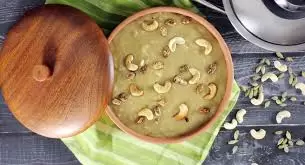
Khichdo Recipe (Gujarati Broken Wheat and Lentil Dish for Uttarayan)
Quick answer: Khichdo is a Gujarati dish of broken or cracked wheat cooked soft with lentils, then finished with a ghee tempering. Many Gujarati families make it for Uttarayan, the state's name for Makar Sankranti, and eat it between kite flying on the roof. It takes about an hour, or 30 minutes in

Quick answer: Khichdo is a Gujarati dish of broken or cracked wheat cooked soft with lentils, then finished with a ghee tempering. Many Gujarati families make it for Uttarayan, the state's name for Makar Sankranti, and eat it between kite flying on the roof. It takes about an hour, or 30 minutes in a pressure cooker.
Kitchen note: This recipe is not yet kitchen-tested by a HinduTone cook. The quantities and timings follow common home methods; judge doneness by look and texture, and adjust for your stove and ingredients.
| Key facts | |
|---|---|
| Dish | Broken wheat and lentils cooked together, savoury or sweet |
| Region | Gujarat |
| Festival role | One of the dishes cooked for Uttarayan, alongside undhiyu, jalebi and chikki |
| Uttarayan 2027 | Gujarat's 2027 holiday list is awaited; in past years kites have flown on 14 January |
| Serves | 4 |
| Prep time | 15 minutes, plus 1 to 2 hours soaking |
| Cook time | 45 to 50 minutes on the stovetop; about 25 minutes in a pressure cooker |
| Allergens | Gluten (wheat), peanuts, dairy (ghee). Vegan with oil |
What is khichdo and why is it made for Uttarayan?
In Gujarati, khichdo (also spelled khichda) is a close relative of khichdi, but the main grain is wheat rather than rice. The wheat is broken or cracked (fada or dalia), and it is cooked with lentils such as toor dal (split pigeon peas) and moong dal until thick and soft. Writers on Gujarati food describe both a savoury, spiced khichdo and a sweet one. DailyO notes that in many places in Saurashtra the Sankranti khichdo is the sweet kind, made from wheat with milk and sugar. Scroll recorded a Gujarati family that cooked spicy cracked-wheat khichdi in large quantities every Makar Sankranti and carried it up to the terrace for lunch while flying kites.
Uttarayan is a day spent on rooftops, so festival food in Gujarat tends to be dishes cooked in bulk and eaten through the day: undhiyu with puris and jalebi, chikki, and khichdo. This page gives the savoury version, with a note on the sweet one below.
Read our Uttarayan in Gujarat guide for the kites, the food and the manja rules, and our undhiyu recipe for the dish usually eaten on the same day.
How is Gujarati khichdo different from North Indian khichdi?
| Gujarati khichdo | Khichdi of Uttar Pradesh and Bihar | |
|---|---|---|
| Main grain | Broken or cracked wheat | Rice |
| Lentils | Toor dal, often with moong or chana dal | Usually moong or urad dal |
| Texture | Thick, grainy, slightly chewy | Soft, often porridge-like |
| Festival link | One of several Uttarayan dishes | Gives the festival its name, Khichdi, and is offered on the day |
In much of Uttar Pradesh, Makar Sankranti is called Khichdi and rice-and-dal khichdi is offered and shared. Our Khichdi Sankranti guide explains that custom, and our khichdi page covers rice khichdi.
Ingredients
| Ingredient | Metric | US measure |
|---|---|---|
| Broken wheat (fada, dalia or coarse bulgur) | 150 g | 1 scant cup |
| Toor dal (split pigeon peas) | 50 g | 1/4 cup |
| Moong dal (split yellow mung) | 50 g | 1/4 cup |
| Raw peanuts (optional) | 30 g | 1/4 cup |
| Green peas or fresh tuvar (pigeon pea) beans | 75 g | 1/2 cup |
| Water | 1 litre | 4 1/4 cups |
| Turmeric | 1/2 teaspoon | 1/2 teaspoon |
| Salt | 1 1/4 teaspoons, or to taste | 1 1/4 teaspoons |
| Ginger and green chilli paste | 2 teaspoons | 2 teaspoons |
| Sugar or jaggery (optional, for the Gujarati sweet-sour touch) | 1 teaspoon | 1 teaspoon |
| Lemon juice | 1 tablespoon | 1 tablespoon |
| Coriander leaves, chopped | a handful | a handful |
For the tempering
| Ingredient | Metric | US measure |
|---|---|---|
| Ghee | 30 g | 2 tablespoons |
| Mustard seeds | 1/2 teaspoon | 1/2 teaspoon |
| Cumin seeds | 1 teaspoon | 1 teaspoon |
| Cloves | 2 | 2 |
| Cinnamon stick | 2 cm piece | 1 inch piece |
| Dried red chilli | 1 | 1 |
| Asafoetida (hing) | a pinch | a pinch |
| Curry leaves | 8 to 10 | 8 to 10 |
Families vary this freely. Some add more kinds of dal, field beans, coconut or a few cashews and raisins; some use whole peeled wheat soaked for hours instead of broken wheat.
How to make khichdo on the stovetop
- Rinse the broken wheat, toor dal and moong dal together two or three times. Soak them in fresh water for 1 to 2 hours. If you use peanuts, soak them with the grains.
- Drain. Put the grains, peanuts and 1 litre of water in a heavy pot with the turmeric and salt.
- Bring to the boil, skim off any foam, then cover and cook on low heat, stirring every 5 minutes so the bottom does not catch. Add a splash of hot water whenever it looks dry.
- After about 30 minutes, add the peas or tuvar beans and the ginger-chilli paste. Cook for another 10 to 15 minutes, until the dal has broken down, the wheat is soft but still has a little bite, and the mixture is thick but still moves when you tilt the pot.
- Stir in the sugar or jaggery, if using. Taste for salt.
- For the tempering, heat the ghee in a small pan. Add the mustard seeds; when they pop, add the cumin, cloves, cinnamon and red chilli. After a few seconds add the asafoetida and curry leaves (stand back, they spit), then pour the tempering over the khichdo.
- Stir, rest the pot covered for 5 minutes, then finish with lemon juice and coriander.
Khichdo thickens as it stands. Loosen it with hot water before serving if needed.
Pressure cooker and Instant Pot
Pressure cooker: Make the tempering first in the cooker itself. Add the soaked, drained grains and peanuts, the peas, ginger-chilli paste, turmeric, salt and about 900 ml (3 3/4 cups) of water. Close and cook on medium heat for 4 to 5 whistles, then let the pressure drop on its own. Open, stir well, adjust the water and seasoning, and add lemon juice and coriander.
Instant Pot: Use Sauté for the tempering, then add everything else with about 850 ml (3 1/2 cups) of water. Scrape the bottom clean to avoid a burn warning. Pressure Cook on High for 12 minutes and allow 10 minutes of natural release.
A rice cooker is not a good fit: broken wheat and toor dal need longer cooking and more stirring than most rice cookers allow.
The sweet khichdo of Saurashtra
The sweet version is a different dish in the same family. Whole wheat is soaked for several hours, lightly pounded or ground to loosen the husk, rinsed, then simmered in milk and water until soft and sweetened with sugar. It is spread on a greased plate, topped with hot ghee and often flavoured with nutmeg or cardamom. Coconut and dried fruit are common garnishes. Ask an elder in your family which khichdo your household keeps for Uttarayan.
Naivedyam notes
Uttarayan in Gujarat is mainly a family and rooftop festival, but many households offer the day's food at the home shrine before eating, and many give to charity on the day. If you offer khichdo as naivedyam, set aside a portion before tasting and before adding onion or garlic (this recipe has none). Follow your family custom or ask your priest.
Substitutions abroad
| Region | Broken wheat | Toor dal and moong dal | Tuvar beans |
|---|---|---|---|
| USA and Canada | Indian grocers ("dalia" or "lapsi"); coarse bulgur (#3 or #4) in supermarkets | Indian grocers; red lentils at a pinch | Frozen "tuvar lilva" at Indian grocers; green peas or edamame |
| UK | Indian grocers; coarse bulgur in Turkish and Middle Eastern shops | Indian and South Asian grocers | Frozen tuvar at Indian grocers; garden peas |
| Australia | Indian grocers; coarse burghul in supermarkets | Indian grocers | Frozen peas or broad beans |
| The Gulf | Broken wheat and coarse burghul are easy to find | Easy to find | Indian supermarkets |
| South-East Asia | Indian grocers in Little India areas; coarse bulgur online | Indian grocers | Green peas or edamame |
Bulgur is pre-cooked, so it softens faster than Indian dalia: start checking at 20 minutes and use a little less water. Do not use fine semolina; it turns to paste.
Vegan option
Replace the ghee with groundnut or sunflower oil. The rest of the recipe is plant-based. Check that your asafoetida is not cut with anything you avoid.
Common mistakes
- Not soaking: the wheat stays hard while the dal turns to mush. Soak both.
- Too little water or stirring: broken wheat catches on the bottom quickly. Stir often and add hot, not cold, water.
- Too thick at serving: khichdo sets as it cools. Cook it a little looser than you want to serve it.
- Fine semolina in place of broken wheat: you get a sticky upma, not khichdo.
- Burnt tempering: add the asafoetida and curry leaves last and pour at once.
Storage
Cool quickly and refrigerate in a covered container within two hours of cooking. Eat within 2 days. Reheat until steaming hot with a splash of water. Khichdo does not freeze especially well; the wheat turns soft.
Allergens
Contains wheat (gluten), peanuts if used, and dairy (ghee). Many asafoetida powders are blended with wheat flour. Peanuts and wheat are major allergens in the USA, UK, Canada, Australia and the EU. Khichdo cannot be made gluten-free without changing the grain; a rice-and-dal khichdi is the gluten-free choice.
Frequently asked questions
Is khichdo the same as khichdi?
They are related but not the same. Khichdi is usually rice and dal; Gujarati khichdo uses broken or cracked wheat as the grain, cooked with lentils, and is thicker and grainier.
Is khichdo sweet or savoury?
Both exist. The savoury kind is cooked with dal, vegetables and spices. In many places in Saurashtra the Sankranti khichdo is sweet, made from wheat with milk and sugar.
When is Uttarayan in 2027?
Gujarat's 2027 holiday list had not been published when this page was written. In past years Gujarat flew its kites on 14 January, with Vasi Uttarayan the next day. Across India, Makar Sankranti is 15 January per the panchang; some government lists mark 14 January. Confirm with your local panchang or temple priest.
Can I make khichdo ahead of Uttarayan?
Yes. Cook it the evening before, cool and refrigerate it, then reheat with a little water and add the tempering, lemon and coriander fresh.
Can I use bulgur instead of dalia?
Yes. Coarse bulgur works but cooks faster because it is already parboiled. Reduce the water slightly and start checking it sooner.
What do Gujaratis eat with khichdo on Uttarayan?
It is part of a wider spread that usually includes undhiyu with puris, jalebi and sesame or peanut chikki. Curd or raita goes well with the savoury version.
Sources
- DailyO, Sonal Kellogg, "Festival of kites and good food: Make Uttarayan happier with our delicious recipes!", 14 January 2019: https://dailyo.in/arts/uttarayan-international-kite-festival-gujarat-khichda-tukkal-makar-sankranti-28891 (accessed 12 November 2026)
- Scroll.in, Priyadarshini Chatterjee, "On Makar Sankranti, the one thing that ties festivities across India is seasonal eating", 14 January 2018: https://scroll.in/magazine/864777/scroll_in (accessed 12 November 2026)
- The Asian Age, DC Correspondent, "Harvested interest" (Sankrant khichdo of broken wheat and toor dal), 13 January 2018: https://www.asianage.com/life/food/130118/harvested-interest.html (accessed 12 November 2026)
- US Food and Drug Administration, "Food Allergies": https://www.fda.gov/food/nutrition-food-labeling-and-critical-foods/food-allergies (accessed 12 November 2026)
- Food Standards Agency (UK), "Food allergy and intolerance advice for consumers": https://www.gov.uk/government/publications/food-allergy-and-intolerance-advice-for-consumers (accessed 12 November 2026)
Last reviewed: 12 November 2026.
Related guides
Share this with family and friends
Send it on WhatsApp, post it, or copy the link.
More from Recipes
- Nolen Gur Payesh Recipe (Bengali Rice Pudding with Date-Palm Jaggery)
- Dudh Puli Recipe (Bengali Rice Dumplings in Thickened Milk with Nolen Gur)
- Bhapa Pitha Recipe (Bengali Steamed Rice Cakes with Coconut and Nolen Gur)
- Kakara Pitha Recipe (Odia Fried Pitha with Coconut Filling)
- Arisa Pitha Recipe (Odia Rice-Flour and Jaggery Cakes)