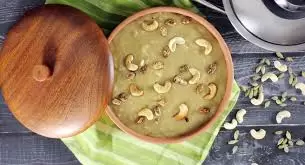
Dudh Puli Recipe (Bengali Rice Dumplings in Thickened Milk with Nolen Gur)
Quick answer: Dudh puli is a Bengali sweet of small half-moon dumplings made from rice-flour dough, filled with coconut cooked in nolen gur (new date-palm jaggery) and simmered in milk until the milk thickens around them. It is one of the pithe-puli made for Poush Sankranti. Add the gur to the milk

Quick answer: Dudh puli is a Bengali sweet of small half-moon dumplings made from rice-flour dough, filled with coconut cooked in nolen gur (new date-palm jaggery) and simmered in milk until the milk thickens around them. It is one of the pithe-puli made for Poush Sankranti. Add the gur to the milk off the heat so it does not curdle.
Kitchen note: This recipe is not yet kitchen-tested by a HinduTone cook. The quantities and timings follow common home methods; judge doneness by look and texture, and adjust for your stove and ingredients.
| Key facts | |
|---|---|
| Dish | Coconut-filled rice-flour dumplings in sweetened, thickened milk |
| Region | Bengal (West Bengal and Bangladesh) |
| Festival role | One of the pithe-puli of Poush Sankranti (Poush Parbon) |
| Makar Sankranti in India | 15 January in India per the panchang; some government lists mark 14 January |
| Poush Sankranti 2027 in Bengal | Follows the Bengali panjika; the West Bengal government's 2027 holiday list is not yet published |
| Serves | 4 to 5 (about 20 small puli) |
| Prep time | 40 minutes |
| Cook time | About 40 minutes |
| Allergens | Milk; coconut; nuts only if you add them |
What is dudh puli?
Puli are small stuffed dumplings of rice-flour dough, usually shaped as half moons; dudh means milk. In dudh puli the dumplings are cooked in milk rather than steamed or fried, and the milk becomes a light kheer around them. The Daily Star of Dhaka describes doodh puli as boiled rice-flour dumplings with a coconut filling, cooked in cardamom-scented milk flavoured with date-palm jaggery, and links it to Makar Sankranti. A West Bengal home cook writing in Down To Earth (April 2026) ties it to Poush Parbon, when fresh date-palm jaggery is in season.
Poush Sankranti is the last day of the Bengali month of Poush and the day of pithe-puli, the family of sweets made from the new season's rice. Deccan Chronicle (January 2026) lists doodh puli with patishapta and gokul pithe among the day's sweets and calls nolen gur the star of Poush Parbon. Nolen gur is boiled down from date-palm sap tapped only in winter; it is sold runny (jhola gur) or set into cakes (patali gur).
See our Poush Sankranti in West Bengal guide for the festival, and our patishapta recipe for the crepe made on the same day.
Ingredients
Filling
| Ingredient | Metric | US measure |
|---|---|---|
| Fresh or thawed frozen grated coconut | 120 g | 1 1/2 cups, loosely packed |
| Nolen gur (patali, grated) or regular jaggery | 100 g | 1/2 cup, grated |
| Green cardamom, ground | 1 to 2 pods | 1 to 2 pods |
Dough
| Ingredient | Metric | US measure |
|---|---|---|
| Fine rice flour | 160 g | 1 cup |
| Water | 240 ml | 1 cup |
| Salt | a pinch | a pinch |
| Ghee or neutral oil | 5 ml | 1 teaspoon |
Milk
| Ingredient | Metric | US measure |
|---|---|---|
| Full-fat milk | 1 litre | 4 1/4 cups |
| Bay leaf (optional) | 1 | 1 |
| Green cardamom, lightly crushed | 2 to 3 pods | 2 to 3 pods |
| Nolen gur (jhola or grated patali) or regular jaggery | 80 to 120 g | 1/3 to 1/2 cup, or to taste |
| Rice flour mixed with 2 tablespoons milk (optional, to thicken) | 1 teaspoon | 1 teaspoon |
How to make dudh puli on the stovetop
Make the filling
- Cook the coconut and grated gur in a heavy pan on low to medium heat, stirring often, for 10 to 15 minutes. The gur melts, then the mixture dries and starts to come together in a sticky mass.
- Stir in the ground cardamom, take it off the heat and let it cool completely. Roll it into about 20 small balls, each the size of a hazelnut.
Make the dough
- Bring the water, salt and ghee to a boil in a saucepan. Lower the heat and tip in the rice flour all at once. Stir quickly until there is no dry flour left.
- Turn off the heat, cover and leave for 5 to 10 minutes so the flour steams in its own heat.
- When it is cool enough to touch, knead it on a plate with a greased palm for 3 to 4 minutes, into a smooth, soft dough that does not crack. Sprinkle in warm water if it cracks, or a little flour if it sticks. Keep it covered.
Shape the puli
- Pinch off a small ball of dough, about the size of a large marble. Flatten it in your palm into a disc about 6 cm (2 1/2 inches) across, slightly thinner at the edges.
- Put a filling ball in the centre, fold the disc into a half moon and pinch the edges firmly to seal. Smooth any cracks with a wet finger. Keep the shaped puli under a damp cloth.
Cook in milk
- Bring the milk to a boil in a wide, heavy pan with the bay leaf and crushed cardamom. Simmer it, stirring and scraping the bottom often, for 15 to 20 minutes, until it has reduced by about a quarter.
- Slide in the puli one at a time. Keep the milk at a gentle simmer, not a rolling boil, and stir only by shaking the pan or nudging gently so the puli do not break.
- Cook for 10 to 15 minutes, until the puli float, look glossy and feel soft when pressed with a spoon. For a thicker milk, stir in the rice-flour paste in the last few minutes.
- Turn off the heat and let the pan stand for 5 to 10 minutes, until it is hot but no longer bubbling.
- Now stir in the gur gently until it dissolves. Taste and add more if you like.
Serve warm or chilled. The milk thickens further as it cools.
Why the gur goes in off the heat
Jaggery stirred into boiling milk can make the milk split, and fresh date-palm gur is known among Bengali cooks for doing this. The Quint's nolen gur payesh method adds the jaggery off the heat for the same reason. Some cooks sweeten the milk with gur while it simmers and have no trouble, especially with set patali gur, but adding it after the pan has stopped bubbling is the safer habit. Use full-fat milk; low-fat milk splits more easily.
Pressure cooker, Instant Pot and rice cooker
The puli are delicate and need gentle simmering in an open pan, so a pressure cooker is not a good fit. An Instant Pot on its Sauté setting (low) can stand in for the pan, but stir carefully and switch it off before adding the gur. A rice cooker is not suitable.
If you are short of time, the filling and dough can be made in advance and the puli shaped up to a few hours ahead; keep them covered in the fridge.
Naivedyam notes
Customs differ from family to family. In some Bengali homes the first pithe of the day go to the household shrine before anyone eats; others make no formal offering. If you offer dudh puli, keep a portion aside before tasting and follow your family's practice or ask your priest.
Nolen gur and other substitutions abroad
Bangladeshi and Indian grocers in larger cities sometimes stock patali gur in winter; check that the label says date palm (khejur). Regular cane jaggery works well and is the easiest choice; the taste is milder and less smoky. Date syrup comes from the date fruit, not the palm sap, so it is not the same, but a teaspoon with regular jaggery gives a hint of the darker flavour. Sugar alone also works if you have nothing else.
| Region | Rice flour | Coconut | Gur | Milk |
|---|---|---|---|---|
| USA and Canada | Indian, Bangladeshi and East Asian grocers | Frozen grated coconut at Indian grocers | Patali gur at some Bangladeshi grocers in winter; regular jaggery otherwise | Whole milk (3.25%) |
| UK | Asian shops and supermarkets | Frozen grated coconut in Asian shops | Patali gur in Bangladeshi shops in some cities; regular jaggery otherwise | Whole milk |
| Australia | Indian and Asian grocers | Frozen grated coconut at Indian grocers | Regular jaggery; patali gur occasionally at Bangladeshi grocers | Full-cream milk |
| The Gulf | Easy to find | Fresh and frozen coconut easy to find | Bengali and Bangladeshi grocers may stock patali gur in season | Full-fat fresh milk |
| South-East Asia | Rice flour is everywhere | Fresh grated coconut in wet markets | Palm sugar (gula melaka, gula Jawa) is a reasonable stand-in | Fresh full-cream milk |
Use fine, non-glutinous rice flour. Glutinous (sticky) rice flour makes chewy dumplings that can stick together.
Vegan option
Cook the puli in coconut milk thinned with a little water (about 600 ml coconut milk to 300 ml water) instead of dairy milk, and grease with oil instead of ghee. Coconut milk does not reduce in the same way, so simmer gently and thicken with the rice-flour paste. Sweeten off the heat as above. If you are making it as an offering, some families use only cow's milk; follow your family custom.
Common mistakes
- Dough made with cold water: rice flour has no gluten, so it cracks. Cooking it in boiling water and kneading while warm makes it pliable.
- Filling too wet: it leaks and the puli burst. Cook it until it gathers into a mass, and cool it.
- Poor seal: the puli open in the milk. Pinch the edges firmly.
- Milk boiling hard: the puli break apart and the milk catches on the bottom. Keep it at a gentle simmer.
- Gur added to boiling milk: the milk can split. Wait until it stops bubbling.
- Overcrowding the pan: use a wide pan so the puli sit in one layer.
Storage
Cool and refrigerate within 2 hours in a covered container. Dudh puli keeps about 2 days in the fridge. The puli soak up milk as they stand, so add a splash of warm milk when you serve leftovers; warm gently without boiling. Do not freeze the finished dish: the puli turn grainy.
Allergens
Contains milk (unless made with coconut milk), ghee and coconut. Coconut is not one of the 14 major allergens on UK labels, but a small number of people react to it, so mention it to guests with allergies. Many families add cashews and raisins to the milk; leave the nuts out for anyone with a nut allergy. Rice flour has no wheat gluten, but check labels for cross-contact.
Frequently asked questions
What is the difference between dudh puli and puli pithe?
Puli pithe is the general name for rice-flour dumplings shaped around a filling. They can be steamed, fried or cooked in milk. Dudh puli is the version cooked in milk.
Why did my milk curdle?
Usually the gur went into milk that was still boiling, or the milk was low-fat. Turn off the heat, let it stop bubbling, and then add the gur. Slightly split milk tastes much the same but looks grainy; next time wait a little longer before adding the gur.
Why do my puli break in the milk?
The dough may be too dry or cracked, the seal weak, or the milk boiling too hard. Knead the dough until smooth, seal well and keep the heat gentle.
Can I make dudh puli without nolen gur?
Yes. Regular jaggery or sugar both work. Nolen gur gives the smoky winter taste Bengali families look forward to.
Can I make the puli ahead?
Yes. Shape them a few hours ahead and keep them covered in the fridge, then cook them in the milk shortly before serving.
When is Poush Sankranti in 2027?
Makar Sankranti falls on 15 January in India per the panchang; some government lists mark 14 January. Bengal keeps Poush Sankranti by the Bengali panjika, and the West Bengal government's 2027 holiday list had not been published at the time of writing. Confirm with your local panchang or temple priest.
Sources
- The Daily Star (Dhaka), Salina Parvin, "Winter pitha", 15 December 2014: https://www.thedailystar.net/winter-pitha-55332 (accessed 12 November 2026)
- Down To Earth, Mousumi Das, "Dudh Puli is a celebration of warmth, tradition, and timeless Bengali heritage", 14 April 2026: https://www.downtoearth.org.in/my-food-story/dudh-puli-is-a-celebration-of-warmth-tradition-and-timeless-bengali-heritage (accessed 12 November 2026)
- Deccan Chronicle, "Kites, sweets and togetherness: Poush Parbon's link to pan-Indian Sankranti", 12 January 2026: https://www.deccanchronicle.com/lifestyle/culture-and-society/kites-sweets-and-togetherness-poush-parbons-link-to-pan-indian-sankranti-1929949 (accessed 12 November 2026)
- The Quint, Lesley D Biswas, "The Mishti Bengal Eats in Winter: 3 Yummy Ways to Use Nolen Gur", 25 October 2017: https://www.thequint.com/lifestyle/food/winter-season-bengal-jaggery-nolen-gur-sweets (accessed 12 November 2026)
- US Food and Drug Administration, "Safe Food Handling": https://www.fda.gov/food/buy-store-serve-safe-food/safe-food-handling (accessed 12 November 2026)
- Food Standards Agency (UK), "Food allergy and intolerance advice for consumers": https://www.gov.uk/government/publications/food-allergy-and-intolerance-advice-for-consumers (accessed 12 November 2026)
Last reviewed: 12 November 2026.
Related guides
Share this with family and friends
Send it on WhatsApp, post it, or copy the link.
More from Recipes
- Medu Vadai Recipe (Ulundu Vadai for Pongal and Festival Days)
- Pongal Kootu Recipe (Mixed Vegetable and Dal Kootu)
- Sakkare Acchu Recipe (Karnataka Sugar Moulds for Sankranti)
- Kakara Pitha Recipe (Odia Fried Pitha with Coconut Filling)
- Arisa Pitha Recipe (Odia Rice-Flour and Jaggery Cakes)