
Types of Payasam and Kheer, and When Each Is Offered
Quick answer: Payasam (South India), kheer (North India) and payesh (Bengal and Odisha) are milk or coconut-milk puddings offered to the deity and served at feasts. The main kinds are rice payasam, vermicelli, sago, moong dal and chana dal payasam, Kerala's jaggery-and-coconut-milk pradhamans, and N
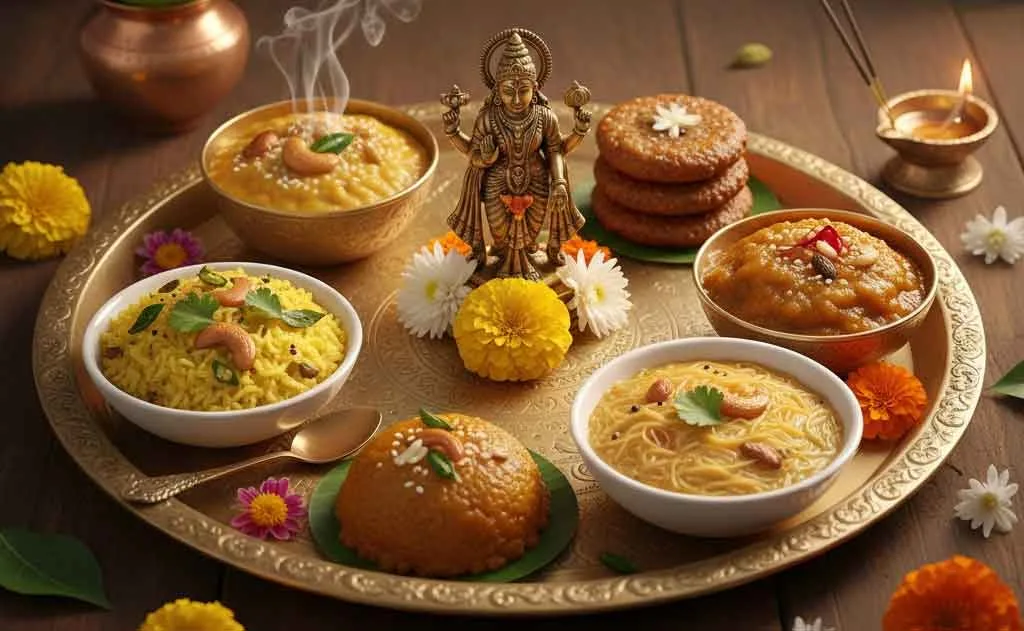
Quick answer: Payasam (South India), kheer (North India) and payesh (Bengal and Odisha) are milk or coconut-milk puddings offered to the deity and served at feasts. The main kinds are rice payasam, vermicelli, sago, moong dal and chana dal payasam, Kerala's jaggery-and-coconut-milk pradhamans, and North Indian rice, makhana and phirni. Rice-and-milk payasam is the oldest and most widely offered.
| Key facts | |
|---|---|
| Names | Payasam (Tamil, Malayalam, Telugu, Kannada payasa), kheer (Hindi, Punjabi), payesh (Bengali), paramannam (Telugu), pradhaman (Kerala, richer jaggery kinds) |
| Base | Milk with sugar, or jaggery with coconut milk |
| Common offerings | Birthdays, Fridays, Varalakshmi Vratam, Onam, Navaratri, Deepavali, Sharad Purnima, Shraddha, temple festivals |
| Related | Paramannam, semiya payasam, makhana kheer |
What is payasam?
The word comes from the Sanskrit payasa, from payas, milk. Rice cooked in milk has been a sacred food for a very long time: in the Ramayana, the payasa that comes from the sacrificial fire at King Dasharatha's putrakameshti yajna is shared among his queens before the birth of Rama and his brothers (Bala Kanda, sarga 16, in the numbering of IIT Kanpur's Valmiki Ramayana text).
Today the same idea has many regional forms. Each is simple: a grain, dal or other base cooked soft, sweetened, and enriched with ghee, cardamom and nuts.
The main kinds at a glance
| Payasam or kheer | Base | Sweetener | Region | Often offered on |
|---|---|---|---|---|
| Paal payasam, rice kheer | Rice, milk | Sugar | All India | Birthdays, festivals, temple offerings |
| Paramannam, bellam paramannam | Rice, milk | Jaggery | Andhra Pradesh, Telangana | Sankranti, Ugadi, Varalakshmi Vratam, temple naivedyam |
| Semiya payasam, sevaiyan kheer | Wheat vermicelli, milk | Sugar | All India | Quick festival and birthday sweet |
| Javvarisi or saggubiyyam payasam, sabudana kheer | Sago (tapioca pearls), milk | Sugar | South India; also North Indian vrat | Festivals; sabudana kheer on fasting days |
| Pesara pappu payasam, paasi paruppu payasam | Roasted moong dal | Jaggery, often with coconut milk | Tamil Nadu, Andhra, Karnataka | Varalakshmi Vratam, Navaratri, Deepavali |
| Senaga pappu or kadalai paruppu payasam | Chana dal | Jaggery | South India | Rama Navami, Ganesh Chaturthi, Navaratri |
| Ada pradhaman | Rice flakes (ada) | Jaggery, coconut milk | Kerala | Onam sadya, Vishu, temple festivals |
| Palada pradhaman | Rice ada, milk | Sugar | Kerala | Onam sadya, weddings |
| Parippu pradhaman | Moong dal | Jaggery, coconut milk | Kerala | Onam sadya |
| Gasagase payasa | Poppy seeds, coconut, rice | Jaggery | Karnataka | Festivals (see note on the Gulf below) |
| Makhana kheer | Fox nuts, milk | Sugar | North India | Navratri and other vrats, Janmashtami |
| Phirni | Ground rice, milk | Sugar | North India | Festivals, often set in clay bowls |
| Payesh | Fragrant short-grain rice (such as gobindobhog), milk | Sugar or nolen gur (date-palm jaggery) | Bengal, Odisha | Birthdays, Durga Puja, winter festivals |
Families vary in what they add: saffron, edible camphor, nutmeg, coconut, dry fruit. Follow your own tradition.
Which payasam for which occasion?
- Daily or weekly puja: a small bowl of rice payasam or semiya payasam is the simplest cooked sweet naivedyam. Fridays are often kept for Lakshmi with a sweet.
- Birthdays: in many South Indian and Bengali homes, the birthday meal begins with payasam or payesh, offered first at the home shrine.
- Varalakshmi Vratam: paramannam or moong dal payasam is common among the offerings; see Varalakshmi Vratam recipes.
- Onam: the sadya ends with two or more pradhamans, usually ada pradhaman and parippu or palada pradhaman.
- Sharad Purnima: in North and West India, rice kheer is left in the moonlight on the night of Sharad Purnima and eaten the next morning; see Sharad Purnima.
- Navaratri and vrats: grain-free kinds such as makhana or sabudana kheer suit fasting days; see fasting food rules by vrat.
- Shraddha and Pitru Paksha: rice kheer or payasam is among the foods many families prepare for the ancestors' rites. Customs differ widely; follow your family priest.
Milk or jaggery: why some payasams curdle
Milk-and-sugar payasams are easy. Milk-and-jaggery payasams can split, because jaggery is slightly acidic. Cooks avoid it by cooking the base fully, taking the pot off the heat, cooling it a little, and stirring in strained, warm jaggery syrup last. Kerala pradhamans avoid the problem by using coconut milk instead of dairy with jaggery. The paramannam recipe explains the method step by step.
Notes for cooks abroad
- Rice: sona masoori, ponni or any short-grain rice works for payasam. In the USA and Australia, Calrose is a good stand-in. For payesh, gobindobhog rice is sold at Bengali and Bangladeshi grocers; otherwise use a short-grain rice.
- Ada (rice flakes for pradhaman): sold at Kerala and South Indian grocers in the Gulf, the UK, the USA and Singapore.
- Coconut milk: canned coconut milk works for pradhamans; dilute it with water for the first cooking and use it neat for the finish.
- Poppy seeds in the Gulf: poppy seeds are banned or tightly controlled in the UAE and several other Gulf countries, including in luggage. Do not carry them; make gasagase payasa only where it is legal, or choose another payasam.
Allergens
Most payasams contain milk; nut garnishes add tree nuts; semiya and some ada are wheat or contain wheat; pradhamans contain coconut. Check each recipe page for details.
Frequently asked questions
What is the difference between payasam and kheer?
They are the same family of dish. Payasam is the South Indian name and kheer the North Indian one. South Indian payasams are often thinner and may use jaggery or coconut milk; North Indian kheer is usually rice, milk and sugar cooked thick.
What is a pradhaman?
A Kerala payasam made with jaggery and coconut milk, usually richer than milk payasam. Ada pradhaman, made with rice flakes, is the best known.
Which payasam is best for naivedyam?
Any payasam cooked cleanly and offered before tasting is fine. Rice payasam and paramannam are the most traditional; follow your family's choice for each festival.
Can payasam be offered during a fast?
Only kinds without grain, such as makhana or sabudana kheer, are eaten on strict grain-free fasts like Ekadashi. Customs vary by vrat and family.
Is payesh the same as kheer?
Payesh is the Bengali and Odia name. It is usually made with fragrant short-grain rice, and in winter with date-palm jaggery (nolen gur).
Related recipes and guides
- Recipes hub
- Paramannam recipe
- Semiya payasam recipe
- Makhana kheer for vrat and bhog
- How to offer naivedyam at home
- Onam: Thiruvonam and sadya
Sources
- Valmiki Ramayana, Bala Kanda, sarga 16 (the payasa from the putrakameshti yajna), text at IIT Kanpur, Valmiki Ramayana (sarga heading: "A being from the fire brings payasam and Dasaratha's queens conceive").
- The National (Abu Dhabi), Flyer to warn Indians over poppy seeds, 2 July 2014: poppy seeds "are banned in the UAE and several Arabian Gulf countries". Check current rules with UAE customs.
Customs differ by family and region; this guide describes common practice. Last reviewed: 12 November 2026.
Share this with family and friends
Send it on WhatsApp, post it, or copy the link.
More from Recipes
- Cooking for Annadanam: A Menu and Quantities for 50 and 100
- Prasadam in an Instant Pot, Pressure Cooker or Rice Cooker
- Coconut Laddu Recipe with Jaggery (Kobbari Laddu, Nariyal Ladoo)
- Besan Laddu Recipe (Gram Flour Laddus for Naivedyam)
- Poornalu (Boorelu) Recipe: Telugu Sweet for Festivals

