Naivedyam by Festival: What to Cook for Each Hindu Festival
Quick answer: Each Hindu festival has its customary naivedyam (food offered to the deity, called bhog in North India).

Quick answer: Each Hindu festival has its customary naivedyam (food offered to the deity, called bhog in North India). Common examples: Ugadi pachadi on Ugadi; panakam, vadapappu and kosambari on Rama Navami; modak or kudumulu on Ganesh Chaturthi; sundal through Navaratri; panchamrit and makhan on Janmashtami; pongal on Sankranti. The table below lists the usual dishes for each festival, with links to recipes.
| Key facts | |
|---|---|
| What it covers | The food commonly offered at about twenty Hindu festivals and vrats |
| Regions | Telugu, Tamil, Kannada, Malayalam, Marathi, Gujarati, Bengali and Hindi-speaking traditions |
| Rule of thumb | Cook fresh, without tasting, usually without onion and garlic; offer before eating |
| How to offer | How to offer naivedyam at home |
Customs vary by family, region and sampradaya. The dishes below are the ones most often named; your family may offer different ones, and a simple offering of fruit and milk is always acceptable.
Naivedyam festival by festival
| Festival | Deity | Commonly offered | Recipes and guides |
|---|---|---|---|
| Ugadi and Gudi Padwa | The new year; Brahma, family deity | Ugadi pachadi (six tastes), bobbatlu or puran poli, pulihora, payasam | Ugadi pachadi recipe, Ugadi 2027 |
| Sri Rama Navami | Rama | Panakam, vadapappu, kosambari, buttermilk; chana dal payasam in some homes | Panakam, vadapappu and kosambari, Rama Navami 2027 |
| Hanuman Jayanti | Hanuman | Boondi or besan laddu, vadas (garland of vadas in South Indian temples), bananas, jaggery and roasted gram | Hanuman Jayanti |
| Akshaya Tritiya | Vishnu, Lakshmi | Kheer, sattu and seasonal fruit in North India; payasam in the South | Akshaya Tritiya foods |
| Varalakshmi Vratam | Lakshmi | Payasam or paramannam, pulihora, daddojanam, kudumulu, vadas, fruit | Varalakshmi Vratam recipes, daddojanam |
| Krishna Janmashtami | Krishna | Makhan and mishri, panchamrit, panjiri, kheer, fruit; Chappan Bhog in some temples | Panchamrit, Janmashtami prasad |
| Ganesh Chaturthi (Vinayaka Chavithi) | Ganesha | Modak (ukadiche modak in Maharashtra), kudumulu and undrallu (Telugu), kozhukattai (Tamil), panchakajjaya (Karnataka), laddus | Ganesh Chaturthi naivedyam, modak recipes |
| Onam | Vishnu (Vamana), Mahabali tradition | The sadya, ending with pradhamans such as ada pradhaman | Onam and sadya, types of payasam |
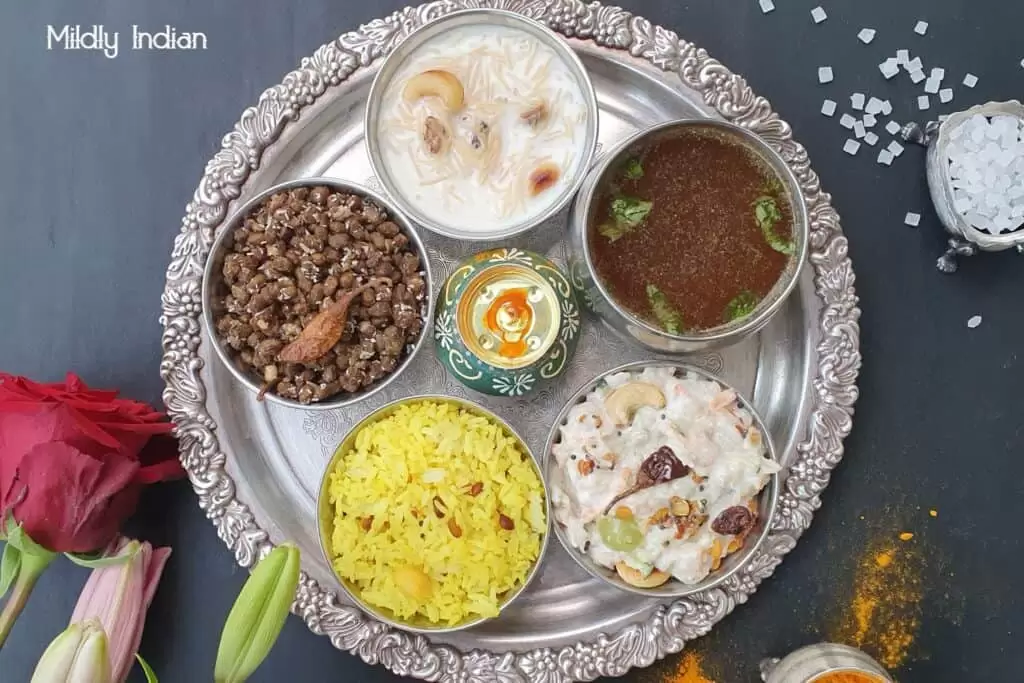
| Navaratri (South) | Durga, Lakshmi, Saraswati | A different sundal each day, payasam, chitrannam (lemon or coconut rice) | Navaratri sundal |
| Navratri (North) | Durga | Vrat bhog: kuttu, singhara and sabudana dishes, fruit, kheer; halwa, puri and chana for Kanya Pujan | Navratri bhog and prasad, Kanya Pujan prasad |
| Durga Puja (Bengal) | Durga | Bhog khichuri, labra, payesh, fried vegetables, chutney | Khichuri bhog and labra |
| Dussehra and Bathukamma | Durga; Gauri (Bathukamma) | Saddulu (flavoured rice dishes) for Saddula Bathukamma; fafda-jalebi in Gujarat | Saddula Bathukamma saddulu, Dussehra recipes |
| Deepavali | Lakshmi, Ganesha; Krishna in the South | Sweets and savouries: ariselu, kajjikayalu, adhirasam, murukku, laddus, karanji, gujiya | Diwali day-by-day recipes, Telugu Deepavali recipes |
| Govardhan Puja and Annakut | Krishna (Govardhan) | Annakut, a "mountain" of many dishes; Chappan Bhog (56 dishes) | Chappan Bhog list |
| Chhath Puja | Surya, Chhathi Maiya | Thekua, kasar (rice-flour laddus), kheer, sugarcane and seasonal fruit | Chhath prasad recipes |
| Nagula Chavithi | Naga devatas | Chalimidi, chimmili, vadapappu, milk | Nagula Chavithi naivedyam |
| Karthika Masam | Shiva, Vishnu | Sattvic meals without onion and garlic; lamps and simple sweets on Mondays and Pournami | Karthika Masam food rules |
| Gita Jayanti and Vaikuntha Ekadashi | Krishna; Vishnu | Tulasi-garnished sweets and fruit; grain-free phalahar for those fasting | Gita Jayanti prasad |
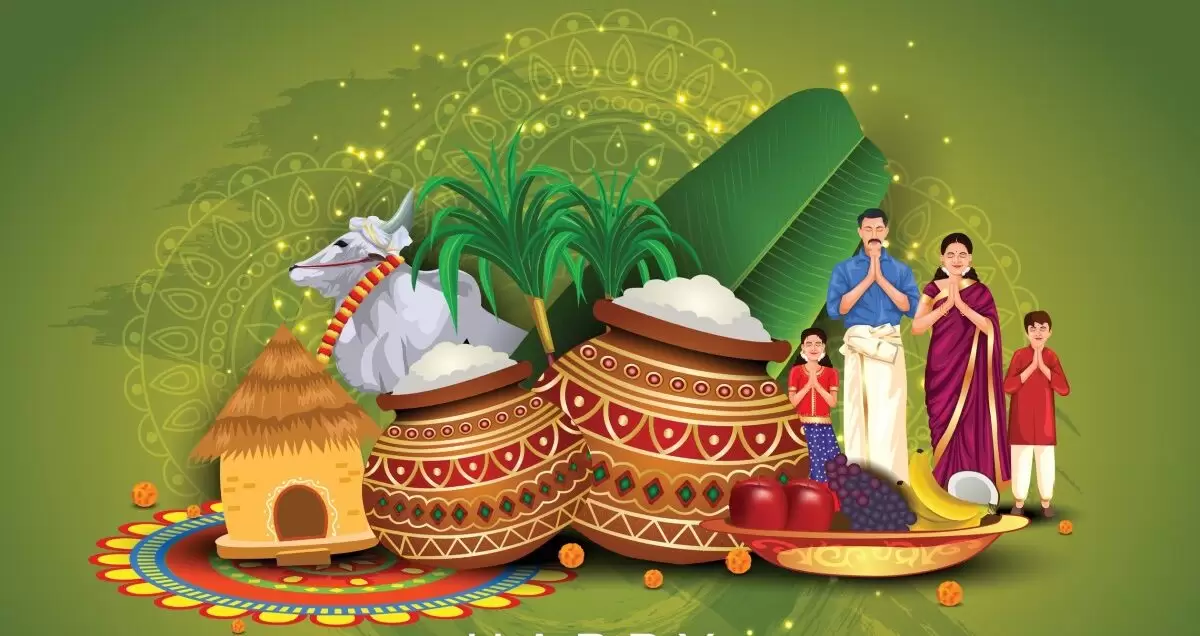
| Makar Sankranti and Pongal | Surya | Sakkarai pongal, ven pongal, chakkara pongali, paramannam; til-gud sweets in the North and West | Sakkarai pongal, ven pongal, paramannam |
| Maha Shivaratri | Shiva | Fruit, milk, bilva leaves; phalahar for those fasting; panchamrit for abhishekam | Shivaratri vrat recipes, panchamrit |
| Satyanarayana Puja | Vishnu as Satyanarayana | Sheera or rava kesari (sapaada bhakshyam), panchamrit, bananas | Kesari bath, panchamrit |
| Ekadashi (every fortnight) | Vishnu | Grain-free phalahar; for those not fasting, sattvic meals without rice | Ekadashi fasting recipes, fasting food rules by vrat |
Everyday naivedyam in South Indian homes
For the daily puja, most South Indian families offer a small portion of the day's cooking before anyone eats: plain rice with a little ghee and dal, or a simple sweet. On Fridays and festival days a rice dish and a sweet are common: daddojanam, pulihora, lemon or coconut rice, paramannam, semiya payasam or chakkara pongali. Temple-style versions are usually cooked without onion and garlic and with ghee; see sattvic cooking without onion and garlic.
Everyday bhog in North Indian homes
In many North Indian homes the daily bhog is simple: fruit, mishri (rock sugar), dry fruit, or a little of the family's food without onion and garlic. Krishna households often offer makhan and mishri. On festivals, halwa, kheer, puri, laddus and panjiri (roasted wheat flour with ghee, sugar and nuts) are common. Many Vaishnava temples follow a fixed daily schedule of bhog offerings set by their own tradition.
Planning a festival naivedyam abroad
- Choose two or three dishes. One rice dish or sweet, one no-cook item such as fruit or panakam, and milk is a complete offering.
- Cook the evening before only what keeps. Fried sweets (laddus, ariselu, murukku) can be made ahead; rice dishes and payasam are best cooked on the day.
- Ingredients: Indian grocers in the USA, UK, Canada, Australia, the Gulf and Southeast Asia stock jaggery, dals, rice flour and festival ingredients, especially in the weeks before major festivals. Each recipe page lists local swaps.
- Dates and timings change every year and by city; check each festival's own page for local times.
Frequently asked questions
What is the most common naivedyam?
Rice cooked with milk (payasam or kheer), fruit, and milk itself are offered across India. Beyond these, each region has its own festival dishes.
Can I offer the same naivedyam for every festival?
Yes. Any clean vegetarian food offered with devotion is acceptable. The festival dishes are customs that families enjoy keeping.
Do I need to make all the dishes listed?
No. One dish made with care is enough. Temples and large households offer many dishes; a small home offers what it can.
Is bhog the same as naivedyam?
Yes. Bhog is the usual word in North India; naivedyam in the South. After the offering, both become prasad or prasadam.
Can I offer store-bought sweets?
Many families do, especially abroad. Others prefer home-made food or fruit for the offering. Follow your custom.
Related guides
- Recipes hub
- How to offer naivedyam at home
- Types of payasam and kheer
- Fasting food rules by vrat
- Sattvic cooking without onion and garlic
- Prasadam and naivedyam
Sources
- HinduTone festival and recipe pages linked in the table, for each festival's customs (kept consistent with them).
- TTD News, "Naivedyam Samarpayami": ritual of offering food to the Lord, for temple naivedyam at Tirumala.
This guide lists common customs; families and temples vary. Last reviewed: 12 November 2026.
Share this with family and friends
Send it on WhatsApp, post it, or copy the link.
More from Recipes
- Gujiya Recipe for Holi (Mawa Gujiya with a No-Khoya Option)
- Rauh di Kheer Recipe (Punjabi Rice Kheer Cooked in Sugarcane Juice)
- Pongal Kootu Recipe (Mixed Vegetable and Dal Kootu)
- Sakkare Acchu Recipe (Karnataka Sugar Moulds for Sankranti)
- Huggi Recipe: Sweet Sihi Huggi and Savoury Khara Huggi