Akkaravadisal Recipe (Rice and Moong Dal Cooked in Milk with Jaggery and Ghee)
Quick answer: Akkaravadisal is a Tamil temple-style sweet of rice and a little moong dal slow-cooked in milk until creamy, then sweetened with jaggery and enriched with plenty of ghee. It is linked with Andal and is offered on Koodaravalli, the 27th day of Margazhi. Allow 10 minutes to prepare and a
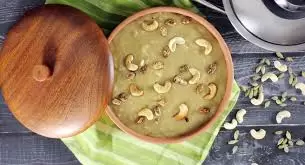
Quick answer: Akkaravadisal is a Tamil temple-style sweet of rice and a little moong dal slow-cooked in milk until creamy, then sweetened with jaggery and enriched with plenty of ghee. It is linked with Andal and is offered on Koodaravalli, the 27th day of Margazhi. Allow 10 minutes to prepare and about 50 minutes to cook.
Kitchen note: This recipe is not yet kitchen-tested by a HinduTone cook. The quantities and timings follow common home methods; judge doneness by look and texture, and adjust for your stove and ingredients.
| Key facts | |
|---|---|
| Dish | Rice and moong dal cooked in milk, sweetened with jaggery, finished with ghee |
| Also written | Akkara adisil, akkaravadisil |
| Festival role | Offered on Koodaravalli (Margazhi 27) in Sri Vaishnava homes and Vishnu temples; a festive and temple sweet |
| Thai Pongal in India | Friday 15 January 2027 per the panchang (a few days after Koodaravalli) |
| Serves | 4 to 6 small portions |
| Prep time | 10 minutes |
| Cook time | About 50 minutes stovetop; about 35 minutes with a pressure cooker |
| Allergens | Milk (milk, ghee), tree nuts (cashews) |
What is akkaravadisal and where does it come from?
Akkaravadisal belongs to the Sri Vaishnava tradition of Tamil Nadu. It is a richer, milkier cousin of sweet pongal: the rice is cooked in milk rather than water, there is only a little dal, and ghee is added generously at the end.
Its story is tied to Andal, the woman saint of Srivilliputhur and author of the Tiruppavai and the Nachiyar Tirumozhi. The account that follows is from one community source (named): KOYIL (koyil.org), a Sri Vaishnava community website, in its article on Srivilliputhur. It holds that Andal longed to offer a hundred pots of butter and a hundred pots of akkara adisil to the Lord as Azhagar at Thirumalirunjolai (the Kallazhagar temple near Madurai), and that Ramanuja, the great Sri Vaishnava teacher, later fulfilled that wish on her behalf. We found this account in that single community source only, so read it as a community tradition, not a dated historical record. The source does not give a verse reference, and we do not add one.
Akkaravadisal on Koodaravalli
Koodaravalli is the 27th day of the Tamil month of Margazhi, the day the 27th pasuram (verse) of Andal's Tiruppavai is sung. That verse describes the devotees sharing a milk-rice sweet so full of ghee that it runs down to their elbows, which is why a rich sweet is cooked on that day. Families and Vishnu temples mark it by offering akkaravadisal, or a rich sweet pongal, and sharing it as prasada. For the 2027 date and how it is counted, see our Koodaravalli guide. We do not print the verse text; read it in your family's Tiruppavai book.
Is akkaravadisal made on Pongal?
The pot that boils over on Thai Pongal morning is usually made into sakkarai pongal, the jaggery-sweet pongal offered to the Sun. Akkaravadisal comes a few days earlier, on Koodaravalli, near the end of the same Margazhi season that leads into Pongal. Some families cook it on other festive days too. Follow your family's custom.
Akkaravadisal and sakkarai pongal: what is the difference?
| Akkaravadisal | Sakkarai pongal | |
|---|---|---|
| Cooking liquid | Mostly milk, cooked down slowly | Mostly water, sometimes with some milk |
| Dal | A little moong dal | More moong dal |
| Ghee | A lot, added in stages | A good amount, less than akkaravadisal |
| Texture | Loose, creamy, almost pudding-like | Thick and soft, holds its shape on a spoon |
| Main occasion | Koodaravalli and temple offerings | Thai Pongal morning |
Ingredients
- Raw rice (short or medium grain, such as ponni or sona masoori): 100 g (1/2 cup)
- Split yellow moong dal: 25 g (2 tablespoons)
- Full-fat milk: 1 litre (4 cups)
- Water: 250 ml (1 cup)
- Jaggery, grated: 150 to 200 g (3/4 to 1 cup, lightly packed)
- Water, for melting the jaggery: 60 ml (1/4 cup)
- Ghee: 80 to 120 ml (1/3 to 1/2 cup)
- Cardamom, ground: 1 g (1/2 teaspoon)
- Cashews: 12 to 15
- Raisins (optional): 12 to 15
- Saffron or a tiny pinch of edible camphor (pachai karpooram), optional: a pinch
Edible camphor is a food-grade product sold at Indian grocers; never use the camphor tablets sold for lamps and puja.
Method
- In a dry heavy pot, roast the moong dal on low heat for 2 to 3 minutes until it smells nutty. Add the rice and roast together for a minute more.
- Rinse the rice and dal together twice and drain.
- Pour 3 cups (750 ml) of the milk and the 1 cup of water into the pot. Bring to a boil, stirring, then add the rice and dal.
- Lower the heat and simmer, stirring every few minutes and scraping the bottom, for 30 to 35 minutes until the rice and dal are very soft and break when pressed. Mash lightly with the back of the ladle.
- Meanwhile, melt the jaggery in 1/4 cup water on low heat. Strain it through a fine sieve to remove grit, and let it cool for a few minutes.
- Take the rice pot off the heat for a minute, then stir in the warm jaggery syrup. Adding it off the boil helps keep the milk from splitting.
- Return the pot to the lowest heat. Add the remaining 1 cup of milk and stir for 5 to 8 minutes until the mixture is thick, glossy and creamy. Do not let it boil hard.
- Add the ghee a few spoons at a time, stirring each lot in before adding more.
- Fry the cashews and raisins in a spoon of ghee until the cashews are golden. Stir them in with the cardamom and the saffron or edible camphor.
Akkaravadisal thickens a lot as it cools. Take it off the heat while it still looks a little loose.
Pressure cooker and Instant Pot
Milk foams strongly under pressure and can block a cooker's vent, so cook the rice in a separate steel bowl placed inside the cooker (the pot-in-pot method), never directly in milk in the cooker base.
Pressure cooker: Put the roasted, rinsed rice and dal in a steel bowl with 2 cups (480 ml) of the milk and 1 cup of water. Pour about 1 1/2 cups of water into the cooker base, set the bowl on a trivet and cook on medium heat for 4 to 5 whistles. Let the pressure drop on its own. Tip the cooked rice into a heavy pan and continue from step 5, adding the rest of the milk in step 7.
Instant Pot: Use the same pot-in-pot set-up with 1 cup of water in the inner pot. Pressure Cook (high) for 15 minutes with a full natural release, then finish in a pan on the stove from step 5.
A rice cooker is not a good fit: the milk boils over and the jaggery stage needs stirring.
Naivedyam notes
Akkaravadisal is made to be offered first. Many families cook it without tasting, offer it to Perumal (Vishnu) or Andal with a lamp, then share it as prasada. Customs differ between temples and families, so follow yours or ask your priest. Our Thai Pongal puja guide explains a simple home offering.
Substitutions abroad
| Region | Jaggery | Rice | Milk and ghee |
|---|---|---|---|
| USA and Canada | Jaggery at Indian grocers; Mexican piloncillo or panela | Sona masoori or ponni; Calrose works | Whole milk (3.25% in Canada, "whole" in the USA); ghee in most large supermarkets |
| UK | Jaggery in Asian shops; dark muscovado sugar as a fallback | Sona masoori; pudding rice at a pinch | Whole milk; ghee in supermarkets |
| Australia | Indian grocers; palm sugar from Asian grocers | Sona masoori; medium-grain rice | Full-cream milk; ghee in supermarkets |
| The Gulf | Easy to find | Ponni and sona masoori easy to find | Full-fat fresh milk; ghee easy to find |
| South-East Asia | Palm sugar (gula melaka, gula jawa) gives a darker, deeper sweetness | Ponni in Little India shops; jasmine rice at a pinch | Fresh full-cream milk; avoid sweetened condensed milk unless you cut the jaggery |
Vegan option
A dairy-free version can be made with thick coconut milk diluted with water for cooking, a cup of undiluted coconut milk at the end, and coconut oil instead of ghee. It tastes quite different and is not the traditional temple sweet. For an offering, naivedyam customs vary and many families use only milk and ghee: follow your family practice or ask your priest.
Common mistakes
- Split milk: adding very hot jaggery syrup to boiling milk can make it curdle. Take the pot off the heat and let the syrup cool a little first.
- Scorched bottom: milk catches easily. Use a heavy pot, keep the heat low and scrape the base as you stir.
- Too thick: it sets as it cools. Stop cooking while it is still loose, and loosen leftovers with warm milk.
- Gritty jaggery: always strain the melted jaggery.
- Adding all the ghee at once: it sits on top instead of blending in. Add it in stages.
Storage
Cool quickly and refrigerate within 2 hours. It keeps for 2 days in the fridge in a covered container. Reheat gently with a splash of warm milk, stirring until smooth. Do not leave it at room temperature for long in warm weather: it is a milk dish.
Allergens
Contains milk (milk and ghee) and tree nuts (cashews). Leave out the cashews for a nut-free version. Contains no gluten or sesame in this recipe; check that any edible camphor or saffron product you use is pure.
Frequently asked questions
What does akkaravadisal taste like?
It is creamy, rich and sweet, with the caramel note of jaggery, the aroma of ghee and cardamom and soft grains of rice. It is looser and milkier than sakkarai pongal.
When is akkaravadisal made?
Above all on Koodaravalli, the 27th day of Margazhi, in Sri Vaishnava homes and Vishnu temples. Some families also make it for other festivals and temple offerings. See our Koodaravalli guide for the 2027 date, and confirm with your temple.
Why is akkaravadisal linked with Andal?
One community source (KOYIL, a Sri Vaishnava website) says that Andal wished to offer a hundred pots of akkara adisil and a hundred pots of butter to Azhagar at Thirumalirunjolai, and that Ramanuja later fulfilled her wish; we found no second source. The 27th pasuram of her Tiruppavai also describes a milk-rice sweet rich with ghee.
Can I use sugar instead of jaggery?
Yes, but the dish loses its colour and caramel flavour. Use about 150 g (3/4 cup) of sugar and add it directly to the cooked rice and milk.
Can I make it with less ghee?
Yes. Use 3 to 4 tablespoons for a lighter version. It will be less glossy and less rich than the temple style.
Why did my akkaravadisal curdle?
The jaggery syrup was too hot, or the pot was boiling hard when you added it, or the jaggery was very acidic. Add cooled syrup off the heat and keep the heat low afterwards.
Sources
- KOYIL (Sri Vaishnava community site), "SrivillipuththUr" (Andal's wish of 100 pots of butter and akkara adisil fulfilled by Ramanuja at Thirumalirunjolai): https://koyil.org/?p=12206 (accessed 12 November 2026)
- HinduTone, "Koodaravalli 2027: Margazhi 27, Andal's 27th Pasuram and the Akkaravadisal Offering": https://hindutone.com/festivals/koodaravalli-2027-margazhi-27-andal/ (accessed 12 November 2026)
- Drik Panchang, "Thai Pongal 2027" (Chennai): https://www.drikpanchang.com/festivals/pongal/thai-pongal-date-time.html?geoname-id=1264527&year=2027 (accessed 12 November 2026)
- US Food and Drug Administration, "Food Allergies": https://www.fda.gov/food/nutrition-food-labeling-and-critical-foods/food-allergies (accessed 12 November 2026)
- US Food and Drug Administration, "Safe Food Handling": https://www.fda.gov/food/buy-store-serve-safe-food/safe-food-handling (accessed 12 November 2026)
Last reviewed: 12 November 2026.
Related guides
Share this with family and friends
Send it on WhatsApp, post it, or copy the link.
More from Recipes
- Medu Vadai Recipe (Ulundu Vadai for Pongal and Festival Days)
- Pongal Kootu Recipe (Mixed Vegetable and Dal Kootu)
- Sakkare Acchu Recipe (Karnataka Sugar Moulds for Sankranti)
- Nolen Gur Payesh Recipe (Bengali Rice Pudding with Date-Palm Jaggery)
- Dudh Puli Recipe (Bengali Rice Dumplings in Thickened Milk with Nolen Gur)