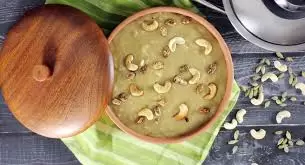
Kalkandu Pongal Recipe (Rock Sugar and Milk Pongal)
Quick answer: Kalkandu Pongal is rice, a little moong dal and plenty of milk, cooked until creamy and sweetened with powdered rock sugar instead of jaggery. It is pale cream in colour and milder than Sakkarai Pongal. Families make it as a festival sweet and temple-style offering.

Quick answer: Kalkandu Pongal is rice, a little moong dal and plenty of milk, cooked until creamy and sweetened with powdered rock sugar instead of jaggery. It is pale cream in colour and milder than Sakkarai Pongal. Families make it as a festival sweet and temple-style offering. It takes about 10 minutes to prepare and 35 to 45 minutes to cook.
| Key facts | |
|---|---|
| Dish | Rice and milk pongal sweetened with rock sugar |
| Festival role | A pale, milk-based sweet pongal for Thai Pongal and other puja days |
| Thai Pongal in India | Friday 15 January 2027 (per the panchang) |
| Serves | 4 |
| Prep time | 10 minutes |
| Cook time | 40 to 45 minutes stovetop; about 30 minutes with a pressure cooker |
| Allergens | Milk (milk, ghee), tree nuts (cashews) |
What is Kalkandu Pongal?
Kalkandu is the Tamil word for rock sugar, the large clear or pale-yellow sugar crystals sold in Indian and Chinese shops. Rock sugar has a clean, mild sweetness, so the milk and ghee come through more clearly than in jaggery pongal. The dish is also called kalkandu sadam (rock sugar rice), and Telugu cooks know a similar dish as patika bellam pongali.
On Thai Pongal most Tamil homes cook Sakkarai Pongal with jaggery. Some families make Kalkandu Pongal as well, or in its place, especially when they prefer a milk pongal for the offering. It is also made on other puja days. Like other festival sweets, it is offered first as naivedyam (food offered to the deity) and then shared.
Ingredients
| Ingredient | Metric | US measure |
|---|---|---|
| Raw rice (ponni, sona masoori or other short or medium grain) | 100 g | 1/2 cup |
| Split yellow moong dal (optional) | 25 g | 2 tablespoons |
| Whole milk | 720 ml | 3 cups |
| Water | 240 ml | 1 cup |
| Rock sugar (kalkandu), powdered | 150 g | 3/4 cup powdered |
| Ghee | 45 ml | 3 tablespoons |
| Cardamom, ground | 1 g | 1/4 teaspoon |
| Saffron (optional) | 8 to 10 strands | 8 to 10 strands |
| Cashews | 10 to 12 (about 12 g) | 1 1/2 tablespoons |
| Raisins | about 12 g | 1 tablespoon |
| Edible camphor (optional) | a tiny pinch | a tiny pinch |
Powder the rock sugar in a mixer or pound it in a cloth before you start. Whole crystals take a long time to dissolve. Use only food-grade edible camphor (pachai karpooram), never the camphor sold for aarti.
How to make Kalkandu Pongal on the stovetop
- Dry-roast the moong dal, if using, for 2 to 3 minutes on low heat. Add the rice, wash both and drain.
- Bring the milk and water to a boil in a heavy-bottomed pot. Stir so it does not catch.
- Add the rice and dal. Lower the heat and simmer, half-covered, for 30 to 35 minutes. Stir every few minutes and scrape the base.
- When the rice is completely soft and the mixture is thick, mash it lightly.
- Add the powdered rock sugar on low heat. It loosens the pongal at first. Stir for 5 to 8 minutes until the sugar dissolves and the pongal thickens again.
- Soak the saffron in a spoon of warm milk and stir it in with the cardamom and edible camphor.
- Fry the cashews in the ghee until golden, add the raisins until they puff, and pour everything over the pongal.
Take it off the heat while still slightly loose. It sets as it cools.
Pressure-cooker and Instant Pot versions
Pressure cooker: Milk can froth and block the vent, so many cooks use the pot-in-pot method. Put the washed rice and dal with 1 1/2 cups (360 ml) milk and 1/2 cup (120 ml) water in a steel bowl inside the cooker, with water in the base. Cook for 4 to 5 whistles on medium heat and let the pressure drop naturally. Tip into a heavy pan, add the rest of the milk and simmer 5 minutes, then continue from step 5.
Instant Pot: Use the same pot-in-pot method on Pressure Cook (high) for 15 minutes, then a full natural release. Finish in a pan as above.
Substitutions abroad
| Region | Rock sugar | Raw rice | Milk |
|---|---|---|---|
| USA and Canada | Indian grocers sell it as kalkandu or misri; Chinese grocers sell yellow rock sugar | Sona masoori or ponni; Calrose works | Whole milk |
| UK | Misri in Asian shops; Chinese rock sugar in Chinese supermarkets | Sona masoori; pudding rice at a pinch | Whole (blue-top) milk |
| Australia | Indian and Chinese grocers | Sona masoori; medium-grain rice | Full-cream milk |
| The Gulf | Widely sold in Indian supermarkets | Ponni and sona masoori are easy to find | Full-fat fresh milk |
| South-East Asia | Rock sugar is a staple in Chinese and Malay groceries | Ponni in Little India shops; jasmine rice at a pinch | Fresh full-cream milk; avoid sweetened condensed milk |
If you cannot find rock sugar, white granulated sugar gives a very similar result. Use the same weight.
Vegan option
Use oat milk or a mix of coconut milk and water instead of dairy milk, and coconut oil instead of ghee. Plant milks scorch faster, so cook on lower heat. Naivedyam customs vary: many families offer only dishes made with cow's milk and ghee. Follow your family practice or ask your priest.
Common mistakes
- Adding sugar too early: sugar slows the rice from softening. Cook the rice fully first.
- Scorched milk: use a heavy pot, keep the heat low and scrape the base often.
- Undissolved crystals: powder the rock sugar first and stir until no grit remains.
- Too sweet or too plain: rock sugar crystals vary in sweetness, so add three-quarters first and taste.
- Too thick later: loosen with warm milk before serving.
Storage
Cool and refrigerate within 2 hours, as with any milk dish. It keeps 2 days in the fridge. Reheat gently with a little milk.
Allergens
Contains milk (milk and ghee) and tree nuts (cashews). Leave out the cashews for a nut-free version. If an allergy is severe, check labels on raisins and ghee for nut cross-contact.
Frequently asked questions
Does milk curdle with rock sugar?
Rock sugar does not usually split milk the way jaggery sometimes can. The bigger risk is scorching, so stir often on low heat.
Is kalkandu the same as misri?
Both are crystallised sugar. Misri sold in North Indian shops may be smaller crystals or threaded lumps. Either works once powdered.
Can I skip the moong dal?
Yes. Many versions are made with rice and milk only. The dal adds body and a nutty taste.
When is Kalkandu Pongal made for Pongal?
Some families make it on Thai Pongal, in India on Friday 15 January 2027 per the panchang. Abroad, confirm your local date with your panchang or temple priest.
Why is my Kalkandu Pongal grey instead of cream?
Usually the milk caught on the base, or the pot was thin. A heavy pot and frequent stirring keep the colour pale.
Sources
- Aleph Book Company, Flavours of India: Heirloom Recipes from India's Kitchens, excerpt "Book Excerpt: Sweet Pongal", Down To Earth, 13 December 2025: https://www.downtoearth.org.in/food/book-excerpt-sweet-pongal (accessed 12 November 2026)
- US Food and Drug Administration, "Food Allergies": https://www.fda.gov/food/nutrition-food-labeling-and-critical-foods/food-allergies (accessed 12 November 2026)
- US Food and Drug Administration, "Safe Food Handling": https://www.fda.gov/food/buy-store-serve-safe-food/safe-food-handling (accessed 12 November 2026)
- Food Standards Agency (UK), "Food allergy and intolerance advice for consumers": https://www.gov.uk/government/publications/food-allergy-and-intolerance-advice-for-consumers (accessed 12 November 2026)
Last reviewed: 12 November 2026.
Related guides
Share this with family and friends
Send it on WhatsApp, post it, or copy the link.
More from Recipes
- Rauh di Kheer Recipe (Punjabi Rice Kheer Cooked in Sugarcane Juice)
- Medu Vadai Recipe (Ulundu Vadai for Pongal and Festival Days)
- Sakkare Acchu Recipe (Karnataka Sugar Moulds for Sankranti)
- Huggi Recipe: Sweet Sihi Huggi and Savoury Khara Huggi
- Nolen Gur Payesh Recipe (Bengali Rice Pudding with Date-Palm Jaggery)