
Chakkara Pongali Recipe (Telugu Sweet Pongali for Sankranti)
Quick answer: Chakkara Pongali is the Telugu sweet pongali: rice and moong dal cooked soft in milk and water, sweetened with jaggery and finished with ghee, cardamom, cashews and raisins. Andhra Pradesh and Telangana homes cook it for Sankranti and offer it before the festive meal.
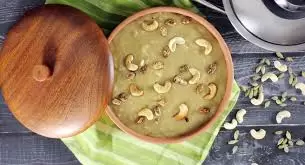
Quick answer: Chakkara Pongali is the Telugu sweet pongali: rice and moong dal cooked soft in milk and water, sweetened with jaggery and finished with ghee, cardamom, cashews and raisins. Andhra Pradesh and Telangana homes cook it for Sankranti and offer it before the festive meal. Allow about 10 minutes to prepare and 30 to 40 minutes to cook.
| Key facts | |
|---|---|
| Dish | Sweet rice and moong dal pongali with jaggery and milk |
| Festival | Sankranti (Pedda Panduga): Friday 15 January 2027 in India per the panchang; some government lists mark 14 January |
| Serves | 4 |
| Prep time | 10 minutes |
| Cook time | 35 to 40 minutes stovetop; about 25 minutes in a pressure cooker |
| Allergens | Milk (milk, ghee), tree nuts (cashews) |
What is Chakkara Pongali?
Chakkera means sugar in Telugu and pongali is the Telugu form of pongal. Despite the name, the Sankranti version is usually sweetened with bellam (jaggery); some homes use sugar. Telugu food writers list chakkera pongali, paramannam and ariselu among the rice-and-jaggery dishes at the heart of the Sankranti table, and many cooks prefer the new season's rice and fresh jaggery for them.
Sankranti in Andhra Pradesh and Telangana is a three-day festival: Bhogi, then Sankranti itself (Pedda Panduga, "the big festival"), then Kanuma. In 2027 in India these fall on Thursday 14 January, Friday 15 January and Saturday 16 January. Pongali is cooked most often on Sankranti day and offered as naivedyam (food offered to the deity) at the household puja. Some families also cook pongali on Bhogi or during the Dhanurmasam month before the festival. Customs vary by family and district. Confirm your local date with your panchang or temple priest.
How does it compare with Tamil Sakkarai Pongal?
The two dishes are close relatives, not identical twins. Both are rice and moong dal sweetened with jaggery. Household recipes vary on both sides of the border, but these differences come up often.
| Chakkara Pongali (Telugu) | Sakkarai Pongal (Tamil) | |
|---|---|---|
| Festival day | Sankranti (Pedda Panduga) | Thai Pongal |
| Cooking liquid | Often more milk, sometimes all milk | Often mostly water, with some milk |
| Sweetener | Jaggery, sometimes sugar | Jaggery |
| Common extras | Dry coconut slivers in some homes | Edible camphor, nutmeg in some homes |
| Pot ritual | Varies by family; some cook pongal outdoors for the Sun on Bhogi | Boiled over in a new pot as the central rite of Thai Pongal |
Ingredients
| Ingredient | Metric | US measure |
|---|---|---|
| Raw rice (sona masoori or other short or medium grain) | 100 g | 1/2 cup |
| Split yellow moong dal | 50 g | 1/4 cup |
| Whole milk | 240 ml | 1 cup |
| Water | 360 ml | 1 1/2 cups |
| Jaggery, grated | 180 to 200 g | 1 cup, lightly packed |
| Water to melt the jaggery | 60 ml | 1/4 cup |
| Ghee | 60 ml | 4 tablespoons |
| Cashews | 12 to 15 (about 15 g) | 2 tablespoons |
| Raisins | about 12 g | 1 tablespoon |
| Dry coconut slivers (optional) | 10 g | 2 tablespoons |
| Cardamom, ground | 1 g | 1/4 teaspoon |
How to make Chakkara Pongali on the stovetop
- Warm 1 tablespoon of the ghee in a heavy pot. Add the moong dal and stir on low heat for 3 to 4 minutes until it smells nutty.
- Add the rice and stir for a minute. Then wash both well and drain.
- Return to the pot with the milk and water. Bring to a boil, lower the heat and simmer half-covered for 25 to 30 minutes, stirring and scraping the base often.
- When both are very soft, mash lightly.
- Melt the jaggery with 1/4 cup water on low heat, then strain it to remove grit. Let it cool for a few minutes.
- Lower the heat under the rice and stir in the jaggery syrup. Cook for 5 to 7 minutes until it thickens and leaves the sides of the pot.
- Fry the cashews, coconut slivers and raisins in the remaining ghee until golden. Add them with the cardamom and stir.
Let the syrup cool slightly and keep the heat low when it goes in. Hot jaggery added to boiling milk can sometimes split it.
Pressure-cooker and Instant Pot versions
Pressure cooker: Cook the roasted dal and rice with 1 cup (240 ml) milk and 1 1/4 cups (300 ml) water for 4 to 5 whistles on medium heat. If your cooker froths with milk, cook with water only and add the milk afterwards. Let the pressure drop naturally, mash and continue from step 5.
Instant Pot: Pressure Cook (high) for 12 minutes with water only, then a full natural release. Stir in the milk on Sauté (low), bring to a simmer and continue from step 5.
Substitutions abroad
| Region | Jaggery | Raw rice | Moong dal |
|---|---|---|---|
| USA and Canada | Indian grocers; piloncillo or panela as a close swap | Sona masoori; Calrose works | Indian grocers |
| UK | Asian shops; dark muscovado sugar as a fallback | Sona masoori; pudding rice at a pinch | Split moong dal in Asian shops |
| Australia | Indian grocers; palm sugar from Asian grocers | Sona masoori; medium-grain rice | Indian grocers |
| The Gulf | Indian supermarkets | Sona masoori is easy to find | Easy to find |
| South-East Asia | Palm sugar (gula melaka, gula jawa); start with less | Sona masoori in Little India shops; jasmine rice at a pinch | Peeled split mung beans in Chinese and Vietnamese shops |
Vegan option
Use coconut milk thinned with water and coconut oil instead of ghee. Naivedyam customs vary: many families use only cow's milk and ghee for the Sankranti offering. Follow your family practice or ask your priest.
Common mistakes
- Adding jaggery before the rice is soft: the rice stays firm. Cook it completely first.
- Split milk: cool the syrup a little and add it on low heat.
- Gritty pongali: always strain the jaggery.
- Too stiff once cool: take it off the heat while loose; warm milk loosens leftovers.
Storage
Cool and refrigerate within 2 hours. It keeps 2 days in the fridge. Reheat gently with a splash of milk.
Allergens
Contains milk (milk and ghee) and tree nuts (cashews). Leave out the cashews for a nut-free version. If an allergy is severe, check labels for nut cross-contact.
Frequently asked questions
Is Chakkara Pongali the same as Sakkarai Pongal?
They are closely related sweet rice and moong dal dishes, and the names share a root meaning "sugar". Telugu homes often use more milk, and the festival day differs. Each family's recipe is its own.
Can I make it with sugar instead of jaggery?
Yes. Use about the same weight of white sugar. The dish will be pale and milder.
Which day of Sankranti is pongali made?
Most often on Sankranti day itself, in India on Friday 15 January 2027 per the panchang. Some families also make it on Bhogi. Ask your elders what your family does.
Why did my pongali curdle?
The jaggery syrup was probably very hot, or it went into milk at a full boil. Cool the syrup a little and keep the heat low.
Can I add chana dal?
Some families use chana dal with or instead of moong dal. Soak it for an hour, as it takes longer to soften.
Sources
- Reshmi AR, "Sankranti: a harvest told through food, fire and memory in Telugu states", Deccan Chronicle, 8 January 2026: https://www.deccanchronicle.com/southern-states/telangana/sankranti-a-harvest-told-through-food-fire-and-memory-in-telugu-states-1929102 (accessed 12 November 2026)
- Askari Jaffer, "Sankranti on a plate: How Telugu kitchens celebrate the harvest", The Hans India, 14 January 2026: https://www.thehansindia.com/featured/women/sankranti-on-a-plate-how-telugu-kitchens-celebrate-the-harvest-1039366 (accessed 12 November 2026)
- US Food and Drug Administration, "Food Allergies": https://www.fda.gov/food/nutrition-food-labeling-and-critical-foods/food-allergies (accessed 12 November 2026)
- US Food and Drug Administration, "Safe Food Handling": https://www.fda.gov/food/buy-store-serve-safe-food/safe-food-handling (accessed 12 November 2026)
Last reviewed: 12 November 2026.
Related guides
Share this with family and friends
Send it on WhatsApp, post it, or copy the link.
More from Recipes
- Rauh di Kheer Recipe (Punjabi Rice Kheer Cooked in Sugarcane Juice)
- Nolen Gur Payesh Recipe (Bengali Rice Pudding with Date-Palm Jaggery)
- Dudh Puli Recipe (Bengali Rice Dumplings in Thickened Milk with Nolen Gur)
- Bhapa Pitha Recipe (Bengali Steamed Rice Cakes with Coconut and Nolen Gur)
- Kakara Pitha Recipe (Odia Fried Pitha with Coconut Filling)

