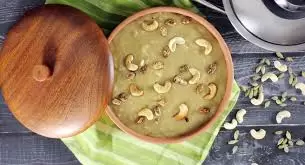
Kakara Pitha Recipe (Odia Fried Pitha with Coconut Filling)
Quick answer: Kakara pitha is an Odia fried sweet: a soft dough of cooked semolina or wheat flour wrapped around grated coconut cooked with jaggery, black pepper and cardamom, then shallow- or deep-fried until golden and crisp. Odia homes make it for Makara Sankranti, Raja and other festivals, and a

Quick answer: Kakara pitha is an Odia fried sweet: a soft dough of cooked semolina or wheat flour wrapped around grated coconut cooked with jaggery, black pepper and cardamom, then shallow- or deep-fried until golden and crisp. Odia homes make it for Makara Sankranti, Raja and other festivals, and a wheat version is offered at Puri. It takes about 1 1/4 hours.
Kitchen note: This recipe is not yet kitchen-tested by a HinduTone cook. The quantities and timings follow common home methods; judge doneness by look and texture, and adjust for your stove and ingredients.
| Key facts | |
|---|---|
| Dish | Fried stuffed pitha: semolina or wheat dough, coconut-jaggery filling |
| Region | Odisha |
| When it is made | Makara Sankranti in many homes; also Raja in June and other festivals |
| Makara Sankranti 2027 | 15 January in India per the panchang; Odisha's 2027 holiday list, as reported, marks 14 January |
| Makes | About 12 pithas |
| Prep time | 40 minutes |
| Cook time | About 35 minutes |
| Allergens | Gluten (semolina or wheat); milk if you use ghee or chhena; sesame if added |
What is kakara pitha?
Pitha is the Odia word for a family of cakes. Kakara (also spelt kakra) is a stuffed, fried pitha with a crisp golden crust and a sweet, peppery coconut centre. The shell is made in two common ways: with semolina (suji) cooked in water into a soft dough, or with wheat flour. Fillings are usually coconut with jaggery or sugar; richer versions use chhena (fresh cheese). Many homes add a pinch of black pepper, and some add a very small amount of edible camphor for aroma.
Is kakara pitha made for Makara Sankranti?
In many Odia homes, yes. OdishaTV's Makar Sankranti reports in January 2019 and January 2020 named kakara pitha, with suji pitha, podo pitha and arisa, among the delicacies prepared on the day; the 2020 report said they are made in every Odia household. The day's central offering is Makara Chaula, the uncooked new-rice dish; see our Makara Chaula recipe and the guide to Makara Sankranti in Odisha.
Kakara is not only a Sankranti sweet. An OrissaPOST feature on Raja, the June festival, describes kakara as a wheat-flour cake sweetened with jaggery, stuffed with grated coconut, black pepper, edible camphor and chhena and deep-fried, and calls it a Raja favourite.
Is kakara offered at the Jagannath temple?
An IANS feature describes a wheat-flour kakara (called ata kakara or sana kakara), stuffed with coconut and jaggery, as one of the Abadha bhoga (Mahaprasad) dishes offered to Lord Jagannath at Puri. The home version below uses a semolina shell, and the wheat version is given as a variation.
Ingredients
For the filling
| Ingredient | Metric | US measure |
|---|---|---|
| Fresh or frozen grated coconut | 120 g | 1 1/2 cups |
| Jaggery, grated | 80 to 100 g | 1/2 cup, packed |
| Ghee | 5 ml | 1 teaspoon |
| Black pepper, freshly crushed | 1/4 teaspoon | 1/4 teaspoon |
| Green cardamom, ground | 3 pods | 3 pods |
| Edible camphor (optional) | a tiny pinch | a tiny pinch |
For the dough
| Ingredient | Metric | US measure |
|---|---|---|
| Fine semolina (suji, rava) | 170 g | 1 cup |
| Water | 300 ml | 1 1/4 cups |
| Sugar or grated jaggery | 15 g | 1 tablespoon |
| Salt | a pinch | a pinch |
| Ghee | 15 ml | 1 tablespoon |
| Oil or ghee for frying | about 400 ml | about 1 2/3 cups |
How to make kakara pitha
Make the filling
- Warm the ghee in a heavy pan over medium-low heat. Add the coconut and stir for 2 minutes.
- Add the jaggery. It will melt and turn the mixture wet. Keep stirring for 8 to 10 minutes until the moisture cooks off and the filling clumps together and leaves the pan.
- Stir in the pepper, cardamom and the camphor, if using. Spread on a plate to cool completely.
Make the dough
- Bring the water, sugar, salt and ghee to a boil in a pan.
- Turn the heat to low. Pour in the semolina in a thin stream, stirring all the time so no lumps form.
- Keep stirring for 2 to 3 minutes until the semolina absorbs all the water and forms a soft mass that leaves the pan. Cover and leave off the heat for 10 minutes.
- While it is still warm, tip it onto a greased plate and knead with greased palms for 2 to 3 minutes into a smooth, soft dough. If it cracks, sprinkle a little warm water and knead again.
Shape
- Divide the dough into 12 balls and the filling into 12 portions.
- Grease your palms. Flatten a ball into a disc about 8 cm across, a little thinner at the edges.
- Cup the disc in your palm and place a portion of filling in the centre.
- Bring the edges together and pinch to seal. Shape it into a round, slightly flattened cake, or press it into a half-moon and crimp the edge. Make sure there are no cracks, or the filling will leak into the oil.
- Keep the shaped pithas under a damp cloth while you finish the rest.
Fry
- Heat oil about 3 cm deep in a kadhai or frying pan over medium heat. A small piece of dough should rise steadily with gentle bubbles.
- Fry three or four pithas at a time, turning once or twice, until golden brown and crisp on all sides, about 4 to 5 minutes.
- Drain on a rack or paper towel. Serve warm or at room temperature.
Variation: wheat-flour kakara
Mix 150 g (1 1/4 cups) whole wheat flour with 2 tablespoons ghee rubbed in, a pinch of salt and a pinch of fennel seeds. Add water little by little to make a firm, smooth dough, rest it for 20 minutes, then shape and fry as above. The crust is crisper and less soft than the semolina version.
Variation: chhena filling
Crumble 150 g fresh chhena or paneer, mix with 2 tablespoons sugar, cardamom and 2 tablespoons grated coconut, and cook for 3 to 4 minutes until dry. Cool before filling. Eat chhena kakara the same day or refrigerate it.
Stovetop, pressure cooker and Instant Pot
Kakara pitha is cooked on the stovetop: the filling and dough are cooked in a pan and the pithas are fried. A pressure cooker, Instant Pot or rice cooker has no useful role. If you want to avoid deep-frying, you can shallow-fry them in a heavy flat pan with 2 to 3 tablespoons of oil or ghee, turning often; they brown less evenly but keep the same filling.
Naivedyam notes
For the deity's portion, cook in a clean kitchen, do not taste the filling or the pithas before the offering, and keep the first pithas aside for the shrine. Many families fry naivedyam in ghee. Families differ on whether chhena sweets or camphor are suitable for their offering; follow your family custom or ask your priest.
Substitutions abroad
| Region | Semolina or flour | Coconut | Jaggery |
|---|---|---|---|
| USA and Canada | Fine suji/rava at Indian grocers; cream of wheat (plain, unflavoured) at a pinch | Frozen grated coconut at Indian grocers; unsweetened desiccated coconut soaked in warm milk or water | Indian grocers; dark muscovado or piloncillo |
| UK | Fine semolina in supermarkets | Frozen grated coconut in Asian shops; desiccated coconut, soaked | Asian shops; dark muscovado |
| Australia | Fine semolina in supermarkets | Indian grocers; desiccated coconut, soaked | Indian grocers; dark brown sugar |
| The Gulf | Easy to find | Fresh and frozen grated coconut widely sold | Easy to find |
| South-East Asia | Semolina in Little India shops and many supermarkets | Fresh grated coconut in wet markets | Palm sugar (gula melaka, gula Jawa) |
Coarse semolina makes a grainy dough that cracks; choose fine semolina, or pulse coarse semolina in a dry grinder first.
Vegan option
Use oil instead of ghee in the filling, the dough and for frying, and skip the chhena variation. The coconut-jaggery version works well this way.
Common mistakes
- Wet filling: steam builds inside and the pitha bursts in the oil. Cook the filling until dry and let it cool.
- Dough left to go cold before kneading: it cracks when shaped. Knead the semolina dough while it is warm.
- Cracks in the shell: filling leaks and the oil spatters. Seal well and smooth any cracks with a greased finger.
- Oil too hot: the outside browns before the shell cooks through. Fry at medium heat.
- Too much camphor: a very small pinch is enough; more makes the filling taste medicinal.
Safety notes
Use only camphor sold as edible (food-grade) camphor; the camphor tablets sold for puja lamps and household use are not food. Leave it out entirely if you are unsure or if young children will eat the pitha. When frying, keep children and pets away from the stove, dry utensils before they touch the oil, and never add water to hot oil.
Storage
Coconut-filled kakara keeps for 1 to 2 days in an airtight box at room temperature in a cool kitchen; refrigerate in warm weather and eat within 3 to 4 days. Chhena-filled kakara should be refrigerated and eaten within a day. Warm in a dry pan or a low oven to re-crisp.
Allergens
Contains gluten (semolina and wheat). Contains milk if you use ghee or the chhena filling. Coconut is not one of the 14 major allergens on UK labels, but some people react to it. Add sesame only if you warn guests.
Frequently asked questions
Is kakara pitha made on Makara Sankranti?
In many Odia homes, yes. OdishaTV's Makar Sankranti reports in 2019 and 2020 named kakara pitha among the delicacies prepared on the day. It is also a favourite at Raja in June and at other festivals.
Semolina or wheat flour: which is traditional?
Both are made in Odisha. The semolina shell is soft and quick to make at home; the wheat-flour version is crisper. The kakara offered at the Jagannath temple is described as a wheat-flour pitha.
Why did my kakara burst while frying?
Usually the filling was still wet or warm, or the shell had a crack. Cook the filling until dry, cool it, and seal each pitha carefully.
Can I bake kakara pitha?
You can brush them with ghee and bake them, but they will not have the usual crisp, blistered crust. Shallow-frying in a heavy pan is a closer alternative to deep-frying.
When is Makara Sankranti in Odisha in 2027?
Makara Sankranti falls on Friday 15 January 2027 in India per the panchang. Odisha's 2027 holiday list, as reported, marks Thursday 14 January. Confirm with your local panchang or temple priest.
How is kakara different from arisa pitha?
Arisa is a solid cake of fresh rice flour cooked in jaggery syrup and fried, with no filling. Kakara has a semolina or wheat shell around a coconut filling. Both are made for Makara Sankranti in many Odia homes.
Sources
- OdishaTV, Sharmili Mallick, "Religious dips, special prayers mark 'Makar Sankranti' in Odisha", 14 January 2019: https://odishatv.in/odisha/religious-dips-special-prayers-mark-makar-sankranti-in-odisha-346920 (accessed 12 November 2026)
- OdishaTV, Sharmili Mallick, "Odisha Celebrates Makar Sankranti With Devotion & Gaiety", 15 January 2020: https://odishatv.in/odisha-news/odisha-celebrates-makar-sankranti-with-devotion-gaiety-428302/amp (accessed 12 November 2026)
- OrissaPOST, "Sweet somethings", 13 June 2018: https://www.orissapost.com/sweet-somethings/ (accessed 12 November 2026)
- IANS via OrissaPOST, "5 quintessential Odia desserts to savour this winter", 5 February 2023: https://www.orissapost.com/5-quintessential-odia-desserts-to-savour-this-winter/ (accessed 12 November 2026)
Last reviewed: 12 November 2026.
Related guides
Share this with family and friends
Send it on WhatsApp, post it, or copy the link.
More from Recipes
- Medu Vadai Recipe (Ulundu Vadai for Pongal and Festival Days)
- Pongal Kootu Recipe (Mixed Vegetable and Dal Kootu)
- Sakkare Acchu Recipe (Karnataka Sugar Moulds for Sankranti)
- Nolen Gur Payesh Recipe (Bengali Rice Pudding with Date-Palm Jaggery)
- Dudh Puli Recipe (Bengali Rice Dumplings in Thickened Milk with Nolen Gur)