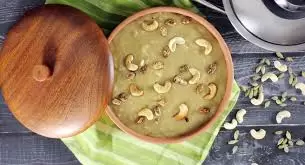
Makara Chaula Recipe (Odisha's Makar Sankranti Rice Offering)
Quick answer: Makara Chaula is Odisha's Makar Sankranti offering of newly harvested rice that is soaked, not cooked, and mixed with milk, jaggery, grated coconut, banana and chhena (fresh cottage cheese), with sesame, sugarcane and fruit in many homes. It is offered to the deities, including at the
Quick answer: Makara Chaula is Odisha's Makar Sankranti offering of newly harvested rice that is soaked, not cooked, and mixed with milk, jaggery, grated coconut, banana and chhena (fresh cottage cheese), with sesame, sugarcane and fruit in many homes. It is offered to the deities, including at the Jagannath temple in Puri, then shared. It takes about 30 minutes plus soaking.
Kitchen note: This recipe is not yet kitchen-tested by a HinduTone cook. The quantities and timings follow common home methods; judge doneness by look and texture, and adjust for your stove and ingredients.
| Key facts | |
|---|---|
| Dish | Uncooked, soaked new rice mixed with milk, chhena, fruit, coconut and jaggery |
| Region | Odisha |
| Festival role | Offered to the deities on Makara Sankranti, then eaten as prasad and shared |
| Makara Sankranti 2027 | 15 January in India per the panchang; Odisha's 2027 holiday list, as reported, marks 14 January |
| Serves | 4 as prasad |
| Prep time | 30 minutes, plus 3 to 4 hours soaking (longer if you make chhena) |
| Cook time | None for the rice; about 10 minutes if you make chhena at home |
| Allergens | Milk; sesame and tree nuts if used |
What is Makara Chaula?
Chaula is Odia for rice, and Makara is the zodiac sign the Sun enters at Sankranti. Makara Chaula is made from the first rice of the new harvest. Unlike pongal or khichdi, the rice is not cooked: it is soaked, drained and then mixed with milk and sweet things into a soft, pudding-like dish.
There is no single recipe. Reports from Odisha describe it as new rice with jaggery, banana, coconut, sesame and milk; others add chhena, curd, sugarcane pieces, ginger, black pepper, cardamom, fruits, dry fruits, ghee or butter. Some homes stir in khai (puffed paddy), rasagola or chhena sweets. Ingredients vary from family to family and district to district, so treat the list below as one common version and follow your own household's way where you know it.
At the Jagannath temple in Puri, Makara Chaula is offered to Lord Jagannath, Lord Balabhadra, Devi Subhadra and the guardian deities on Makara Sankranti, and the deities wear the special Makara Besha that day. Homes across Odisha prepare it and offer it to their own deities before sharing it with family and neighbours. In parts of western Odisha, around Sambalpur, sharing Makara Chaula is linked to a custom of sworn friendship: friends who share it on this day call each other makar, a lifelong friend.
For the state's festival, see our Makara Sankranti in Odisha guide.
Ingredients
| Ingredient | Metric | US measure |
|---|---|---|
| New-season raw rice, short or medium grain | 100 g | 1/2 cup |
| Pasteurised whole milk | 240 ml | 1 cup |
| Chhena (fresh cottage cheese), crumbled | 100 g | 1/2 cup, packed |
| Fresh grated coconut | 40 g | 1/2 cup |
| Ripe banana, sliced | 1 large | 1 large |
| Jaggery, grated | 60 to 80 g | 1/3 to 1/2 cup |
| Plain curd (yoghurt), optional | 60 g | 1/4 cup |
| Sugarcane, peeled and cut into small pieces, optional | 40 g | 1/4 cup |
| White sesame seeds, toasted | 5 g | 2 teaspoons |
| Fresh ginger, finely grated | 3 g | 1/2 teaspoon |
| Black pepper, freshly ground | a pinch | a pinch |
| Green cardamom, ground | 2 pods | 2 pods |
| Chopped fruit (apple, grapes, pomegranate) and cashews, optional | to taste | to taste |
For home-made chhena
| Ingredient | Metric | US measure |
|---|---|---|
| Pasteurised whole milk | 1 litre | 4 1/4 cups |
| Lemon juice or white vinegar | 30 ml | 2 tablespoons, mixed with 2 tablespoons water |
One litre of milk gives roughly the 100 to 150 g of chhena you need. Fresh paneer, crumbled, is a quick substitute.
How to make Makara Chaula
Make the chhena (if not using paneer)
- Bring the milk to a boil, then turn off the heat.
- Stir in the diluted lemon juice a little at a time until the milk splits into white curds and clear, greenish whey.
- Pour it into a sieve lined with clean muslin. Rinse under cold water to remove the lemon taste, then twist and squeeze out the whey.
- Hang or press it for 20 to 30 minutes, then crumble it finely with your fingers. Keep it in the fridge until needed.
Prepare the rice
- Wash the rice three or four times in clean water until the water runs nearly clear.
- Cover it with fresh drinking water and soak for 3 to 4 hours in the fridge. Some families soak it overnight.
- Drain well and spread it on a clean cloth for 15 to 20 minutes so the surface dries.
- Lightly pound it or pulse it a few times in a dry grinder to break the grains into a coarse, semolina-like texture. Some homes leave the soaked grains whole; this is a family choice.
Mix
- In a clean bowl, mix the rice with the milk and curd, if using. Let it sit in the fridge for 15 minutes so the rice softens a little more.
- Stir in the grated jaggery until it dissolves.
- Add the coconut, chhena, banana, sugarcane, sesame, ginger, pepper and cardamom. Fold gently so the banana keeps its shape.
- Taste and adjust the jaggery. The texture should be soft and loose, like a thick, chunky pudding. Add a little more milk if it is stiff.
- Top with the fruit and nuts, if using, just before offering.
Stovetop, pressure cooker and Instant Pot
Makara Chaula is not cooked, so there is no stovetop, pressure-cooker or Instant Pot method for the dish itself. The only stove step is boiling the milk for chhena. If your family prefers boiled milk in the mix, boil it and cool it completely in the fridge before adding.
Food safety: pasteurised milk and keeping it cold
Because nothing in Makara Chaula is cooked after mixing, safe handling matters.
- Use pasteurised milk and pasteurised curd. Raw (unpasteurised) milk can carry harmful bacteria, and the risk is highest for children, pregnant women, older people and anyone with a weak immune system. If you only have raw milk, boil it and cool it before use.
- Soak the rice in the fridge, in clean drinking water, rather than on the counter overnight.
- Keep it cold. Refrigerate the finished dish and do not leave it out for more than 2 hours, or 1 hour on a hot day above 32°C (90°F). After the offering, bring it back to the fridge promptly.
- Make only what you will eat the same day. The banana browns, the chhena sours, and the dish is best fresh.
- For small children, leave out the sugarcane pieces and whole nuts, which can be a choking hazard.
Naivedyam notes
Makara Chaula is first offered to the household deities and then eaten as prasad. Prepare it in a clean bowl, do not taste it before the offering, and keep a portion for the shrine. Families differ on what may go into an offering: some leave out ginger, pepper or bought sweets, and some use only boiled milk. Follow your family practice or ask your priest.
Substitutions abroad
New-season rice is rarely labelled as such abroad. Choose a fresh bag of short or medium-grain rice. Gobindobhog, a small fragrant rice from Bengal, is close in spirit and sold at some Bengali and Bangladeshi grocers.
| Region | Rice | Chhena | Coconut and jaggery |
|---|---|---|---|
| USA and Canada | Gobindobhog or sona masoori at Indian grocers; Calrose works | Make at home from pasteurised milk; or fresh paneer | Frozen grated coconut and jaggery at Indian grocers |
| UK | Gobindobhog or sona masoori in Asian shops; pudding rice at a pinch | Home-made; or paneer from supermarkets | Frozen coconut and jaggery in Asian shops |
| Australia | Indian grocers; medium-grain rice | Home-made; or paneer | Indian grocers |
| The Gulf | Easy to find, including Odia and Bengali grocers' rice | Paneer widely sold; or home-made | Easy to find |
| South-East Asia | Short-grain rice in any market | Home-made; paneer in Little India shops | Fresh coconut in wet markets; palm sugar (gula melaka) instead of jaggery |
Sugarcane is sold in Asian and Latin American shops in North America and the UK, and in many South-East Asian markets. If you cannot find it, leave it out.
Vegan option
A plant-based version is possible: use oat, almond or coconut milk, leave out the curd and chhena, and add more banana and coconut. It is a different dish from the temple form, and many families would not offer a plant-milk version as naivedyam. Follow your family custom.
Common mistakes
- Rice not soaked long enough: it stays hard and chalky. Soak until a grain breaks easily between your fingers.
- Soaking on the counter overnight: in warm kitchens this invites spoilage. Soak in the fridge.
- Adding hot milk: it starts to cook the banana and chhena. Use cold or fully cooled milk.
- Mixing too hard: the banana turns to mush. Fold gently.
- Making it a day ahead: it turns sour and grey. Mix it on the morning of the festival.
Storage
Keep covered in the fridge and eat the same day. Do not keep leftovers beyond the next morning. Do not freeze.
Allergens
Contains milk (milk, curd, chhena). Contains sesame if you add it, and tree nuts if you add cashews or other nuts. Coconut is not one of the 14 major allergens on UK labels, but a small number of people react to it. The recipe has no gluten.
Frequently asked questions
Is the rice in Makara Chaula cooked?
No. The new rice is soaked until it softens and is eaten uncooked, mixed with milk and the other ingredients. That is what sets it apart from cooked Sankranti dishes such as pongal and khichdi.
What does "Makara Chaula" mean?
Chaula means rice in Odia, and Makara refers to Makara Sankranti, the Sun's entry into Makara (Capricorn). So it is the rice of Makara Sankranti.
Is Makara Chaula offered at the Jagannath temple in Puri?
Yes. News reports from Puri describe Makara Chaula being offered to Lord Jagannath, Lord Balabhadra, Devi Subhadra and the guardian deities on Makara Sankranti, when the deities wear the Makara Besha.
Can I use raw milk?
Use pasteurised milk. If you only have raw milk, boil it and cool it fully before mixing it in, and keep the finished dish in the fridge.
When is Makara Sankranti in Odisha in 2027?
Makara Sankranti falls on 15 January in India per the panchang. Odisha's 2027 holiday list, as reported, marks 14 January. Confirm with your local panchang or temple priest.
Can I use basmati rice?
You can, but long-grain basmati stays firmer after soaking. Short or medium-grain rice softens better and gives the usual texture.
Sources
- Sambad English, "Odisha celebrates Makar Sankranti; Makar Chaula offered to deities at Jagannath temple", 14 January 2023: https://sambadenglish.com/odisha-celebrates-makar-sankranti-makar-chaula-offered-to-deities-at-jagannath-temple (accessed 12 November 2026)
- All India Radio News (newsonair.gov.in), "Makar Sankranti celebrated with traditional rituals across Odisha", 14 January 2026: https://www.newsonair.gov.in/makar-sankranti-celebrated-with-traditional-rituals-across-odisha (accessed 12 November 2026)
- OdishaBytes, "Odisha celebrates Makar Sankranti with traditional fervour", 14 January 2026: https://odishabytes.com/odisha-celebrates-makar-sankranti-with-traditional-fervour/ (accessed 12 November 2026)
- OdishaBytes, "Hari-Hara Milan in Makar Sankranti symbolises lifelong friendship or 'Makar' between people", 16 January 2020: https://odishabytes.com/hari-hara-milan-in-makar-sankranti-symbolises-lifelong-friendship-or-makar-between-people/ (accessed 12 November 2026)
- Ommcom News, "Makara Chaula: the sweet essence of Odisha's Makar Sankranti", 14 January 2026: https://ommcomnews.com/odisha-news/makara-chaula-the-sweet-essence-of-odishas-makar-sankranti/ (accessed 12 November 2026)
- Outlook India (Poshan), "What's cooking in the world's largest kitchen on Makar Sankranti day?": https://www.outlookindia.com/poshan/poshan-news-whats-cooking-in-the-worlds-largest-kitchen-on-makar-sankranti-day-a-sneak-peek-into-the-jagannath-temple-kitchen-news-345706 (accessed 12 November 2026)
- US Food and Drug Administration, "Raw Milk Misconceptions and the Danger of Raw Milk Consumption": https://www.fda.gov/food/buy-store-serve-safe-food/raw-milk-misconceptions-and-danger-raw-milk-consumption (accessed 12 November 2026)
- US Food and Drug Administration, "Safe Food Handling": https://www.fda.gov/food/buy-store-serve-safe-food/safe-food-handling (accessed 12 November 2026)
- US Food and Drug Administration, "Food Allergies": https://www.fda.gov/food/nutrition-food-labeling-and-critical-foods/food-allergies (accessed 12 November 2026)
Last reviewed: 12 November 2026.
Related guides
Share this with family and friends
Send it on WhatsApp, post it, or copy the link.
More from Recipes
- Medu Vadai Recipe (Ulundu Vadai for Pongal and Festival Days)
- Pongal Kootu Recipe (Mixed Vegetable and Dal Kootu)
- Dudh Puli Recipe (Bengali Rice Dumplings in Thickened Milk with Nolen Gur)
- Bhapa Pitha Recipe (Bengali Steamed Rice Cakes with Coconut and Nolen Gur)
- Kakara Pitha Recipe (Odia Fried Pitha with Coconut Filling)