Nolen Gur Payesh Recipe (Bengali Rice Pudding with Date-Palm Jaggery)
Quick answer: Nolen gur payesh, or nolen gurer payesh, is Bengali rice pudding: a small amount of short-grain fragrant rice cooked slowly in full-fat milk until creamy, then sweetened with nolen gur (new date-palm jaggery) instead of sugar. The one rule that matters is to add the gur off the heat, o
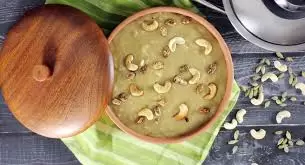
Quick answer: Nolen gur payesh, or nolen gurer payesh, is Bengali rice pudding: a small amount of short-grain fragrant rice cooked slowly in full-fat milk until creamy, then sweetened with nolen gur (new date-palm jaggery) instead of sugar. The one rule that matters is to add the gur off the heat, once the milk has stopped bubbling, or the milk can curdle.
Kitchen note: This recipe is not yet kitchen-tested by a HinduTone cook. The quantities and timings follow common home methods; judge doneness by look and texture, and adjust for your stove and ingredients.
| Key facts | |
|---|---|
| Dish | Rice cooked in reduced milk, sweetened with date-palm jaggery |
| Region | Bengal (West Bengal and Bangladesh) |
| Festival role | Cooked through the nolen gur season and on Poush Sankranti (Poush Parbon) alongside the pithe |
| Makar Sankranti in India | 15 January in India per the panchang; some government lists mark 14 January |
| Poush Sankranti 2027 in Bengal | Follows the Bengali panjika; the West Bengal government's 2027 holiday list is not yet published |
| Serves | 4 |
| Prep time | 10 minutes, plus 30 minutes soaking |
| Cook time | 50 to 60 minutes |
| Allergens | Milk; nuts only if you add them |
What is nolen gur payesh, and how is it different from other payasams?
Payesh is the Bengali word for rice cooked in milk, the same family as payasam in the south and kheer in the north (see our guide to the types of payasam and kheer). What makes nolen gur payesh different is the sweetener. Nolen gur, "new jaggery", is boiled down from the sap of the date palm, which is tapped only in the cold months, so this payesh belongs to winter. The Quint describes nolen gur as a winter-only product sold in two forms: runny jhola gur and solid patali gur, and gives payesh as one of its classic uses.
Compared with our Kerala-style paal payasam, three things change:
| Nolen gur payesh | Paal payasam (Kerala style) | |
|---|---|---|
| Sweetener | Nolen gur (date-palm jaggery) | Sugar |
| When the sweetener goes in | Off the heat, after the milk stops bubbling | During cooking, while the milk simmers |
| Rice | Short-grain fragrant rice such as Gobindobhog, or basmati | See that recipe for the rice it uses |
| Colour and taste | Light caramel colour, smoky, toffee-like | Pale cream to pinkish, from long cooking of milk and sugar together |
The timing is the important part. Sugar can be stirred into simmering milk safely. Jaggery, and fresh date-palm gur in particular, can make hot milk split, so Bengali cooks add it at the end. The Quint's payesh method and The Daily Star's notun gurer kheer both add the jaggery last, and The Quint does it off the heat.
On Poush Sankranti, the last day of the Bengali month of Poush, payesh is cooked beside the pithe. Deccan Chronicle (January 2026) recalls the smell of pithe and payesh cooking in every home on the day. See our Poush Sankranti in West Bengal guide.
Ingredients
| Ingredient | Metric | US measure |
|---|---|---|
| Full-fat milk | 1.25 litres | 5 1/4 cups |
| Gobindobhog or other short-grain fragrant rice (basmati also works) | 40 g | 3 tablespoons |
| Bay leaf | 1 | 1 |
| Green cardamom, lightly crushed | 3 pods | 3 pods |
| Ghee (optional) | 5 ml | 1 teaspoon |
| Nolen gur, grated patali or jhola, or regular jaggery | 100 to 130 g | 1/2 to 2/3 cup, grated, or to taste |
| Raisins (optional) | 15 g | 1 1/2 tablespoons |
| Cashews or almonds, chopped (optional) | 15 g | 2 tablespoons |
Payesh uses very little rice for the amount of milk. That is what keeps it loose and creamy rather than set.
How to make nolen gur payesh on the stovetop
- Wash the rice two or three times and soak it in water for about 30 minutes. Drain it and let it dry on a plate. If you like, rub it with the ghee.
- Pour the milk into a wide, heavy pan. Add the bay leaf and cardamom and bring to a boil over medium heat, stirring so it does not catch.
- Lower the heat and simmer for about 15 minutes, stirring and scraping the bottom every couple of minutes, until the milk has reduced by about a quarter.
- Add the drained rice. Keep simmering gently, stirring often, for 30 to 40 minutes, until the grains are completely soft and break when pressed, and the milk has reduced to roughly half its starting volume. It should coat the back of a spoon but still pour.
- Add the raisins and nuts, if using, for the last 2 to 3 minutes.
- Turn off the heat. Remove the bay leaf. Let the pan stand, stirring now and then, for 5 to 10 minutes, until it is hot but no longer bubbling.
- Stir in the grated or liquid gur a little at a time until it melts. Taste and add more if you like. Do not put the pan back on the heat.
Serve warm, at room temperature or chilled; many Bengali families prefer it cold. It thickens as it cools, so stop cooking while it still looks a little thinner than you want.
Why the gur must go in off the heat
When nolen gur meets milk that is still boiling, the milk can split into grainy curds. Waiting until the payesh stops bubbling, using full-fat milk, and adding the gur gradually all reduce the risk. If you want to reheat payesh later, warm it gently and do not let it boil. This is the main way nolen gur payesh differs from a sugar-sweetened payasam.
Pressure cooker and Instant Pot
Milk can foam and block the vent of a pressure cooker, so use this short cut with care:
- Put the soaked rice in the cooker with 120 ml (1/2 cup) water and 240 ml (1 cup) of the milk. Cook on low heat for 2 whistles (about 8 to 10 minutes), then let the pressure drop on its own.
- Open the cooker, add the rest of the milk and simmer with the lid off, stirring often, for 20 to 25 minutes until creamy and reduced.
- Turn off the heat, wait until it stops bubbling, then stir in the gur.
In an Instant Pot, cook the rice with the water and 240 ml milk on Pressure Cook for 8 minutes with natural release, add the rest of the milk and simmer on Sauté for about 20 minutes. Press Cancel and let it stand before adding the gur. Never fill a pressure cooker or Instant Pot more than half full with milk.
A rice cooker is not suitable: the milk needs reducing in an open pan.
Naivedyam notes
Payesh is a common offering in Bengali homes. If you offer it, keep a portion aside before anyone tastes and follow your family's practice or ask your priest about what may be offered.
Nolen gur substitutions abroad
Fresh nolen gur is hard to find outside Bengal. Look for patali gur (solid date-palm jaggery) at Bangladeshi and Indian grocers in larger cities in winter, and check that the label says date palm (khejur). If you cannot find it:
- Regular cane jaggery is the easiest substitute. The payesh tastes milder and less smoky. It can also split milk, so add it off the heat in the same way.
- Date syrup is made from the date fruit, not the palm sap. On its own it tastes fruity rather than smoky; a teaspoon mixed with regular jaggery adds depth.
- Palm sugar (gula melaka or gula Jawa, from other palms) gives a caramel note close in spirit.
- Dark muscovado or brown sugar is a last resort; it is the least likely to split the milk.
| Region | Rice | Gur | Milk |
|---|---|---|---|
| USA and Canada | Gobindobhog at some Bangladeshi and Indian grocers; basmati or other short-grain rice otherwise | Patali gur at some Bangladeshi grocers in winter; regular jaggery otherwise | Whole milk (3.25%) |
| UK | Gobindobhog in Bangladeshi shops in some cities; basmati is easy to find | Patali gur in Bangladeshi shops in some cities; regular jaggery otherwise | Whole milk |
| Australia | Basmati or other short-grain rice at Indian and Asian grocers | Regular jaggery; patali gur occasionally at Bangladeshi grocers | Full-cream milk |
| The Gulf | Gobindobhog and basmati usually available at Indian and Bangladeshi grocers | Bengali and Bangladeshi grocers may stock patali gur in season | Full-fat fresh milk |
| South-East Asia | Basmati in Little India shops; local short-grain rice also works | Palm sugar (gula melaka, gula Jawa) is a reasonable stand-in | Fresh full-cream milk |
Do not use UHT skimmed or low-fat milk: it reduces poorly and splits more easily.
Vegan option
Cook the rice in a mix of oat milk or another plant milk and coconut milk (about two parts plant milk to one part coconut milk). Plant milks do not reduce in the same way, so cook only until the rice is soft and the pudding is creamy. Sweeten with regular jaggery or palm sugar off the heat. If you are making payesh as an offering, many families use only cow's milk; follow your family custom.
Common mistakes
- Gur added on the heat: the milk curdles. Turn off the heat first and wait until the bubbling stops.
- Too much rice: the payesh sets thick and stodgy. Keep to a small amount of rice.
- Thin pan, high heat: the milk scorches on the bottom and tastes burnt. Use a heavy pan and stir often.
- Low-fat milk: it is thin and splits more easily.
- Cooking it to the final thickness: it thickens a lot as it cools.
Storage
Cool and refrigerate within 2 hours in a covered container. Payesh keeps about 2 days in the fridge. Stir in a little milk if it has thickened too much, and warm gently without boiling, or serve cold.
Allergens
Contains milk and ghee. Nuts are optional; leave them out for anyone with a nut allergy. Payesh contains no wheat gluten.
Frequently asked questions
Why did my nolen gur payesh curdle?
Usually the gur went in while the milk was still boiling, or the milk was low-fat. Next time turn off the heat, let it stand until the bubbling stops, and add the gur a little at a time.
Can I use jhola gur instead of patali gur?
Yes. Jhola gur is the runny form of nolen gur and blends in quickly. Add it gradually and taste, because its sweetness varies from batch to batch.
What is the difference between payesh and kheer?
They are the same family of dishes: rice cooked in milk. Payesh is the Bengali name, kheer the north Indian name and payasam the south Indian name. Our guide to the types of payasam and kheer compares them.
Which rice is best for payesh?
Bengali cooks usually use Gobindobhog, a short-grain fragrant rice from West Bengal. Basmati or another short-grain rice also works.
Can I make payesh ahead for Poush Sankranti?
Yes. Make it the day before, cool it quickly and keep it in the fridge. Many families prefer it cold.
When is Poush Sankranti in 2027?
Makar Sankranti falls on 15 January in India per the panchang; some government lists mark 14 January. Bengal keeps Poush Sankranti by the Bengali panjika, and the West Bengal government's 2027 holiday list had not been published at the time of writing. Confirm with your local panchang or temple priest.
Sources
- The Quint, Lesley D Biswas, "The Mishti Bengal Eats in Winter: 3 Yummy Ways to Use Nolen Gur", 25 October 2017: https://www.thequint.com/lifestyle/food/winter-season-bengal-jaggery-nolen-gur-sweets (accessed 12 November 2026)
- The Daily Star (Dhaka), Salina Parvin, "Winter pitha", 15 December 2014: https://www.thedailystar.net/winter-pitha-55332 (accessed 12 November 2026)
- Deccan Chronicle, "Kites, sweets and togetherness: Poush Parbon's link to pan-Indian Sankranti", 12 January 2026: https://www.deccanchronicle.com/lifestyle/culture-and-society/kites-sweets-and-togetherness-poush-parbons-link-to-pan-indian-sankranti-1929949 (accessed 12 November 2026)
- US Food and Drug Administration, "Safe Food Handling": https://www.fda.gov/food/buy-store-serve-safe-food/safe-food-handling (accessed 12 November 2026)
- US Food and Drug Administration, "Food Allergies": https://www.fda.gov/food/nutrition-food-labeling-and-critical-foods/food-allergies (accessed 12 November 2026)
Last reviewed: 12 November 2026.
Related guides
Share this with family and friends
Send it on WhatsApp, post it, or copy the link.
More from Recipes
- Gujiya Recipe for Holi (Mawa Gujiya with a No-Khoya Option)
- Rauh di Kheer Recipe (Punjabi Rice Kheer Cooked in Sugarcane Juice)
- Medu Vadai Recipe (Ulundu Vadai for Pongal and Festival Days)
- Pongal Kootu Recipe (Mixed Vegetable and Dal Kootu)
- Sakkare Acchu Recipe (Karnataka Sugar Moulds for Sankranti)
You might also like
Dudh Puli Recipe (Bengali Rice Dumplings in Thickened Milk with Nolen Gur)
Bhapa Pitha Recipe (Bengali Steamed Rice Cakes with Coconut and Nolen Gur)
Akkaravadisal Recipe (Rice and Moong Dal Cooked in Milk with Jaggery and Ghee)