
Patishapta Recipe (Bengali Rice Crepes with Coconut and Nolen Gur)
Quick answer: Patishapta is a thin Bengali crepe made from a rice-flour, semolina and flour batter, rolled around a filling of fresh coconut cooked with nolen gur (date-palm jaggery), or around kheer (milk reduced until thick). It is one of the pithe (rice sweets) made for Poush Sankranti, also call
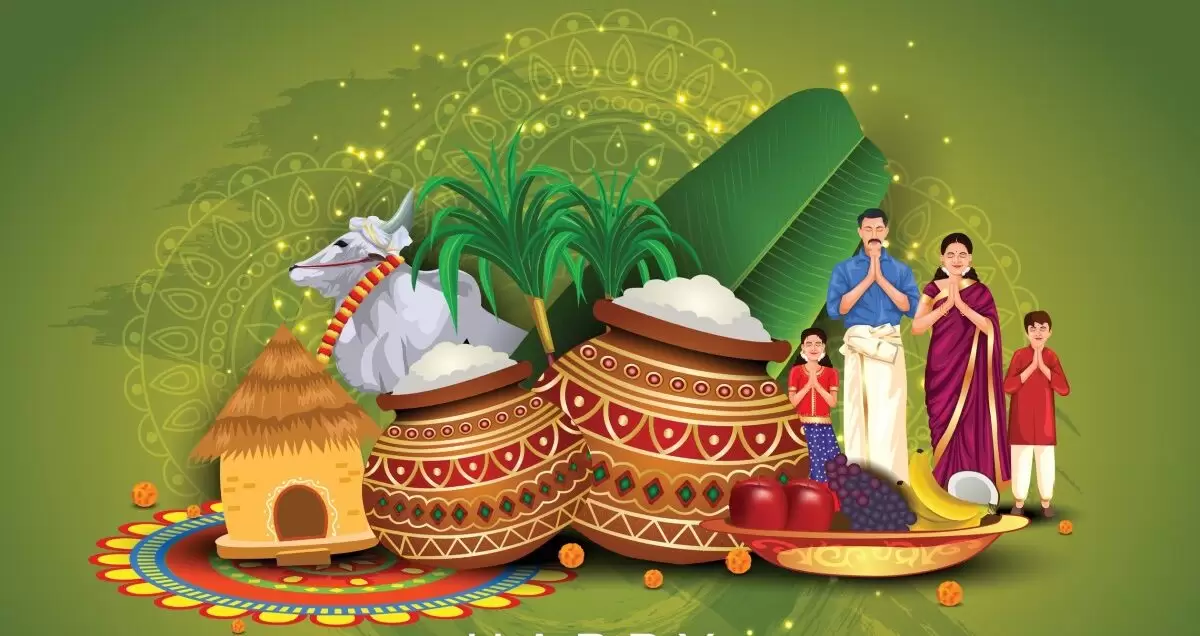
Quick answer: Patishapta is a thin Bengali crepe made from a rice-flour, semolina and flour batter, rolled around a filling of fresh coconut cooked with nolen gur (date-palm jaggery), or around kheer (milk reduced until thick). It is one of the pithe (rice sweets) made for Poush Sankranti, also called Poush Parbon. Allow about 2 hours, mostly resting time.
Kitchen note: This recipe is not yet kitchen-tested by a HinduTone cook. The quantities and timings follow common home methods; judge doneness by look and texture, and adjust for your stove and ingredients.
| Key facts | |
|---|---|
| Dish | Rolled crepes with a sweet coconut-jaggery or kheer filling |
| Region | West Bengal (also made in Bengali homes in Bangladesh and abroad) |
| Festival role | One of the pithe of Poush Sankranti (Poush Parbon) |
| Makar Sankranti in India | 15 January in India per the panchang; some government lists mark 14 January |
| Poush Sankranti 2027 in Bengal | Follows the Bengali panjika; the West Bengal government's 2027 holiday list is not yet published |
| Makes | 12 to 14 crepes |
| Prep time | 20 minutes, plus 1 hour resting the batter |
| Cook time | 15 minutes for the filling; about 35 minutes for the crepes |
| Allergens | Milk, gluten (semolina and plain flour); tree nuts only if you add them |
What is patishapta and why is it made at Poush Sankranti?
Poush Sankranti is the last day of the Bengali month of Poush, when the Sun enters Makara (Capricorn). In Bengal it is the day of pithe-puli, the general name for sweets made from the new season's rice, and the day is often called Poush Parbon or Pithe Parbon. Patishapta is one of the best known of these sweets, alongside puli pithe and bhapa pithe.
The other star of the season is nolen gur, "new jaggery", boiled down from the sap of the date palm. The sap is tapped only in the cold months, so fresh nolen gur is a winter product. It comes in two forms: jhola gur, a runny syrup, and patali gur, set into cakes. Its smoky caramel taste is what makes a Bengali patishapta taste of Poush.
Households differ on the filling. Coconut with nolen gur is the everyday favourite; a kheer filling (milk cooked down until thick, sometimes mixed with coconut) is richer. Both are given below.
For how Poush Sankranti fits into the wider festival, see our Makar Sankranti 2027 guide and our Poush Sankranti in West Bengal guide.
Ingredients
Batter
| Ingredient | Metric | US measure |
|---|---|---|
| Rice flour (fine) | 160 g | 1 cup |
| Fine semolina (sooji) | 45 g | 1/4 cup |
| Plain flour (maida) | 30 g | 1/4 cup |
| Milk | 360 to 420 ml | 1 1/2 to 1 3/4 cups |
| Sugar or grated jaggery | 15 g | 1 tablespoon |
| Salt | a pinch | a pinch |
| Ghee or neutral oil, for the pan | about 30 ml | about 2 tablespoons |
Coconut and nolen gur filling
| Ingredient | Metric | US measure |
|---|---|---|
| Fresh grated coconut | 160 g | 2 cups, loosely packed |
| Nolen gur (patali, grated) or regular jaggery | 150 g | 3/4 cup, grated |
| Green cardamom, ground | 2 pods | 2 pods |
| Ghee (optional) | 5 ml | 1 teaspoon |
Kheer filling (alternative)
| Ingredient | Metric | US measure |
|---|---|---|
| Full-fat milk | 1 litre | 4 1/4 cups |
| Nolen gur or sugar | 60 g | 1/4 cup, grated, or to taste |
| Grated coconut (optional) | 40 g | 1/2 cup |
Shop-bought khoya (mawa) is a short cut: crumble 200 g (about 1 1/2 cups) and cook it for a few minutes with the gur instead of reducing the milk.
Batter proportions vary a great deal between families. Some use only rice flour and semolina; others use more plain flour for a softer, more pliable crepe. The mix above sits in the middle.
How to make patishapta on the stovetop
Make the filling
- Put the coconut and grated gur in a heavy pan on low to medium heat. The gur will melt and the mixture will turn wet.
- Stir often for 10 to 15 minutes, until the moisture cooks off and the mixture turns sticky and starts to hold together. Do not let it darken at the bottom.
- Stir in the cardamom and the ghee, if using. Take it off the heat and let it cool. It firms up as it cools.
- For kheer instead: boil the milk in a wide, heavy pan and keep it at a lively simmer, stirring and scraping the base, until it thickens to a soft paste (40 minutes or more). Add the gur only after you take it off the heat, so the milk does not curdle, then mix in the coconut if using.
Make the batter
- Whisk the rice flour, semolina, plain flour, sugar and salt with 360 ml milk until smooth. It should be a thin, pourable batter, a little thicker than single cream.
- Rest it for about 1 hour so the semolina softens. Stir well and add more milk if it has thickened.
Cook the crepes
- Heat a non-stick or well-seasoned flat pan on medium-low heat. Brush with a few drops of ghee.
- Pour a small ladle of batter (about 3 tablespoons) into the centre and tilt the pan, or spread it with the back of the ladle, into a thin oval about 15 cm (6 inches) long.
- Cook until the top looks dry and the edges lift slightly, about 1 minute. Patishapta is usually not turned and should stay pale, with only light spots underneath.
- Place a line of filling (about 1 1/2 tablespoons) along one edge. Roll the crepe up with a spatula, press lightly and cook a few seconds more.
- Move it to a plate and repeat, stirring the batter each time because the flour settles.
Serve warm or at room temperature. In many homes extra jhola gur is drizzled over the top.
Pressure cooker, Instant Pot and rice cooker
Patishapta needs a flat pan, so there is no pressure-cooker or rice-cooker version of the crepes. A pressure cooker does not help the kheer either, because the milk has to reduce with the lid off. If you have an Instant Pot, the Sauté setting can stand in for a pan when making the coconut filling, but a heavy pan on the hob is easier to control.
Naivedyam notes
Pithe are home sweets and customs differ. Some families set aside the first pithe for the household shrine before anyone eats; others make no formal offering. If you offer patishapta, keep a portion aside before tasting, and follow your family practice or ask your priest about what may be offered.
Substitutions abroad
Fresh nolen gur is hard to find outside Bengal. Bangladeshi and Indian grocers in larger cities sometimes stock patali gur (solid date-palm jaggery) in winter. Regular cane jaggery works well; the taste is less smoky. Date syrup is made from the date fruit, not date-palm sap, so a spoonful with regular jaggery only gives a hint of the flavour.
| Region | Rice flour and semolina | Coconut | Gur |
|---|---|---|---|
| USA and Canada | Indian, Bangladeshi and East Asian grocers | Frozen grated coconut at Indian grocers | Patali gur at some Bangladeshi grocers in winter; regular jaggery otherwise |
| UK | Asian shops; supermarket rice flour | Frozen grated coconut in Asian shops | Patali gur in Bangladeshi shops in some cities; regular jaggery otherwise |
| Australia | Indian and Asian grocers | Frozen grated coconut at Indian grocers | Regular jaggery; patali gur occasionally at Bangladeshi grocers |
| The Gulf | Easy to find | Fresh and frozen coconut easy to find | Bengali and Bangladeshi grocers may stock patali gur in season |
| South-East Asia | Rice flour is everywhere | Fresh grated coconut in wet markets | Palm sugar (gula melaka) is a reasonable stand-in; regular jaggery in Little India shops |
Desiccated coconut can replace fresh: soak 100 g (1 1/4 cups) in 120 ml (1/2 cup) warm milk for 20 minutes before cooking it with the gur.
Vegan option
Make the batter with water, or half water and half coconut milk, and grease the pan with oil. The coconut and gur filling is already free of dairy if you skip the ghee. Use regular jaggery for a reliably vegan sweetener. If you are making pithe for an offering, some families use only milk and ghee; follow your family custom.
Gluten-free version
Leave out the semolina and plain flour and use 220 g (1 1/3 cups) rice flour. The crepes will be more fragile, so keep them a little thicker and roll them gently.
Common mistakes
- Batter too thick: the crepes turn heavy and crack when rolled. Thin it with milk, a spoon at a time.
- Pan too hot: the batter sets in lumps before you can spread it, and the crepe browns. Keep the heat medium-low.
- Filling too wet: it leaks out of the roll. Cook it until it gathers into a mass.
- Gur added to boiling milk: it can split the kheer. Add it off the heat.
- Not stirring the batter: rice flour sinks to the bottom, so the last crepes come out thin and the first thick.
Storage
Cool and refrigerate within 2 hours, in a covered container. Patishapta keeps about 2 days in the fridge; the kheer version is best eaten within a day. Warm briefly in a pan or eat at room temperature. The coconut filling alone keeps 3 to 4 days in the fridge.
Allergens
Contains milk (batter, kheer, ghee) and gluten (semolina and plain flour). Coconut is not one of the 14 major allergens on UK labels, but a small number of people react to it, so mention it to guests with food allergies. Many families add cashews or raisins to the kheer filling; leave them out for anyone with a nut allergy.
Frequently asked questions
What is the difference between patishapta and puli pithe?
Patishapta is a thin crepe rolled around a filling. Puli pithe is a dumpling: rice-flour dough shaped around a filling, then boiled in milk (dudh puli) or steamed or fried.
Can I make patishapta without nolen gur?
Yes. Regular jaggery or sugar gives a good patishapta. The smoky taste of nolen gur is what people miss, so many Bengali families abroad save a cake of patali gur brought from home for the festival.
Why does my patishapta break when I roll it?
The batter is usually too thick, or the crepe has cooked too long and dried out. A little more plain flour in the batter also makes the crepe more pliable.
Can I make patishapta ahead?
You can make the filling a day or two ahead and keep it in the fridge. The batter can rest overnight in the fridge. The crepes are best made on the day.
When is Poush Sankranti in 2027?
Makar Sankranti falls on 15 January in India per the panchang; some government lists mark 14 January. The day Bengal keeps as Poush Sankranti follows the Bengali panjika and the West Bengal government's holiday list, which had not been published at the time of writing. Confirm with your local panchang or temple priest.
Is patishapta only made at Sankranti?
It is closely tied to Poush Sankranti and the nolen gur season, but many families make it through the winter months whenever fresh gur is available.
Sources
- India TV News, "Makar Sankranti 2025: 4 types of pitha made during Poush Sankranti", 14 January 2025: https://www.indiatvnews.com/lifestyle/food/makar-sankranti-2025-4-types-of-pitha-made-during-poush-sankranti-2025-01-14-971149 (accessed 12 November 2026)
- The Quint, Lesley D Biswas, "The Mishti Bengal Eats in Winter: 3 Yummy Ways to Use Nolen Gur", 25 October 2017: https://www.thequint.com/lifestyle/food/winter-season-bengal-jaggery-nolen-gur-sweets (accessed 12 November 2026)
- US Food and Drug Administration, "Safe Food Handling": https://www.fda.gov/food/buy-store-serve-safe-food/safe-food-handling (accessed 12 November 2026)
- US Food and Drug Administration, "Food Allergies": https://www.fda.gov/food/nutrition-food-labeling-and-critical-foods/food-allergies (accessed 12 November 2026)
- Food Standards Agency (UK), "Food allergy and intolerance advice for consumers": https://www.gov.uk/government/publications/food-allergy-and-intolerance-advice-for-consumers (accessed 12 November 2026)
Last reviewed: 12 November 2026.
Related guides
Share this with family and friends
Send it on WhatsApp, post it, or copy the link.
More from Recipes
- Sankranti Recipes by State: What India Cooks for Makar Sankranti, Pongal, Lohri and Bihu
- Paal Pongal Recipe (Milk Pongal Cooked in a Pot on Thai Pongal)
- Bobbatlu Recipe (Telugu Sweet Flatbread with Chana Dal and Jaggery)
- Sarson da Saag and Makki di Roti Recipe (Punjabi Mustard Greens with Maize Flatbread)
- Dahi Chura Recipe (Flattened Rice with Curd and Jaggery)
