Top Harvest Festivals in Hinduism 2026: Lohri, Makar Sankranti & Pongal Guide
Top Harvest Festivals in Hinduism: Lohri, Makar Sankranti, and Pongal 2026 Guide Introduction: Celebrating India's Harvest Season As winter reaches its peak…
2027 update: In India, Lohri 2027 is on Thursday 14 January and Makar Sankranti on Friday 15 January 2027; dates abroad can differ by a day. See Makar Sankranti 2027 date and Punya Kaal timings.
Top Harvest Festivals in Hinduism: Lohri, Makar Sankranti, and Pongal 2026 Guide
Introduction: Celebrating India's Harvest Season
As winter reaches its peak and the harvest season arrives, millions across India prepare to celebrate three of Hinduism's most vibrant festivals: Lohri, Makar Sankranti, and Pongal. These ancient celebrations mark the end of the harvest season and the sun's northward journey, bringing communities together in gratitude for nature's abundance and the blessings of Surya, the Sun God.
While each festival has distinct regional flavors—Lohri's bonfire celebrations in Punjab, Pongal's four-day festivities in Tamil Nadu, and Makar Sankranti's nationwide observance—they share common threads of thanksgiving, renewal, and the celebration of agricultural prosperity. This comprehensive guide explores the 2026 dates, regional variations, traditional foods, and spiritual significance of these beloved harvest festivals.
Lohri 2026: Punjab's Bonfire Festival
Date and Timing
Lohri 2026: Monday, January 13, 2026
Lohri is celebrated on the last day of the month of Paush, one night before Makar Sankranti. The festival typically falls on January 13th each year, marking the end of winter solstice and the beginning of longer days.
Regional Significance: Punjab and North India
Lohri holds special importance in Punjab, Haryana, Himachal Pradesh, and Delhi. It is primarily a Punjabi folk festival that celebrates the winter crop harvest, particularly wheat, which is sown in October and harvested in March or April. The festival also honors the sun god and the fire god, Agni.
For newlyweds and new parents, Lohri holds additional significance as families celebrate the first Lohri of the new bride or newborn with special enthusiasm and community gatherings.
Traditional Celebrations and Customs
The Sacred Bonfire: The centerpiece of Lohri celebrations is the community bonfire lit after sunset. Families and neighbors gather around the flames, offering prayers for prosperity and abundance. Traditional offerings include:
- Sesame seeds (til)
- Jaggery (gur)
- Puffed rice (murmura)
- Popcorn
- Rewri (sesame seed brittle)
- Peanuts
- Gajak (sesame and jaggery sweet)
As these offerings are thrown into the fire, people circle the bonfire, singing traditional Lohri songs and folk tunes. The most popular song pays tribute to Dulla Bhatti, a legendary Punjabi hero.
Music and Dance: No Lohri celebration is complete without the energetic beats of the dhol and traditional Punjabi folk dances like Gidda (performed by women) and Bhangra (performed by men).
Lohri Foods: Traditional Delicacies
The cuisine of Lohri reflects Punjab's rich agricultural heritage:
- Sarson da Saag and Makki di Roti: Mustard greens curry with cornmeal flatbread—the quintessential Punjabi winter meal
- Til ki Chikki: Sesame seed brittle made with jaggery
- Gajak: Crunchy sweet made from sesame seeds, peanuts, and jaggery
- Rewri: Small disc-shaped sesame sweets
- Moongphali: Roasted peanuts
- Popcorn: Fresh corn kernels popped over the fire
- Pinni: Sweet round balls made from wheat flour, ghee, and jaggery
These foods are not only delicious but also provide warmth and energy during the cold winter months.
Makar Sankranti 2026: India's Pan-National Harvest Festival
Date and Astronomical Significance
Makar Sankranti 2026: Tuesday, January 14, 2026
Makar Sankranti marks the sun's transition (Sankranti) into the zodiac sign of Capricorn (Makar). This astronomical event signifies the end of the winter solstice and the beginning of longer days, as the sun starts its northward journey known as Uttarayan.
Nationwide Celebrations: Unity in Diversity
Unlike many Hindu festivals determined by the lunar calendar, Makar Sankranti follows the solar calendar and is celebrated across India, albeit under different names and with unique regional customs:
North India: Celebrated as Makar Sankranti with kite flying and sesame-jaggery sweets
Gujarat: Known as Uttarayan, featuring competitive kite flying festivals
Rajasthan: Called Sankrant, marked by exchanging til-gur laddoos and the saying "Til gud ghya, god god bola" (Eat sesame and jaggery, speak sweet words)
Maharashtra: Observed as Makar Sankranti with women exchanging til-gul and colorful traditional attire
Karnataka: Celebrated as Makar Sankramaṇa, featuring Ellu Birodhu (sesame seed mixing ceremony)
Andhra Pradesh & Telangana: Known as Pedda Panduga or Sankranti, a three-day festival
Assam: Called Magh Bihu or Bhogali Bihu, celebrating the harvest of autumn rice
West Bengal: Observed as Poush Sankranti with pithe-puli (rice cakes) and date palm jaggery sweets
Bihar: Known as Khichdi or Til Sankranti
Traditional Rituals and Practices
Holy Dips: Taking a sacred bath in rivers, especially the Ganges, Yamuna, Krishna, or Godavari, is considered highly auspicious on Makar Sankranti. Millions gather at holy sites like Prayagraj, Haridwar, and Nashik.
Kite Flying: One of the most joyous traditions, particularly in Gujarat and Rajasthan, symbolizing the human spirit reaching for the divine and celebrating the sun's northward journey.
Charitable Acts: Known as Makar Sankranti Daan, giving to the poor and needy is considered especially meritorious on this day. Common donations include sesame seeds, jaggery, blankets, warm clothes, and food.
Sun Worship: Devotees offer prayers to Surya Dev, expressing gratitude for a bountiful harvest and seeking blessings for prosperity.
Makar Sankranti Foods: Regional Delicacies
Khichdi: A comforting dish of rice and lentils cooked together, often with vegetables and spices. In Uttar Pradesh and Bihar, donating khichdi to the poor on this day is considered highly auspicious, which is why the festival is also called Khichdi.
Til-Gul Laddoo: Sweet balls made from sesame seeds and jaggery, symbolizing the importance of maintaining sweet relationships
Puran Poli: Sweet flatbread stuffed with lentils and jaggery, popular in Maharashtra
Chikkis: Brittle made from peanuts, sesame seeds, or mixed nuts with jaggery
Undhiyu: A Gujarati mixed vegetable delicacy prepared specially for Uttarayan
Pithe-Puli: Rice cakes filled with coconut and jaggery, popular in Bengal and Odisha
Dahi Chura: Flattened rice with yogurt and jaggery, popular in Bihar and Jharkhand
Ellu Bella: A Karnataka mixture of sesame seeds, peanuts, coconut, jaggery, and dried fruits
Pongal 2026: Tamil Nadu's Grand Four-Day Celebration
Date and Festival Duration
Pongal 2026: January 14-17, 2026
- Bhogi Pongal: Wednesday, January 14, 2026
- Surya Pongal (Thai Pongal): Thursday, January 15, 2026
- Mattu Pongal: Friday, January 16, 2026
- Kaanum Pongal: Saturday, January 17, 2026
Pongal coincides with the Tamil month of Thai and is one of the most important festivals in Tamil Nadu, celebrated over four days with distinct significance for each day.
Regional Significance: Tamil Nadu's Premier Festival
Pongal is to Tamil Nadu what Diwali is to North India—a major cultural and religious celebration that transcends religious boundaries. The festival marks the end of the winter solstice and the beginning of the sun's six-month-long journey northward, which brings prosperity and good harvest.
The name "Pongal" comes from the Tamil word meaning "to boil over," referring to the ritual of boiling rice in milk until it overflows, symbolizing abundance and prosperity.
Four Days of Celebration
Day 1: Bhogi Pongal Bhogi is dedicated to Lord Indra, the god of rain and clouds. This day focuses on discarding old belongings and welcoming the new:
- Lighting the Bhogi fire (bonfire) with old, unwanted items
- Cleaning and decorating homes
- Creating colorful kolam (rangoli) designs with rice flour at the entrance
- Collecting cow dung cakes for fuel
- Young girls performing the ritual dance around the bonfire
Day 2: Surya Pongal (Thai Pongal) The main day of the festival dedicated to the Sun God:
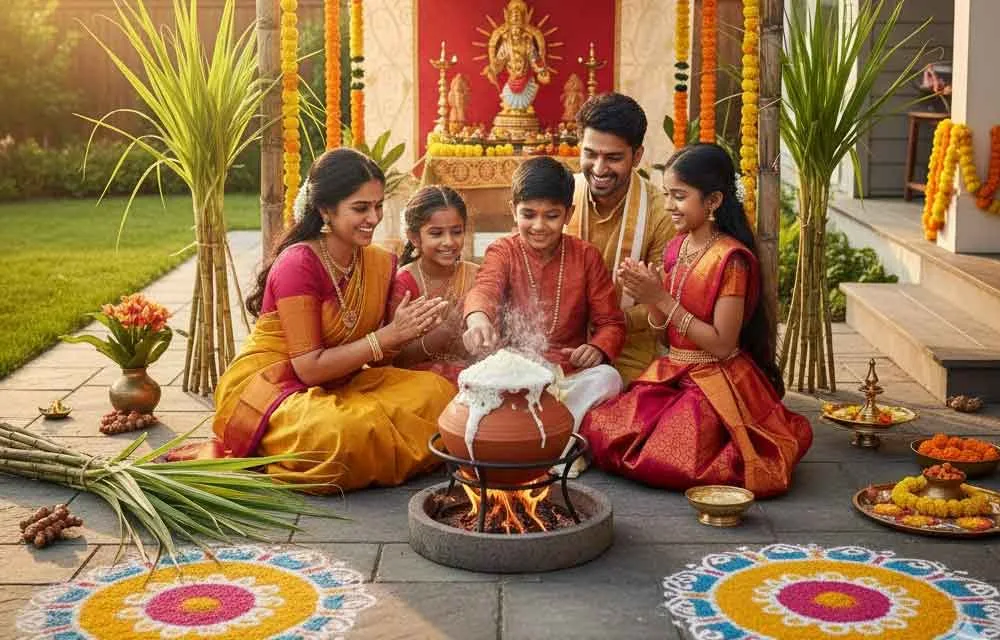
- Cooking the traditional sweet Pongal dish in new clay pots
- Boiling the mixture in the open courtyard, allowing it to overflow as a symbol of abundance
- Shouting "Pongalo Pongal!" when the milk boils over
- Offering the first portion to Surya Dev
- Decorating the Pongal pot with turmeric plant and sugarcane
- Drawing elaborate kolam designs with colored powders
Day 3: Mattu Pongal Dedicated to cattle, particularly cows and bulls, recognizing their invaluable contribution to agriculture:
- Bathing cattle and decorating them with colorful beads, bells, and flower garlands
- Painting their horns in bright colors
- Offering them the Pongal dish first
- Conducting Jallikattu (bull-taming sport) in some regions
- Prayers for the health and prosperity of livestock
Day 4: Kaanum Pongal The day for family reunions and social gatherings:
- Visiting relatives and friends
- Taking trips to beaches or picnic spots
- Young women performing a ritual where they feed crows, praying for their brothers' well-being
- Community feasts and celebrations
- Traditional games and cultural activities
Pongal Food: The Sacred Sweet Dish
Traditional Pongal Recipe The signature dish called Pongal (or Sakkarai Pongal for the sweet version) is prepared with great devotion:
Ingredients:
- Raw rice
- Split moong dal (yellow lentils)
- Fresh milk
- Jaggery or sugar
- Ghee (clarified butter)
- Cashews and raisins
- Cardamom powder
- Edible camphor (optional)
Preparation: The rice and moong dal are cooked together with milk and water until soft. Jaggery syrup is prepared separately and mixed with the cooked rice-dal mixture. Ghee is generously added, and the mixture is garnished with cashews and raisins fried in ghee, along with cardamom powder.
Other Pongal Delicacies:
- Ven Pongal: Savory version with pepper, cumin, and curry leaves
- Medu Vadai: Crispy lentil fritters
- Payasam: Sweet rice pudding
- Sugarcane juice: Fresh and naturally sweet
- Vadai: Savory fritters made from lentils
Shared Themes: Gratitude to Surya and Nature
Sun Worship Across Festivals
All three harvest festivals center around reverence for Surya, the Sun God, acknowledging his vital role in agriculture and life itself. The sun's northward journey (Uttarayan) is seen as an auspicious period, bringing warmth, longer days, and the promise of a prosperous growing season.
In Vedic tradition, the sun represents consciousness, vitality, and the divine light that sustains all life. These festivals offer devotees an opportunity to:
- Express gratitude for the sun's life-giving energy
- Pray for continued abundance and prosperity
- Align themselves with cosmic rhythms and seasonal changes
- Purify their minds and bodies for spiritual advancement
Agricultural Gratitude and Nature's Bounty
At their core, all three festivals are thanksgiving celebrations for a successful harvest. Farmers express gratitude for:
- Fertile soil that yields crops
- Adequate rainfall provided by the monsoons
- Livestock that aids in farming
- Natural cycles that govern agricultural success
- The elements—sun, water, wind, earth—that support life
This deep connection to nature reflects the Hindu philosophy of living in harmony with the environment and recognizing the divine in all natural phenomena.
Community and Social Harmony
These festivals strengthen social bonds through:
- Shared Celebrations: Communities gather around bonfires, cook together, and celebrate collectively
- Acts of Charity: Donating to the less fortunate ensures everyone can participate in the festivities
- Family Reunions: Kaanum Pongal and similar traditions bring families together
- Cultural Preservation: Traditional songs, dances, and rituals pass down heritage to younger generations
- Conflict Resolution: The exchange of sweets with the phrase "Til gud ghya, god god bola" (Eat sesame and jaggery, speak sweet words) encourages leaving behind past grievances
Seasonal and Health Wisdom
The traditional foods of these festivals are not randomly chosen but reflect ancient nutritional wisdom:
Sesame Seeds (Til): Rich in healthy fats, protein, and minerals, providing warmth during winter
Jaggery (Gur): Unrefined sugar that purifies the blood, boosts immunity, and provides energy
Ghee: Clarified butter that improves digestion and provides essential fatty acids
Lentils and Rice: Complete protein combinations that are easily digestible
Milk: Provides calcium and protein while being sattvic (pure) in nature
These ingredients help the body transition from winter to spring while strengthening immunity against seasonal illnesses.
Planning Your 2026 Harvest Festival Celebrations
Creating Your Festival Calendar
January 13, 2026 (Monday): Celebrate Lohri
- Organize or attend a community bonfire
- Prepare traditional Punjabi foods
- Share sweets with neighbors and family
January 14, 2026 (Tuesday): Observe Makar Sankranti/Bhogi Pongal
- Take a holy dip if near a sacred river
- Perform charitable acts
- Prepare khichdi or regional specialties
- Begin Pongal celebrations with Bhogi rituals
January 15, 2026 (Thursday): Thai Pongal (Main Day)
- Cook the traditional Pongal dish
- Offer prayers to Surya Dev
- Create kolam designs
- Share Pongal with family and community
January 16, 2026 (Friday): Mattu Pongal
- Honor cattle and livestock
- Decorate animals with traditional ornaments
- Offer prayers for agricultural prosperity
January 17, 2026 (Saturday): Kaanum Pongal
- Plan family outings or reunions
- Visit relatives and friends
- Enjoy community celebrations
Tips for Modern Celebrations
For Urban Dwellers:
- Join community events organized by cultural associations
- Create small-scale celebrations in apartment complexes
- Connect with your heritage through cooking traditional foods
- Participate in virtual celebrations with family members in different locations
Sustainable Practices:
- Use eco-friendly materials for bonfires and decorations
- Avoid plastic kites and synthetic strings
- Choose organic, locally sourced ingredients
- Compost food offerings rather than discarding them
Teaching Children:
- Involve children in preparation and cooking
- Share stories about the festivals' significance
- Teach traditional songs and dances
- Explain the connection between food, seasons, and health
Spiritual Significance and Deeper Meanings
The Symbolism of Fire
The bonfire central to Lohri and Bhogi represents:
- Transformation and purification
- The divine element of Agni (fire god)
- Burning away past karma and negativity
- The warmth of community and relationships
The Overflow of Abundance
The boiling over of Pongal symbolizes:
- Prosperity flowing beyond boundaries
- Gratitude expressed through material abundance
- The generosity of nature when properly honored
- Sharing wealth with the community
The Northward Journey (Uttarayan)
The sun's movement into Capricorn represents:
- Spiritual ascent and progress
- Moving from darkness toward light
- The triumph of knowledge over ignorance
- Cosmic order and divine timing
In Hindu philosophy, Uttarayan (the six months when the sun travels north) is considered the path of the gods, while Dakshinayana (southward journey) is the path of ancestors. Dying during Uttarayan is believed to lead to moksha (liberation), which is why Bhishma in the Mahabharata chose to leave his body during this period.
Agricultural Lessons for Life
These festivals teach timeless principles:
- Patience: Crops take time to grow, just as goals require persistent effort
- Cooperation: Farming requires community support, reflecting interdependence
- Gratitude: Acknowledging sources of sustenance prevents arrogance
- Cyclical Thinking: Understanding seasons teaches acceptance of life's ups and downs
- Respect for Nature: Honoring elements ensures environmental stewardship
Conclusion: Embracing Harvest Festival Traditions in 2026
As you prepare to celebrate Lohri, Makar Sankranti, and Pongal in 2026, remember that these festivals offer more than just an opportunity for feasting and celebration. They connect us to our agricultural roots, remind us of our dependence on natural cycles, and reinforce the values of gratitude, community, and spiritual awareness.
Whether you're lighting a bonfire for Lohri in Punjab, flying kites for Uttarayan in Gujarat, preparing khichdi for Makar Sankranti in Bihar, or cooking the sacred Pongal dish in Tamil Nadu, you're participating in ancient traditions that have sustained Indian culture for millennia.
These festivals teach us to:
- Honor the sources of our sustenance
- Celebrate with our community
- Share our abundance with those in need
- Stay connected to natural rhythms
- Express gratitude for life's blessings
- Look forward with hope and positivity
May the harvest festivals of 2026 bring abundant blessings, prosperity, and joy to you and your loved ones. As the sun begins its northward journey, may your life also move toward greater light, wisdom, and spiritual fulfillment.
Pongalo Pongal! Lohri Di Vaisakhi! Happy Makar Sankranti!
For more insights into Hindu festivals, traditions, and spiritual practices, continue exploring HinduTone.com, your comprehensive guide to Hindu culture and spirituality.
🌸 For More Devotional Journey, Follow
- Temples
/temples/ - Tirumala Updates
/tirumala/ - Sabarimala Yatra
/category/sabarimala-yatra/ - Pooja, Slokas & Mantras
/pooja-slokas-and-mantras/ - Hindu Gods
/hindu-gods/
Frequently Asked Questions
When is Lohri in 2026?
Lohri 2026 falls on Monday, January 13, 2026. It is celebrated on the last day of the month of Paush, one night before Makar Sankranti, with a community bonfire lit after sunset.
When is Makar Sankranti in 2026?
Makar Sankranti 2026 is on Tuesday, January 14, 2026. It marks the sun's transition into Capricorn (Makar) and the start of Uttarayan, the sun's northward journey.
What are the four days of Pongal in 2026?
Pongal runs January 14-17, 2026: Bhogi Pongal on January 14, Surya Pongal (Thai Pongal) on January 15, Mattu Pongal on January 16 and Kaanum Pongal on January 17.
What do people offer into the Lohri bonfire?
Offerings include sesame seeds, jaggery, puffed rice, popcorn, rewri, peanuts and gajak. People circle the fire singing folk songs, the most popular paying tribute to Dulla Bhatti.
Why does Makar Sankranti follow a fixed date unlike many Hindu festivals?
Makar Sankranti follows the solar calendar rather than the lunar calendar. It is celebrated across India under different names, such as Uttarayan in Gujarat and Magh Bihu in Assam.
How do Hindus abroad, including NRIs, celebrate these harvest festivals?
They can follow the same customs: a bonfire with sesame and jaggery offerings for Lohri, charity and sun worship on Makar Sankranti, and boiling rice in milk until it overflows for Pongal.
Share this with family and friends
Send it on WhatsApp, post it, or copy the link.
More from Festivals
- Masik Shivaratri 2027 Dates: Monthly Shivaratri List, Nishita Kaal Times and Dates Abroad
- Sankashti Chaturthi 2027 Dates and Moonrise Times: Full List for India and Abroad
- Pradosh Vrat 2027 Dates: All 25 Pradosham Days, Pradosh Kaal Times and Dates Abroad
- Amavasya 2027 Dates: New Moon Days, Darsha Amavasya, Tithi Times and Dates Abroad
- Purnima 2027 Dates: Full Moon Vrat Days, Snan-Daan Days, Tithi Times and Dates Abroad
You might also like

Canada Pongal Celebrations 2026: Hindu Harvest Festival Guide
Hinduism in Washington DC (DMV) 2026: Complete Guide for DC Area Hindus
Pongal 2026 in UAE: City-Wise Hindu Harvest Festival Guide