Sankranti Recipes by State: What India Cooks for Makar Sankranti, Pongal, Lohri and Bihu
Quick answer: Across India the January harvest festival is kept with sesame, jaggery and new rice, but each region turns them into its own dishes: sweet pongal in Tamil Nadu, ariselu and bobbatlu in the Telugu states, ellu-bella in Karnataka, tilgul in Maharashtra, undhiyu in Gujarat, rewri and gaja

Quick answer: Across India the January harvest festival is kept with sesame, jaggery and new rice, but each region turns them into its own dishes: sweet pongal in Tamil Nadu, ariselu and bobbatlu in the Telugu states, ellu-bella in Karnataka, tilgul in Maharashtra, undhiyu in Gujarat, rewri and gajak at Lohri, dahi-chura and khichdi in Bihar and Uttar Pradesh, pithe in Bengal and Assam, and Makara Chaula in Odisha.
Kitchen note: The linked recipes are not yet kitchen-tested by a HinduTone cook; each says so on its page.
| Key facts | |
|---|---|
| Makar Sankranti and Thai Pongal 2027 | 15 January in India per the panchang; some government lists mark 14 January |
| Lohri 2027 | Thursday 14 January 2027 per the panchang (Punjab's 2027 holiday list not yet published) |
| Magh Bihu 2027 | Friday 15 January 2027 per the panchang; the central restricted-holiday list marks "Makar Sankranti / Magha Bihu" on Thursday 14 January |
| Uttarayan (Gujarat) 2027 | Gujarat's 2027 holiday list is awaited |
| Ingredients shared almost everywhere | Sesame (til), jaggery (gur, bellam, vellam), rice from the new harvest, sugarcane |
| Common allergens | Sesame, peanuts, tree nuts, milk and ghee, wheat |
This page explains what is cooked where and why. It gives no quantities: the full recipes are on the linked pages. For which pongal is cooked on which day in Tamil Nadu, see our guide to the kinds of pongal.
Why are sesame, jaggery and new rice everywhere?
Makar Sankranti falls in midwinter, and its food is seasonal: new rice where rice is the crop just harvested, fresh jaggery, sesame, peanuts and winter vegetables. Crops differ from region to region, so not every regional form is a rice harvest festival. Sesame and jaggery sweets are also exchanged as gifts, which is why so many regions have a sweet that is shared with neighbours rather than eaten at home alone.
You will often read that sesame and jaggery "keep the body warm" in winter. That is a popular explanation, not a medical claim, and we do not repeat health claims for festival foods.
Sankranti foods by state at a glance
| Region | Festival name | What is cooked | Why or when | Recipes |
|---|---|---|---|---|
| Tamil Nadu | Thai Pongal | Rice cooked in milk in a new pot, then sakkarai (sweet) pongal; ven (savoury) pongal | The pot boils over as a sign of plenty; the pongal is offered to the Sun | Sakkarai pongal, paal pongal, ven pongal |
| Andhra Pradesh, Telangana | Sankranti, Pedda Panduga | Ariselu, bobbatlu, sunnundalu, kajjikayalu, gavvalu; sakinalu in Telangana; garelu on Kanuma | Rice-flour and jaggery sweets of the harvest; garelu for the cattle festival day | Ariselu, bobbatlu, sunnundalu, garelu |
| Karnataka | Makara Sankramana | Ellu-bella: sesame, jaggery, dry coconut, peanuts and roasted gram | Shared on a plate with the wish to "eat sesame and jaggery and speak good words" | Ellu-bella |
| Maharashtra | Makar Sankranti | Tilgul (sesame-jaggery sweets); tilachi poli (sesame-jaggery stuffed flatbread) | Exchanged with the saying "take tilgul and speak sweetly" | Tilgul ladoo, gul poli |
| Gujarat | Uttarayan | Undhiyu (mixed winter vegetables) and laddoos, eaten through the kite-flying day | Families gather on rooftops to fly kites | Undhiyu |
| Punjab | Lohri, then Maghi | Rewri, gajak, peanuts and popcorn; sarson da saag with makki di roti | Rewri, gajak, peanuts and popcorn are thrown into the Lohri bonfire and shared | Sarson da saag and makki di roti |
| Bihar | Sakraat, Khichdi | Dahi-chura (flattened rice with curd and jaggery), tilkut, tilwa; khichdi in the evening | Dahi-chura and til sweets by day, a special khichdi with four accompaniments later | Dahi-chura, tilkut |
| Uttar Pradesh | Khichdi Parv | Khichdi of rice, dal and winter vegetables | Offered on the day, which is why the festival is called Khichdi; khichdi is offered at the Gorakhnath temple | Khichdi |
| West Bengal | Poush Sankranti, Poush Parbon | Pithe: patishapta, puli, gokul pithe; payesh; all made with nolen gur | Rice-flour sweets from the new paddy and fresh date-palm jaggery | Patishapta |
| Assam | Magh Bihu, Bhogali Bihu | Til pitha, ghila pitha, narikol laru, jolpan | Prepared on Uruka, the eve, for the feast and visits of Bihu | Til pitha |
| Odisha | Makara Sankranti | Makara Chaula: new rice with jaggery, banana, coconut, sesame and milk | Offered to the deities, then eaten as prasad | Makara Chaula |
| Uttarakhand (Kumaon) | Ghughutiya, Uttarayani | Ghughute: fried shapes of wheat flour and jaggery strung into a necklace | Children call the crows and feed them pieces | Uttarakhand guide |
Sesame-jaggery brittles and sweets such as chikki, rewri, gajak and til laddu are made across much of north and west India for the festival; see our chikki recipe.
South India
Tamil Nadu: the pongal pot
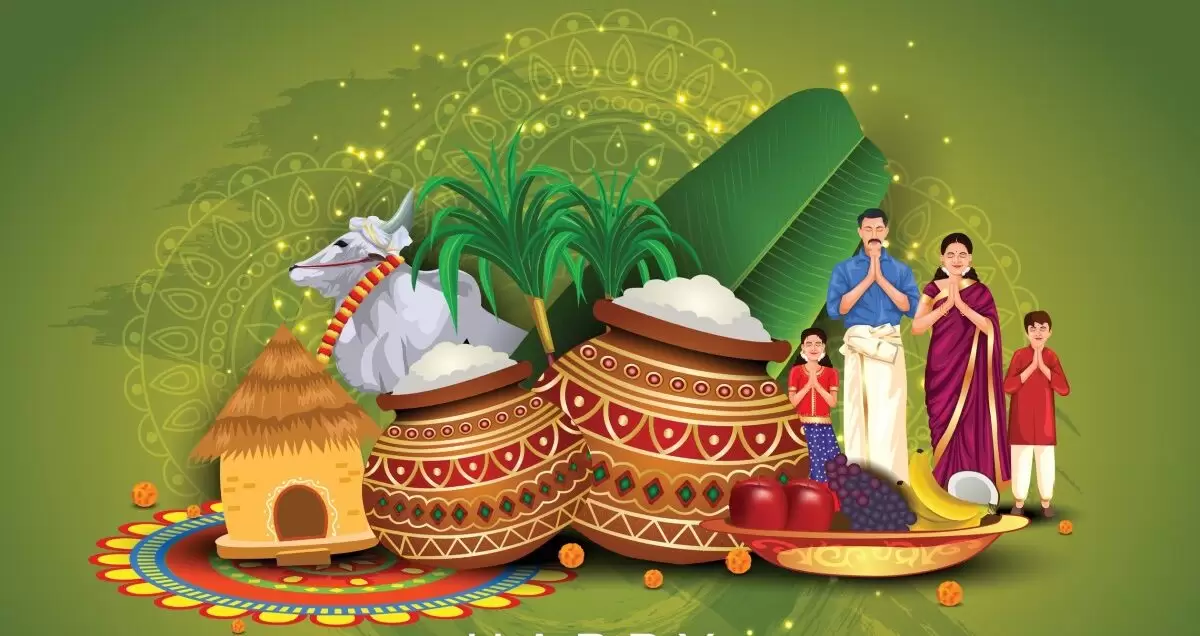
The dish gives Thai Pongal its name. On the morning of the festival, rice from the new harvest is cooked with milk in a new pot, traditionally of clay, with a turmeric plant tied round its neck. The family lets it boil over and calls "Pongalo Pongal!", then sweetens it with jaggery into sakkarai pongal and offers it to the Sun before the meal. A savoury ven pongal is often cooked too. Our paal pongal recipe covers the milk pot and using a clay pot safely on a modern stove; the Thai Pongal guide explains the day. A few days earlier, on Koodaravalli (Margazhi 27), Sri Vaishnava families offer the richer milk sweet akkaravadisal.
Andhra Pradesh and Telangana: a table of harvest sweets
Telugu Sankranti food is a spread of homemade sweets, many built on rice flour and jaggery. Ariselu, rice-flour and jaggery discs, are the classic Andhra Sankranti sweet. Bobbatlu are flatbreads stuffed with chana dal and jaggery. Sunnundalu are laddus of roasted urad dal, jaggery and ghee, served to newly married couples visiting their in-laws at Sankranti. Kajjikayalu are crisp pastries with a filling that changes by region, and gavvalu are small shell-shaped sweets. In Telangana, sakinalu, coils of rice flour and sesame, are the dish without which the festival feels incomplete. On Kanuma, the day for cattle, many vegetarian households eat garelu (urad dal vadas). Chakkara pongali and paramannam are the sweet rice dishes. See Sankranti in Andhra Pradesh and Telangana, and the recipes for chakkara pongali and paramannam.
Karnataka: ellu-bella
Ellu-bella is a dry mix of white sesame, jaggery pieces, dry coconut, roasted peanuts and roasted gram. Families carry small plates of it to friends and neighbours and exchange it with a saying that means "eat sesame and jaggery and speak good words". Read our Karnataka Makara Sankranti guide and the ellu-bella recipe.
Kerala
In Kerala, Makara Sankranti is chiefly a temple observance, centred on Sabarimala and the Makaravilakku; the state's great harvest festivals are Onam and Vishu. There is no single Kerala Sankranti dish to list here. See our Kerala guide.
West India
Maharashtra: tilgul and a sweet word
Tilgul, sweets of sesame and jaggery, are pressed into small rounds or set in moulds and exchanged with the saying "take tilgul and speak sweetly". Tilachi poli, a flatbread stuffed with sesame and jaggery, is the festive bread. See the Maharashtra guide and the tilgul ladoo and gul poli recipes.
Gujarat: food for the rooftop
Uttarayan is the kite festival. Families and neighbours gather on rooftops from dawn, so the food is made to be eaten through the day: undhiyu, a mixed dish of winter vegetables traditionally cooked in a clay pot, with laddoos and other sweets. Gujarat's 2027 holiday list is awaited; see the Uttarayan guide and the undhiyu recipe.
Rajasthan
Sesame-jaggery sweets are exchanged as gifts for Sankranti in Rajasthan as in Maharashtra. We have not found two reliable sources for the state's other festival dishes, so we do not list them here.
North India
Punjab: Lohri and Maghi
Lohri, on the eve of Maghi, is a Punjabi festival kept by Hindus and Sikhs alike. Around the bonfire, families throw rewri (small sesame-jaggery sweets), gajak (sesame-jaggery brittle), peanuts and popcorn into the fire, then share them. Sarson da saag (mustard greens) with makki di roti (maize-flour flatbread) is the winter meal of the season. Pinni, a rich wheat-flour, ghee and jaggery sweet, is a Punjabi winter favourite: see our pinni recipe. Read the Lohri guide.
Haryana, Delhi and Himachal Pradesh
Customs here overlap with Punjab and with the khichdi tradition of the plains. Our Maghi and Sakrat guide covers the region.
Uttar Pradesh: Khichdi Parv
In much of Uttar Pradesh the festival is simply called Khichdi. Khichdi of rice, dal and winter vegetables, cooked with ghee, is offered on the day and eaten as the festival meal. At the Gorakhnath temple in Gorakhpur, devotees offer khichdi, and a Khichdi Mela runs for more than a month from Sankranti. See the Khichdi Sankranti guide and our khichdi recipe.
Uttarakhand: ghughute for the crows
In Kumaon the festival is Ghughutiya. Wheat flour is kneaded with jaggery, twisted into small shapes such as drums, knots and pomegranates, fried, and strung into a necklace with an orange in the middle. Children wear the necklaces and call the crows to feed them pieces, a custom special to Kumaon. In Garhwal the day is called Khichdi Sankrant. See the Uttarayani and Ghughutiya guide.
East and North-East India
Bihar: dahi-chura and tilkut
The Sankranti morning meal in Bihar is dahi-chura: flattened rice with curd and jaggery. Til sweets, especially tilkut (pounded sesame and jaggery) and tilwa, are eaten and given. In the evening there is a special khichdi with cauliflower, peas and potato, served with its "four friends": papad, ghee, pickle and chokha (a mash of roasted vegetables). See the Bihar and Jharkhand guide and the dahi-chura and tilkut recipes.
West Bengal: pithe and nolen gur
Poush Sankranti is the season of pithe-puli, sweets made from the new rice and nolen gur, the fresh jaggery of the date palm. Patishapta are thin rice-flour crêpes rolled round a coconut and jaggery filling; puli are dumplings, sometimes simmered in milk as dudh puli; gokul pithe are fried. Payesh, rice cooked in milk, is made too. Poush Sankranti 2027 dates are announced by the West Bengal government. See the Poush Sankranti guide and the patishapta recipe.
Assam: Uruka and the Bihu feast
On Uruka, the eve of Magh Bihu, families prepare chira (flattened rice), pitha, laru and curd for the feast and the visits of the following day. Til pitha is a roll of sticky bora rice flour around a sesame and jaggery filling; ghila pitha is fried; narikol laru are coconut balls. Jolpan, a breakfast of soaked or puffed rice with curd and jaggery, is eaten on the Bihu morning. See the Magh Bihu guide and the til pitha recipe.
Odisha: Makara Chaula
The signature offering of Odisha is Makara Chaula: newly harvested rice, soaked and coarsely ground rather than cooked, mixed with jaggery, banana, coconut, sesame, milk and chhena (fresh cheese). It is offered to the deities and to the Sun on the morning of the festival, then eaten as prasad. Because the rice is not cooked, wash and soak it well and use fresh milk and chhena the same day. See the Odisha guide and the Makara Chaula recipe.
Cooking these dishes abroad
Most of these dishes travel well. Sesame, peanuts and jaggery are sold at Indian grocers in most cities; Mexican piloncillo or panela and South-East Asian palm sugar are reasonable jaggery swaps. Nolen gur and Assamese bora rice can be hard to find outside India; the recipe pages suggest swaps. Label sesame and peanut sweets clearly at community events, as both are major allergens. For timing and customs abroad, see Makar Sankranti and Pongal abroad.
Frequently asked questions
What is the most common Sankranti food across India?
Sesame and jaggery, in some form. Tilgul in Maharashtra, ellu-bella in Karnataka, rewri and gajak in Punjab and tilkut in Bihar are all sesame-jaggery sweets, and many are exchanged as gifts.
Why is khichdi eaten on Makar Sankranti?
In Uttar Pradesh and Bihar, khichdi of rice, dal and winter vegetables is offered and eaten on the festival, which is why the festival is called Khichdi there. In Bihar it is the evening meal after dahi-chura in the morning.
Is Pongal the same dish as Sankranti sweets?
No. Pongal is a rice dish cooked in a pot on Thai Pongal in Tamil Nadu; sakkarai pongal is its sweet form. Other regions cook different dishes for the same festival day, such as chakkara pongali in the Telugu states.
What is eaten on Lohri?
Rewri, gajak, peanuts and popcorn are thrown into the bonfire and shared, and sarson da saag with makki di roti is the classic winter meal. Lohri falls on Thursday 14 January 2027 per the panchang.
What do Bengalis cook for Poush Sankranti?
Pithe and puli, sweets made from new rice flour and nolen gur (date-palm jaggery), along with payesh. Patishapta crêpes and dudh puli are among the best known.
Is Makara Chaula cooked?
No. The new rice is soaked and coarsely ground, then mixed with jaggery, fruit, coconut, milk and chhena. Because it is raw, use clean, well-soaked rice and fresh dairy, and eat it the same day.
Which Sankranti sweets contain allergens?
Most contain sesame; many contain peanuts, cashews, milk or ghee; bobbatlu, pinni and ghughute contain wheat. Ask the cook or check the recipe page before serving guests with allergies.
Sources
- Scroll.in, Priyadarshini Chatterjee, "On Makar Sankranti, the one thing that ties festivities across India is seasonal eating", 14 January 2018: https://scroll.in/magazine/864777/scroll_in (accessed 12 November 2026)
- Malay Mail, Dhesegaan Bala Krishnan, "What is Pongal and how is it celebrated in Malaysia?", 13 January 2025: https://www.malaymail.com/news/malaysia/2025/01/13/what-is-pongal-and-how-is-it-celebrated-in-malaysia/162581 (accessed 12 November 2026)
- Hinduism Today, "Festivals: Sankranti or Pongal", April 2010: https://www.hinduismtoday.com/2010-04-festivals-sankranti-or-pongal/ (accessed 12 November 2026)
- The News Minute, Rajeswari Parasa, "The taste of Sankranthi: Six dishes made in Telugu households", 7 January 2021: https://www.thenewsminute.com/andhra-pradesh/taste-sankranthi-six-dishes-made-telugu-households-140992 (accessed 12 November 2026)
- Deccan Chronicle, "Sankranthi Recipes For Telugus", 7 January 2024: https://deccanchronicle.com/nation/current-affairs/070124/telugu-pindi-vantalu-for-sankranti.html (accessed 12 November 2026)
- Deccan Chronicle, "Sankranti: A harvest told through food, fire and memory in Telugu states": https://www.deccanchronicle.com/southern-states/telangana/sankranti-a-harvest-told-through-food-fire-and-memory-in-telugu-states-1929102 (accessed 12 November 2026)
- Onmanorama, "Ellu bella" recipe and custom, 14 January 2024: https://onmanorama.com/food/recipe/2024/01/14/ellu-bella-sesame-winter-recipe.html (accessed 12 November 2026)
- OT Eats (Outlook Traveller), Muskan Kaur, "Know More About The Significance Of Til-Gud For Makar Sakranti And Lohri", 12 January 2026: https://oteats.outlooktraveller.com/features/guides/know-more-about-the-significance-of-til-gud-on-makar-sakranti-and-lohri (accessed 12 November 2026)
- Gujarat Tourism (Government of Gujarat), "International Kite Festival": https://gujarattourism.com/fair-and-festival/international-kite-festival.html (accessed 12 November 2026)
- Incredible India (Ministry of Tourism), "Celebrating Lohri the Punjabi way": https://www.incredibleindia.gov.in/en/punjab/amritsar/celebrating-lohri-the-punjabi-way (accessed 12 November 2026)
- The Tribune, Lohri baskets including pinni (Life Style, Ludhiana), 12 January 2025: https://epaper.tribuneindia.com/3963341/Life+Style-(Ldh)/XL-12-January-2025 (accessed 12 November 2026)
- Government of Bihar, "Fairs" (Sakraat foods): https://betastate.bihar.gov.in/fairs (accessed 12 November 2026)
- PTI via The Week, "Preparations completed for annual Khichdi Mela at Gorakhnath temple", 6 January 2026: https://www.theweek.in/wire-updates/national/2026/01/06/preparations-completed-for-annual-khichdi-mela-at-gorakhnath-temple.html (accessed 12 November 2026)
- Deccan Chronicle, "Kites, sweets and togetherness: Poush Parbon's link to pan-Indian Sankranti", 12 January 2026: https://www.deccanchronicle.com/lifestyle/culture-and-society/kites-sweets-and-togetherness-poush-parbons-link-to-pan-indian-sankranti-1929949 (accessed 12 November 2026)
- EastMojo, Pritisha Borthakur, "The many kinds of pitha, laru and jolpaan to feast on this Magh Bihu", 13 January 2023: https://eastmojo.com/assam/2023/01/13/the-many-kinds-of-pitha-laru-and-jolpaan-to-feast-on-this-magh-bihu/ (accessed 12 November 2026)
- OdishaBytes, "Odisha celebrates Makar Sankranti with traditional fervour", 14 January 2026: https://odishabytes.com/odisha-celebrates-makar-sankranti-with-traditional-fervour/ (accessed 12 November 2026)
- District Administration Bageshwar (Government of Uttarakhand), "Culture and Heritage": https://bageshwar.nic.in/culture-heritage/ (accessed 12 November 2026)
- Outlook India, Nakshatra Shah, "All about Ghughutiya and Kumaon's Uttarayani Mela", 15 January 2022 (updated 16 January 2024): https://www.outlookindia.com/travel/all-about-ghughutiya-and-kumaon-s-uttarayani-mela-news-30813 (accessed 12 November 2026)
- US Food and Drug Administration, "Food Allergies": https://www.fda.gov/food/nutrition-food-labeling-and-critical-foods/food-allergies (accessed 12 November 2026)
Last reviewed: 12 November 2026.
Related guides
Share this with family and friends
Send it on WhatsApp, post it, or copy the link.
More from Recipes
- Sarson da Saag and Makki di Roti Recipe (Punjabi Mustard Greens with Maize Flatbread)
- Pinni Recipe (Punjabi Atta Pinni with Ghee and Nuts)
- Tilkut Recipe (Pounded Sesame and Jaggery Sweet from Bihar)
- Dahi Chura Recipe (Flattened Rice with Curd and Jaggery)
- Til Pitha Recipe (Assamese Sesame and Jaggery Rice Rolls)