
Bobbatlu Recipe (Telugu Sweet Flatbread with Chana Dal and Jaggery)
Quick answer: Bobbatlu are thin Telugu flatbreads stuffed with a sweet filling of cooked chana dal and jaggery, roasted on a griddle with ghee. Telugu families make them for Sankranti and Ugadi. Plan about 30 minutes of hands-on preparation, 1 to 2 hours for the dough to rest and about an hour to co
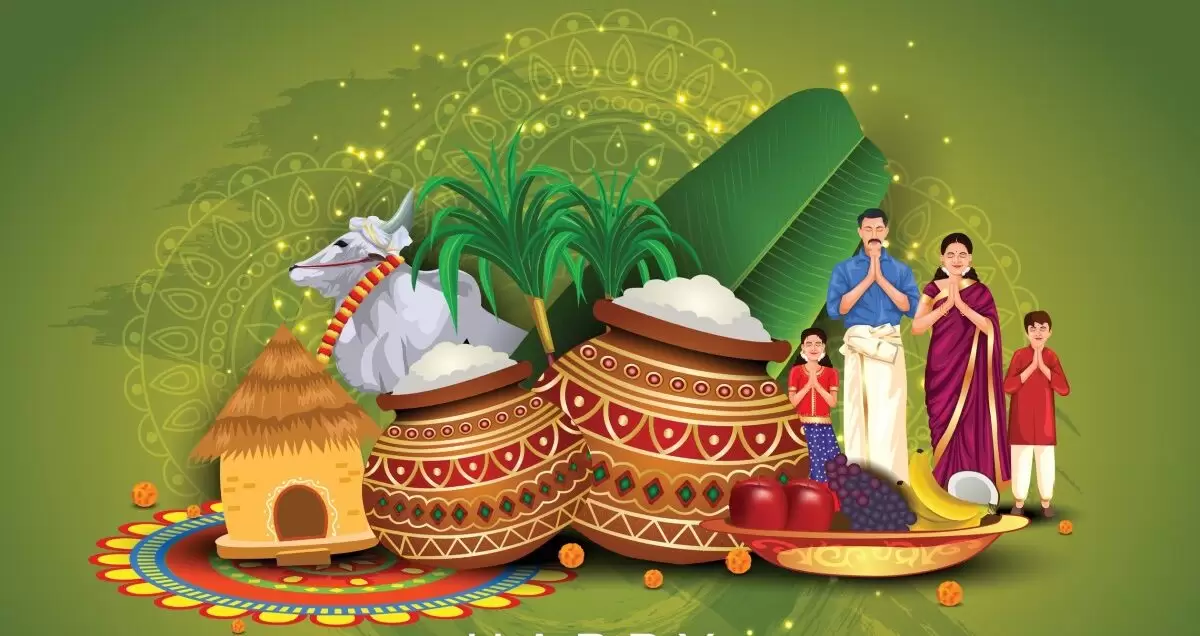
Quick answer: Bobbatlu are thin Telugu flatbreads stuffed with a sweet filling of cooked chana dal and jaggery, roasted on a griddle with ghee. Telugu families make them for Sankranti and Ugadi. Plan about 30 minutes of hands-on preparation, 1 to 2 hours for the dough to rest and about an hour to cook the filling and roast 10 to 12 bobbatlu.
Kitchen note: This recipe is not yet kitchen-tested by a HinduTone cook. The quantities and timings follow common home methods; judge doneness by look and texture, and adjust for your stove and ingredients.
| Key facts | |
|---|---|
| Dish | Sweet stuffed flatbread: chana dal and jaggery filling inside a soft flour dough |
| Other names | Bobbattu, bakshalu (Telugu); obbattu or holige (Karnataka); puran poli (Maharashtra) |
| Festival role | Sankranti and Ugadi sweet in Andhra Pradesh and Telangana |
| Sankranti in India | Friday 15 January 2027 per the panchang (Pedda Panduga, the main day) |
| Makes | 10 to 12 bobbatlu |
| Prep time | 30 minutes, plus 1 to 2 hours resting the dough |
| Cook time | About 60 minutes (filling plus roasting) |
| Allergens | Gluten (wheat flour), milk (ghee) |
What are bobbatlu and when are they made?
Bobbatlu (singular bobbattu) are a festival sweet of Andhra Pradesh and Telangana. A ball of sweet filling made from split chickpeas (chana dal) and jaggery is wrapped in a soft dough, rolled thin and roasted with ghee. In Rayalaseema the same sweet is often called bakshalu. Neighbouring states make close relatives: obbattu or holige in Karnataka and puran poli in Maharashtra.
Telugu households cook bobbatlu for Ugadi, the Telugu new year in spring, and for Sankranti in January, alongside ariselu, sakinalu, sunnundalu and kajjikayalu. Which festival sweets a family makes, and on which of the Sankranti days, varies from home to home: the three or four days run from Bhogi through Sankranti to Kanuma. Read the full Sankranti in Andhra Pradesh and Telangana guide for the day-by-day customs.
Whether bobbatlu are placed before the deity as naivedyam (food offered before it is eaten) depends on family custom. Many homes offer a sweet made that morning before the meal; follow your family practice or ask your priest.
Ingredients
For the filling
| Ingredient | Metric | US measure |
|---|---|---|
| Chana dal (split Bengal gram) | 200 g | 1 cup |
| Water, for cooking the dal | 750 ml | 3 cups |
| Jaggery, grated | 200 g | 1 cup, lightly packed |
| Cardamom, ground | 1 g | 1/2 teaspoon |
| Ghee | 15 ml | 1 tablespoon |
For the dough
| Ingredient | Metric | US measure |
|---|---|---|
| Maida (all-purpose or plain flour) | 150 g | 1 1/4 cups |
| Salt | a pinch | a pinch |
| Turmeric (optional, for colour) | a pinch | a pinch |
| Water | about 120 ml | about 1/2 cup |
| Oil (sesame or a neutral oil) | 60 ml, plus extra for rolling | 1/4 cup, plus extra |
For roasting
| Ingredient | Metric | US measure |
|---|---|---|
| Ghee | 60 to 90 ml | 4 to 6 tablespoons |
Many Telugu homes use maida for a thin, soft wrapper; others use whole-wheat flour (atta) or half and half. Whole-wheat dough is harder to roll thin but works.
How to make bobbatlu
Make the dough first
- Mix the flour, salt and turmeric in a bowl. Add the water a little at a time and knead to a soft, sticky dough, softer than chapati dough.
- Pour the oil over the dough and knead for 2 to 3 minutes until it absorbs most of it. The dough should feel very soft and stretchy.
- Cover and rest it for at least 1 hour, ideally 2. Resting makes it stretch without tearing.
Cook the filling
- Rinse the chana dal and soak it for 30 minutes. Drain.
- Boil the dal in 3 cups of water, half-covered, for 30 to 40 minutes until it is soft enough to crush between your fingers but still holds its shape. Do not cook it to a mush.
- Drain the dal well in a sieve and let it steam dry for 10 minutes. Keep the cooking water if you like; many cooks use it in a thin rasam.
- Grind the drained dal to a smooth, thick paste without adding water, or mash it very well.
- Put the paste and the jaggery in a heavy pan on low to medium heat. The jaggery melts and the mixture turns loose at first.
- Stir constantly for 10 to 15 minutes until it thickens, leaves the sides of the pan and gathers into one mass. Add the cardamom and the spoon of ghee.
- Test it: cool a small piece and roll it between your palms. If it forms a smooth ball that does not stick, it is ready. If it is sticky, cook a few minutes more.
- Let the filling cool completely, then divide it into 10 to 12 balls, a little larger than a lime.
Stuff, roll and roast
- Divide the dough into the same number of pieces, each about half the size of a filling ball.
- Grease a sheet of banana leaf, baking paper or a thick plastic sheet, and your fingers.
- Flatten a piece of dough into a small disc, set a filling ball in the middle and pull the dough up around it to close it. Pinch off any extra dough at the top.
- Press the stuffed ball flat with oiled fingers, then pat or roll it gently into a thin round, about 15 to 18 cm (6 to 7 inches) across. Work slowly so the filling does not break through.
- Heat a flat griddle (tawa) on medium heat. Lift the sheet, flip the bobbattu onto the griddle and peel the sheet away.
- Cook for about a minute until brown spots appear underneath, then turn it. Spread ghee on both sides and cook until both sides have golden-brown spots.
- Stack the cooked bobbatlu on a plate. They soften as they sit.
Pressure cooker and Instant Pot
Pressure cooker for the dal: Cook the soaked, drained dal with 2 1/2 cups (600 ml) of water on medium heat for 2 to 3 whistles, then let the pressure drop on its own. Check that the dal is soft but whole, drain it well and carry on from step 7. Cookers vary, so start with fewer whistles; overcooked dal makes a sticky filling.
Instant Pot for the dal: Pressure Cook (high) for 8 to 9 minutes with 2 cups (480 ml) of water and a natural release, then drain. Cook the dal-and-jaggery filling in a pan on the stove: it needs constant stirring.
A rice cooker is not a good fit for this recipe.
Substitutions abroad
| Region | Chana dal | Jaggery | Flour and leaf |
|---|---|---|---|
| USA and Canada | Indian grocers; yellow split peas at a pinch (softer, different taste) | Jaggery blocks or powder at Indian grocers; Mexican piloncillo or panela | All-purpose flour; frozen banana leaves in Asian and Latin shops, or baking paper |
| UK | Asian shops ("chana dal") | Asian shops; dark muscovado sugar as a fallback | Plain flour; baking paper or a freezer bag cut open |
| Australia | Indian grocers | Indian grocers; palm sugar from Asian grocers | Plain flour; banana leaves at Asian grocers |
| The Gulf | Easy to find | Easy to find in Indian supermarkets | Maida is widely sold |
| South-East Asia | Little India shops | Palm sugar (gula melaka, gula jawa) gives a darker taste | Plain flour; fresh banana leaves are common in markets |
If you use a softer sugar such as palm sugar or muscovado, the filling may need a few more minutes of stirring to thicken.
Vegan option
Bobbatlu work well without dairy. Use oil instead of ghee in the filling and for roasting. If you are cooking for a puja, naivedyam customs vary: many families use only ghee. Follow your family practice or ask your priest.
Common mistakes
- Wet filling: dal that was not drained well, or filling that was not cooked long enough, oozes through the dough. Do the ball test in step 10.
- Mushy dal: overcooked dal makes a sticky filling that never firms up. Stop when it crushes easily but keeps its shape.
- Stiff dough: a firm dough tears when rolled thin. Keep it soft and oily, and rest it fully.
- Too much dough: a thick wrapper hides the filling. Use about half as much dough as filling.
- High heat: the outside burns before the inside warms. Roast on medium heat.
Storage
Cool completely and store in an airtight box. Bobbatlu keep for a day at room temperature in a cool kitchen and 3 to 4 days in the fridge. Warm them on a griddle before serving. The cooked filling also keeps in the fridge for 3 to 4 days if you want to roll fresh bobbatlu later. In hot, humid places, refrigerate the same day.
Allergens
Contains gluten (wheat flour) and milk (ghee). Chana dal is a legume. Some cooks add grated coconut to the filling or brush with sesame oil: check with the cook if you avoid sesame. Bobbatlu contain no nuts unless the cook adds them.
Frequently asked questions
Are bobbatlu and puran poli the same?
They are close relatives. Both are flatbreads stuffed with a sweet chana dal and jaggery filling. Telugu bobbatlu are usually made with a very soft, oily maida dough rolled thin; Maharashtrian puran poli is often made with wheat flour, and the spicing and size vary by family.
Are bobbatlu made for Sankranti or Ugadi?
Both. Telugu families make them for Ugadi in spring and for Sankranti in January. In India, Sankranti falls on Friday 15 January 2027 per the panchang; abroad, confirm your date with your local panchang or temple priest.
Why does my filling break through the dough?
The filling is too wet, or the dough is too stiff or too thin at one spot. Cook the filling until a cooled piece rolls into a smooth ball, keep the dough soft, and press it out slowly with oiled fingers.
Can I make bobbatlu ahead?
Yes. Make the filling a day or two ahead and keep it in the fridge. Roll and roast the bobbatlu on the day, as freshly made ones are softest.
Can I use sugar instead of jaggery?
Yes. Use the same weight of sugar. The filling will be paler and sweeter in a cleaner way, and it may thicken a little faster.
Can I make them with coconut filling?
Yes. Coconut-and-jaggery bobbatlu are a common variation. Cook grated coconut with jaggery until thick and use it the same way.
Sources
- The News Minute, Rajeswari Parasa, "The taste of Sankranthi: Six dishes made in Telugu households", 7 January 2021: https://www.thenewsminute.com/andhra-pradesh/taste-sankranthi-six-dishes-made-telugu-households-140992 (accessed 12 November 2026)
- The News Minute, Balakrishna Ganeshan, "Bobbatlu, Ariselu and five other sweets from Telangana and AP you must try", 26 August 2020: https://www.thenewsminute.com/andhra-pradesh/bobbatlu-ariselu-and-five-other-sweets-telangana-and-ap-you-must-try-131642 (accessed 12 November 2026)
- Deccan Chronicle, "Sankranthi Recipes For Telugus", 7 January 2024: https://deccanchronicle.com/nation/current-affairs/070124/telugu-pindi-vantalu-for-sankranti.html (accessed 12 November 2026)
- Drik Panchang, "Pedda Panduga 2027 date" (Hyderabad): https://www.drikpanchang.com/festivals/sankranti/pedda-panduga/pedda-panduga-date-time.html?year=2027&geoname-id=1269843 (accessed 12 November 2026)
- US Food and Drug Administration, "Food Allergies": https://www.fda.gov/food/nutrition-food-labeling-and-critical-foods/food-allergies (accessed 12 November 2026)
- US Food and Drug Administration, "Safe Food Handling": https://www.fda.gov/food/buy-store-serve-safe-food/safe-food-handling (accessed 12 November 2026)
Last reviewed: 12 November 2026.
Related guides
Share this with family and friends
Send it on WhatsApp, post it, or copy the link.
More from Recipes
- Sankranti Recipes by State: What India Cooks for Makar Sankranti, Pongal, Lohri and Bihu
- Paal Pongal Recipe (Milk Pongal Cooked in a Pot on Thai Pongal)
- Pinni Recipe (Punjabi Atta Pinni with Ghee and Nuts)
- Dahi Chura Recipe (Flattened Rice with Curd and Jaggery)
- Makara Chaula Recipe (Odisha's Makar Sankranti Rice Offering)
