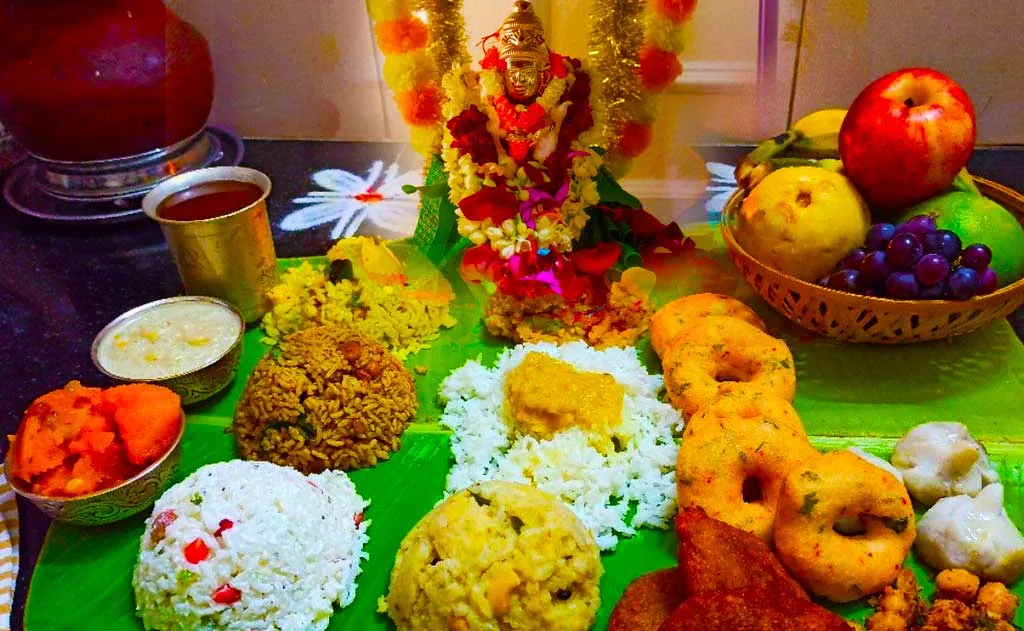
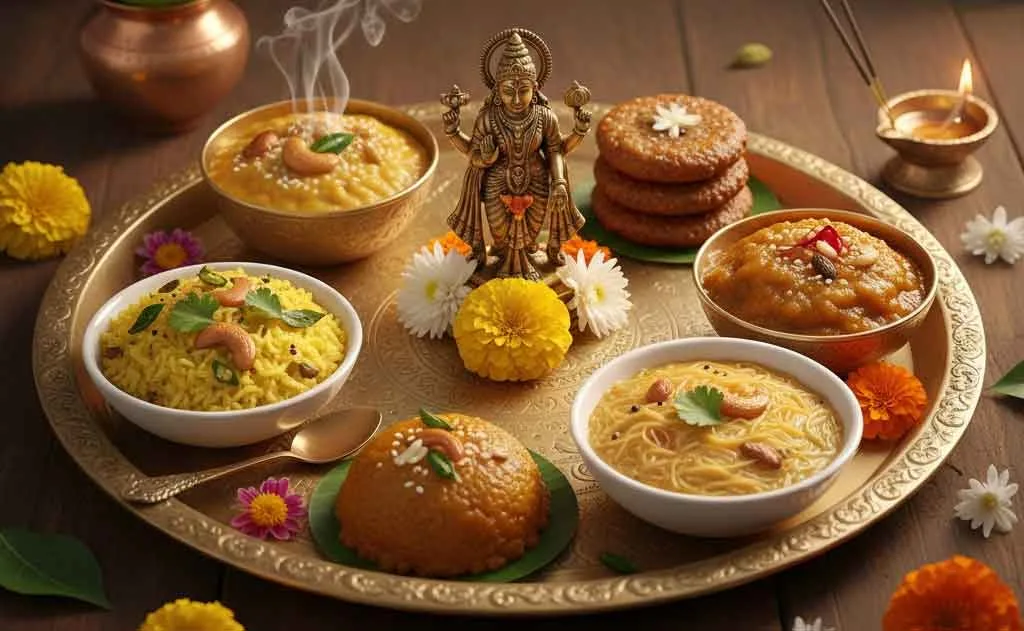
Garelu Recipe (Andhra Urad Dal Vada)
Quick answer: Garelu are crisp, ring-shaped fritters of soaked and ground urad dal (split black gram), seasoned with ginger, green chilli, cumin and curry leaves, and deep-fried.
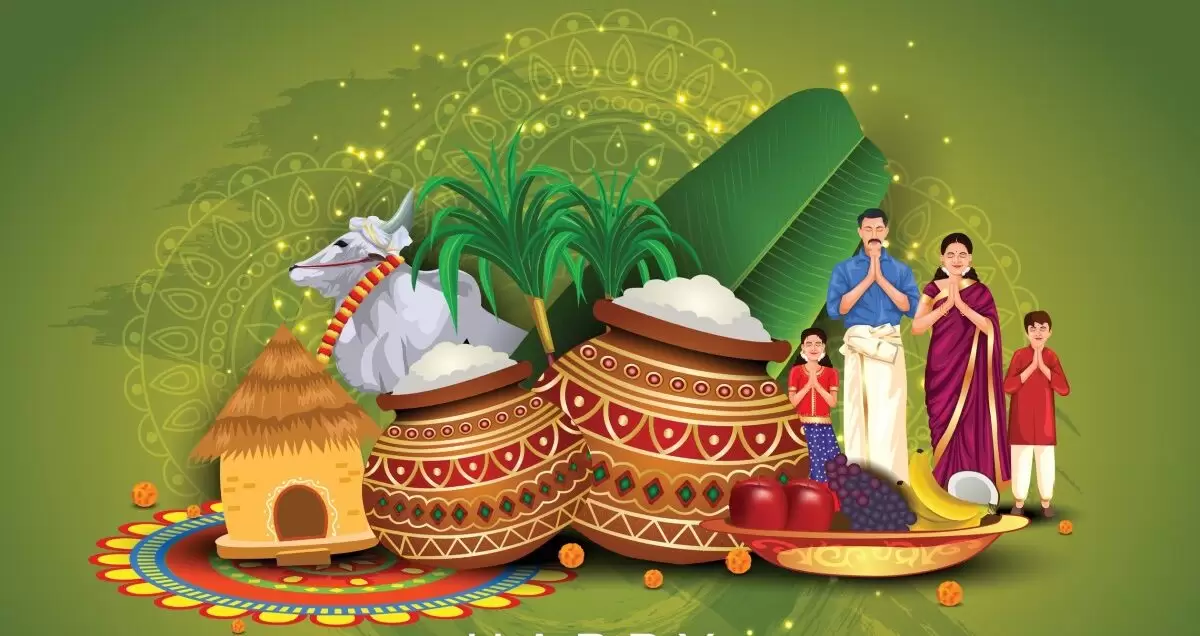
Quick answer: Garelu are crisp, ring-shaped fritters of soaked and ground urad dal (split black gram), seasoned with ginger, green chilli, cumin and curry leaves, and deep-fried. In Andhra Pradesh and Telangana they are made through the Sankranti festival, and in many homes a dish of urad dal batter is a fixed part of Kanuma.
| Key facts | Details |
|---|---|
| Also called | Gaarelu, minapa garelu; medu vada or ulundu vadai in Tamil Nadu |
| Festival role | Sankranti festival meals; customary on Kanuma in many Telugu homes |
| Kanuma 2027 | Saturday 16 January 2027 in India (Drik Panchang) |
| Makes | About 14 to 16 garelu |
| Soaking time | 4 hours |
| Prep time | 15 minutes |
| Cook time | About 30 minutes |
| Vegan | Yes |
| Allergens | Urad dal (a legume); check asafoetida and frying oil |
Garelu and the days of Sankranti
The Telugu Sankranti festival runs over three days, with a fourth in some areas. In India in 2027, Bhogi falls on Thursday 14 January, Sankranti on Friday 15 January (15 January in India per the panchang; some government lists mark 14 January) and Kanuma on Saturday 16 January, with Mukkanuma on Sunday 17 January. Confirm with your local panchang or temple priest.
Garelu appear on festival tables across all three days. Kanuma, the day for honouring cattle, has the closest link. Deccan Chronicle's Sankranti food guide (January 2024) reports the custom that something made from black gram batter must be eaten on Kanuma, and that vegetarian households keep it with garelu. Many families who eat meat that day serve garelu with chicken curry. Customs differ by district and family, so follow your elders.
Two festive variations are common: perugu garelu, soaked in tempered yoghurt, and paakam garelu, soaked in jaggery syrup.
Naivedyam notes
For a puja offering, leave out the onion and keep the batter plain: ginger, chilli, cumin, curry leaves and salt. Offer the first garelu before the family eats.
Ingredients
| Ingredient | Metric | US measure |
|---|---|---|
| Urad dal, skinned (whole white "gota" or split) | 200 g | 1 cup |
| Cold water for grinding | 60 to 90 ml | 1/4 to 1/3 cup, added a spoon at a time |
| Fresh ginger, finely chopped | 10 g | a 2 cm (3/4 inch) piece |
| Green chillies, finely chopped | 2 | 2 |
| Cumin seeds | 3 g | 1 teaspoon |
| Curry leaves, chopped | 1 sprig | about 10 leaves |
| Salt | about 4 g | about 3/4 teaspoon |
| Asafoetida (optional) | a pinch | a pinch |
| Onion, finely chopped (optional, not for naivedyam) | 40 g | 1/4 cup |
| Oil for deep-frying (groundnut or sunflower) | about 750 ml | about 3 cups |
How to make garelu (stovetop)
- Rinse the urad dal two or three times. Soak it in plenty of water for 4 hours. Do not soak it overnight, or the batter can turn slack.
- Drain it completely in a colander for a few minutes.
- Grind the dal in a wet grinder or a strong blender, adding cold water a spoonful at a time. Stop to scrape down the sides. The batter should be smooth, thick and fluffy, and just hold its shape on a spoon.
- Test the batter: drop a small blob into a bowl of water. If it floats, it holds enough air. If it sinks, beat it by hand for 2 to 3 minutes and test again.
- Fold in the ginger, chillies, cumin, curry leaves, salt, asafoetida and onion (if using). Add salt only just before frying, because it draws water out of the batter.
- Heat the oil in a heavy, deep pan, no more than one-third full, on medium heat. It is ready when a drop of batter rises to the top at once with steady bubbles. If you use a thermometer, about 175 to 180 °C (350 to 355 °F) is a common guide.
- Wet your hands. Place a lime-sized ball of batter on a wet sheet of plastic, a banana leaf or the back of a steel bowl. Flatten it gently and push a hole through the centre with a wet finger.
- Slide it off carefully into the oil, close to the surface, so the oil does not splash. Fry three or four at a time.
- Turn them once. Fry for about 3 to 4 minutes in all, until golden and crisp.
- Lift out with a slotted spoon and drain on a rack or paper towels. Serve hot with coconut chutney, or as part of the festival meal.
Is there another way to make garelu?
Garelu are traditionally deep-fried, and that is what gives the crisp shell and soft centre. An air fryer does not work well: the batter is too wet to hold its shape. A paniyaram (appe) pan with a little oil gives small, round dumplings. They taste good, but they are a different, non-traditional snack. A pressure cooker has no role here.
Deep-frying safety
- Stay at the stove the whole time. If you must leave, switch the heat off.
- Keep children and pets well away from the stove and the pan handle. Turn handles inward.
- Never let water reach hot oil. Shake water off your hands and the leaf before shaping, and pat the slotted spoon dry.
- If oil smokes, turn the heat down at once.
- If oil catches fire, switch off the heat and cover the pan with a lid or a baking sheet. Never pour water on burning oil, and never carry a burning pan.
- Keep a working smoke alarm, but not right above the stove, and open a window or run the extractor fan.
Ingredient substitutions abroad
| Where you live | Urad dal | Other notes |
|---|---|---|
| USA, Canada | "Urad dal" or "urad gota" at Indian grocers; avoid whole black (unskinned) urad | Fresh curry leaves in the freezer section |
| UK | Sold as "urid dal" or "white lentils" at Indian shops | Groundnut oil at Asian supermarkets |
| Australia | Indian grocers in all major cities | Frozen curry leaves keep well |
| Gulf | Easy to find at Indian supermarkets | Fresh curry leaves widely available |
| South-East Asia | Indian shops in Singapore and Malaysia carry urad dal | Use any neutral frying oil |
With a small blender, grind in two batches so the motor does not warm the batter; warm batter fries flat and oily.
Common mistakes
- Too much water. A runny batter cannot be shaped and soaks up oil. Add water a spoonful at a time.
- Oil too hot. The outside browns before the centre cooks. Medium heat gives an even golden colour.
- Salting too early. Salt added hours before frying thins the batter.
- Overcrowding. Too many at once cools the oil.
Storage
Garelu are best eaten the day they are made. Refrigerate cooled leftovers, covered, and eat within two days; reheat in a hot oven or dry pan until crisp.
Allergens and dietary notes
Garelu are vegan and naturally gluten-free, provided your asafoetida contains no wheat flour (many compounded powders do) or you leave it out. They contain urad dal, a legume. If you fry in groundnut (peanut) oil, tell guests with a peanut allergy. Coconut chutney contains coconut.
Frequently asked questions
Why are my garelu hard?
Usually the batter was too dry or not beaten enough. A light, airy batter that passes the float test gives soft centres.
Why do garelu soak up so much oil?
Either the batter is too thin, or the oil is not hot enough. Test one first and adjust before frying the whole batch.
Do I have to make the hole in the middle?
The hole is traditional. It lets the centre cook through as fast as the outside. Small round vadas without a hole also work, but fry them a little longer.
Are garelu the same as medu vada?
They are the same kind of urad dal vada. Garelu is the Telugu name; medu vada and ulundu vadai are Tamil names. Seasonings vary by family.
Why are garelu linked to Kanuma?
Newspaper accounts of Telugu Sankranti record the custom of eating something made from black gram batter on Kanuma, and garelu are the usual choice. It is a household custom; reasons given for it vary.
Sources
- Deccan Chronicle, "Sankranthi Recipes For Telugus", 7 January 2024 (black gram batter on Kanuma; perugu and paakam garelu): https://deccanchronicle.com/nation/current-affairs/070124/telugu-pindi-vantalu-for-sankranti.html (accessed 12 November 2026)
- Slurrp, "Sankranti 2023: Garelu And Chicken Curry, The Andhra Festive Grub On Kanuma", updated 6 January 2023 (garelu with chicken curry on Kanuma): https://slurrp.com/article/sankranti-2023-garelu-and-chicken-kura-the-andhra-festive-grub-1673008840444 (accessed 12 November 2026)
- Deccan Chronicle, "How Rituals Make Sankranti The Biggest Hindu Festival", 13 January 2026 (Kanuma and non-vegetarian dishes): https://www.deccanchronicle.com/lifestyle/culture-and-society/sankranti-rituals-in-andhra-pradesh-1930145 (accessed 12 November 2026)
- U.S. Fire Administration, "Cooking fire safety": https://www.usfa.fema.gov/prevention/home-fires/prevent-fires/cooking/ (accessed 12 November 2026)
- Drik Panchang, Kanuma 2027 (Hyderabad), as cited on our Makar Sankranti 2027 guide: https://www.drikpanchang.com/festivals/sankranti/kanuma-panduga/kanuma-panduga-date-time.html?geoname-id=1269843&year=2027 (accessed 21 October 2026)
Last reviewed: 12 November 2026.
Related guides
Share this with family and friends
Send it on WhatsApp, post it, or copy the link.
More from Recipes
- Cooking for Annadanam: A Menu and Quantities for 50 and 100
- Prasadam in an Instant Pot, Pressure Cooker or Rice Cooker
- Coconut Laddu Recipe with Jaggery (Kobbari Laddu, Nariyal Ladoo)
- Besan Laddu Recipe (Gram Flour Laddus for Naivedyam)
- Boondi Laddu Recipe, with a Tirupati-Style Home Version