Cooking for Annadanam: A Menu and Quantities for 50 and 100
Quick answer: For an annadanam (free meal offered as charity) of 50 to 100 people, a simple sattvic menu works best: rice, sambar or dal, one vegetable, a sweet such as payasam, curd or buttermilk, and a pickle or chutney. Plan about 75 g of raw rice and 25 g of dal per person, cook in batches no bi

Quick answer: For an annadanam (free meal offered as charity) of 50 to 100 people, a simple sattvic menu works best: rice, sambar or dal, one vegetable, a sweet such as payasam, curd or buttermilk, and a pickle or chutney. Plan about 75 g of raw rice and 25 g of dal per person, cook in batches no bigger than your largest pot allows, offer the food to the deity first, and keep it hot (above 60°C, 140°F) until it is served.
| Key facts | |
|---|---|
| Annadanam | Giving food (anna) as a gift (dana); see Annadanam in Hinduism |
| Typical menu | Rice, sambar or dal, one vegetable, payasam, curd or buttermilk, pickle |
| Rule of thumb | 75 g raw rice and 25 g dal per person, for a meal with other dishes |
| Food safety | Keep hot food above 60°C (140°F); refrigerate leftovers within 2 hours in shallow containers |
| Abroad | Community events may need a food permit or registered kitchen; check local rules |
What is annadanam?
Annadanam means the gift of food. Temples, mathas and families feed devotees and anyone who comes, on festival days, at pujas and in memory of elders. The meaning and traditions are explained in Annadanam in Hinduism. This page is the practical side: what to cook, how much, and how to keep it safe.
A simple annadanam menu
- Rice (plain, or a flavoured rice such as pulihora or lemon rice)
- Sambar or dal
- One vegetable (poriyal, thoran or dry sabzi; potatoes, beans, cabbage, carrots and pumpkin travel well)
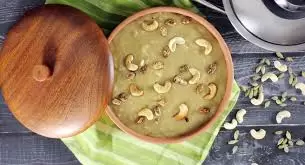
- Sweet: a payasam such as paramannam, semiya payasam or chakkara pongali, or kesari
- Curd rice or buttermilk (daddojanam can replace plain rice and curd)
- Pickle or chutney, banana or fruit
A North Indian menu works the same way: khichdi or bhog khichuri, or puri with aloo sabzi, chana, halwa or kheer, and raita. Many annadanam menus are cooked without onion and garlic; see sattvic cooking without onion and garlic.
How much to cook: 50 and 100 people
These are planning amounts of raw ingredients for an adult meal where several dishes are served. Adjust for children, appetite and whether people take food home.
| Item | Per person | For 50 | For 100 |
|---|---|---|---|
| Rice (raw) | 75 g | 3.75 kg | 7.5 kg |
| Dal for sambar or dal (raw toor or moong) | 25 g | 1.25 kg | 2.5 kg |
| Vegetables for sambar (prepared) | 40 g | 2 kg | 4 kg |
| Vegetable side dish (prepared) | 80 g | 4 kg | 8 kg |
| Payasam (finished) | 100 ml | 5 litres | 10 litres |
| Curd (yogurt) or buttermilk | 75 g curd | 3.75 kg | 7.5 kg |
| Oil and ghee (all dishes together) | 15 ml | 750 ml | 1.5 litres |
| Bananas | 1 | 50 | 100 |
Rice roughly triples in weight when cooked, so 7.5 kg of raw rice gives about 20 to 22 kg of cooked rice.
Cooking in batches
- Pot size: cooked rice and dal need about twice the volume of the raw ingredients plus water. If your largest pot holds 20 litres, cook rice in batches of about 3 to 4 kg raw.
- Rice: steaming in large perforated trays, or cooking in large pressure cookers in batches, is easier than one giant pot.
- Sambar and payasam: stir often and use heavy-based vessels; large volumes scorch easily.
- Timing: cook the dishes that hold well (sambar, payasam, dry vegetables) first; cook rice last so it is fresh.
- Naivedyam first: set aside a portion of each dish for the deity before serving anyone. See how to offer naivedyam at home.
For pressure-cooker timings by dish, see prasadam in an Instant Pot or pressure cooker.
Keeping it safe
Large batches of cooked rice, dal and milk sweets are where community meals most often go wrong. US and UK food-safety agencies give the same basic rules:
- Keep hot food hot: at 60°C (140°F) or above until served. Use chafing dishes, insulated containers or a low burner.
- Keep cold food cold: curd, buttermilk and chutneys at 4°C (40°F) or below until served, for example in containers set on ice.
- Two hours: do not leave cooked food at room temperature for more than 2 hours (1 hour above 32°C, 90°F).
- Cool leftovers fast: divide them into shallow containers and refrigerate promptly. Do not put a whole large pot in the fridge.
- Reheat thoroughly: until steaming hot all the way through.
- Clean hands and surfaces: handwashing station, clean ladles, separate cloths.
Running an annadanam abroad
- Permits: in the USA, UK, Canada, Australia and many other countries, food served to the public at events may need a temporary event permit or a registered kitchen. Temples usually already have one. Check with the temple or your local council or health department.
- Allergens: in the UK and EU, food served to the public must have its allergen information available. List milk, nuts, sesame, mustard, gluten and other allergens for each dish on a card.
- Gulf countries: hold annadanam in temple premises or private homes, and follow local law and the host community's guidance.
- Leftovers: many temples arrange for safe surplus food to go to local food banks or shelters; check their rules before donating cooked food.
Frequently asked questions
How much rice do I need for 100 people?
About 7.5 kg of raw rice when other dishes are served, giving roughly 20 to 22 kg cooked rice. For a rice-heavy meal with few side dishes, plan 100 g raw per person.
Should annadanam food be offered to God first?
Yes, in most traditions. A portion of each dish is offered as naivedyam before the meal is served.
Can annadanam include onion and garlic?
Many temples and families cook annadanam without onion and garlic. Follow the temple's or your family's practice.
How long can annadanam food sit out?
No more than 2 hours at room temperature (1 hour in very hot weather), unless kept hot above 60°C (140°F) or cold at 4°C (40°F) or below.
What is the simplest menu for a small annadanam?
Pongal or khichdi, a sweet, curd or buttermilk and a banana. It can be cooked in two pots and served easily.
Related guides
- Recipes hub
- Annadanam in Hinduism
- How to offer naivedyam at home
- Naivedyam by festival
- Bhog khichuri and labra
- Prasadam in an Instant Pot or pressure cooker
Sources
- US Food and Drug Administration, Safe Food Handling, for the 2-hour and 1-hour rules.
- USDA Food Safety and Inspection Service, USDA urges consumers to keep clear of the danger zone, for the 40–140°F danger zone and keeping hot food at 140°F or above.
- Food Standards Agency (UK), Food allergy and intolerance, for allergen information.
Planning quantities are typical catering estimates, not measured; adjust for your group. Last reviewed: 12 November 2026.
Share this with family and friends
Send it on WhatsApp, post it, or copy the link.
More from Recipes
- Gujiya Recipe for Holi (Mawa Gujiya with a No-Khoya Option)
- Rauh di Kheer Recipe (Punjabi Rice Kheer Cooked in Sugarcane Juice)
- Medu Vadai Recipe (Ulundu Vadai for Pongal and Festival Days)
- Pongal Kootu Recipe (Mixed Vegetable and Dal Kootu)
- Sakkare Acchu Recipe (Karnataka Sugar Moulds for Sankranti)